Do Cockroaches Bite?
Rarely. Cockroaches don’t generally bite people (National Pesticide Information Center), and in homes where they’re controlled or few, bites are rare (Roth and Willis, 1957). The cases on record come from very heavy infestations, mostly in tropical sleeping quarters and on ships, where cockroaches nibbled the nails, calluses and skin of sleeping people.
Difficulty: easy. Call a pro if you see cockroaches every night despite baiting, or you live in an apartment where they come from other units. If you rent, tell your landlord in writing.
For most households, the real health problem is different: cockroach droppings and shed skins cause allergies and can make asthma worse (University of Kentucky, NPIC). If you’re waking up with itchy bites, another pest is far more likely. This page can’t diagnose a bite.
When Cockroaches Do Bite
The most thorough review is The Medical and Veterinary Importance of Cockroaches by Louis Roth and Edwin Willis, published by the Smithsonian in 1957. Its chapter on bites says biting has been well documented where cockroach populations are large, especially in sleeping quarters in the tropics. The accounts it collects include:
- Sailors complaining of their toenails, fingernails and the hard skin of their soles and hands being nibbled.
- The calluses on the bare feet of a sleeping ship’s crew, gnawed each night.
- A house in Brazil where cockroaches bit off the eyelashes of about a dozen children.
- Heavy infestations in which German and American cockroaches nibbled skin, especially at the ears, and gnawed at scabs, particularly on nursing infants (Rageau and Cohic, 1956, as cited in the review).
The pattern is the same in every case: a large infestation and a person asleep. Most of these reports are old and come from ships and tropical settlements, not modern homes.
What a Cockroach Bite Looks Like
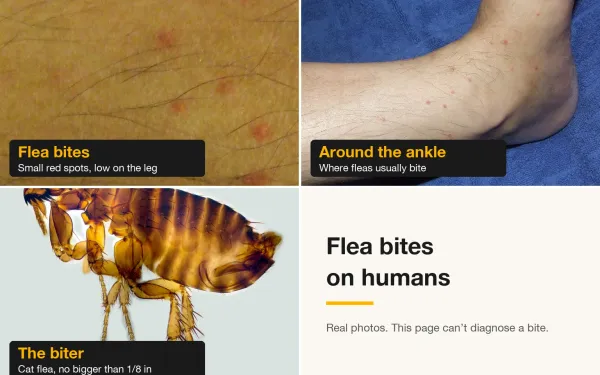
The accounts describe nibbled nails and calluses, and small wounds on the skin, rather than a typical bite mark. We found no reliable photo of a cockroach bite, so we don’t show one. If you have red, itchy bumps and no visible nibbling, a cockroach is an unlikely cause; compare bug bite patterns, bed bug bites and flea bites, or use the bite identifier above.
The Bigger Risk: Allergens and Germs
- Allergies and asthma. Many people are allergic to cockroach droppings and shed skins, which can cause congestion, sneezing and watery eyes, and can trigger asthma with coughing, wheezing and trouble breathing (University of Kentucky). UC IPM says indoor infestations are risk factors for asthma in children, especially in multi-unit housing.
- Germs on food. Because cockroaches move from filth to food, they can carry microbes that cause food poisoning and other illnesses (University of Kentucky).
So the reason to deal with cockroaches isn’t bites; it’s what they leave in the air and on your counters.
If a Cockroach Bit You
Treat it like any small wound or insect bite. MedlinePlus advises washing the spot with soap and water, using ice wrapped in a washcloth (10 minutes on, 10 off) and an anti-itch cream or antihistamine if needed.
Call 911 for trouble breathing, wheezing or shortness of breath, swelling anywhere on the face or in the mouth, throat tightness or trouble swallowing, feeling weak, or turning blue (MedlinePlus).
See a doctor if, over the next several days, the spot shows signs of infection, such as increasing redness, swelling or pain (MedlinePlus). If cockroaches make your asthma or allergies worse, talk to your doctor about that too.
Keep Them Off You: Fix the Infestation
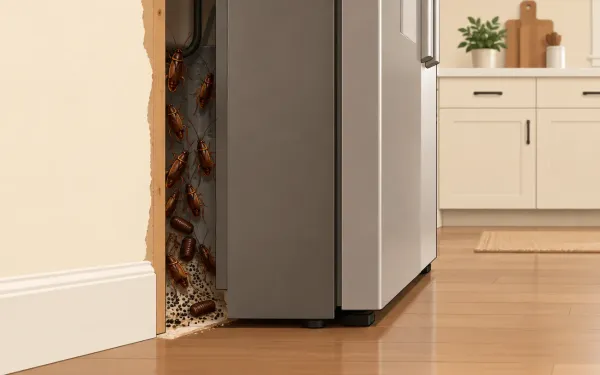
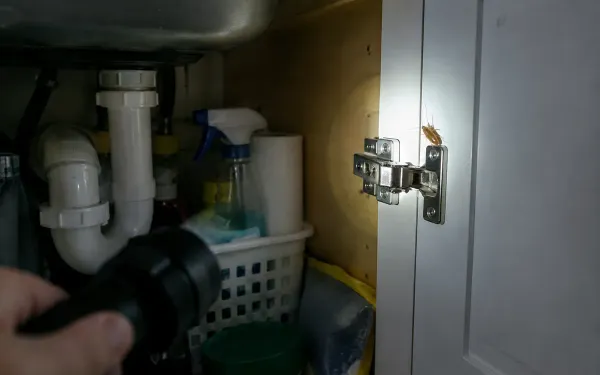
Every recorded case involved a large infestation, so the fix is getting the numbers down. The University of Kentucky says most householders get better results with baits than with sprays; see how to get rid of roaches and roach gel bait. Not sure what you have? Types of cockroaches and signs of roaches help you check.
Common questions
They can, but it’s rare. The recorded cases involved sleeping people in places with huge infestations (Roth and Willis, 1957). In an ordinary home, itchy bites after sleeping are much more likely from bed bugs or fleas.
Any break in the skin can get infected, so watch for increasing redness, swelling or pain (MedlinePlus). The health effect cockroaches are known for is allergies and asthma, not bites (University of Kentucky, NPIC).
No. Wood roaches are outdoor cockroaches that wander in by accident, and none of the guides we checked lists biting as a problem.
Sources and further reading · 6
- Roth, L. M., and Willis, E. R. (1957). The Medical and Veterinary Importance of Cockroaches. Smithsonian Miscellaneous Collections 134(10): chapter IX, “Cockroach Bites.”
- National Pesticide Information Center: Cockroaches: cockroaches don’t generally bite people; allergy and asthma.
- University of Kentucky: Cockroach Elimination in Homes and Apartments (EF614): allergens, asthma, germs on food, baits.
- UC IPM: Cockroaches: allergens and asthma risk in children.
- MedlinePlus: Insect Bites and Stings: first aid, when to call 911, signs of infection.
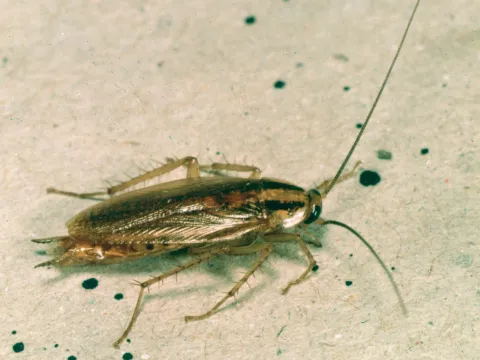
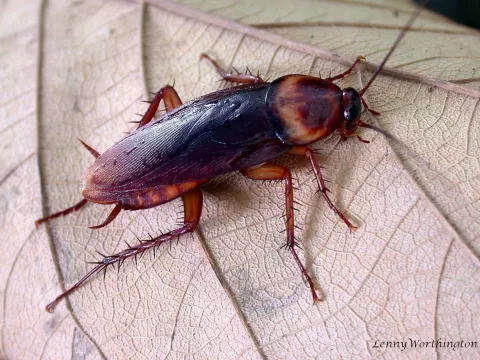
- Cover photos: German cockroach by Clemson University – USDA Cooperative Extension (CC BY 3.0 US); American cockroach by Len Worthington (CC BY-SA 2.0); oriental cockroach by Alvesgaspar (CC BY-SA 4.0); via Wikimedia Commons.