How to Get Rid of Fleas in Your House (and on Your Pet)
To get rid of fleas, you treat the pet and the house at the same time. Adult fleas live on the pet, but their eggs fall off into carpet, furniture and pet beds, and new fleas keep hatching there for weeks (UC IPM, University of Kentucky).
Time: about 3–4 weeks. Difficulty: moderate. Call a pro if you still see fleas four weeks after treating every pet and the house, or you have no pets and suspect raccoons, opossums, squirrels or other wildlife living in the attic, chimney or under the house.
Below: how to confirm it’s fleas, the five steps in order, how long it takes and which popular fixes don’t work.
In this guide:
- First, Make Sure It’s Fleas
- How to Get Rid of Fleas in 5 Steps
- How Long It Takes
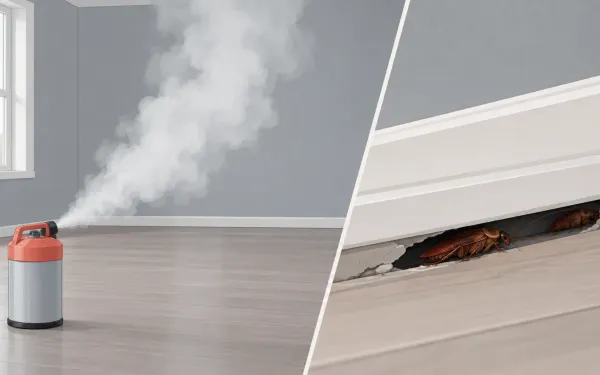
- Do Flea Bombs Work?
- Diatomaceous Earth and Other Home Remedies
- Can Humans Get Fleas?
- Common Questions
First, Make Sure It’s Fleas
You’ll usually find signs before you see a flea:
- Adult fleas: reddish brown, wingless, no longer than 1/8 inch and flat from side to side. They jump (UC IPM).
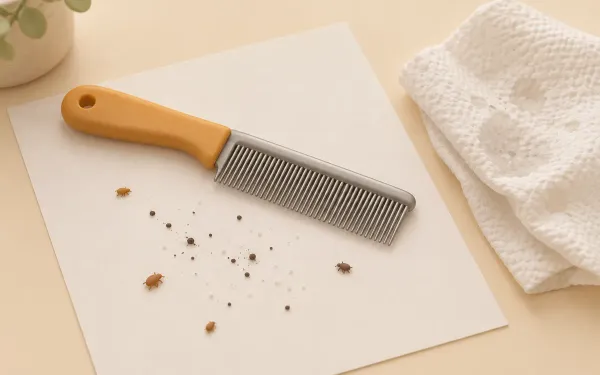
- Flea dirt: dark, pepper-like specks in the pet’s fur (University of Kentucky). It’s digested blood.
- Flea eggs: pearly white, oval, about 1/32 inch. They’re smooth and fall off the pet into its bed and the carpet (UC IPM).
Quick test for flea dirt: comb the specks onto a wet paper towel. If they turn reddish brown, it’s flea dirt (University of Minnesota). Check the base of the tail, neck, belly and armpits first.
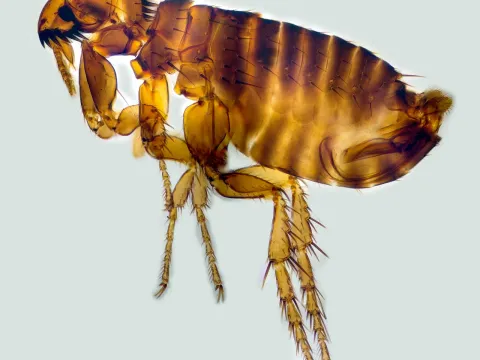 BitesAdult cat fleaUp to 1/8 inch; flat side to side.
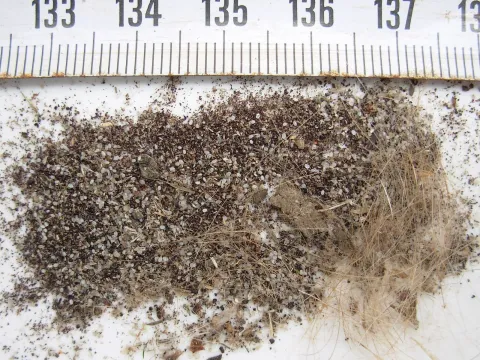 Flea dirt and eggsBlack specks and white grains, combed from a pet.
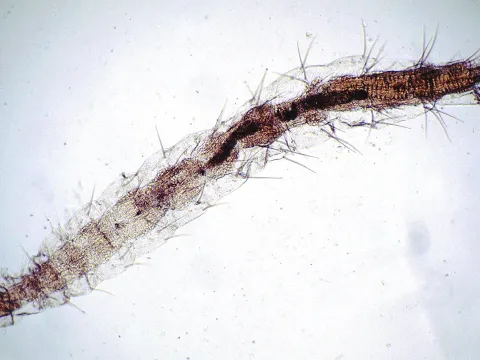 Flea larvaUp to 3/16 inch, hairy, no legs. Lives in carpet and pet beds.
More photos and the larva and cocoon stages are in what do fleas look like. If the bugs don’t match, see bugs that look like fleas.
How to Get Rid of Fleas in 5 Steps
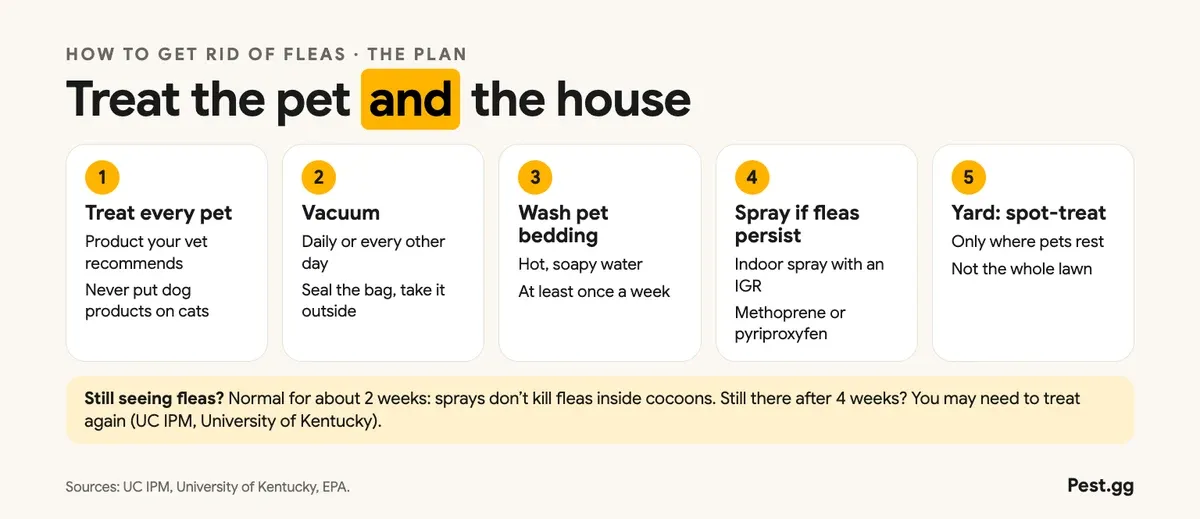
Infographic: the five steps. Sources: UC IPM, University of Kentucky, EPA.
1. Treat every pet
This is the step that matters most: adult fleas spend most of their time on the dog or cat, not in the carpet (University of Kentucky). Treat every dog and cat in the house, not just the one scratching.
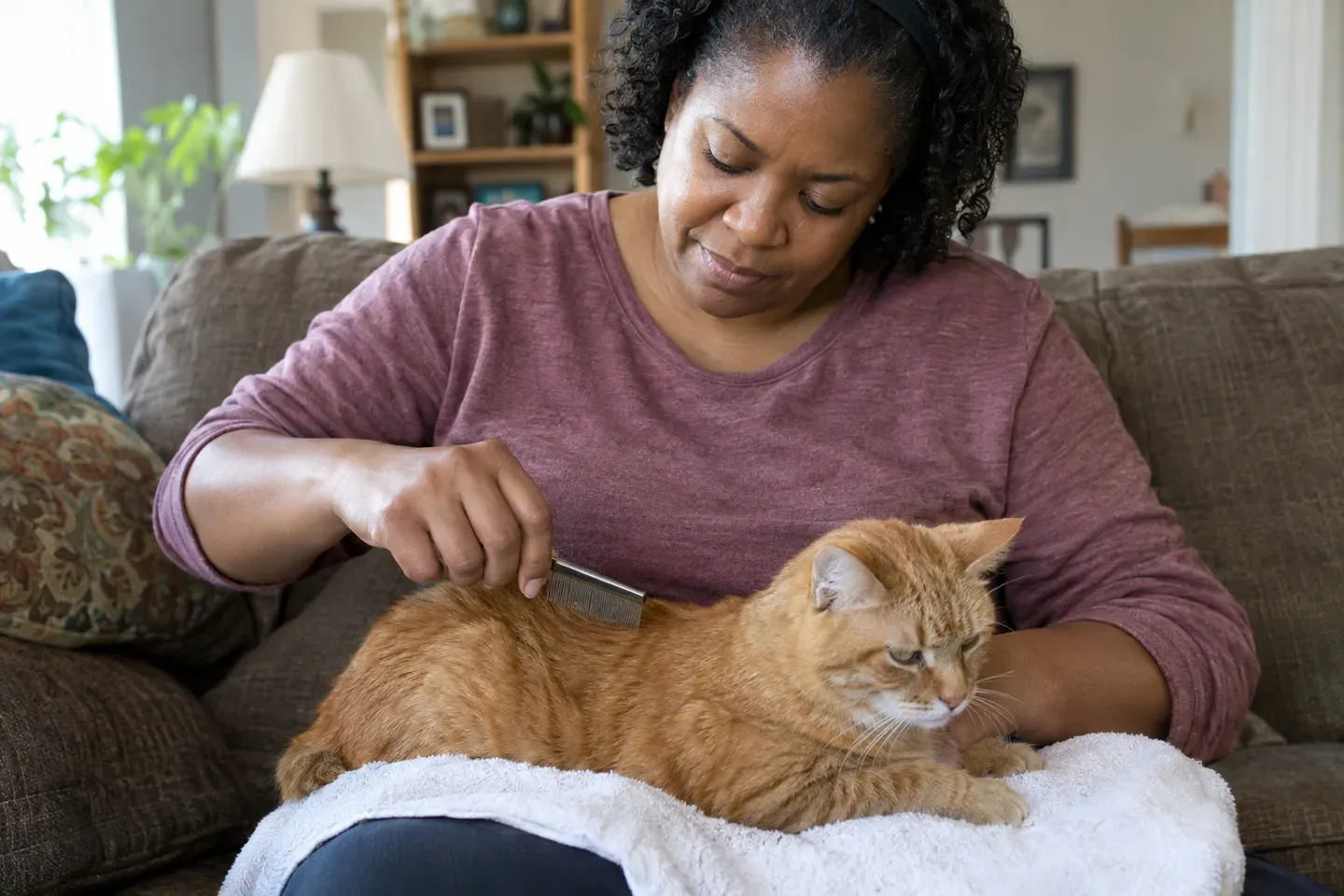
- Ask your vet which product to use. Spot-ons, oral products and collars all exist, and UC IPM calls several of them very effective and safe. Your vet can match one to your pet’s species, age and weight.
- Never put a dog product on a cat. EPA says never to use dog products on cats, or cat products on dogs, because some pesticides are more toxic to one species than the other. UC IPM adds that products with permethrin or amitraz should never be applied to cats.
- Follow the label for weight. Use the amount for your pet’s size, and only on the species the label names (EPA).
- Never use carpet or yard products on a pet (University of Kentucky).
If your pet reacts badly after a treatment, EPA says to bathe it right away with mild soap and lots of water, then call your vet or the National Pesticide Information Center (1-800-858-7378).
2. Vacuum every day or two
Vacuum floors, rugs, carpets, upholstered furniture and the cracks along baseboards daily or every other day (UC IPM). Focus on where the pet sleeps and rests.
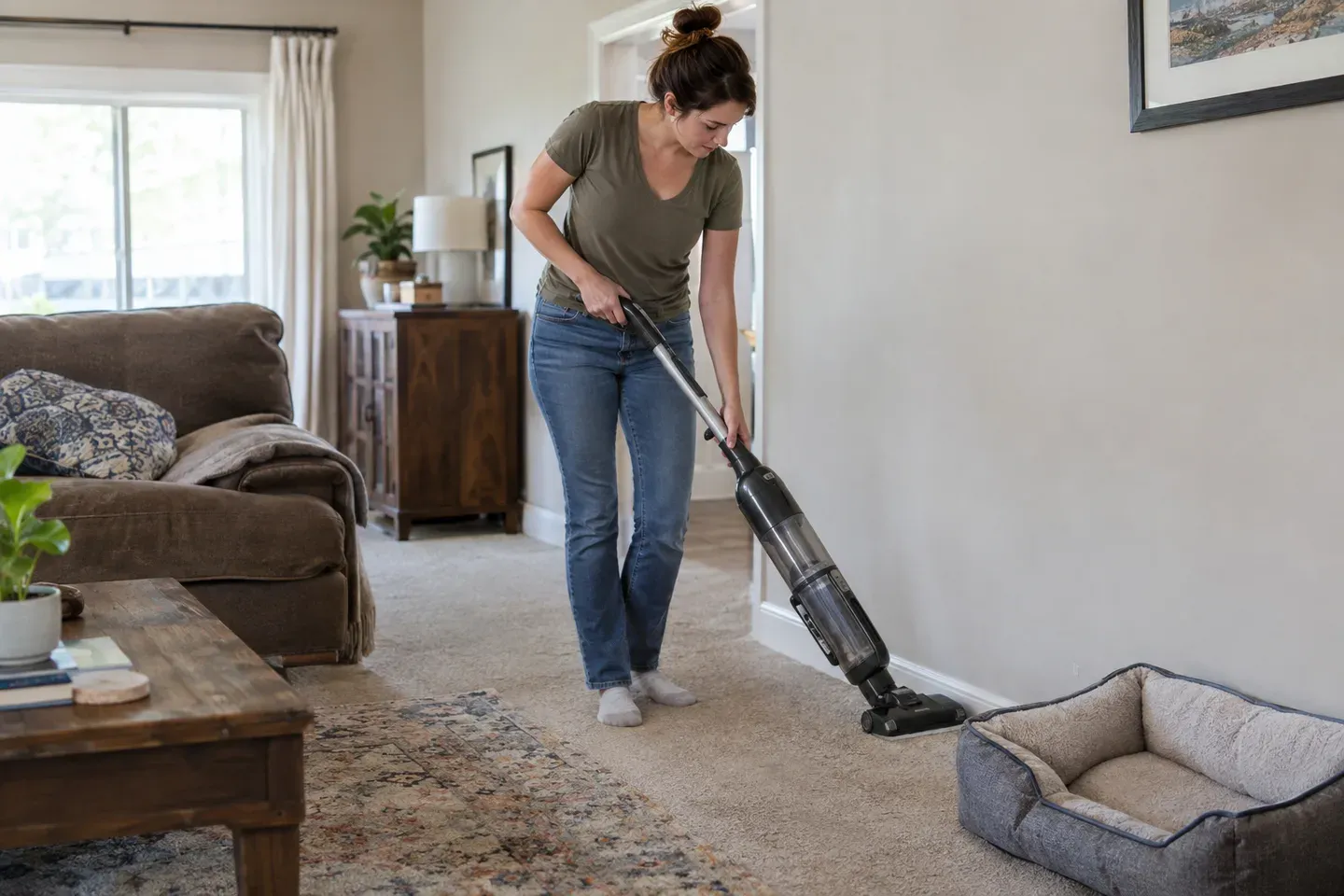
Vacuuming does three jobs. It picks up eggs, larvae and cocoons (University of Kentucky). It kills fleas outright: in an Ohio State study, vacuuming killed an average of 96% of adult fleas and all of the larvae and pupae tested. And the vibration makes fleas come out of their cocoons sooner, where treatments can reach them (University of Kentucky).
After vacuuming, seal the bag in a garbage bag and put it in the outside trash (University of Kentucky).
3. Wash the pet’s bedding
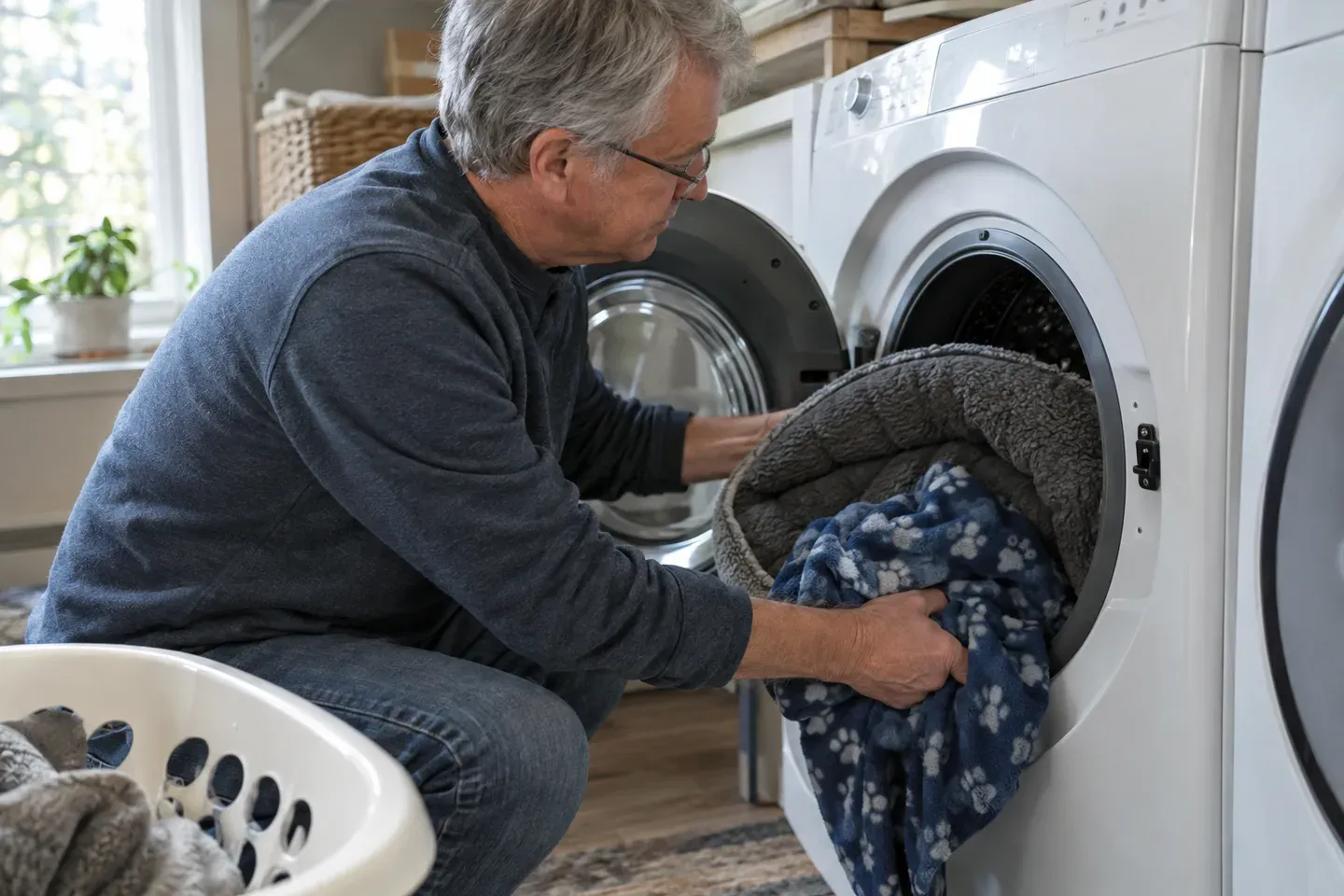
Wash pet bedding in hot, soapy water at least once a week (UC IPM). Include blankets or cushions where the pet sleeps.
4. Treat the house if fleas persist
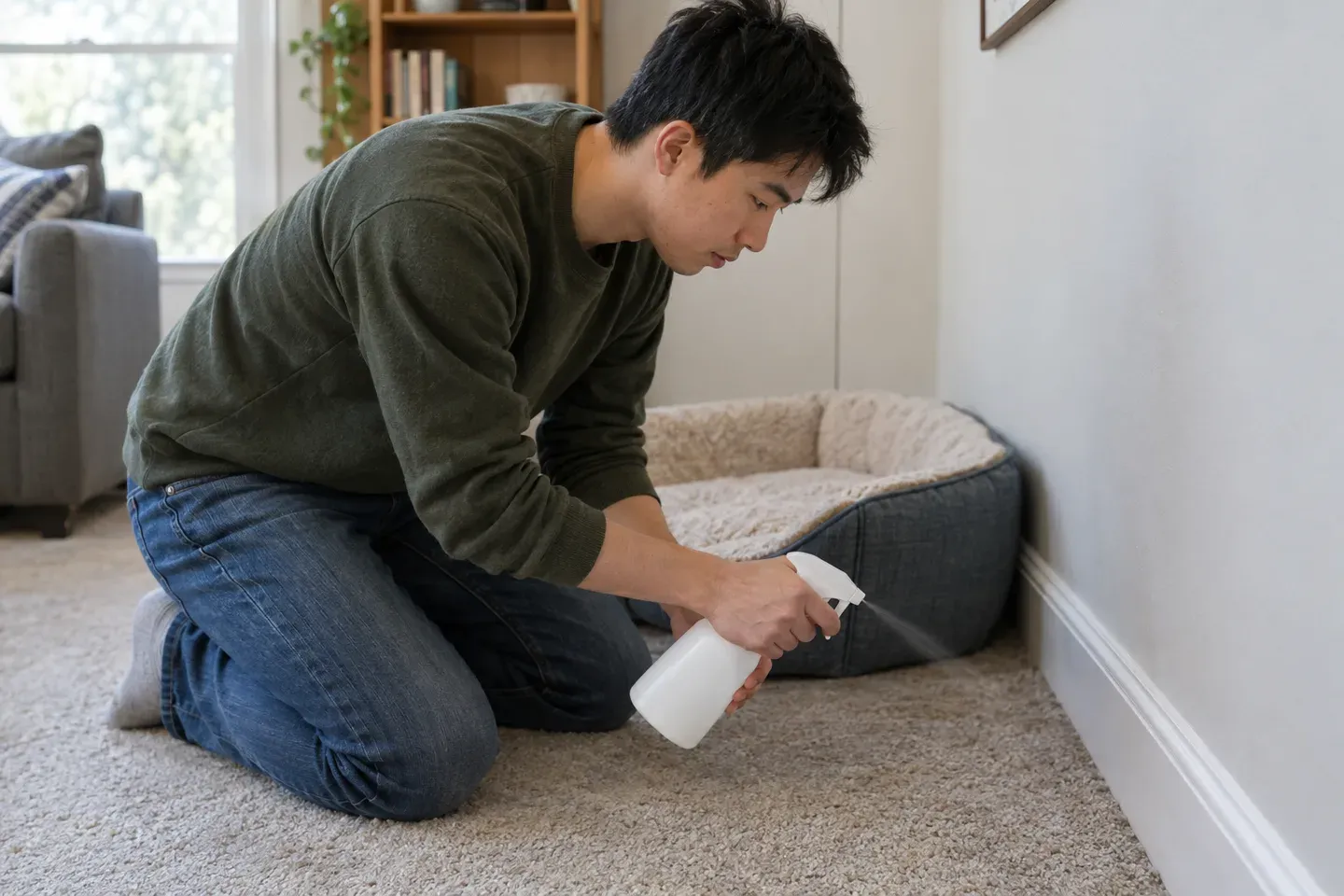
If fleas keep turning up despite on-pet treatment and vacuuming, use an indoor flea spray that contains an insect growth regulator (IGR) such as methoprene or pyriproxyfen. It stops eggs and larvae from developing (University of Kentucky). UC IPM says other insecticides often fail against the larvae.
- Where: carpets, pet sleeping areas, carpet under furniture, baseboards and windowsills (UC IPM).
- How: a hand sprayer or aerosol aimed at those spots, not a fogger (UC IPM).
- Then: keep vacuuming, and don’t spray again for at least several weeks (UC IPM).
5. Treat the yard only where pets rest
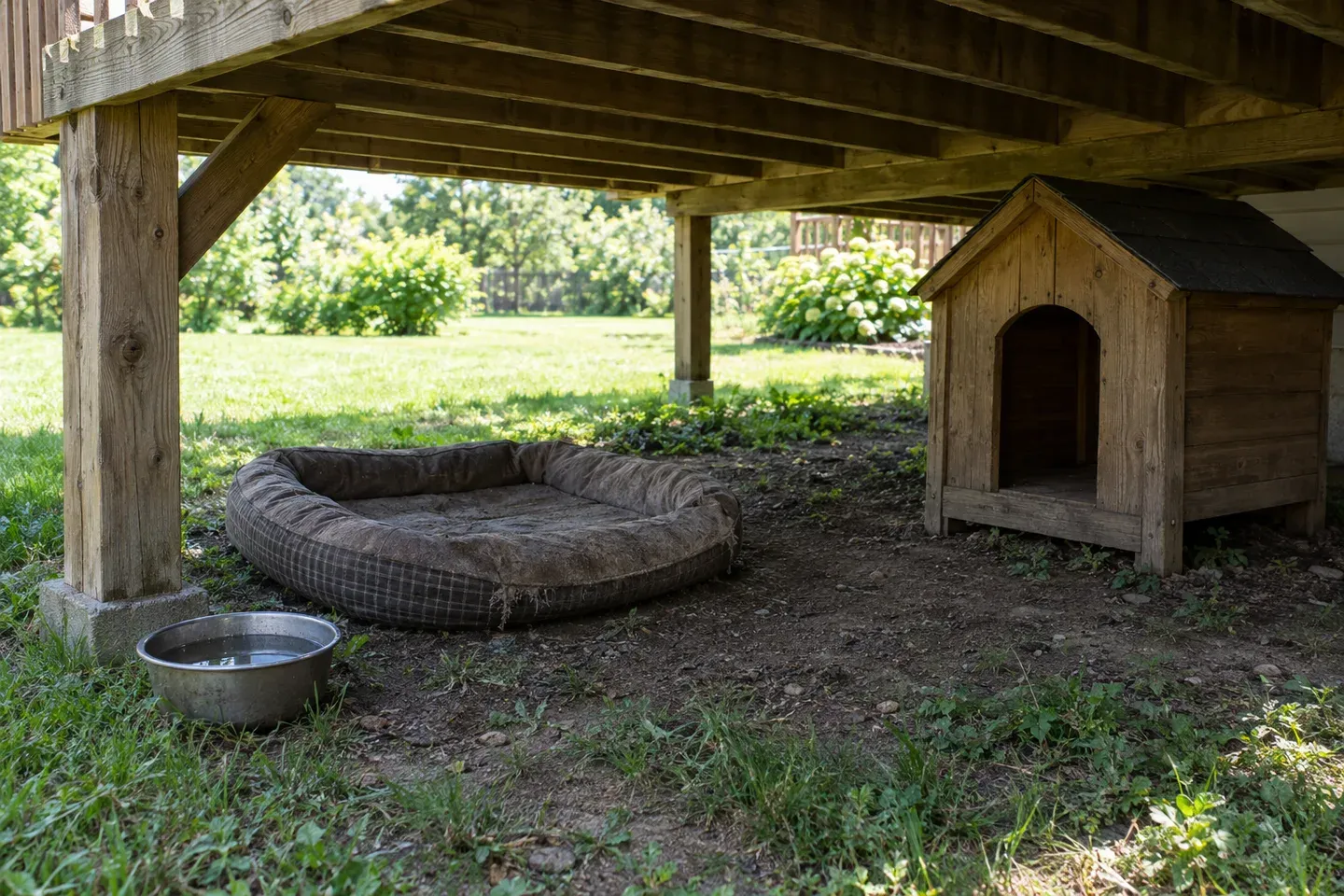
Outdoor sprays aren’t necessary unless you see a lot of adult fleas outside (UC IPM). If you do, treat where pets rest, sleep and run: the doghouse, kennel and under the deck. It’s seldom necessary to treat the whole yard or spots in full sun (University of Kentucky, UC IPM).
How Long It Takes
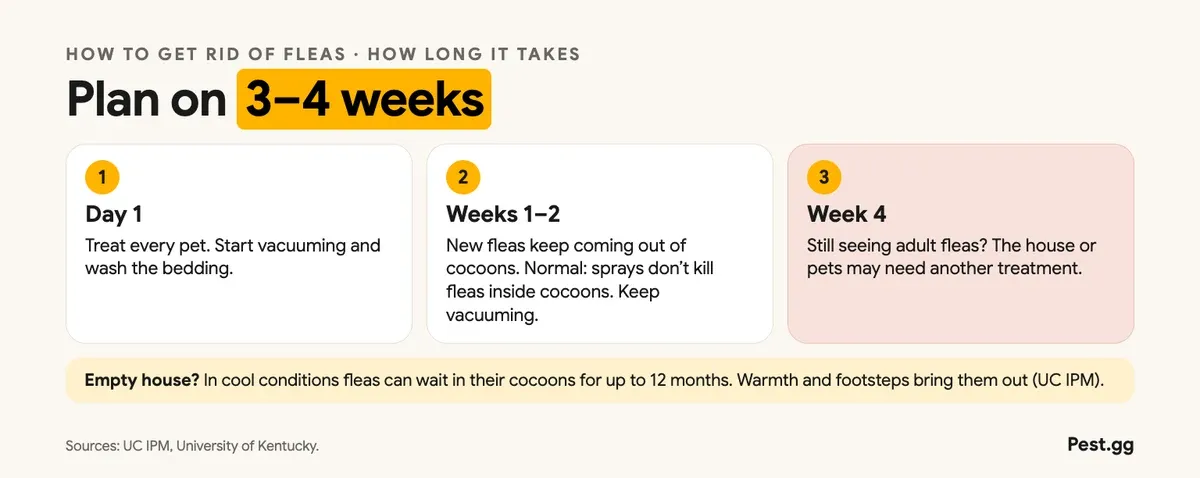
Infographic: what to expect week by week. Sources: UC IPM, University of Kentucky.
Plan on three to four weeks:
- Weeks 1–2: you’ll still see fleas. Even after treatment, new adults keep coming out of cocoons for about 2 weeks, because sprays don’t kill the pupae inside (UC IPM). This is normal. Keep vacuuming.
- Week 4: if you’re still seeing adult fleas, the University of Kentucky says the house or the pets may need another treatment.
In cool conditions, fleas can wait in their cocoons for up to 12 months. Warmth and footsteps on the carpet bring them out (UC IPM), so an empty house can suddenly have fleas when people move back in.
Do Flea Bombs Work?
Usually not. The University of Kentucky says foggers are “seldom effective against fleas” and doesn’t recommend them. UC IPM says foggers don’t give the coverage or long-term control of a spray aimed directly at carpets and pet resting spots.
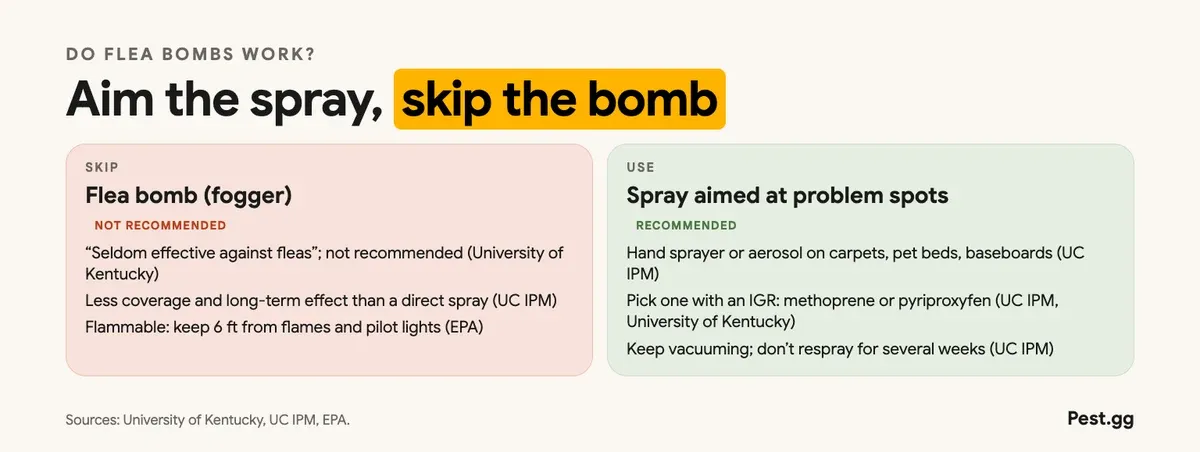
Infographic: flea bomb vs. a direct spray. Sources: University of Kentucky, UC IPM, EPA.
If you use one anyway, follow EPA’s safety rules:
- One fogger per room, never more than the label calls for.
- At least six feet from all ignition sources. Turn off pilot lights. The propellants are flammable.
- Never in closets, cabinets or under counters.
- Everyone, including pets, leaves. Stay out for the time on the label, usually 2 to 4 hours, then open doors and windows to air it out.
More on why bombs disappoint: do roach bombs work.
Diatomaceous Earth and Other Home Remedies
Diatomaceous earth is a fine powder that kills insects by drying them out. It only works while it stays dry and undisturbed (National Pesticide Information Center). Neither the UC IPM nor the University of Kentucky flea guide lists it as a treatment. Carpet you’re vacuuming every day doesn’t stay undisturbed, so it isn’t a substitute for the five steps. If you use it, follow the label: breathing the dust can irritate your nose (NPIC).
Remedies UC IPM says don’t work:
- Vitamin B1 (thiamine) supplements
- Brewer’s yeast
- Herbal flea collars
- Ultrasonic devices
Can Humans Get Fleas?
You can get bitten, but fleas prefer animals. CDC says they bite people when animals aren’t available, and the University of Kentucky says adult fleas spend most of their time on the dog or cat.
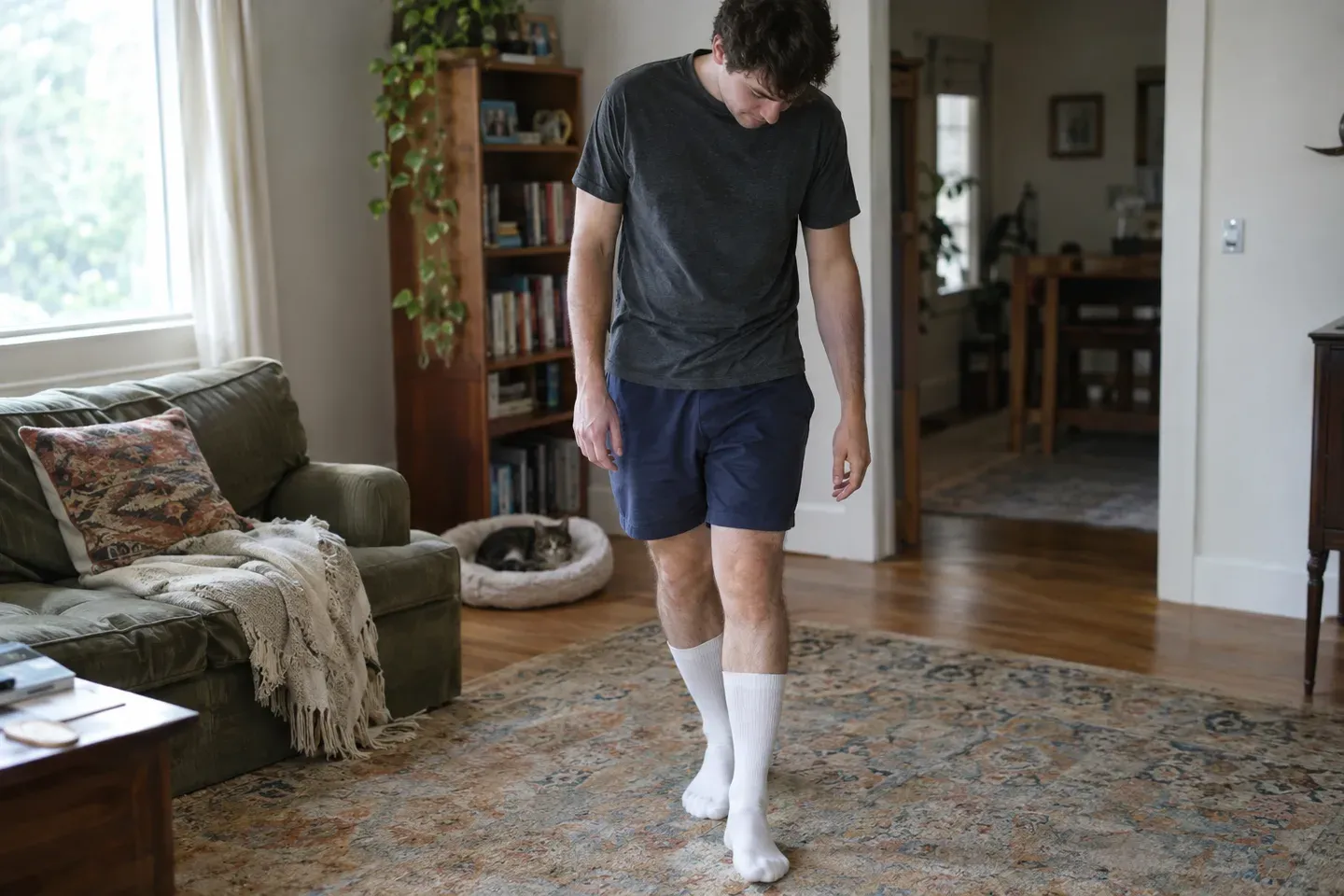
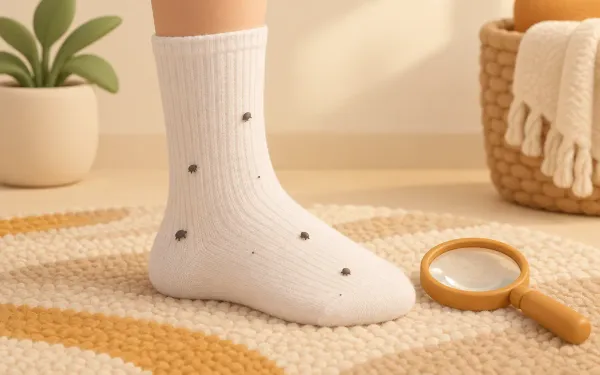
To check a room, walk through it in white socks pulled up high. Fleas show up against the white (University of Kentucky).
Flea bites mostly itch rather than hurt (MedlinePlus). UC IPM describes a small red spot with a red halo. Fleas can sometimes spread diseases such as flea-borne typhus (CDC). Not sure fleas are what’s biting? Our free bug bite identifier asks a few quick questions to narrow down which bug is likely, or compare the common bites in our guide to bug bites.
Call 911 for trouble breathing, wheezing or shortness of breath; swelling anywhere on the face or in the mouth; or throat tightness or difficulty swallowing (MedlinePlus). See a doctor if a bite shows signs of infection, such as increasing redness, swelling or pain (MedlinePlus).
Common questions
Usually, yes. The University of Kentucky says getting rid of fleas “requires treatment of pets, and oftentimes the premises.” Eggs fall off the pet, so vacuuming and washing bedding are part of every plan. A spray is only needed if fleas persist.
Wildlife is the usual source: raccoons, opossums, skunks or squirrels living in the attic, chimney or under the house (University of Kentucky). Fleas left by a previous owner’s pet can also wait in cocoons for months (UC IPM).
No flea dirt on the pet when you comb it, and no fleas on white socks after walking through the rooms where the pet sleeps. Keep up the on-pet treatment as your vet advises.
Sources and further reading · 9
- UC IPM: Fleas: adult and egg description, pet products, permethrin and amitraz on cats, vacuuming and bedding schedule, IGR sprays, foggers, yard, 2-week emergence, 12-month cocoons, remedies that don’t work.
- University of Kentucky: Flea Control and Prevention (EF602): treating pets and premises, vacuuming, vacuum bags, IGRs, foggers, yard, retreatment after 4 weeks, white socks, wildlife.
- EPA: Controlling Fleas and Ticks on Your Pet: dog products on cats, label weight, what to do after a bad reaction.
- EPA: Safety Precautions for Total Release Foggers: ignition sources, one per room, small spaces, re-entry.
- Ohio State University: Cat fleas’ journey into the vacuum is a one-way trip (2007): vacuuming kills adults, larvae and pupae. The study was partly funded by a vacuum maker.
- National Pesticide Information Center: Diatomaceous Earth: how it works, dust irritation.
- CDC: About Fleas: fleas prefer animals but bite people, flea-borne diseases.
- University of Minnesota: Clinical Veterinary Diagnostic Laboratory, Fleas: flea dirt test, where to check.
- MedlinePlus: Insect Bites and Stings: flea bites itch, when to call 911, signs of infection.