Bugs That Look Like Fleas (and How to Tell in 1 Minute)
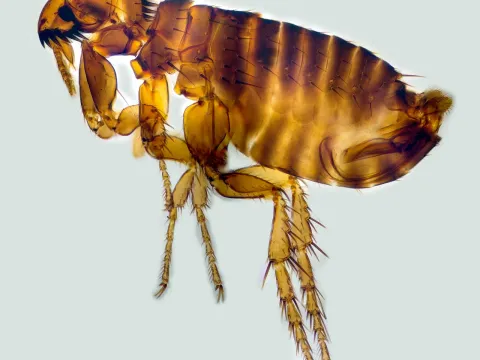
A flea is a tiny, reddish-brown insect, no longer than 1/8 inch, flattened from side to side so it looks like it walks on its edge (UC IPM). It jumps, and it lives on pets.
Difficulty: easy. Call a pro if you confirm fleas and they’re still biting four weeks after treating every pet and vacuuming, or you have no pets and suspect wildlife (raccoons, opossums, bats) living in the attic or under the house.
Several other small bugs get mistaken for fleas. Some jump too. Others are the right size and color but don’t jump at all. Start with one question: does it jump? Then check where you found it. The chart below sorts seven look-alikes this way.
In this guide:
- The 1-Minute Test: Does It Jump?
- Bugs That Jump Like Fleas
- Bugs That Look Like Fleas but Don’t Jump
- How to Confirm It’s Fleas
- Common Questions
The 1-Minute Test: Does It Jump?
Put the bug on a white surface, or catch it on tape, and look with a magnifier or your phone’s zoom. Then take a photo and identify it from a photo with our free bug identifier.
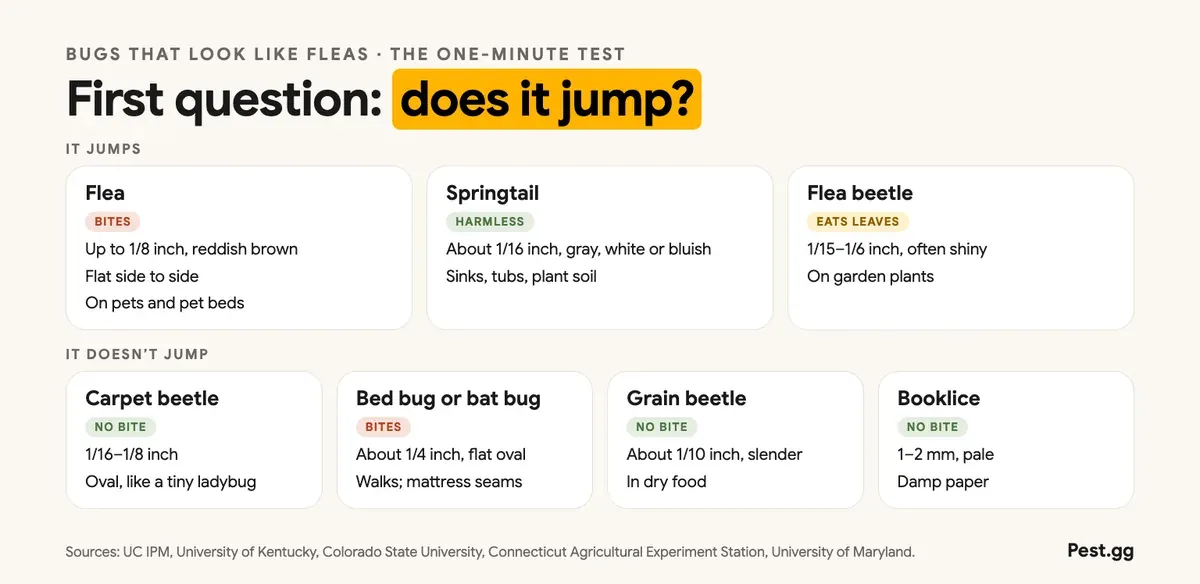
Infographic: the jump test, then where you found it. Sources: UC IPM, University of Kentucky, Colorado State University, Connecticut Agricultural Experiment Station.
| Bug | Jumps? | Size | Where you find it | Bites people? |
|---|---|---|---|---|
| Flea | Yes | Up to 1/8 in (UC IPM) | On pets, pet beds, carpet | Yes (UC IPM) |
| Springtail | Yes | About 1/16 in (UC IPM) | Sinks, tubs, damp basements, plant soil | No (UC IPM) |
| Flea beetle | Yes | 1/15–1/6 in (Colorado State) | Garden plants, vegetables | Feeds on plants |
| Carpet beetle (adult) | No | 1/16–1/8 in (Univ. of Kentucky) | Rug edges, closets | No; larvae eat fabric |
| Bed bug or bat bug | No | About 1/4 in (CAES) | Mattress seams; bat bugs near bat roosts | Yes (CAES, Colorado State) |
| Sawtoothed grain beetle | No | About 1/10 in (UC IPM) | Flour, cereal, dry food | No; eats stored food |
| Booklice | No | 1–2 mm (Univ. of Maryland) | Damp paper, boxes, windowsills | No; eats mold |
Bugs That Jump Like Fleas
Fleas. Reddish brown, wingless and flat from side to side (UC IPM). The University of Kentucky says they can jump up to about 6 inches straight up, enough to land on a pet or on your shoes and pant legs. Adults spend most of their time on the pet, not in the carpet. The common one on both cats and dogs is the cat flea (UC IPM). For close-up photos of fleas, eggs and flea dirt, see what do fleas look like.
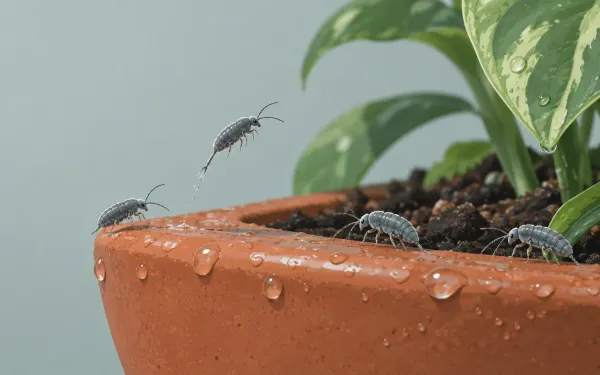
Springtails. About 1/16 inch, whitish, bluish or dark gray to black (UC IPM). They jump with a spring-like tail folded under the body, and UC IPM says that’s why people confuse them with fleas. They gather in damp places: sinks, bathtubs, houseplant soil. They don’t bite people or pets (UC IPM). Dry the spot out; see how to get rid of springtails.
Flea beetles. Small beetles with thick hind legs for jumping, 1/15 to 1/6 inch, brown, green or metallic blue to black (Colorado State University). They live on plants, especially tomatoes, potatoes, cabbage and broccoli, and chew small holes in leaves. A tiny beetle that hops off your tomato plant is likely a flea beetle.
Bugs That Look Like Fleas but Don’t Jump
Carpet beetles. Adults are small, 1/16 to 1/8 inch, oval and black or mottled white, brown, yellow and orange (University of Kentucky). They are often found around the edges of rugs (University of Kentucky). Their hairy larvae eat wool and other natural fibers. See carpet beetles.
Bed bugs and bat bugs. Flat, broadly oval and about 1/4 inch, the size of an apple seed. They walk; they don’t jump or fly (Connecticut Agricultural Experiment Station). Bat bugs look almost the same as bed bugs. Colorado State says they live near bat roosts in attics, chimneys and walls, and can bite people when the bats leave. See bugs that look like bed bugs.
Pantry beetles. The sawtoothed grain beetle is slender, flat and brown, about 1/10 inch, with tooth-like points along its sides (UC IPM). It lives in flour, cereal and other dry food, not on pets. See tiny brown bugs in the house.
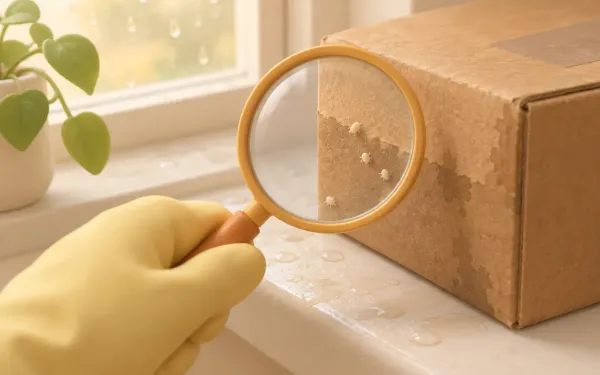
Booklice. Pale and soft, 1 to 2 mm, on damp paper, boxes and windowsills (University of Maryland). They eat mold and don’t bite.
For other small dark bugs, see small black bugs in the house.
 BitesCat fleaUp to 1/8 inch; flat side to side; jumps.
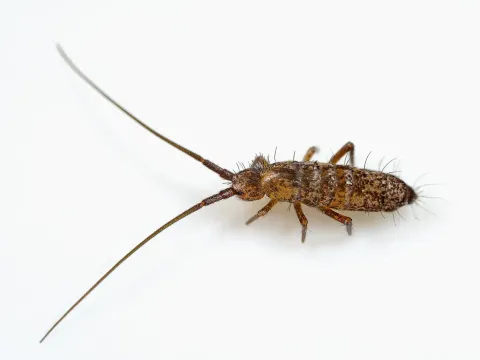 HarmlessSpringtailAbout 1/16 inch; jumps; damp spots.
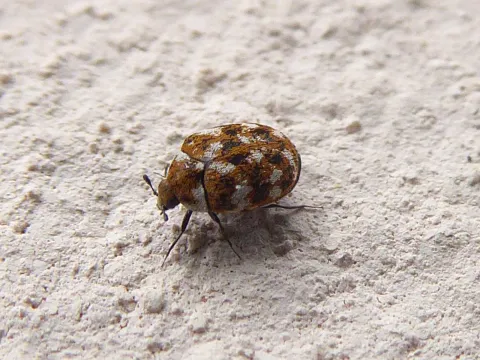 Carpet beetle1/16–1/8 inch; oval; on rugs.
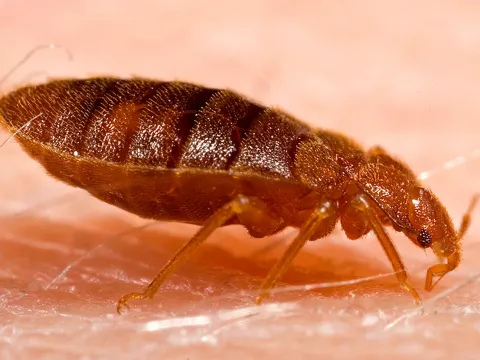 BitesBed bugAbout 1/4 inch; flat oval; walks.
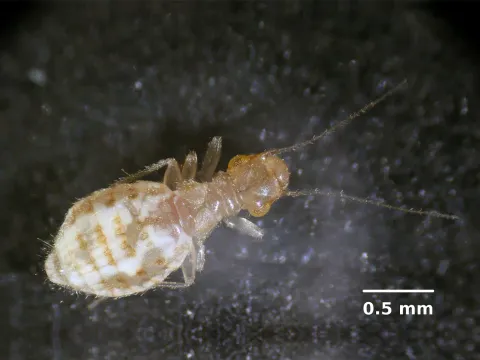 HarmlessBooklice1–2 mm; pale; damp paper.
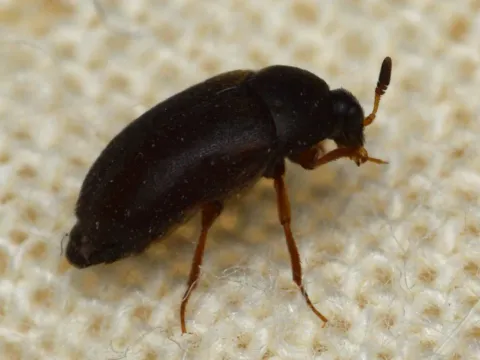 Black carpet beetleSmall, shiny, black; oval.
How to Confirm It’s Fleas
Three quick checks:
- Comb your pet with a flea comb over white paper. Look at the base of the tail, neck, belly and armpits (University of Minnesota veterinary lab).
- Do the wet paper towel test. Flea dirt is flea droppings: dark, pepper-like specks of digested blood in the fur (University of Kentucky). Put the specks on a wet paper towel. If they dissolve into a reddish-brown color, it’s likely flea dirt (University of Minnesota veterinary lab).
- Walk in white socks. The University of Kentucky suggests walking through the house or yard in white socks pulled up high. Fleas show up against the white.
No pets? Fleas can still come from wildlife. The University of Kentucky says raccoons, opossums, skunks or squirrels living in the attic, chimney or under the house are often the source.
Confirmed fleas? Treat every pet first, with a product your vet recommends, then vacuum often. The University of Kentucky says you may keep seeing some fleas for a few weeks as new ones hatch.
Common questions
Most often springtails, if they’re in a damp spot like a sink, tub or plant pot. They don’t bite (UC IPM). If they’re on garden plants, they’re likely flea beetles (Colorado State).
No. UC IPM says springtails don’t bite people or pets and don’t spread disease.
Yes, adults are about the same size. But carpet beetles are oval, like a tiny ladybug, and are often around rug edges. Fleas are flat from side to side and found on pets.
Bed bugs and bat bugs bite people, and young bed bugs are smaller than adults, but they walk instead of jumping (Connecticut Agricultural Experiment Station, Colorado State). If you’re getting bitten at night in bed, check the mattress seams.
Sources and further reading · 10
- UC IPM: Fleas: size, shape, cat flea is the common flea on cats and dogs.
- University of Kentucky: Fleas (EF602): jumping height, adults stay on the pet, flea feces, white socks, wildlife sources, fleas after treatment.
- UC IPM: Springtails: size, colors, jumping, confused with fleas, don’t bite.
- Colorado State University: Flea Beetles: size, colors, jumping legs, host plants.
- Colorado State University: Bed Bug Look-Alikes: bat bugs, where they live, biting people.
- Connecticut Agricultural Experiment Station: Bed Bugs and Look-Alikes (PDF): bed bug size and shape, they walk and don’t jump, fleas jump.
- University of Kentucky: Carpet Beetles (EF601): adult size and colors.
- UC IPM: Pantry Pests: sawtoothed grain beetle.
- University of Maryland Extension: Booklice: size and habits.
- University of Minnesota: Clinical Veterinary Diagnostic Laboratory, Fleas: where to check, wet paper towel test.