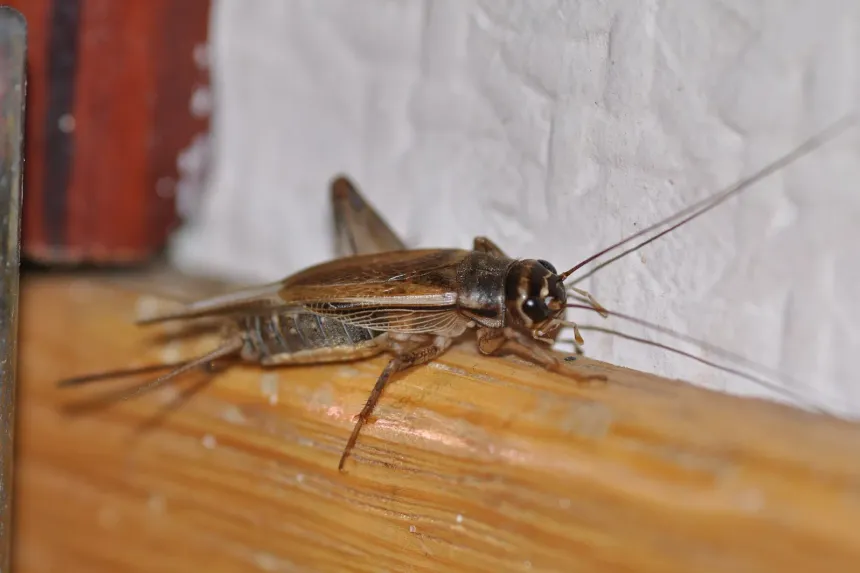
- Scientific name
- Acheta domesticus
- Also called
- cricket in the house
- Size
- About 3/4–1 in
- Color
- Light yellowish brown with three dark bands across the head
- Found in
- Basements, kitchens, living areas, garages, around lights
- Harmful?
- Can chew fabric and paper; no health risk
- Active
- Late summer and fall; chirps at night
House crickets are the chirping crickets that come indoors in late summer and fall, drawn by lights and warmth. They don’t bite or carry disease, but large numbers can chew holes in clothing and paper, and the chirping keeps people up. The one thing to do: seal gaps around doors and the foundation and switch outdoor lights to yellow bulbs.
This page covers how to identify a house cricket, tell it from a camel cricket and keep it out. It rests on UC IPM guidance.
How to Identify a House Cricket: Three Bands on the Head
- About 3/4 to 1 inch, light yellowish brown.
- Three dark bands across the top of the head.
- Long antennae and large hind legs for jumping.
- Wings folded flat over the back; females have a long, thin egg-laying tube at the tail.
Only males chirp, by rubbing their wings together, and they do it at night. Crickets are nocturnal and hide by day (UC IPM).
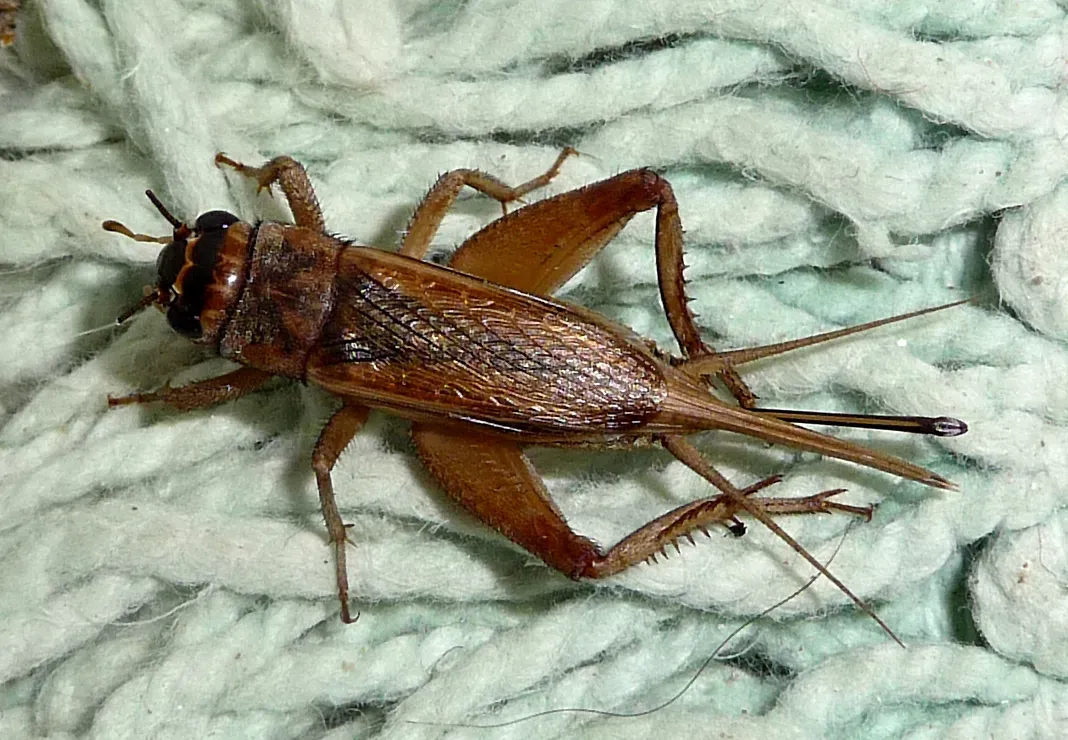
A house cricket on a rug. Indoors they hide in fabric and clutter. Photo: gailhampshire (CC BY 2.0), via Wikimedia Commons.
House Cricket vs. Camel Cricket: Wings and Chirps
| Cricket | How it differs | How to tell |
|---|---|---|
| House cricket | Flat back, wings, light yellowish brown | Chirps at night; three bands on the head |
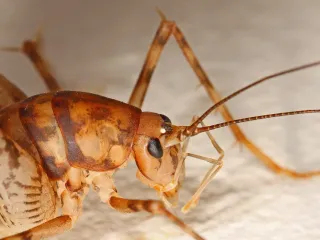
| Camel cricket | Humpbacked, wingless, mottled brown | Silent; damp basements and crawl spaces |
| Field cricket | Shiny black or brown, winged | Chirps; usually outdoors |
Where You’ll Find Them: Near Lights and Warmth
- Around lights, doors and windows at night
- Basements, kitchens and warm rooms near the furnace or water heater
- Garages and window wells
Outdoors, crickets move in from weedy areas as they dry up, and large numbers can wipe out rows of garden seedlings in a day or two (UC IPM).
Are House Crickets Harmful? Mostly Noisy
They don’t bite or carry disease. Indoors, large numbers can chew holes in clothing, especially soiled cotton, wool and silk, and damage paper, as UC IPM describes. Ragged holes in soiled spots, with crickets nearby, are one of the patterns on holes in clothes. The chirping is the main complaint.
How to Confirm It’s a House Cricket
- Listen at night for chirping near a door, window or warm room.
- Look for the three dark bands across the head.
- Check for wings: a humpbacked, wingless cricket in the basement is a camel cricket.
What to Do: Seal, Dim the Lights, Trap
Seal gaps around doors, windows and the foundation, fit door sweeps, switch outdoor lights to yellow bulbs, and clear weeds and debris next to the house. Sticky traps along baseboards catch the ones inside. How to get rid of crickets has the step-by-step plan. For other pests, browse all pest guides.
Often confused with
Sources
Last reviewed Oct 4, 2026.