Small Black Bugs in House: 10 Common Ones and How to Tell
Small black bugs in the house are usually one of five things: carpet beetles on windowsills, small ants on counters, pantry beetles in dry food, springtails in damp spots, or fleas around pets. Where you found it and how it moves (crawls, jumps or flies) narrows it down in a minute, and most of them need cleanup, not spray.
Difficulty: easy. Call a pro if you confirm bed bugs (a live bug, shed skins or dark spots in mattress seams), or fleas keep biting after a month of treating pets and vacuuming. Renters should tell the landlord in writing first.
This sorter rests on university extension fact sheets and the Pest Library entries built from them. For anything bigger or more colorful, start with common house bugs.
In this guide:
- Small Black Bugs in House: Start With Where You Found It
- Tiny Black Beetles on Windowsills and Carpets
- Little Black Bugs in the Kitchen and Pantry
- Tiny Black Bugs That Jump
- Tiny Black Bugs in the Bathroom
- Tiny Black Bugs That Look Like Poppy Seeds
- Small Black Bugs That Bite
- Tiny Black Flying Bugs in the House
- Common Questions
Small Black Bugs in House: Start With Where You Found It
“Small black bug” covers dozens of insects, but only a handful live indoors. The room is the best first clue:
| Where you found it | Most likely |
|---|---|
| Windowsill, closet, under a rug | Black or varied carpet beetle |
| Moving specks on a sill that smear red | Clover mites |
| Kitchen counter, in a line | Odorous house ant or pavement ant |
| Inside flour, rice, spices or pet food | Rice weevil, flour beetle or drugstore beetle |
| Sink, tub, damp basement, houseplant pot | Springtails |
| On the pet, in the pet bed, on your legs | Cat fleas |
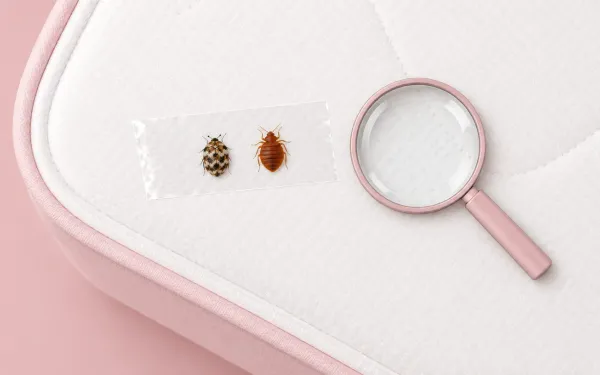
| Mattress seams, headboard | Bed bugs (dark reddish brown, not true black) |
| Flying around plants, drains or trash | Fungus gnats, drain flies or phorid flies |
Most are 1/16 to 1/4 inch. To pin yours down in five minutes:
- Catch one on clear tape and stick it to white paper; compare its size with a grain of rice.
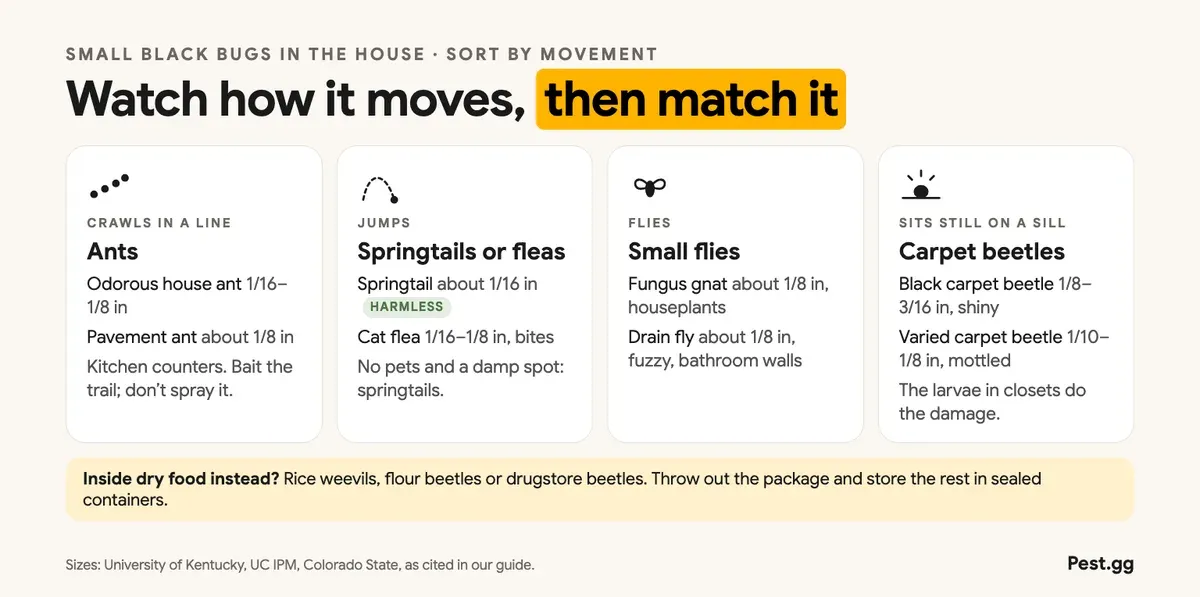
- Note how it moved: in a line (ants), jumped (springtails or fleas), flew (gnats or flies) or sat still on a sill (carpet beetles).
- Look under a phone flashlight. Many “black” bugs are really dark reddish brown up close, and a snout, spots or stripes narrow it down.
- Check the nearest source (the dry food, rug edge, plant soil or mattress seam), then match it in the Pest Library or with our free bug identifier.
Tiny Black Beetles on Windowsills and Carpets
The single most common answer to “little black beetles in house” is a carpet beetle. Two kinds dominate:
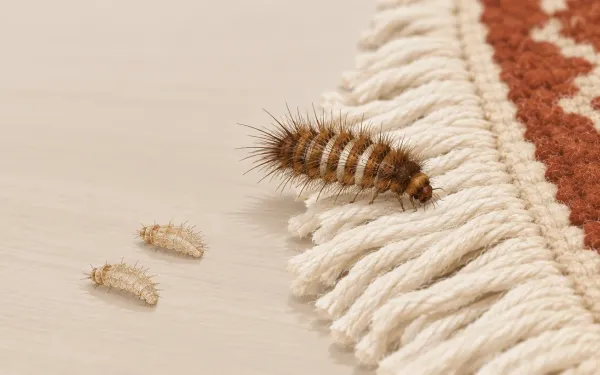
- Black carpet beetle: an oval, shiny black or very dark brown adult about 1/8 to 3/16 inch, with brownish legs (University of Kentucky). Carpet beetle larvae are the real problem: smooth, carrot-shaped, golden to dark brown, up to about 1/2 inch, with a long tuft of hair at the tail.
- Varied carpet beetle: rounder and smaller, about 1/10 to 1/8 inch, mottled white, brown and yellow. From a distance it reads as a dark speck; up close you see the pattern.
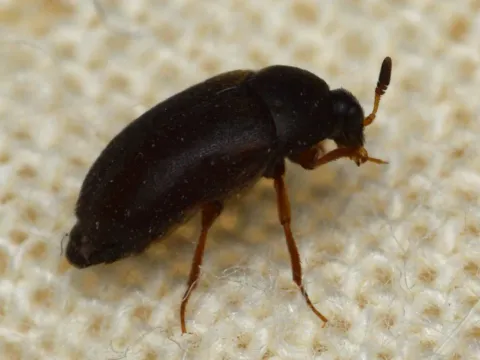 Black carpet beetleShiny, oval; windowsills.
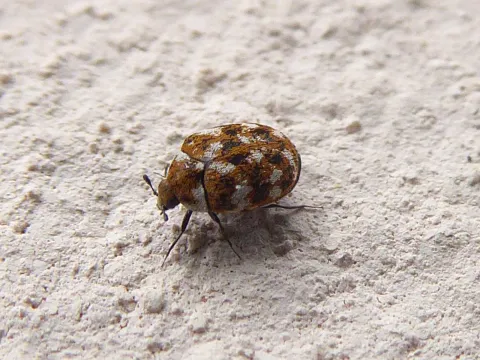 Varied carpet beetleRound, mottled.
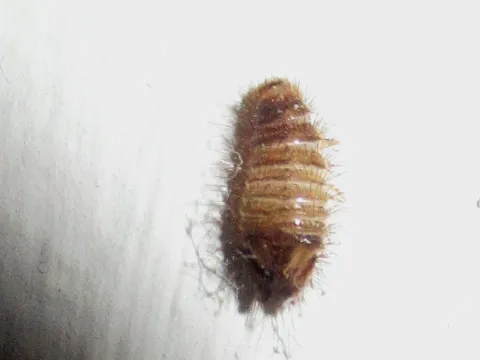 Carpet beetle larvaHairy; does the damage.
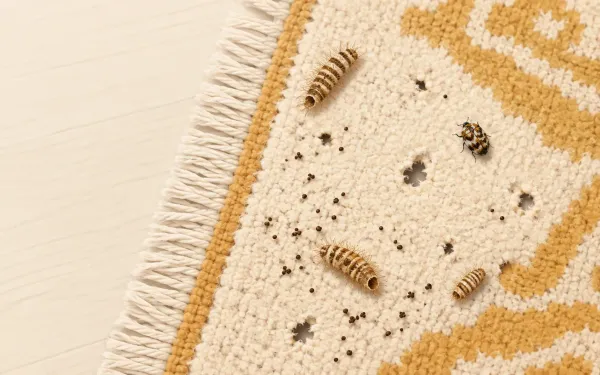
Adults feed on pollen outdoors and turn up at windows in spring, so finding a few on a sill in spring is normal. What matters is the larvae and their shed skins in closets, under rugs and along baseboards, because the larvae eat wool, fur, feathers and, in the black carpet beetle’s case, flour and pet food too (Colorado State).
Two more windowsill specks that aren’t beetles:
- Clover mites: very small and reddish brown, they look like moving dark specks along sills and thresholds in early spring and sometimes fall. Crushed, they leave a red-brown stain, so wipe them up gently with a soapy rag or use the vacuum’s crevice tool (University of Kentucky). They don’t bite people and won’t breed indoors (Penn State).
- Thrips: about 1/16 inch, slender, yellowish to black, with narrow wings folded over the back. Indoors they feed on houseplants, and they’ve been reported to give prick-like bites that may itch (University of Minnesota).
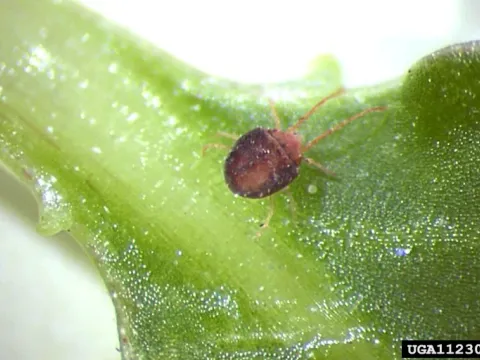 HarmlessClover miteSmears red if crushed.
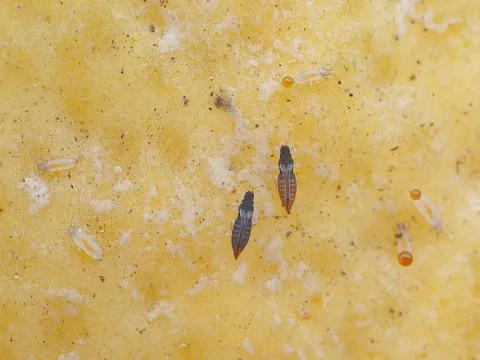 ThripsSlender; near houseplants.
What to do about carpet beetles: vacuum edges, under furniture and closet floors, then wash, freeze or throw out anything they’ve eaten into. The full plan is in how to get rid of carpet beetles, and signs of carpet beetles shows what the damage looks like.
Little Black Bugs in the Kitchen and Pantry
Small black ants on the counter
A moving line of tiny dark insects is almost always ants. Two common kinds:
- Odorous house ant: 1/16 to 1/8 inch, dark brown to black, fast and erratic. Crush one: it smells like rotten coconut (University of Kentucky).
- Pavement ant: about 1/8 inch, dark with lighter legs, with fine grooves on the head you can see with a magnifier. Small piles of sand at slab cracks give it away.
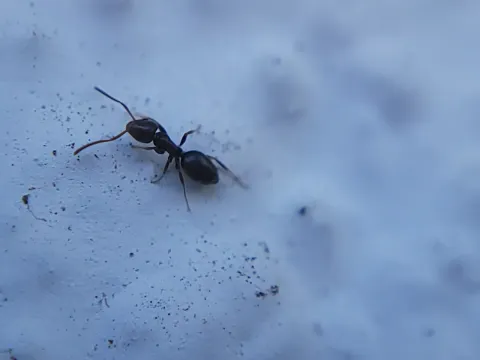
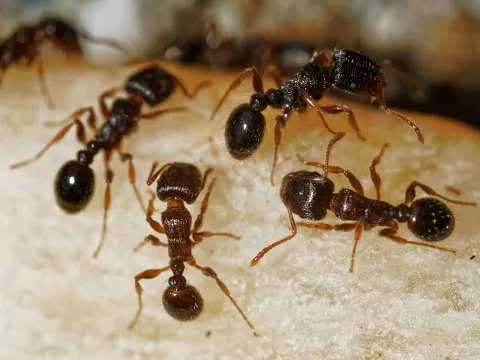
Kentucky’s advice for both is to bait the trails rather than spray them, so workers carry the bait back to the colony.
Black beetles in flour, rice and spices
If the bugs are inside a dry food package, it’s a pantry beetle:
- Rice weevil: about 1/8 inch, reddish brown to nearly black, with a long snout and four faint orange spots. It lives in whole grains, rice and popcorn (University of Kentucky).
- Red flour beetle and confused flour beetle: shiny reddish-brown, flat, about 1/7 inch, no snout, in flour and mixes (UC IPM).
- Drugstore beetle: about 1/8 inch, reddish brown, head tucked under, in spices, pet food and almost any dry food (UC IPM).
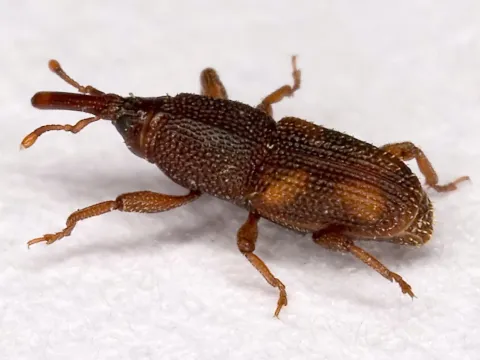 Rice weevilLong snout; in grains.
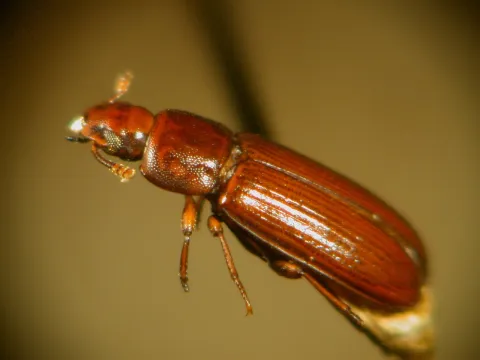 Red flour beetleFlat, no snout; in flour.
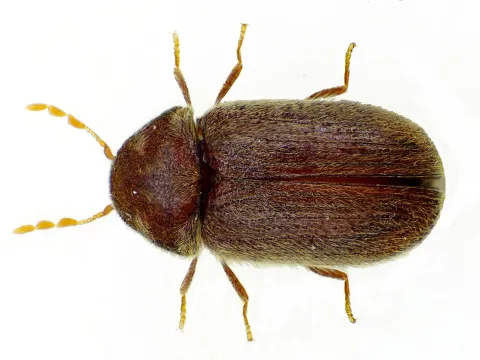 Drugstore beetleHead tucked; spices, pet food.
UC IPM’s fix is the same for all three: throw out food that shows any sign of infestation, take it out of the house, and keep the rest in containers with tight-fitting lids, not plastic bags. Weevils have their own guide: how to get rid of weevils.
One more pantry find: small, globe-shaped beetles with a spider-like look in old, forgotten food may be spider beetles. Washington State calls them among the most common beetles in moldy, old food and recommends sealed containers, not insecticides.
Tiny Black Bugs That Jump
Jumping narrows it to two:
- Springtails: about 1/16 inch, gray, black or bluish, soft. They flick into the air with a forked tail and gather in damp spots: tubs, sinks, window sills, basements and houseplant soil (UC IPM).
- Cat fleas: about 1/16 to 1/8 inch, dark reddish brown, flattened side to side, jump far, and bite. They’re tied to pets, pet bedding and carpets.
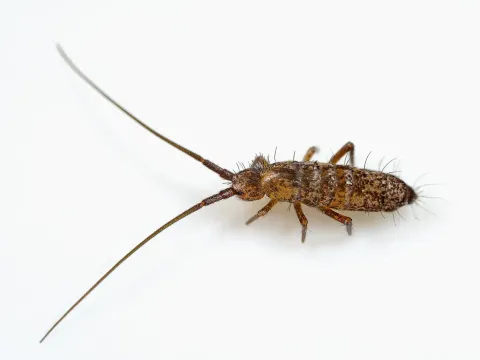
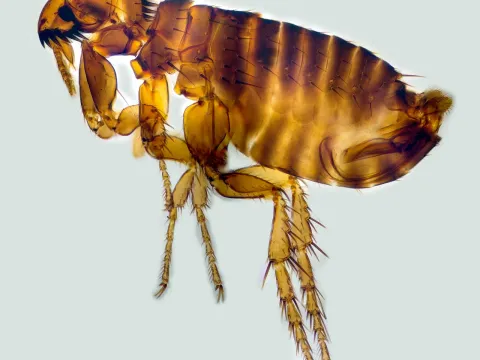
University of Minnesota Extension’s quick test: fleas are hard to crush, springtails squash easily. More mix-ups are sorted in bugs that look like fleas. Location settles most cases: springtails in the bathroom with no pets means moisture, not fleas.
Springtails don’t bite or damage anything; drying out the damp spot is the cure, step by step in how to get rid of springtails. Fleas mean treating every pet with a vet-recommended product and vacuuming for several months (UC IPM).
Tiny Black Bugs in the Bathroom
Tiny black bugs in the bathroom are usually springtails, drain flies or ants, all drawn by moisture:
- Springtails, if they jump.
- Drain flies, if they’re fuzzy, gray to tan, about 1/8 inch, sitting on the wall with wings folded like a roof (University of Kentucky). See how to get rid of drain flies.
- Ants on a trail to the sink or tub.
Pale, soft bugs in the same spots are more likely booklice or silverfish; see tiny white bugs. Any of these in large numbers points to a leak, a damp wall or poor ventilation, which is worth fixing for its own sake.
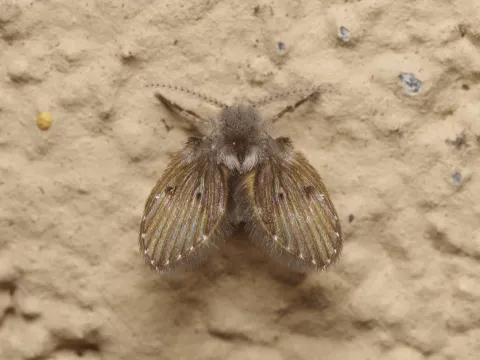 HarmlessDrain flyFuzzy; rests on walls.
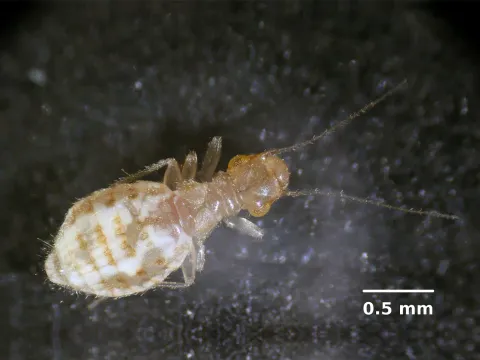 BooklousePale, soft; damp spots.
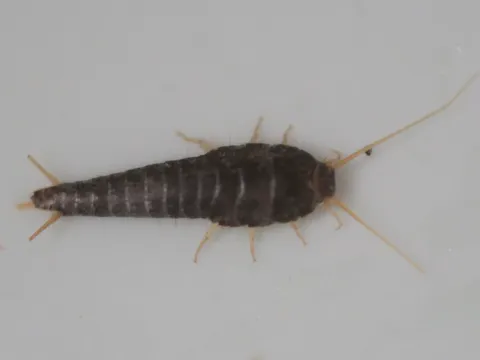 SilverfishSilvery; three tails.
Tiny Black Bugs That Look Like Poppy Seeds
“Like poppy seeds” is one of the most searched descriptions, and it fits several very different things:
- Bed bugs: adults are flat, oval and about 3/16 inch, like an apple seed, reddish brown (EPA). Younger nymphs are smaller and pale until they feed. In mattress seams, the “poppy seeds” may also be bed bug fecal spots: dark dots that bleed into the fabric like a marker would (EPA).
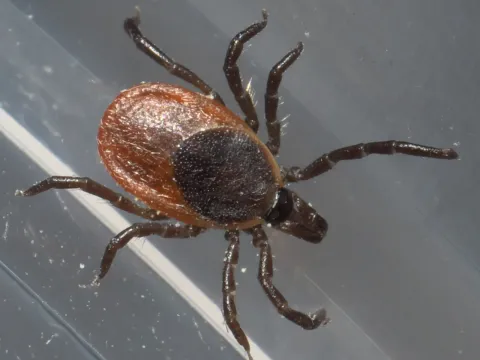
- Blacklegged tick nymphs: about the size of a poppy seed (CDC), found attached to skin after time outdoors, not crawling around the kitchen. If you find one attached, follow the CDC’s tick removal steps.
- Flea dirt: black specks in pet fur that turn reddish on a wet paper towel, which is digested blood (UC IPM).
- Carpet beetle adults on a sill.
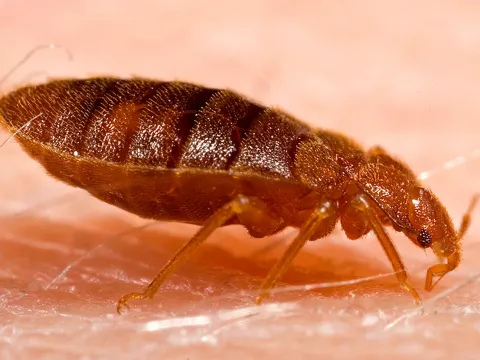
Don’t decide on bed bugs from bites alone; EPA calls bites “a poor indicator” because they look like other insect bites, rashes or hives. Look for the bug itself, its shed skins or the spotting. Carpet beetle vs bed bug covers the most common mix-up in detail.
Small Black Bugs That Bite
Of the common indoor black bugs, only a few bite people:
| Bug | What gives it away |
|---|---|
| Cat flea | Bites around ankles; pets scratching; flea dirt |
| Bed bug | Bites after sleeping; spots and skins in seams |
| Thrips | Occasional prick-like bites near houseplants |
Ants, carpet beetles, weevils, flour beetles and springtails don’t feed on people. Varied carpet beetle larvae have hairs that can irritate skin, though, and an itchy rash near infested bedding can be mistaken for bites.
Not sure what bit you? Our free bug bite identifier asks a few quick questions about the bites and where you were, and tells you which pests fit and when to see a doctor.
Tiny Black Flying Bugs in the House
Small black flying bugs indoors are almost always small flies. Getting rid of gnats sorts them in detail; the short version:
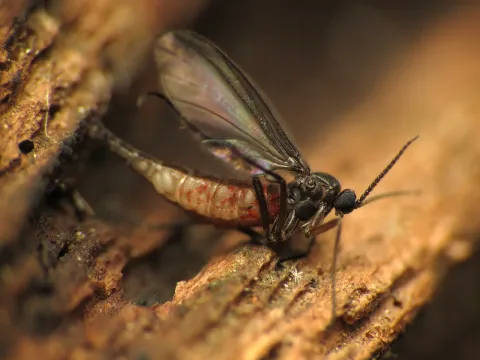
- Around houseplants: fungus gnats, about 1/8 inch, dark gray to black (UC IPM). Let the topsoil dry between waterings; see how to get rid of fungus gnats.
- On bathroom walls: drain flies (above).
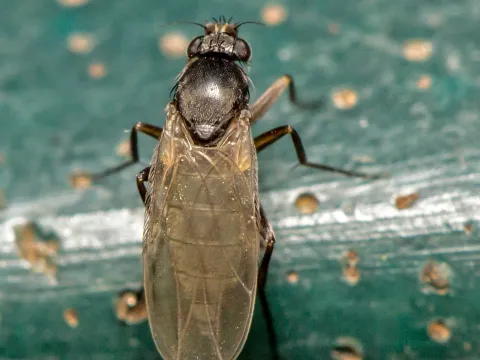
- Near trash or a floor drain: phorid flies, tan to dark brown (University of Maryland).
Common questions
Not quite. EPA describes adult bed bugs as reddish brown and about the size of an apple seed, and the young ones are pale until they feed. They can look black in dim light, so check under a flashlight and look for shed skins and dark spots in mattress seams.
Fleas look dark from a distance but are dark reddish brown and flattened side to side (UC IPM). They jump far and live around pets; black specks in your pet’s fur that turn red on a damp paper towel are flea dirt.
Most sudden appearances have a simple cause: a forgotten food package, a damp spot, a pet bringing in fleas, or carpet beetles flying in through windows in spring. Find that source first; spraying the bugs you see won’t fix it.
Sources and further reading · 9
- University of Kentucky Entomology: Carpet Beetles (EF601), Ant Control for Householders (EF619), Stored Product Pests in the Pantry (EF612), Drain Flies (EF615) and Springtails (EF420).
- UC IPM: Carpet Beetles, Pantry Pests, Springtails, Fleas and Fungus Gnats.
- University of Minnesota Extension: Springtails and Thrips (indoor insects).
- University of Kentucky: Clover Mites (EF627); Penn State Extension: Clover Mites.
- Colorado State University Extension: Dermestid Beetles (Carpet Beetles).
- Washington State University PestSense: Spider Beetle.
- University of Maryland Extension: Phorid Fly.
- EPA: Bed Bugs: Appearance and Life Cycle and How to Find Bed Bugs.
- CDC: What to Do After a Tick Bite and About Lyme Disease.