How to Get Rid of Springtails in Your House for Good
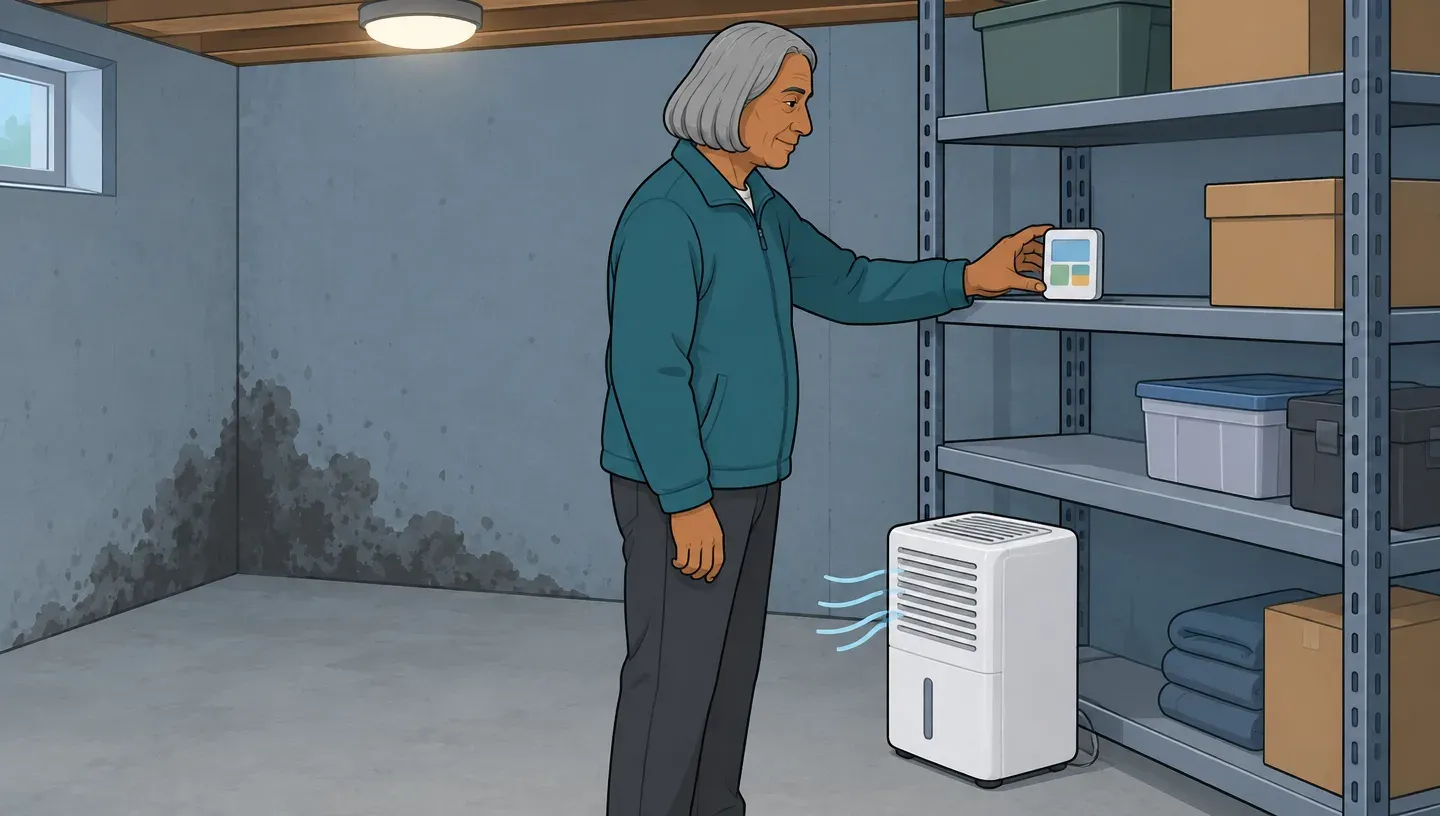
Illustration: a small humidity meter on a basement shelf, a dehumidifier running below it and a damp patch at the base of the wall.
To get rid of springtails, remove the moisture they need. Find the leak, drip or damp spot, dry it out with a fan or dehumidifier, and keep indoor humidity under 60%. Vacuum or rinse away the springtails you see. Springtails that can’t find moisture soon die, so it has worked when no new ones appear.
Saw springtails tonight? Rinse the ones in the sink or tub down the drain and vacuum the rest. Wipe up standing water, run the bathroom fan and look under the sink for a drip. No spray needed. A migration usually lasts less than a week; if new ones keep appearing after a week of drying out, go to Step 1.
Cost: about $15 in supplies. Difficulty: moderate. Call a pro if you can’t find or reach the source of the moisture, such as a hidden leak inside a wall, a wet crawl space or water pooling against the foundation.
This guide covers springtails in sinks, tubs, basements, windowsills and houseplant soil. It won’t sell you a spray: sprays are often no better than a vacuum, and while the damp spot stays wet, new springtails keep coming in. The honest limit is that a leak inside a wall or under the floor is a plumber’s job.
What Works and What Doesn’t Against Springtails
| Method | Works? | Cost | Main limitation |
|---|---|---|---|
| Finding and fixing the leak or damp spot | Yes, the core fix | Repair cost varies | Hidden leaks need a plumber |
| Fans and humidity under 60% | Yes | $9.99 hygrometer | Dehumidifier only if it stays high |
| Rinsing and vacuuming | Yes, for the ones you see | Free | New ones arrive while it’s damp |
| Mulch back, downspouts out, gaps sealed | Yes, stops migrations | $5.29 caulk | Outdoor work; renters ask the landlord |
| “Springtail killer” sprays | Temporary at best | — | Resistant; Minnesota says don’t use indoors |
| Diatomaceous earth | Little in damp spots | — | Works only while dry |
Are They Springtails or Fleas?
Springtails are tiny, wingless and about 1/16 inch long. Most are gray, brown or black, though some species are white. They can’t fly, but a forked “tail” folded under the body flings them several inches into the air, which is why people mistake them for fleas.
The quick test, per University of Minnesota Extension: fleas are flattened side to side and hard to crush. Springtails have soft, rounded bodies and squash easily. Location is the other clue. A springtail infestation shows up in sinks, tubs, floor drains, windowsills, damp basements and houseplant soil, not on your pet.
Are Springtails Harmful?
No. Springtails don’t bite or sting people or pets, don’t spread disease and don’t damage food, clothes or furniture. They’re a nuisance, and a sign that something in the house is too wet. The same damp spot can grow mold, which is one more reason to dry it out.
The main fixes, rinsing, vacuuming and drying, use no chemicals, so they’re fine to do with kids and pets in the house.
Why Are Springtails in My House?
Springtails live in damp soil, mulch, leaf litter and rotting wood outside, feeding on fungi, mold and decaying plants. When that soil dries out, they go looking for moisture, and a shaded house is it. They get in under doors, through torn screens, along pipes and vents, or in potted plants.
That’s why they often arrive in a rush, typically after a wet spring is followed by a hot, dry stretch in summer. Indoors, they crawl toward water and get trapped in sinks and tubs.
Vacuuming alone can’t win while moisture keeps them alive.
Step 1: Find the Moisture Source
University of Minnesota Extension says a few springtails can simply be vacuumed up or ignored; it’s a steady stream of them that means something is wet. Grab a flashlight and check:
- Under sinks and around toilets and tubs: drips, a damp cabinet floor, cracked caulk.
- Basements and crawl spaces: wet walls, condensation, standing water.
- Windows: condensation on the glass and wet or rotting sills.
- Cold-water pipes: “sweating” pipes that drip.
- Outside: downspouts that dump next to the house, ground that slopes toward it, sprinklers that soak the wall.
A humidity meter (hygrometer) tells you whether the air itself is the problem. The EPA puts them at $10 to $50 and the target below 60%. Condensation on windows, walls or pipes is another sign the air is too humid.
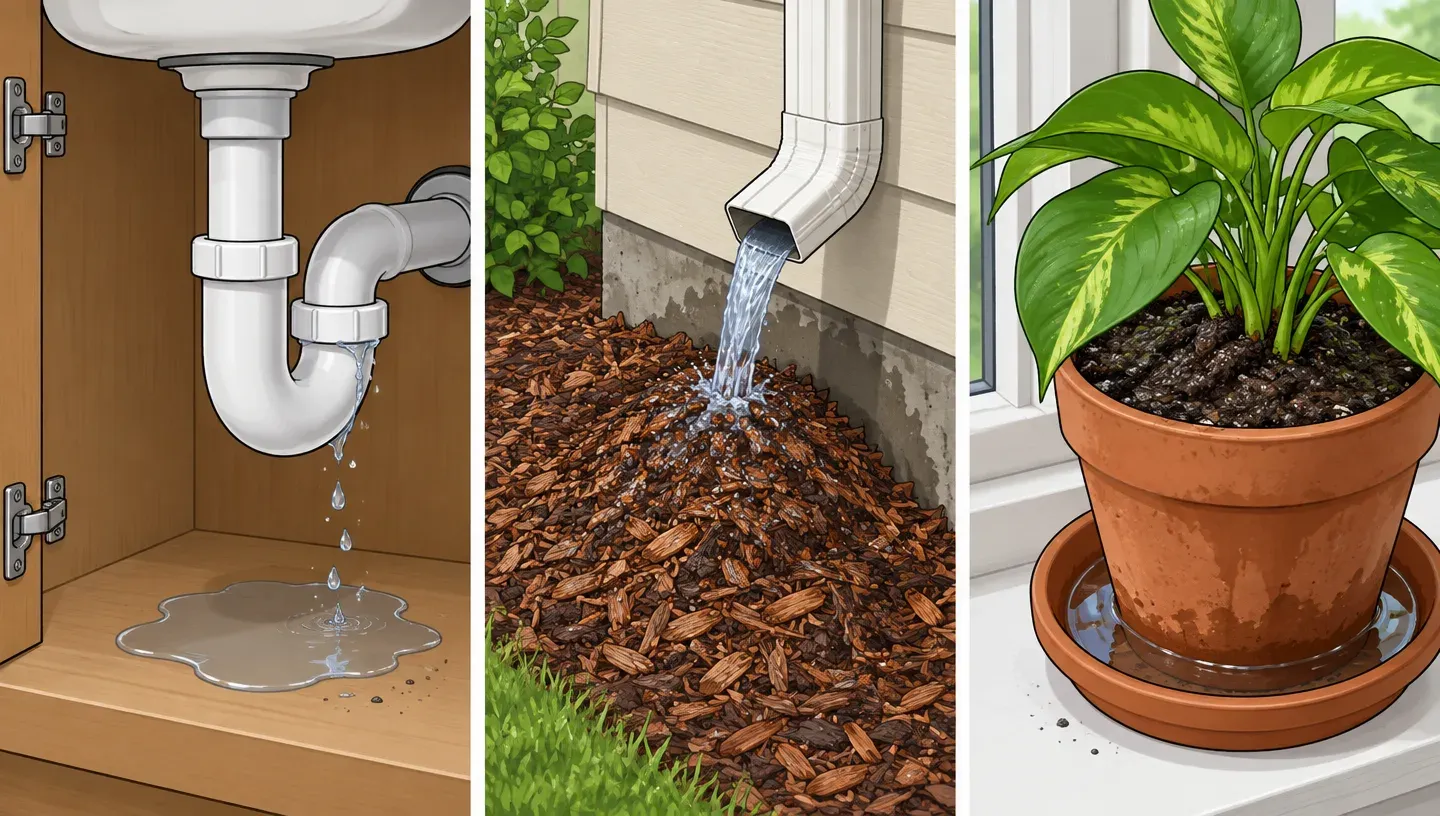
Illustration: a drip under the bathroom sink, a downspout emptying against a mulched foundation, and water standing in a houseplant saucer.
Step 2: Dry Out the Area
Fix the water source, then dry things out. UC IPM says airing out and drying the area controls springtails indoors, and a fan speeds it up.
- Repair the leak or have it repaired. Replace cracked caulk around the tub and sink.
- Run exhaust fans when you shower or cook, or open a window.
- Insulate sweating cold-water pipes so condensation stops dripping.
- Take out wet wood, especially if it’s moldy.
- Keep indoor humidity below 60%, ideally 30 to 50%. That’s the EPA’s target for preventing mold, and it takes away what springtails need too. Wet spots dried within 24 to 48 hours usually won’t grow mold.
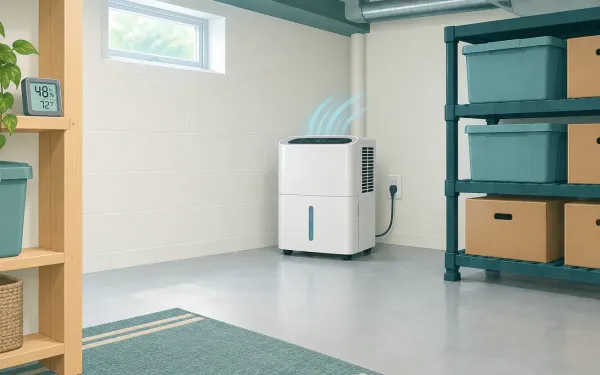
Only if the meter still reads above 60% after the leaks are fixed is a dehumidifier worth buying. Sizing, placement and running costs are covered in our comparison of dehumidifiers for silverfish, centipedes and springtails.
Renting? Rinse, vacuum, run the fans and photograph any leak, then report it to your landlord or building manager in writing, along with any outdoor fixes from Step 4. If a water problem isn’t fixed, the EPA says you can contact your local or state health or housing authority.
Step 3: Vacuum or Rinse Away the Springtails
Springtails are soft and easy to crush, and they soon die indoors without moisture, so water and a vacuum are all you need.
- In sinks and tubs, wash them down the drain with water.
- On floors, windowsills and walls, vacuum them up. Repeat as they appear.
- Never pour or spray insecticide down drains (UC IPM).
Springtails can’t fly. If the tiny insects around your drain are flying, they aren’t springtails, and drain flies need a different fix.
Step 4: Dry the Foundation and Seal Entry Points
Most springtails come from the soil outside, so the last step is outdoors:
- Pull mulch and wet leaves back from the foundation, and don’t overwater the beds beside the house.
- Extend downspouts so they carry water away from the house.
- Fix drainage where the ground slopes toward the building.
- Seal the gaps. UC IPM lists caulk, weather stripping, fine-mesh screen, steel wool or expanding foam. Repair torn screens, and close gaps under doors, around windows and pipes, and at attic and basement vents.
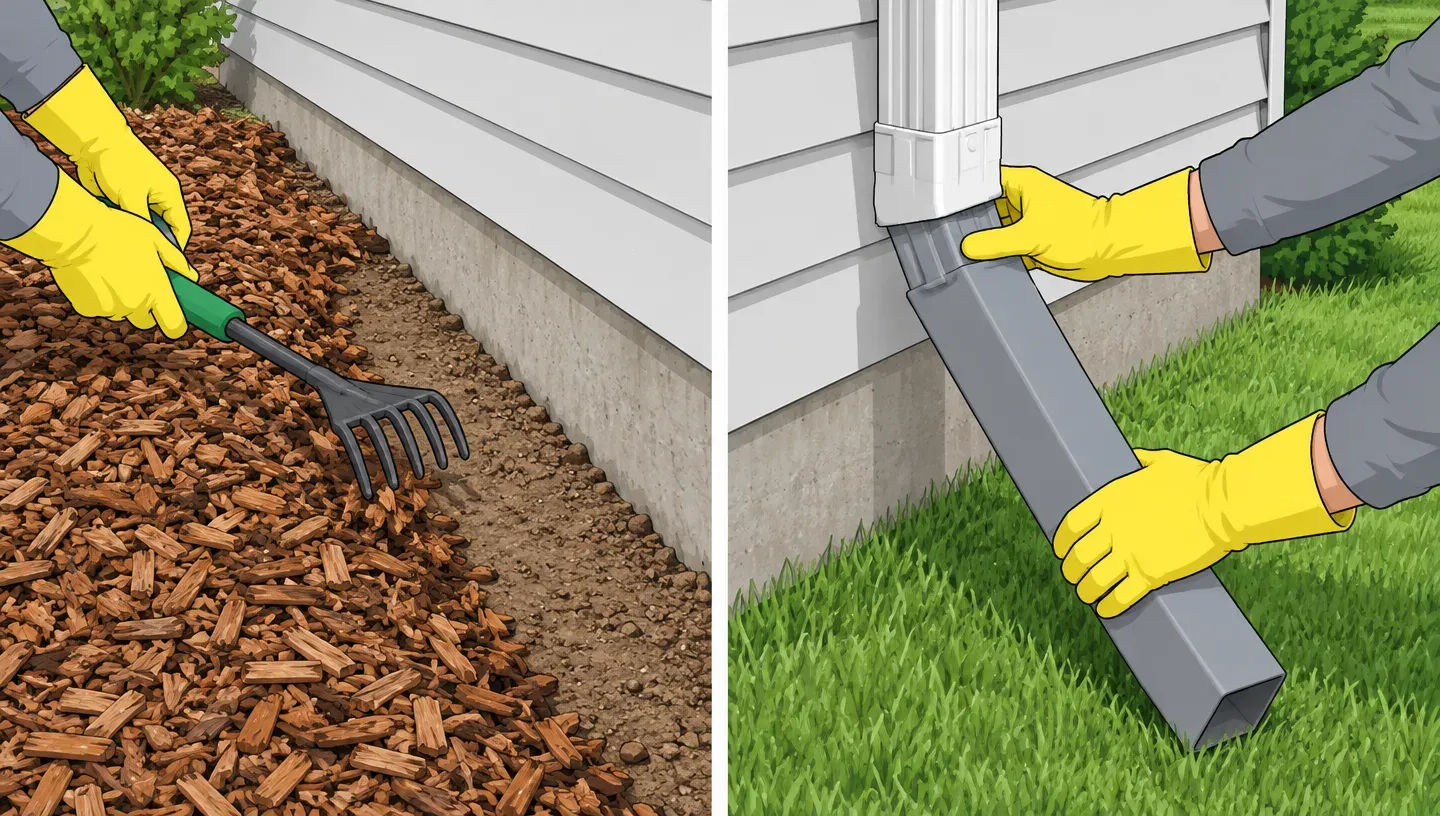
Illustration: mulch raked back from the foundation (left) and a downspout extension carrying water away from the wall (right).
Springtails in Houseplants
Springtails in potted plants are a watering problem. University of Minnesota Extension says they prefer soil that’s too wet or mixes high in peat.
- Let the soil dry out between waterings; water less often but more deeply.
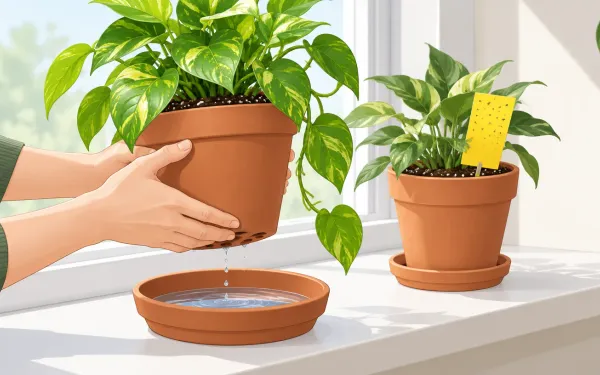
- Empty the saucer so water doesn’t stand under the pot.
They do little if any damage to houseplants. Small flies around the pot are a different pest: fungus gnats, which commonly infest potted plants and have their own fix.
Do You Need a Springtail Insecticide?
Usually not. “Springtail killer” sprays sell well, but UC IPM says sprays are often no more effective than vacuuming and give only temporary relief if the moisture isn’t fixed.
University of Minnesota Extension says not to use pesticides for springtails inside the home at all.
Springtails are fairly resistant to most insecticides, and a migration keeps bringing in new ones. That’s why spraying the ones you see doesn’t stop the next wave.
Already put down diatomaceous earth? It kills by drying insects out, and NPIC notes it works only while it stays dry, so it does little in a damp spot. It can also irritate the nose and eyes if breathed in, so keep any you’ve used where kids and pets can’t get into it.
If springtails keep pouring in from outside, UC IPM says a perimeter treatment of the foundation walls is best left to a professional.
Still Seeing Springtails? Timeline and Fixes
Springtails trapped indoors soon die, and Colorado State Extension says a migration usually lasts less than a week. If new ones still show up after a week of drying out, the moisture is still there. Check, in order:
- The spot where you see the most of them, with a flashlight: a slow drip, damp cabinet floor or condensation.
- The hygrometer: still above 60%? Run a dehumidifier in that room.
- Outside that wall: mulch, a downspout or a sprinkler soaking the foundation.
- Houseplants: overwatered soil or full saucers.
If all four check out and they keep coming, the source may be inside a wall or under the floor. See below.
Which Plan Fits Your Situation
| Your situation | Start with | Then |
|---|---|---|
| A rush after a hot, dry spell | Rinse and vacuum for a week | Nothing more if they stop |
| Steady stream in a bathroom or kitchen | Flashlight under sinks and tubs | Fix the drip, replace cracked caulk |
| Damp basement or crawl space | Hygrometer reading | Dehumidifier only if above 60% after repairs |
| Along one outside wall | Mulch, downspouts, sprinklers | Seal gaps under doors and around pipes |
| In houseplant soil | Drier watering, empty saucers | Check for fungus gnats if they fly |
| Everything checks out, still coming | A plumber for hidden leaks | A pro for a perimeter treatment |
What It Might Still Cost
| Item | Typical cost |
|---|---|
| Digital hygrometer | $9.99 |
| Silicone caulk, 2.8 oz tube | $5.29 |
| DIY basics: hygrometer and caulk | About $15 |
| Dehumidifier, 25–32 pints per day (only if humidity stays high) | $129.99–$149.99 |
| Pro pest control visit (general, not springtail-specific) | $108–$261, average $172 |
DIY: Target list prices, Oct. 2026, before tax. Pro: HomeAdvisor (updated June 2026); we found no springtail-specific price. A visit that only sprays doesn’t fix the moisture.
Before You Start: A Quick Checklist
- Grab a flashlight for under sinks, tubs and toilets.
- Buy a hygrometer before a dehumidifier.
- Wipe up standing water and run the exhaust fan.
- Look outside the wall where you see the most of them.
- Pull mulch and wet leaves back from the foundation.
- Photograph any leak if you rent, then report it in writing.
- Keep pesticides and drain sprays out of it.
When to Call a Pro
- You can’t find the moisture, or it’s inside a wall or under the floor. That’s a job for a plumber, not an exterminator.
- The problem is structural: a wet crawl space, water pooling at the foundation or ground that slopes toward the house.
- Springtails keep coming in from outside after you’ve cleared mulch and fixed downspouts, and you want a perimeter treatment. Ask what they’ll do about moisture, not just what they’ll spray. Our guide to what an exterminator does covers what to ask.
Common questions
Often, once the weather or the leak changes. They soon die indoors without moisture, so drying the damp spot is what makes them go away for good; if it stays wet, new ones keep coming in.
Not for long. Springtails soon die indoors unless they find moisture (UC IPM). Springtails in bed or on carpet point to a damp room, a leak or condensation nearby, so start Step 1 in that room.
Not necessarily, but they feed on mold and fungi, and UC IPM calls their continued presence indoors a sign of moisture. Check the damp spot for mold while you fix it.
The Bottom Line
Springtails are a moisture alarm, not an infestation to spray. Rinse and vacuum the ones you see, find the leak or damp spot, dry it with fans and keep humidity under 60%, and fix mulch, downspouts and gaps outside. A migration usually fades within a week. If new ones keep coming after the house is dry, look inside walls and under floors, or check whether the damp basement also has silverfish, which need the same drying out.
Sources and further reading · 5
- UC IPM: Springtails (Pest Notes 74136), updated 08/2025 — identification, habitat, entry points, drying out, drains, exclusion materials, houseplants, insecticides and perimeter treatment.
- University of Minnesota Extension: Springtails, reviewed 2024 — springtails vs. fleas, small vs. large numbers, moisture causes, fan or dehumidifier, houseplants, no pesticides indoors.
- Colorado State University Extension: Springtails — harmless to people, summer migrations and how long they last, insecticide resistance.
- EPA: A Brief Guide to Mold, Moisture and Your Home — humidity targets, hygrometer cost, condensation, drying within 24–48 hours, renters and unresolved water problems.
- NPIC: Diatomaceous Earth Fact Sheet — how it works, why it must stay dry, irritation if inhaled.