Carpet Beetle vs Bed Bug: How to Tell Them Apart
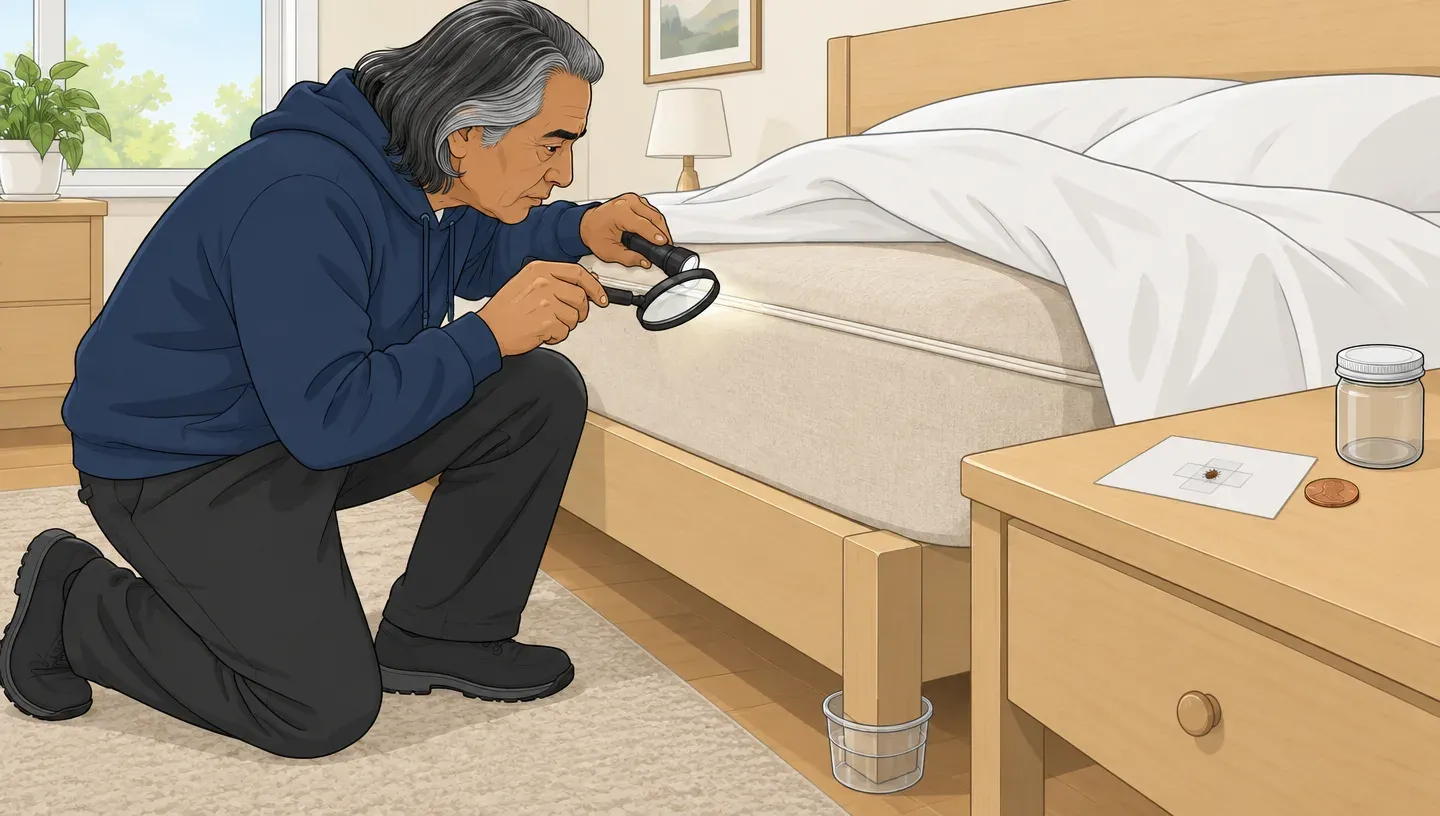
Illustration: a man checks a mattress seam; a bug taped to a card sits beside a coin.
Carpet beetle vs bed bug: carpet beetles do not bite. A hairy crawler, or a tiny round, oval-shaped beetle like a small ladybug, is a carpet beetle; it eats natural fibers such as wool, plus lint, not people. A flat, smooth, reddish-brown oval the size of an apple seed may be a bed bug. Decide on evidence, not bites: dark ink-like spots in mattress seams and other sleeping areas mean bed bugs.
Difficulty: easy. Call a pro if you find live bed bugs, their dark spots or pale shed skins in mattress seams, or an extension office confirms bed bugs; if you rent, tell your landlord first.
This page compares the two side by side, then walks through five free checks and what a wrong guess costs. We haven’t tested anything ourselves; it rests on EPA, CDC, National Pesticide Information Center, University of California and University of Kentucky guidance, plus HomeAdvisor cost guides.
Carpet Beetle vs Bed Bug: Quick Comparison
| Carpet beetle | Bed bug | |
|---|---|---|
| Adult | Round, hard-backed, black or speckled white, brown, yellow | Flat, oval, wingless, reddish brown |
| Adult size | About 1/8 inch at most | Apple seed |
| Young | Fuzzy, bristly larva, often striped, slow | Nymph: smaller, paler, yellowish-white flat oval |
| Shed skins | Brown, bristly, hollow shells | Light brown to pale yellow, like empty bed bugs |
| Droppings | Pellets the size of a grain of salt | Dark dots that bleed into fabric like a marker |
| When you see it | Daytime, on windowsills and drapes | Night, on the bed |
| Where it lives | Wool, fur, feathers, lint, rug edges, closets | 85% in or near the bed |
| Feeds on you? | No | Yes |
Sources: University of Kentucky, University of California and EPA.
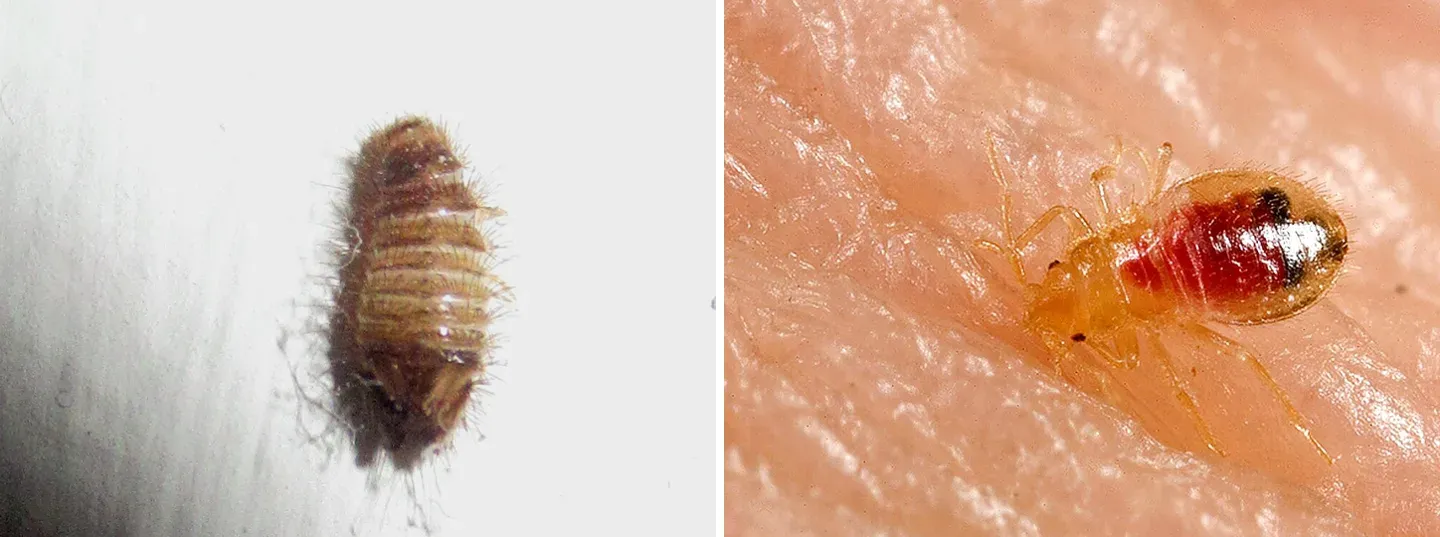
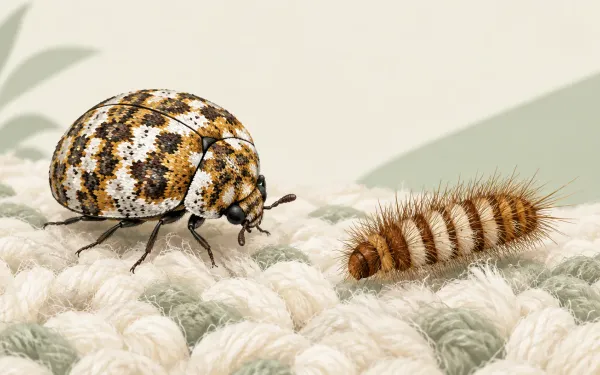
Left: a varied carpet beetle larva, photo by David Short (CC BY 2.0). Right: a bed bug nymph after feeding, photo by Piotr Naskrecki, CDC/Harvard University (public domain). Both via Wikimedia Commons.
Are Carpet Beetles Worse Than Bed Bugs?
No. Carpet beetles damage wool, fur and feathers but don’t feed on people, and the University of California says a few adults indoors “should not be cause for alarm.” Act only if you find larvae feeding.
Bed bugs feed on you and spread from room to room. They aren’t known to spread disease, but they bring itching, lost sleep and a far bigger removal bill (see the costs below).
Adults: Round Beetle or Flat Oval
A round, hard-shelled back like a tiny ladybug means a beetle; a flat, wingless oval is the bed bug shape. Carpet beetles, often called carpet bugs, are smaller than a bed bug, with short antennae, in colors from solid black to mottled white, brown and yellow.
Bed bug adults are flat and oval when hungry, and swollen and redder after a meal. They can’t jump or fly.
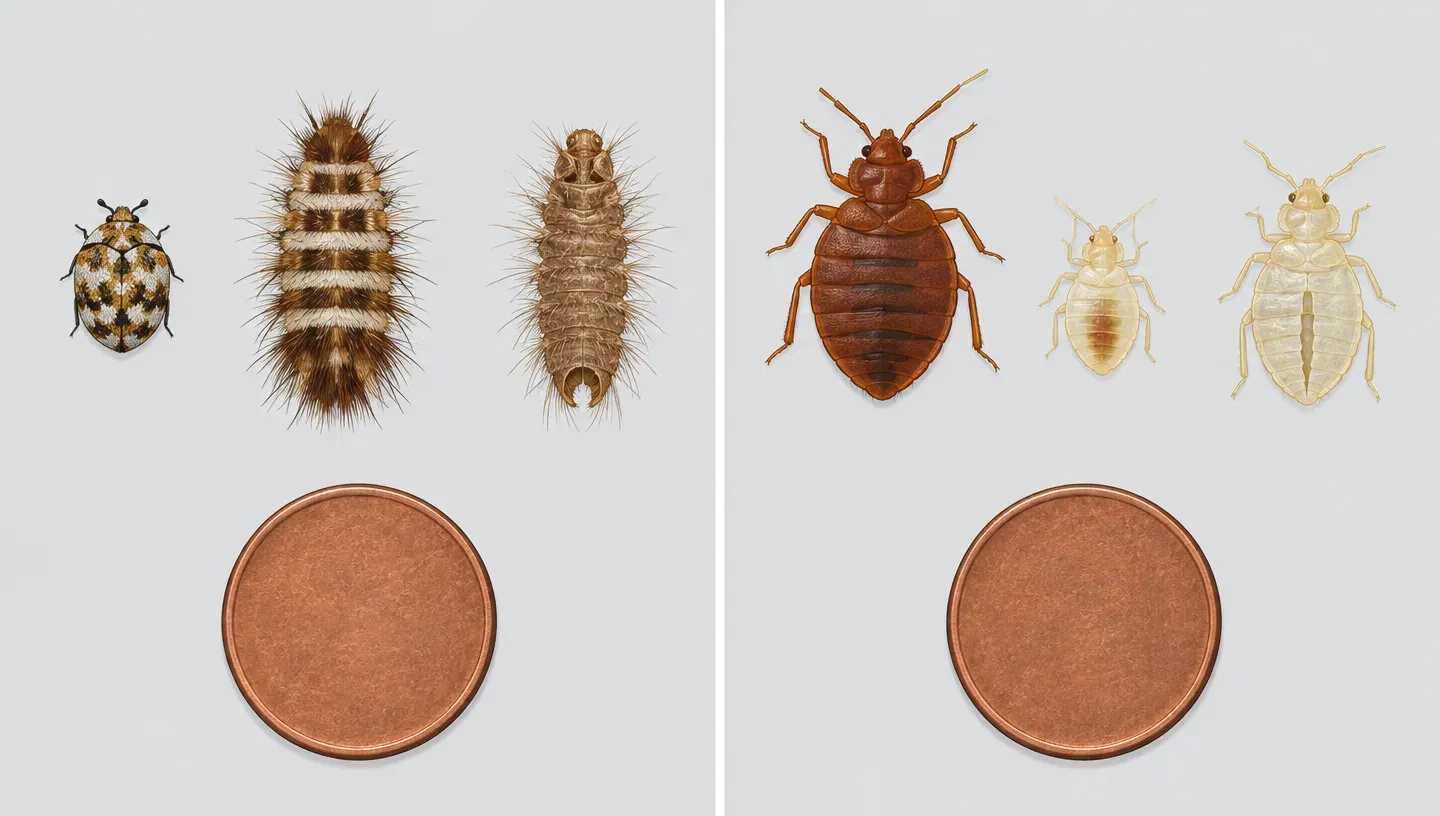
Illustration: carpet beetle adult, larva and skin (left) and bed bug adult, nymph and skin (right), drawn to scale.
The Connecticut Agricultural Experiment Station’s look-alikes poster shows both side by side.
Carpet Beetle Larvae vs Bed Bug Nymphs: Look for a Head
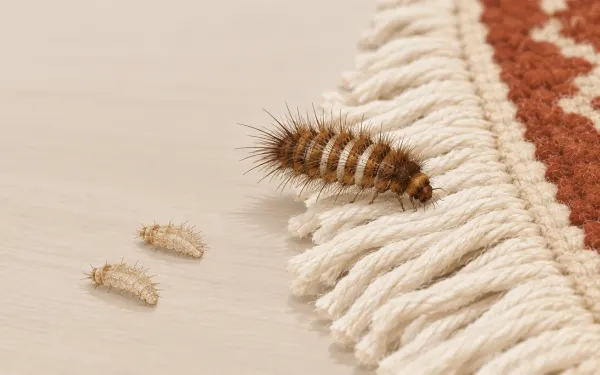
Bed bugs don’t have larvae; their nymphs look like smaller, paler adults. Carpet beetle larvae look like fuzzy maggots, slightly longer than the adults, tan to brown and slow. Some are striped; others are shiny with a tail tuft of long hairs.
A larva’s hairy, segmented body can look like a bed bug’s rear half, but you won’t see a head on it. A bed bug shows a distinct head with antennae.
Skins, Droppings and Eggs: What’s Left Behind Settles It
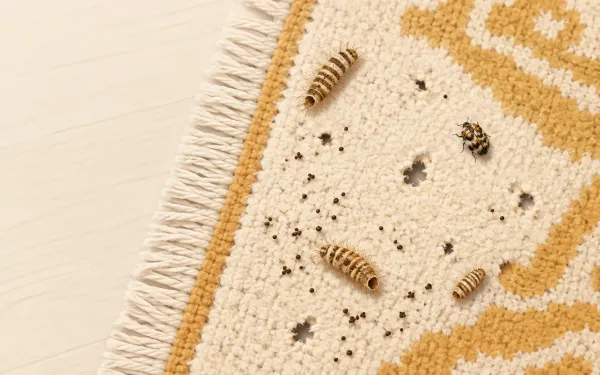
Bristly brown skins and salt-grain pellets are key signs of carpet beetles. Bed bug droppings are dots that bleed into fabric “like a marker would,” in the EPA’s words, and their eggs are pinhead-size, pearl-white and often glued in place.
When and Where You See Them: Windowsill or Mattress Seam
Bed bugs feed on sleeping people, mostly at night, and hide in dark cracks during the day (University of California). A bug on your sheets at 3 a.m. fits a bed bug. Carpet beetle adults are drawn to sunlight, so they turn up in daytime on windowsills and drapes, after flying in from flowering plants or riding in on cut flowers.
Bed bugs stay in mattress seams, box springs, bed frames and headboards. Carpet beetle larvae go where the food is: rug edges, closet shelves, down pillows and lint under baseboards. A larva on your pillow may be eating the down, so treat carpet beetles in bed as a pillow problem first.
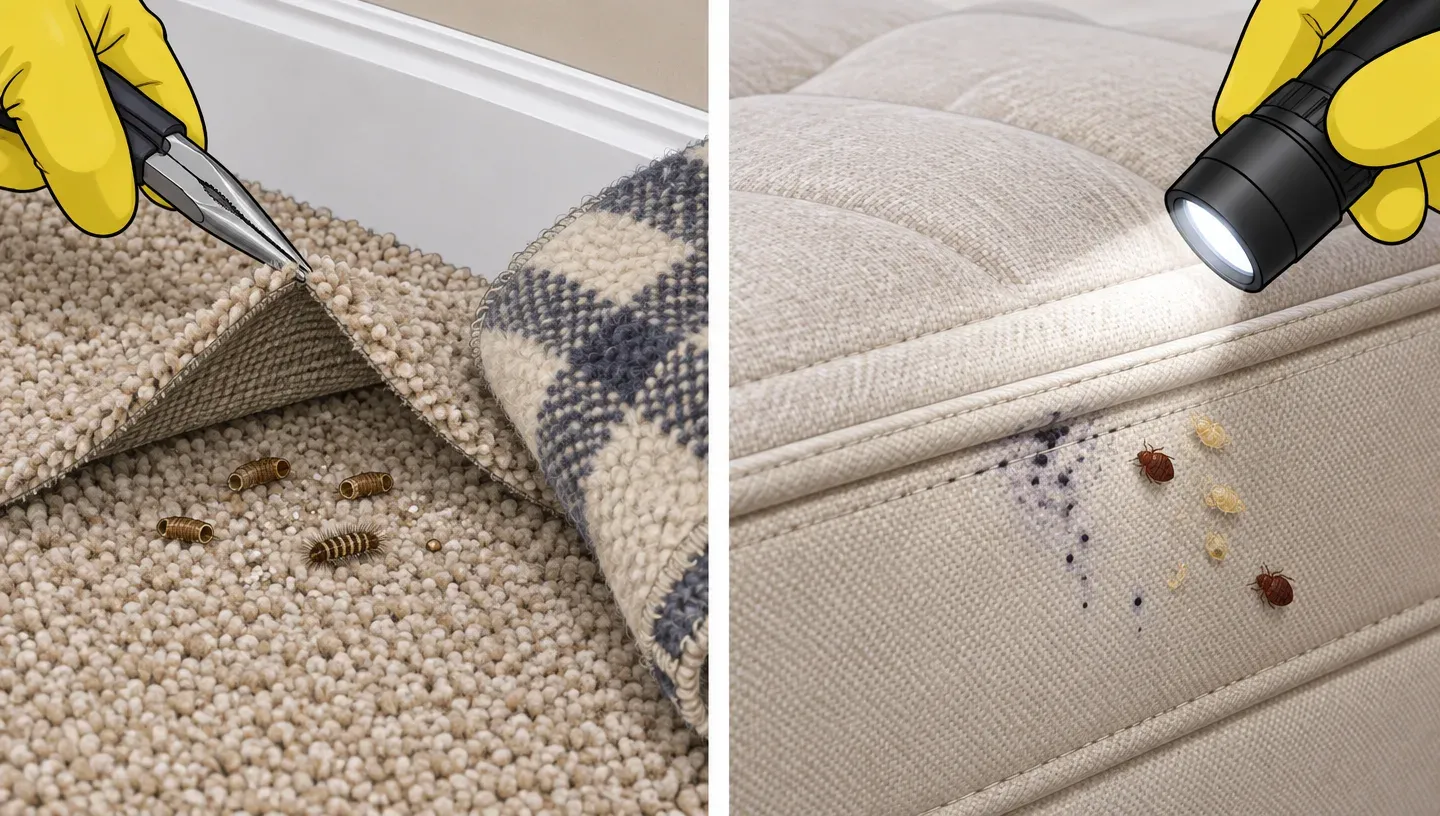
Illustration: carpet beetle evidence along a rug edge (left); bed bug spots and pale skins in a mattress seam (right).
Carpet Beetle vs Bed Bug Bites: Only One Bites
Carpet beetles don’t feed on blood, but varied carpet beetle hairs can irritate skin, so an itchy rash near infested bedding doesn’t have to be bites.
Bed bugs do bite, but bites prove nothing. The University of California calls telling their bites from mosquito, flea or spider bites “difficult to impossible,” and the CDC says marks can take up to 14 days to appear. Search for bugs and spots instead; our bug bites guide helps with the rest.
How to Tell If You Have Carpet Beetles or Bed Bugs
Steps 1–4 take one evening and cost nothing. Step 5 takes weeks, only if you’re still unsure.
Step 1: Tape the bug and zoom in. Don’t squash it; press clear tape over it, stick it on a card beside a penny and look for hair, a round beetle back, or a flat oval with a clear head. The CDC compares an adult bed bug to Lincoln’s head on a penny.
Step 2: Search the bed. Check the mattress seams, piping and tags, the box spring and cracks in the frame and headboard. The EPA’s rule of thumb: if a crack holds a credit card, it can hide a bed bug.
Step 3: Check the carpet beetle spots. Look at windowsills, rug edges, closet floors, stored wool and pet bedding for bristly skins or salt-grain pellets.
Step 4: Get a free ID. Every US county has an extension office; find yours in the county office directory. The EPA says extension agents identify pests at no cost.
Step 5: Set interceptor cups. In research cited by the University of California, these cups caught six times more bed bugs than visual searches. The EPA’s homemade version: a small deli container a bed leg fits in, taped inside a larger one wrapped in masking tape, with a little talcum powder in both. Set one under each leg, pull the bed off the wall and check weekly.
What a Wrong Guess Costs
| Item | Typical cost |
|---|---|
| DIY checks (tape, flashlight, homemade cups) | Household items |
| Pest ID by your extension office | Free |
| Bed bug inspection by a pro | $65–$200 |
| Bed bug treatment, one room | $300–$650 |
| Bed bug treatment, whole home | $1,500–$6,200 |
| Carpet beetle treatment by a pro (price guide) | $150–$450 |
Pro prices: HomeAdvisor’s bed bug and carpet beetle cost guides, June 2026; 70 bed bug quotes homeowners shared on Reddit had a $1,500 median; only 6 carpet beetle quotes were shared, ranging $250–$1,800.
The whole-home price is what a late find costs: the EPA says a minor infestation is “far less costly and easier” to treat than a widespread one. Before paying for a spray “to be sure,” ask what the inspector found and where.
What to Do Next
Carpet beetles: vacuum rugs, drapes and upholstered furniture and throw out the bag right away. Washing infested items in hot water or dry-cleaning them kills all stages (University of California). The full carpet beetle plan covers the rest.
Bed bugs: keep sleeping in your own bed, or they spread to the couch. Run sheets through the dryer on high for 30 minutes, the National Pesticide Information Center’s kill time. Skip store sprays and bug bombs, which scatter bed bugs, and pool diatomaceous earth, which can harm you if breathed in. If you rent, tell your landlord in writing; call a pro if bugs keep turning up, since the EPA says treatment can take weeks to months.
- Tape the bug to a card beside a penny.
- Strip the bed and check every seam with a flashlight.
- Check windowsills and rug edges for bristly skins.
- Send the sample to your county extension office.
- Dry bedding on high for 30 minutes if you suspect bed bugs.
- Ask what the inspector found before paying for treatment.
Common questions
Yes. Finding one doesn’t rule out the other. If bites continue after you’ve dealt with carpet beetles, run the bed check in Step 2.
Don’t count on it. For carpet beetles, the University of California advises a product labeled for them, never sprayed on clothing or bedding. Cigarette (“cigar”) beetles are light brown pantry beetles; throw out the infested food instead.
No. Carpet beetle larvae scavenge lint, hair, dead insects and other animal material; they won’t control bed bugs.
Sources and further reading · 6
- EPA: How to Find Bed Bugs, Bed Bugs Appearance and Life Cycle and Do-it-yourself Bed Bug Control.
- CDC: About Bed Bugs.
- National Pesticide Information Center: Bed Bugs and County Extension Offices.
- University of California IPM Pest Notes: Carpet Beetles, Bed Bugs and Pantry Pests.
- University of Kentucky Entomology: Carpet Beetles (ENTFACT-601).
- Connecticut Agricultural Experiment Station: Bed Bugs and Look-Alikes (PDF).