Carpet Beetles in Bed or Mattress? What to Do About It
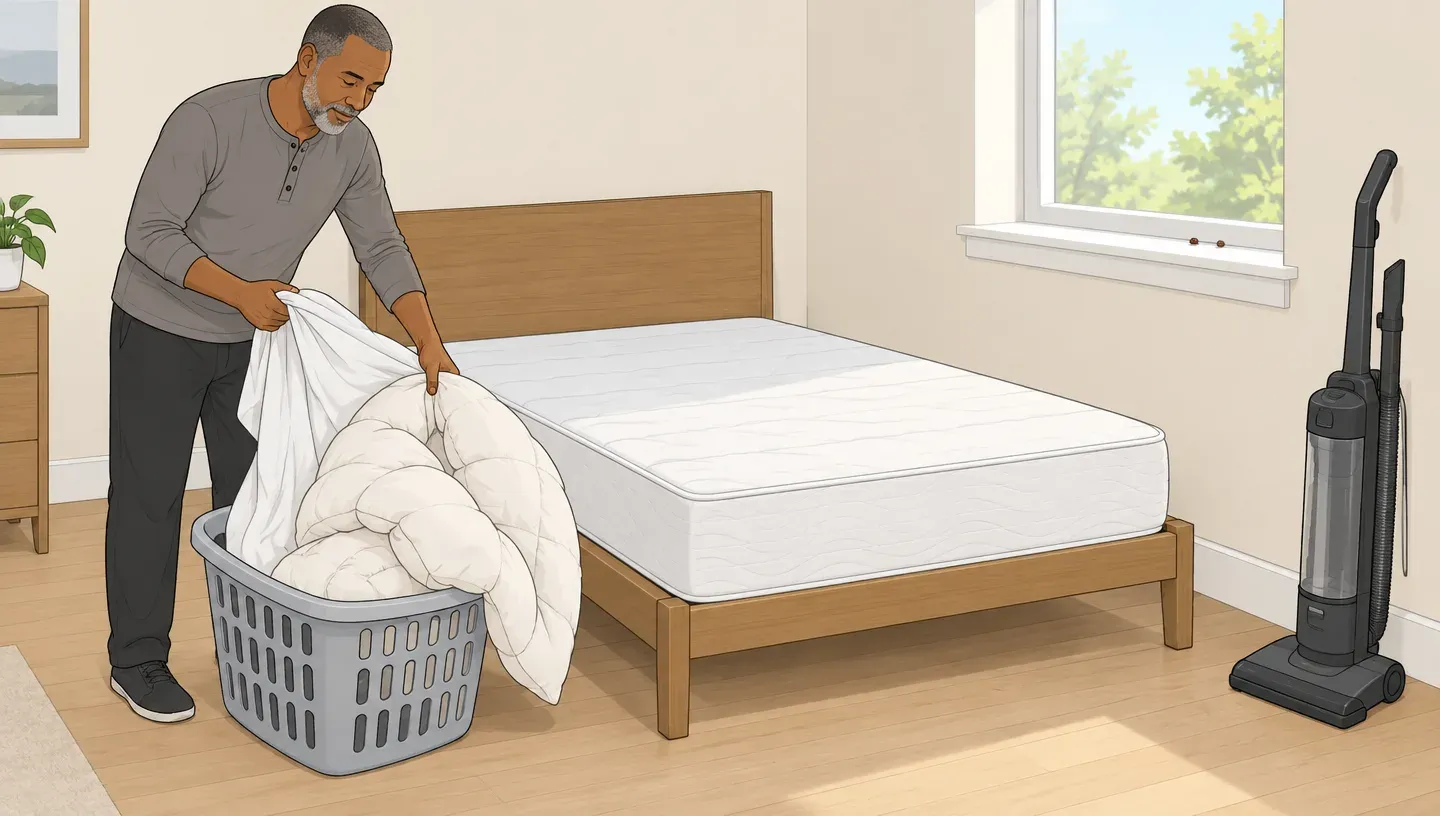
Illustration: a man strips the sheets and comforter into a laundry basket, with the bed pulled away from the wall and a vacuum ready.
Carpet beetles in bed usually mean larvae wandered over from lint, hair or wool nearby, not that the mattress is being eaten. They don’t bite, so clean sheets are safe to sleep on. Hot-wash and dry your bedding, vacuum under the bed and along the baseboards, and check nearby wool, down and feather items. Don’t spray the bedding.
Cost: about $0–8 in supplies. Difficulty: moderate. Call a pro if larvae are inside a wool-, feather- or hair-stuffed mattress, pillow or couch that you can’t wash, or you still can’t find where they’re breeding after a thorough search.
This page covers why they end up in beds, how to tell them from bed bugs, whether your mattress is at risk, the three cleanup steps and how to tell they’re gone. We haven’t tested anything ourselves; it rests on UC IPM, University of Kentucky and other extension fact sheets, a 2024 dermatology review and list prices.
What You Found in Bed at a Glance
| What you found | Looks | Size | What it means |
|---|---|---|---|
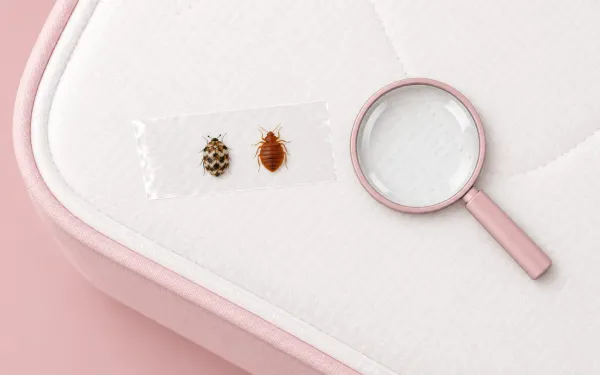
| Carpet beetle adult | Round beetle, black or mottled white, brown, yellow | 1/10 to 1/8 inch | Flew in; often passing through |
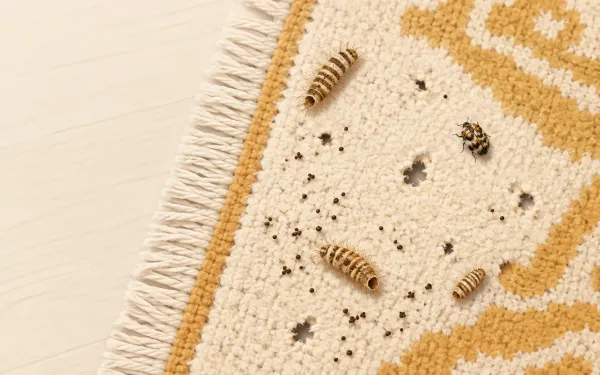
| Carpet beetle larva | Fuzzy, bristly maggot | Slightly longer than adults | A food source nearby |
| Shed skins | Brown, bristly, shell-like | Larva-sized | Larvae are feeding nearby |
| Bed bug | Flat, oval, brown | Apple seed | Check mattress seams for dark spots |
Sources: UC IPM, Oklahoma State and EPA.
Why Are Carpet Beetles in My Bed? Wool, Down and Lint Nearby
Adults eat pollen, fly in through open windows and gather on windowsills, so one on a bed by a window is usually passing through. More on what carpet beetles look like.
Larvae do the damage. They crawl from room to room and eat keratin, the protein in wool, feathers, fur and hair. Down pillows, down comforters and wool blankets are commonly attacked, and hair and lint under the bed and along baseboards feed them in the dark. The good news: blankets in regular use are seldom attacked.
Carpet Beetles or Bed Bugs? Check the Shape
Bed bugs are flat and oval; carpet beetle larvae are hairy and bristly, and the adults, most often the varied carpet beetle, are round. Bristly skins and salt-grain droppings point to carpet beetles. Rusty stains and dark spots that bleed into fabric like a marker point to bed bugs. Our carpet beetle vs. bed bug guide draws both to the same scale.
Is It Safe to Sleep in the Bed? Yes
Carpet beetles don’t bite, according to a 2024 dermatology review. Their larval hairs can cause itchy bumps that look like bites, which ease with thorough cleaning, and Penn State Extension says the reaction seems to show up only after years of exposure. See a doctor about any rash, yours or a child’s, that won’t clear; our bug bites guide helps rule out real biters.
No washer until tomorrow? Bag the stripped bedding, keep it closed and sleep on spare sheets. Wash or freeze wool and felt toys, which the University of Kentucky lists as commonly attacked; synthetic plush isn’t larva food. Vacuum where your pet sleeps and hot-wash its bedding with yours.
Can Carpet Beetles Live in Your Mattress? Only a Natural-Fiber One
Check the label before you throw anything out. Larvae don’t feed on synthetic fibers (UC IPM), so on an all-foam or polyester mattress they only pick at hair and lint in the seams, and vacuuming is enough. A zippered cover isn’t needed; the EPA recommends those for bed bugs.
A wool-, down-, feather- or hair-stuffed mattress, pillow or couch with larvae inside is different: spraying the outside won’t reach them. Replace it, or ask pest control companies or dry cleaners about vault fumigation, which UC IPM says only licensed operators can do. The “couch beetle” on sofas is often the same insect, sometimes carried in on secondhand furniture.
How to Clear Them From Your Bed
Step 1: Hot-wash and dry the bedding. Hot washing, dry cleaning or dryer heat kills eggs and larvae (University of Kentucky); UC IPM’s rule is 120°F or higher for 30 minutes. Take a comforter too big for your washer to a laundromat or dry cleaner, and seal anything you can’t heat in a plastic bag in the freezer for 2 weeks, letting it warm a day before opening.
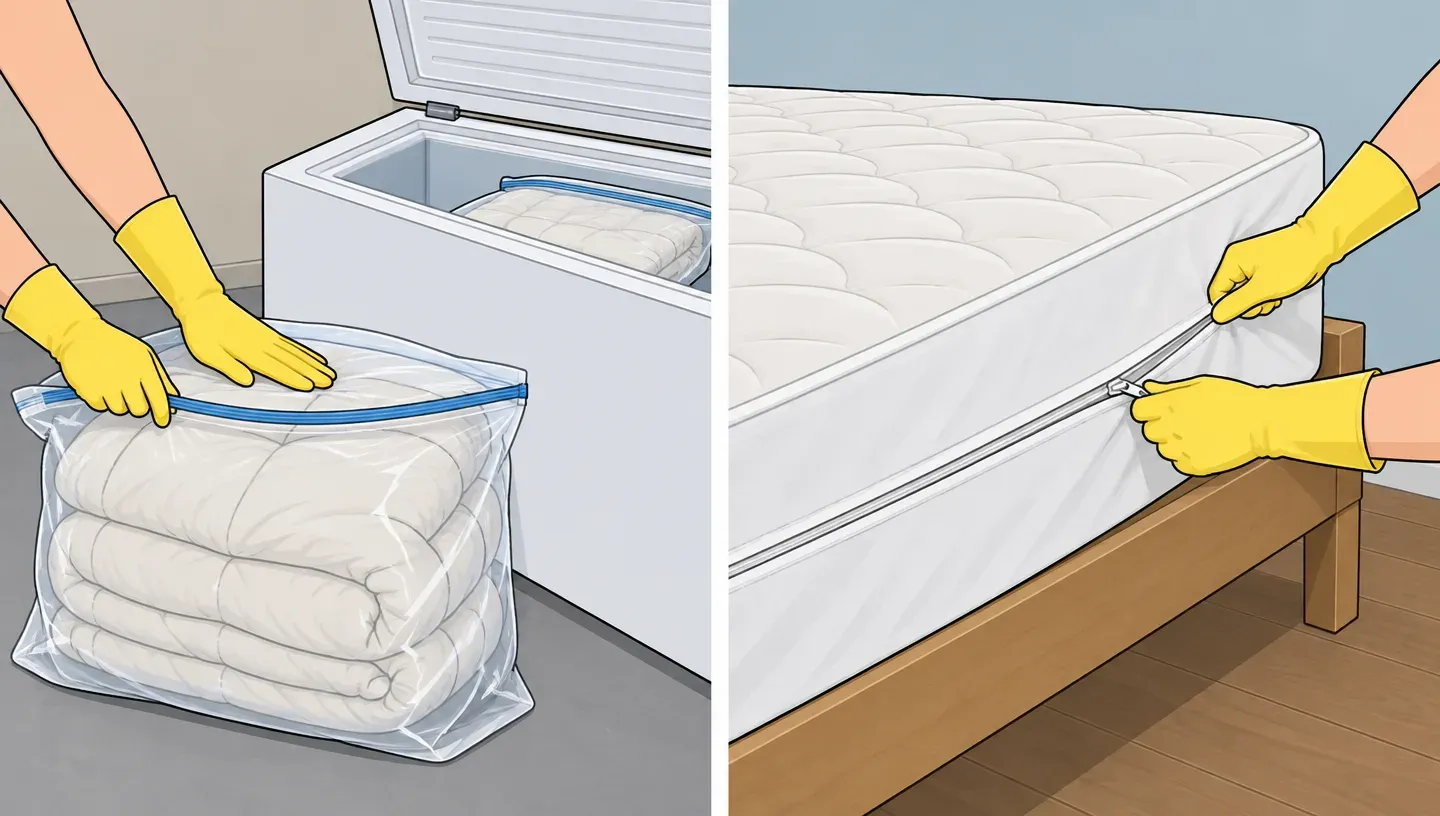
Illustration: gloved hands bag a down comforter for the freezer (left) and vacuum along a mattress seam with a crevice tool (right).
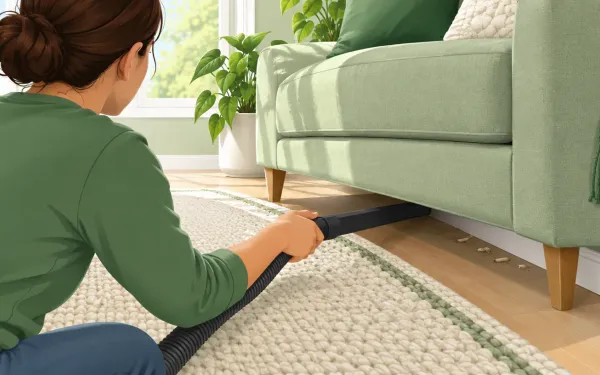
Step 2: Vacuum the bed and bedroom. Use the crevice tool on mattress and box spring seams, under the pulled-out bed, rug edges, floor vents and windowsills. Rug edges are more likely to be infested than open carpet. Take the bag or dust straight to an outdoor bin, since it can hold live eggs and larvae.
Step 3: Find the source. Check closets and drawers for wool sweaters, felt hats and furs unworn for months, under-bed storage bins, light fixtures with dead insects, and old bird or rodent nests (UC IPM); if you’ve had mice nesting in the attic, check that nest. Shed skins can outnumber the larvae (Oklahoma State), so they’re often the easier clue; see signs of carpet beetles.
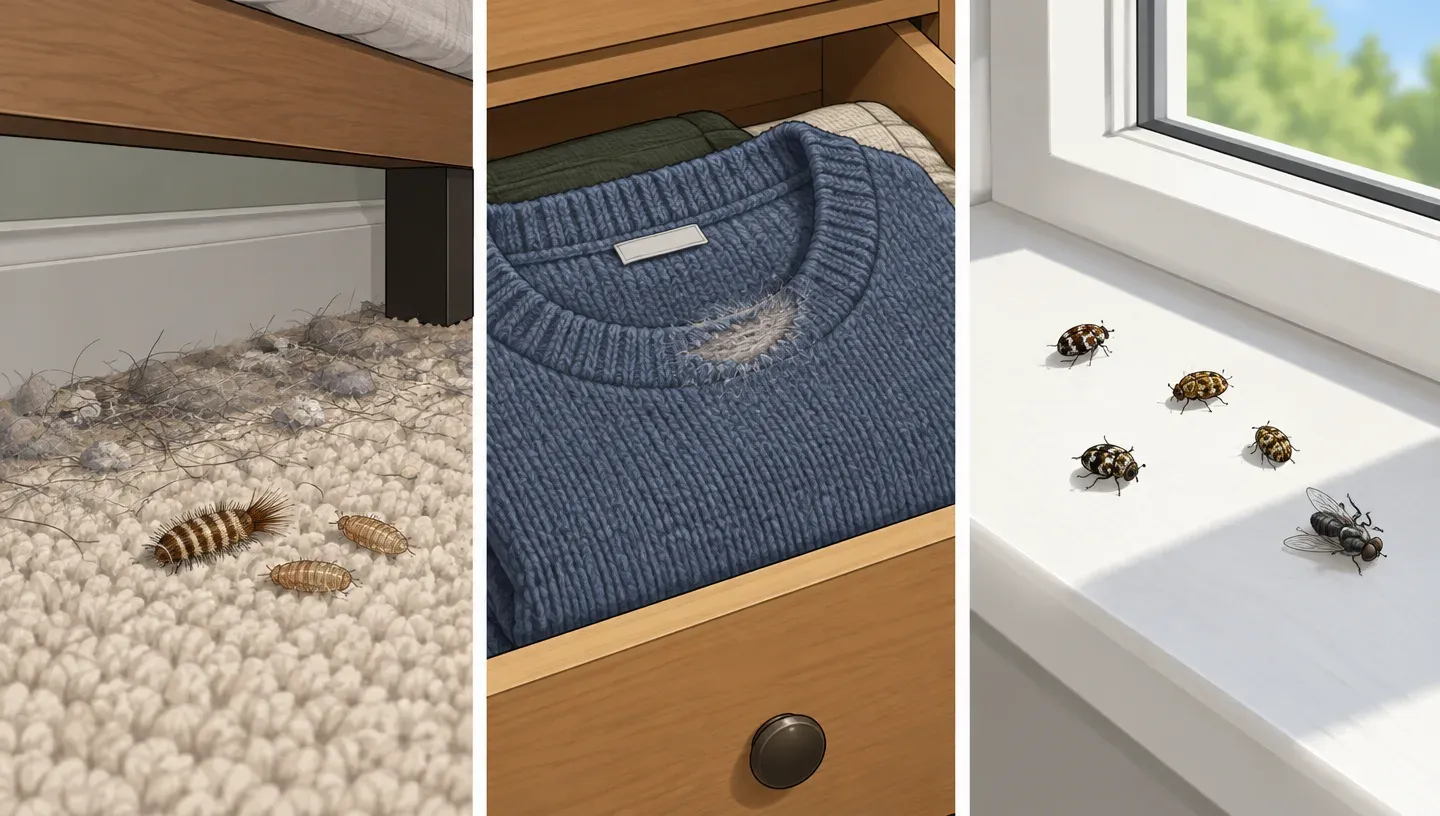
Illustration: the usual sources near a bed are lint under it, forgotten woolens in a drawer, and adults at the window.
How to Confirm They’re Gone
- Set plain sticky traps on windowsills, behind the bed and in the closet, not pheromone traps, which are species-specific and sold mainly online.
- Check them once or twice a week (UC IPM).
- Look for fresh skins in the spots you cleaned.
- Keep watching through next spring, when adults and wandering larvae show up most indoors.
Larvae grow slowly and can go several weeks without food (Colorado State), so one stray after cleanup isn’t a failure.
Sprays and Home Remedies: Mostly Skip Them
Sprays are often of limited use, because larvae sit inside materials sprays can’t reach (University of Kentucky). Penn State lists diatomaceous earth for cracks and crevices only when beetles are widespread and no source turns up, and it works only while dry. None of the university guides we used lists vinegar, lavender or other essential oils as a treatment. Spot-treating carpet edges you can’t clean is in the full plan for getting rid of carpet beetles.
What to Do Next
Clean first; most beds need nothing more. If you’re weighing a visit, see exterminator vs. DIY cost.
| Item | Typical cost |
|---|---|
| Washing, drying, vacuuming | $0 with your own machines |
| Sticky insect monitors (12) | $7.47 |
| Pro carpet beetle treatment (price guide) | $150–$450 |
Monitor price from DoMyOwn, checked October 1, 2026. Pro range: HomeAdvisor (updated June 2026). If a pro plans to spray your mattress or bedding, ask why; the extension guides say not to.
Call a pro when larvae are inside a stuffed item you can’t wash, when you can’t find the source after a thorough search, or when a valuable wool or Oriental rug is involved (UC IPM suggests an experienced operator or carpet-cleaning company).
- Strip the bed straight into the washer, not onto the floor.
- Wash hot and dry on high for at least 30 minutes.
- Vacuum mattress seams, under the bed and the baseboards.
- Empty the vacuum into an outdoor bin.
- Search closets and storage for wool, down and feathers.
- Set sticky traps and check them weekly.
Common questions
Not necessarily. UC IPM says treatment is needed once you find larvae developing in fabrics, and larvae wander a long way looking for food (Colorado State), so one can be a stray. Repeat finds or piles of shed skins point to a source nearby.
Possibly. Oklahoma State lists air ducts among the places larvae live, and says some infestations start with adults flying from house to house. Vacuum inside floor vents. Renting? If you find larvae in vents or shared areas, tell your landlord in writing.
Sources and further reading · 11
- UC IPM: Carpet Beetles (Pest Notes 7436).
- University of Kentucky: Carpet Beetles (ENTFACT-601).
- University of Maryland Extension: Carpet Beetles.
- Oklahoma State Extension: Dermestid Carpet Beetles.
- Colorado State University Extension: Dermestid Beetles (Carpet Beetles).
- University of Arizona Extension: Indoor Pests.
- University of Arkansas Extension: Carpet Beetles.
- Penn State Extension: Carpet Beetle Dermatitis (copy hosted by Cumberland County, PA).
- Cutis: What’s Eating You? Carpet Beetles (Dermestidae) (2024).
- EPA: Bed Bug Appearance, How to Find Bed Bugs, DIY Bed Bug Control.
- HomeAdvisor: Carpet Beetle Extermination Cost.