Best Bait for Mouse Traps: What to Put on the Trigger

Illustration: a slice of bread spread with peanut butter next to a plate of apple slices.
The three best baits for mouse traps are peanut butter, hazelnut spread and nesting material such as a cotton ball or dental floss (CDC, UC IPM, Nebraska Extension). Start with a pea-sized dab of peanut butter pressed into the trigger, or a fresh piece of the food your mice are already eating. Use chocolate, caramel or a non-allergenic bait if anyone has a peanut allergy. Skip big globs and cheese: too much bait gets eaten without setting the trap off.
This guide compares six mouse trap baits, shows how to fix each one to the trigger, and matches them to your home. We haven’t run our own trap trials. The rankings rest on CDC, UC IPM and Nebraska Extension guidance, plus one trap maker’s baiting instructions.
How We Compared These Baits
We rated each mouse trap bait on five things:
- Who recommends it: whether the CDC, UC IPM or Nebraska Extension names it for traps.
- Staying power: whether it stays pressed into the trigger or can be licked off.
- Allergy safety: whether it works in a home with a peanut allergy.
- Cost: whether you already have it in the kitchen.
- When it wins: the signs that tell you it’s the right bait for your mice.
Sources are listed at the end; guidance and prices were checked in September and October 2026.
What to Put on a Mouse Trap
Peanut butter first, then whatever the mice are already eating. The CDC says chunky peanut butter or mutton fat works best on a snap trap’s bait pan, and the other baits below cover allergies and fussy mice.
| Bait | Who names it | Best for | Main limitation |
|---|---|---|---|
| Peanut butter or hazelnut spread | CDC, UC IPM, Nebraska | Your first round of traps | Not for a peanut-allergy home |
| Chocolate or caramel | Nebraska Extension | Peanut-free homes, mice raiding sweets | Solid pieces need pressing in |
| Seeds or nuts, such as birdseed | Nebraska Extension | Mice in pet food, birdseed or grain | Bind them in a spread first |
| Cotton ball or dental floss | Nebraska Extension | Mice that lick food bait clean | Draws nest builders, not feeders |
| Bacon or mutton fat | CDC, one trap maker | A high-fat swap for peanut butter | Replace it once dry or dirty |
| The food they’re already eating | UC IPM | Homes with chewed packages near droppings | Only helps if you’ve found the food |
| Cheese | None of our sources | Nothing; it isn’t a first-choice bait | Not on any extension list we found |
Trapping rats instead? The CDC notes that rats tend to fear anything new, so baiting works differently; see the best bait for rat traps.
Best Bait by Rodent and Situation
| Rodent and situation | Bait to use | Source |
|---|---|---|
| House mouse, first round of traps | Pea-sized dab of chunky peanut butter or hazelnut spread | CDC, UC IPM |
| House mouse, peanut-allergy home | Chocolate or caramel pressed into the trigger | Nebraska Extension |
| House mouse licking the bait clean | Cotton ball or dental floss tied to the trigger | Nebraska Extension |
| House mouse in pet food, birdseed or grain | Seeds or nuts bound in a spread | Nebraska Extension |
| Rat, any trap | Peanut butter, a nut, a raisin or bacon tied on; leave traps baited but unset at first | CDC; rat bait guide |
| Mouse or rat ignoring every bait | The food they’ve been raiding | UC IPM |
None of our sources changes the bait by season; what changes is what the mice are eating, so match the bait to the food near the droppings.
Peanut Butter: The Default Mouse Bait
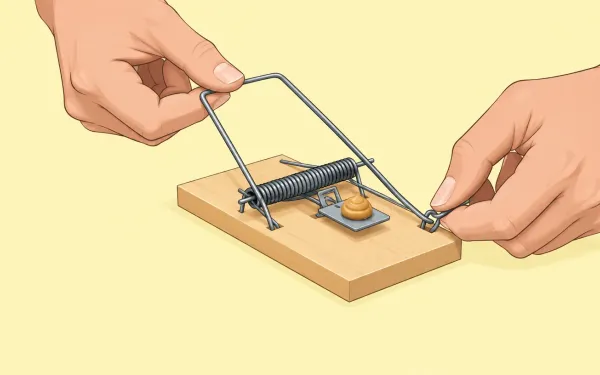
UC IPM calls peanut butter “very attractive to house mice” and easy to use. Press a pea-sized dab into the grooves of the trigger, not on top, so the mouse has to work at it. Hazelnut spread works the same way.
Best for: your first set of traps, in almost any home.
Main limitation: skip it if anyone in the home has a peanut allergy.
Chocolate and Caramel: The Peanut-Free Pick
Nebraska Extension lists chocolate and caramel as mouse baits, and names them, with commercial non-allergenic baits, as the swap for a peanut-allergy home. A small chip or a smear of caramel pressed into the trigger is enough.
Best for: peanut-free homes, or mice that have been raiding sweets.
Main limitation: a solid chip has to be pressed into the trigger or tied on, like any solid bait.
Seeds and Nuts: When They’re Raiding Grain
Seeds are on Nebraska’s list, and they match what many house mice eat. If you find seed hulls near the bird feeder or pet bowl, bait with those. One Reddit fix mixes birdseed into the peanut butter.
Best for: mice getting into birdseed, pet food or grain.
Main limitation: loose seeds work best bound in a spread, as in the Reddit fix.
Cotton Ball or Dental Floss: When Food Gets Licked Off
Nest-building females go after soft material, so Nebraska Extension lists cotton balls as bait. A strand of dental floss or a scrap of cloth tied to the trigger does the same job: the mouse pulls to take it and springs the trap.
Best for: traps that keep getting licked clean.
Main limitation: it appeals to nest-building females, not every mouse.
Bacon or Mutton Fat: A High-Fat Backup
The CDC lists mutton fat with peanut butter as the best snap-trap baits, and one trap maker lists bacon. Tie a small strip to the trigger rather than balancing it.
Best for: a peanut-free home where sweets haven’t worked.
Main limitation: replace it as soon as it dries out or gets dirty.
The Food They’re Already Eating: Often the Best Bait
UC IPM says the best bait is often the food house mice are already eating. Look for chewed packages, nibbled pet food or seed hulls near fresh droppings, then bait with a clean piece of that food, not the piece they chewed. House mice eat almost anything, but the chewed package shows what these mice are eating right now.

Illustration: a cookie box chewed open at one corner, with crumbs and chocolate chips on the pantry shelf.
Best for: kitchens and pantries with clear signs of what was raided.
Main limitation: it only works once you’ve found the food they’re after.
How to Bait a Mouse Trap So Mice Can’t Lick It Off
Bait size and how it’s attached matter more than which food you pick.
Step 1: Use a pea-sized amount. With more than that, a mouse can eat from the edge without pressing the trigger; UC IPM warns that with too much bait, a house mouse may remove it without setting the trap off.
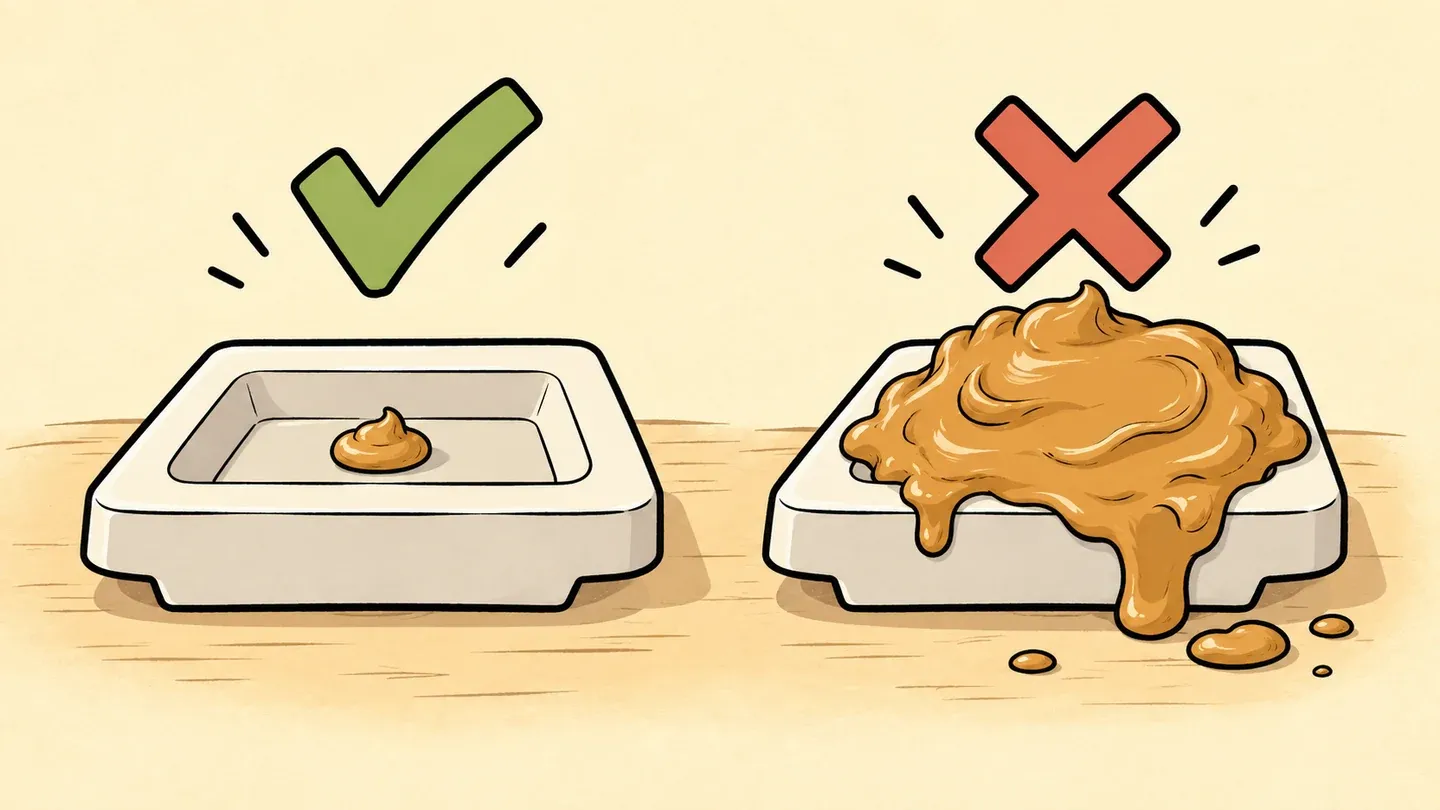
Illustration: a small dab of peanut butter in one bait tray, marked with a check, and a heap spilling over another, marked with a cross.
Step 2: Press it into the trigger with a swab. Use a cotton swab or toothpick, not your finger; one trap maker suggests this so you don’t leave your scent on the trap. Bait goes only on the trigger or in the bait cup, never on the kill bar or spring.
Step 3: Tie bait on if it keeps vanishing. Nebraska Extension suggests tying a small piece of cloth to the trigger and putting the bait on the cloth, which soaks it up and makes the mouse pull. In one Reddit thread where five traps were licked clean overnight, a reply suggests wedging a smoked almond under the trigger’s tab (thread).
Step 4: Place the trap against the wall. Set it at a right angle to the wall with the bait end touching it, where you’ve found droppings. Spacing and trap styles are in how to set a mouse trap.
Step 5: Check daily, refresh weekly. The CDC says to check traps daily and check the bait every week, refilling or moving it as needed for at least 15 days. Replace it sooner if it’s gone, dirty or dried out.
Bait Gone but No Mouse?
When the bait disappears and the trap stays set, the dab is usually too big or the trigger too firm. Work through these fixes in order:
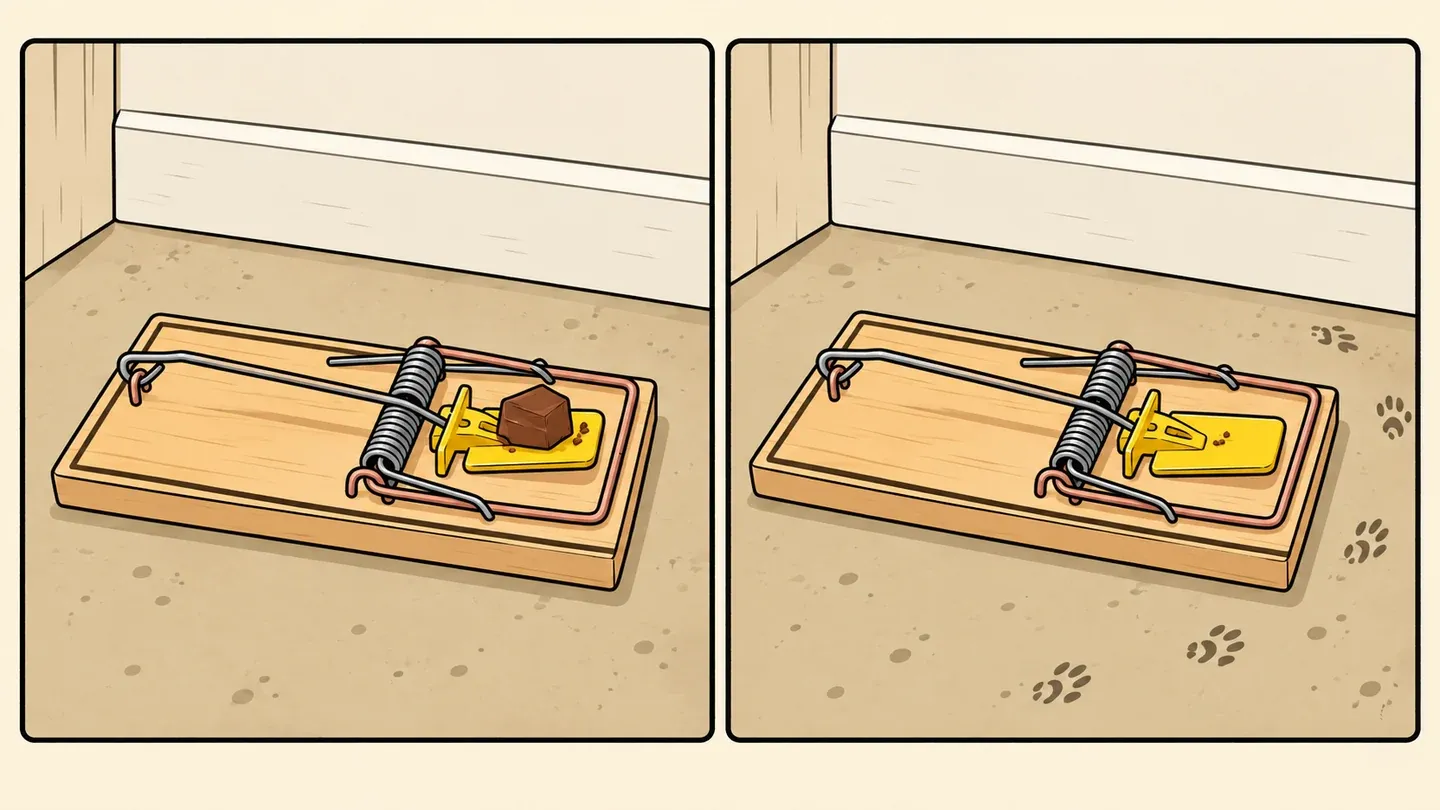
Illustration: a baited snap trap against a baseboard; in the second panel the bait is gone, the trap is still set and there are paw prints nearby.
- Use less bait and press it in. A pea-sized dab in the trigger grooves, nothing on the edges.
- Set the trigger lighter. Nebraska Extension says to reset the trap with a light “hair trigger.” On a trap with two trigger notches, that’s the more sensitive one.
- Tie the bait on. Cloth, dental floss or a cotton ball on the trigger makes the mouse pull.
- Rule out insects. Insects can carry bait off too. Don’t spray insecticide on the trap or the bait.
- Move the trap. If the bait sits untouched for days, move the trap to the freshest droppings, flush against the wall.
Pre-baiting (bait out, trap not set) is mostly a rat technique. The CDC says house mice are less cautious and may be trapped more quickly; for wary rats, see why rats avoid traps.
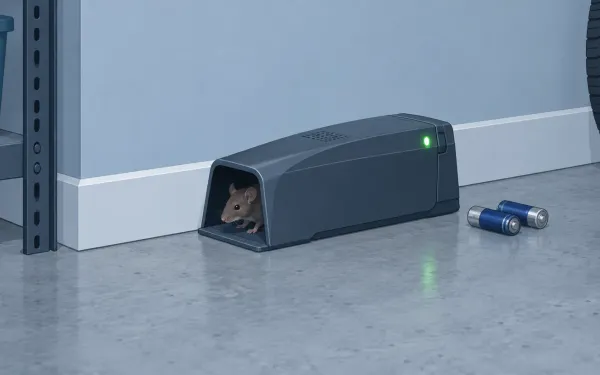
A trap that mice never visit is usually in the wrong spot rather than baited wrong, the most common reason mouse traps don’t work. Electronic traps fail for their own reasons, such as weak batteries and dirty plates; see why an electronic trap takes the bait but doesn’t kill.
Is Mouse Trap Bait Safe Around Kids and Pets?
The food is ordinary; the danger is the trap. The CDC says to keep baits and traps out of reach of children and pets, so put baited traps behind the fridge or stove or at the back of a cabinet, not in the open. If someone in the home has a peanut allergy, use a peanut-free bait from the table above.
Which Bait Fits Your Situation
| Situation | Bait to use | Why |
|---|---|---|
| Not sure what they’re eating | Pea-sized dab of peanut butter | The CDC and UC IPM both lead with it. |
| Peanut allergy at home | Chocolate, caramel or non-allergenic bait | Nebraska Extension’s peanut-free options. |
| Chewed packages or pet food near droppings | A fresh piece of that food | UC IPM: the best bait is often what they’re eating. |
| Bait licked clean, trap still set | Cloth, floss or a cotton ball tied on | The mouse has to pull, which springs the trap. |
| Mice in the birdseed or grain | Seeds pressed into peanut butter | Matches their food and stays on the trigger. |
| A bucket trap outdoors | Peanut butter spread over the can | See how bucket traps work. |
What It Might Still Cost
The bait is free; the traps and cleanup aren’t. Plan for these:
| Item | Price |
|---|---|
| Bait | Peanut butter from your kitchen |
| Snap traps, 12–24 set in pairs | $2.29 a two-pack, about $14–$28 |
| Nitrile gloves, 50 count | $8.49 |
| Bleach for cleanup, 81 oz | $6.39 |
| Copper mesh for sealing, 20 ft | $28.80 |
| Non-allergenic commercial bait | — |
| Pro trap-and-seal job, 53 shared quotes (middle half) | $1,400–$3,000 |
| Pro visit, price-guide range (usually no sealing) | $150–$655 |
The supply list adds up to about $57–71, the same kit as our mouse plan; the two-pack total is our math. Prices are U.S. list prices from September and October 2026, before tax and shipping, and the pro range is on the exterminator vs. DIY cost page.
Before You Bait: A Quick Checklist
- Look for chewed food near fresh droppings, and bait with that.
- Use a pea-sized dab, not a spoonful.
- Press the bait into the trigger with a swab, not your finger.
- Tie on cloth or floss if traps get licked clean.
- Set the trigger light on the more sensitive notch.
- Keep baited traps out of reach of children and pets.
- Check traps every morning and refresh the bait weekly for at least 15 days.
Common questions
Cheese isn’t a first-choice bait. None of the extension guides we checked list it among recommended mouse baits; they lead with peanut butter, and Nebraska adds chocolate, caramel and seeds.
Yes. UC IPM calls it “very attractive to house mice.” The catch is quantity: too much and they eat it without setting the trap off.
The Bottom Line
Start with a pea-sized dab of peanut butter pressed into the trigger, or a fresh piece of whatever the mice are already eating. If the bait keeps vanishing, use less, tie on cloth or floss, and set the trigger lighter before you change foods.
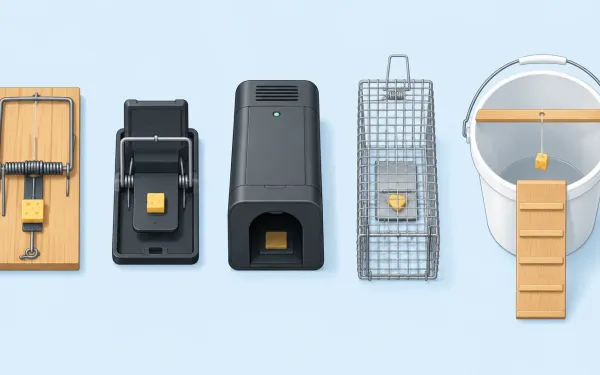
Bait is one part of the job. Choose a trap from the main types of mouse traps, and seal the gaps with steel wool or copper mesh. If fresh droppings still turn up after weeks of steady trapping, that’s the point to bring in a pro.
Sources and further reading · 4
- Centers for Disease Control and Prevention, How to Trap Up to Remove Rodents.
- UC Statewide Integrated Pest Management Program, Pest Notes: House Mouse.
- Nebraska Extension, Controlling House Mice (G1105).
- Victor, wide-pedal mouse trap instructions.