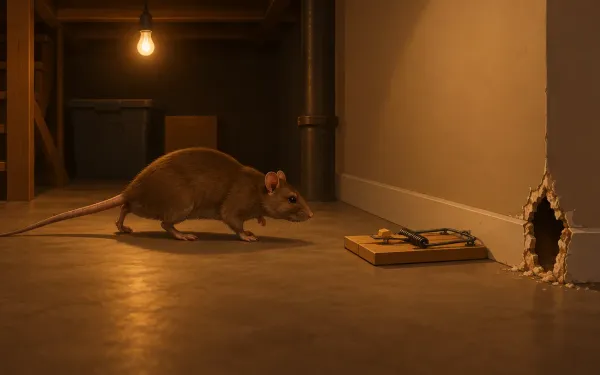
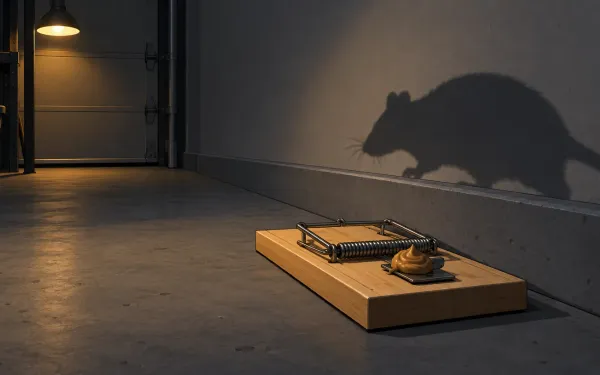
Why Rats Avoid Traps (and How to Catch a Smart Rat)
Rats avoid traps mostly because the trap is new, the wrong size or in the wrong spot, or because there’s easier food nearby. To catch a smart rat, bait a rat-size snap trap unset along the wall where you find droppings, put other food away, and set every trap the same night once the bait is taken.
Call a pro if pre-baiting and trapping haven’t stopped new droppings, urine spots or gnawing, which the CDC treats as a sign of an ongoing infestation.
Rat stealing the bait or walking past the trap every night? Start with the table below, then the checks under it. We haven’t tested traps ourselves; this rests on CDC, UC IPM and Internet Center for Wildlife Damage Management (ICWDM) guidance and published studies of rodent behavior. The step-by-step basics are in how to catch a rat.
How to Catch a Smart Rat: What to Change
When a rat sniffs the trap and leaves, or the bait vanishes and the bar never comes down, the usual cause is ordinary: the wrong trap, bait that comes off too easily, or better food somewhere else.
| What you see | What to change |
|---|---|
| No catches, no fresh signs | Look for fresh signs elsewhere first |
| Bait gone, trap still set | Use less bait, pressed into the trigger or tied on |
| Rat walks up and leaves | Pre-bait unset for a few nights; remove other food |
| Trap snapped, no rat | Set it at a right angle to the wall |
| Trap dragged away | Fasten rat traps down |
| Untouched, droppings elsewhere | Move it onto the route |
Step 1: Use a rat trap with a wide trigger. Mice and rats need different traps, and in a trial the ICWDM describes, expanded-trigger traps caught almost twice as many rats. Test the trap with a pencil, never your fingers.
Step 2: Make the bait hard to steal. UC IPM recommends a pea-sized amount of bait, not a spoonful, tied to the trigger with thread or pressed into it.
Step 3: Remove the competition. Put pet food away at night and store dry goods in sealed containers, so the trap is the easiest meal around.
Step 4: Pre-bait, then set every trap at once. Leave traps unset until the bait has been taken at least once; UC IPM warns that a rat that sets off a trap and escapes becomes very hard to catch again. Electronic traps need pre-baiting too.
Step 5: Watch with a camera. Predator Free NZ recommends a motion camera for traps that aren’t catching; a night of footage shows whether the rat walks past, backs away or steals from the side.
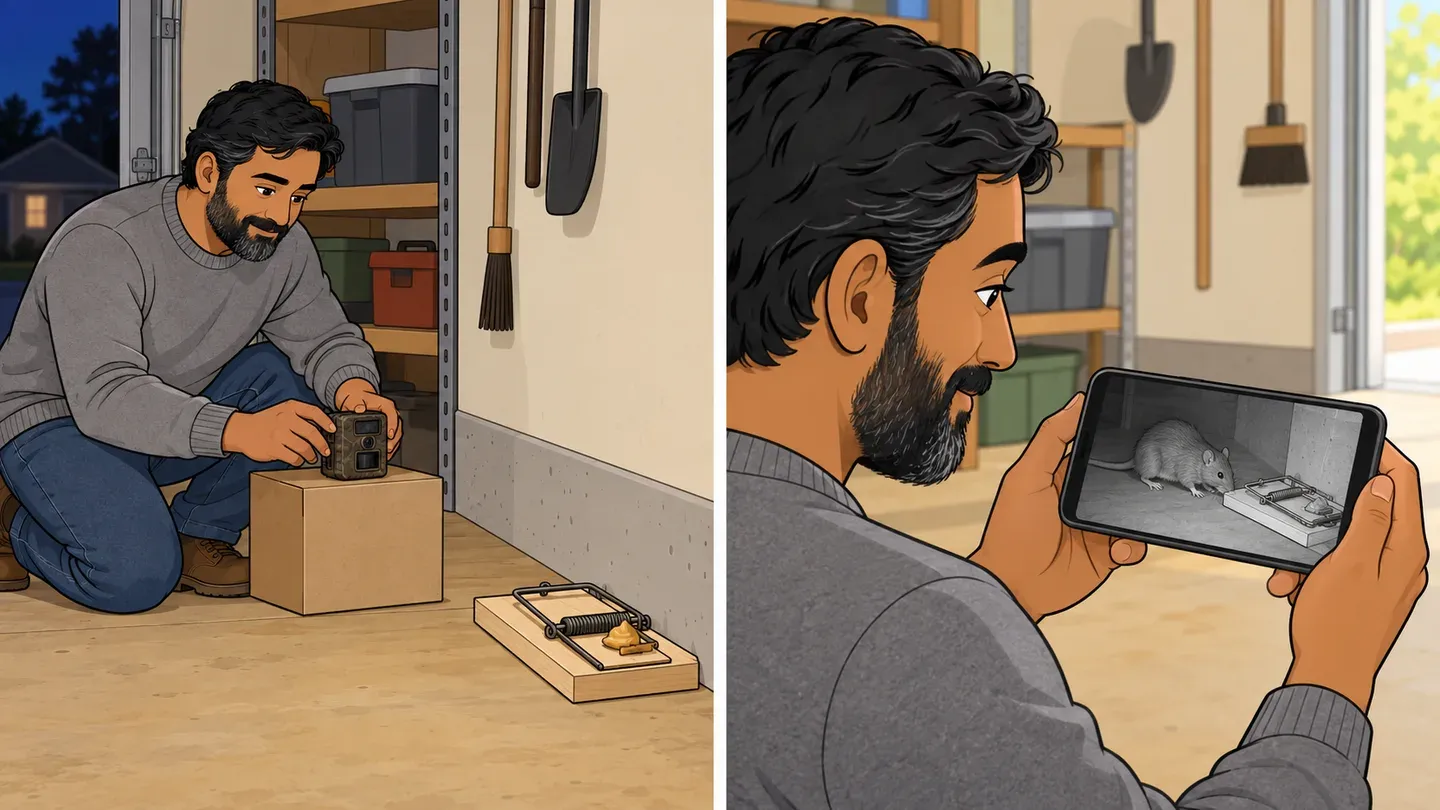
Illustration: a trail camera watches a rat-size snap trap, and the night footage shows a rat beside it.
If a rat has already escaped a trap, pull the traps for a few days, then come back with a different style of rat trap, pre-baited and unset, a little further along the same route.
Why Rats Avoid New Traps (Neophobia)
Rats are wary of anything new on a route they know, a trait called neophobia. The CDC says several days may pass before some rats approach a new trap. Until then, a rat may stop, sniff and walk around it, or take another path.
Before you blame neophobia, check for fresh droppings or gnaw marks near the trap, not just anywhere in the house. It may simply be off the rat’s current route; rat droppings along a wall show where that route is.
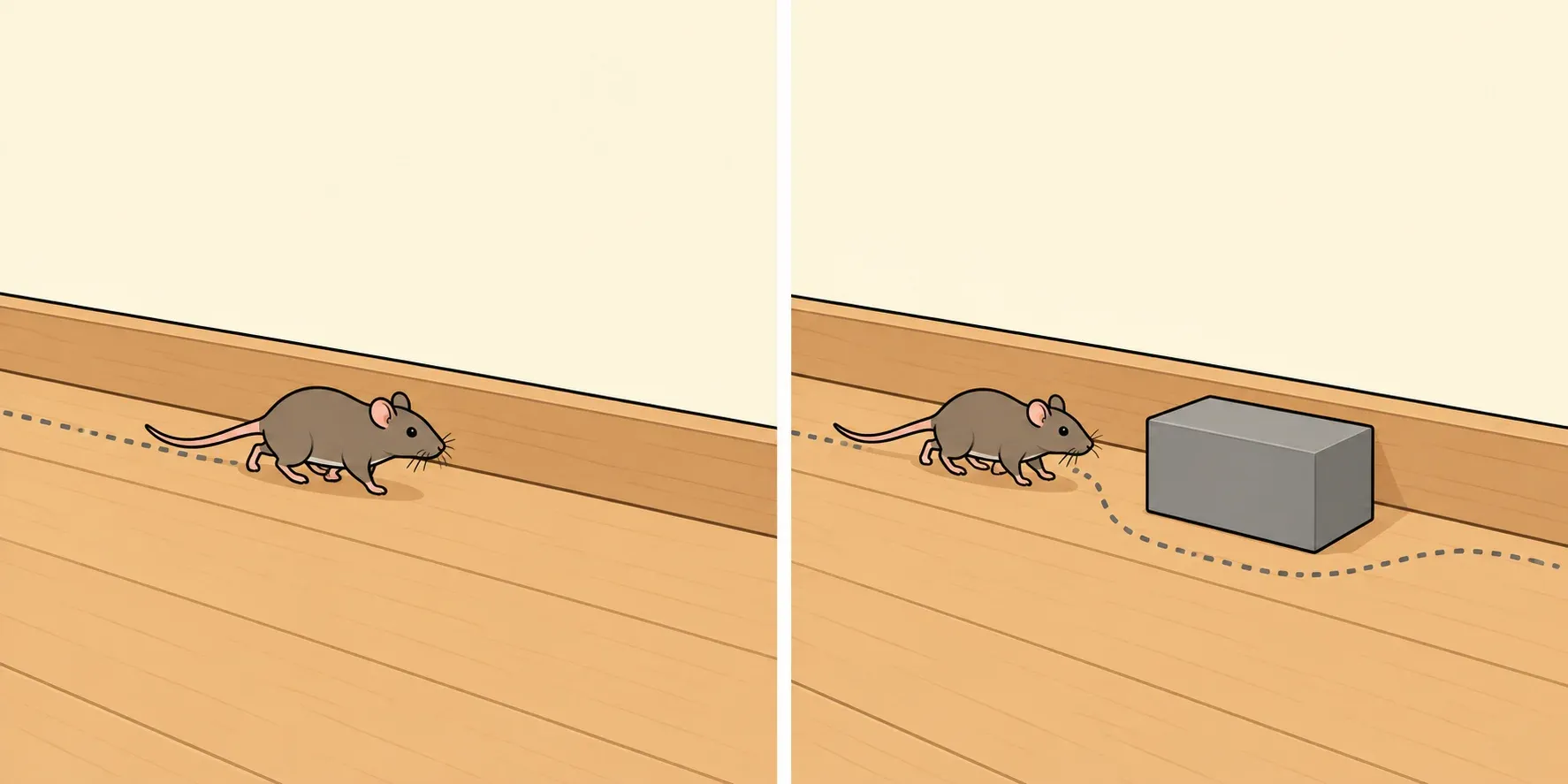
Illustration: a rat’s path along the wall bends around a new object.
Are Rats Smarter Than Mice at Avoiding Traps?
Rats are usually the more cautious of the two; the CDC says house mice and deer mice are less cautious. A review of studies on rodent-control devices draws a similar line: it reports more pronounced, long-lasting avoidance in some wild rat populations and mixed findings for house mice, with some studies describing mice as more likely to approach novel objects.
No rule fits every rat, though. The review found that avoidance varies by species, population and individual, and a lab study of wild brown rats (Norway rats) in Tokyo found rats from one site wary of novel objects and rats from another not.
If it’s mice walking past your traps, the fixes are different: switch to mouse-size traps and set more of them, no more than about 10 feet apart where you find droppings (UC IPM).
How to Pre-Bait a Rat Trap
Bait the trap but don’t set it, as the CDC suggests, so rats get used to it as a safe food source. Check it each morning, and once the bait is being taken, set every trap the same evening. Skip this if your trap’s instructions say not to.
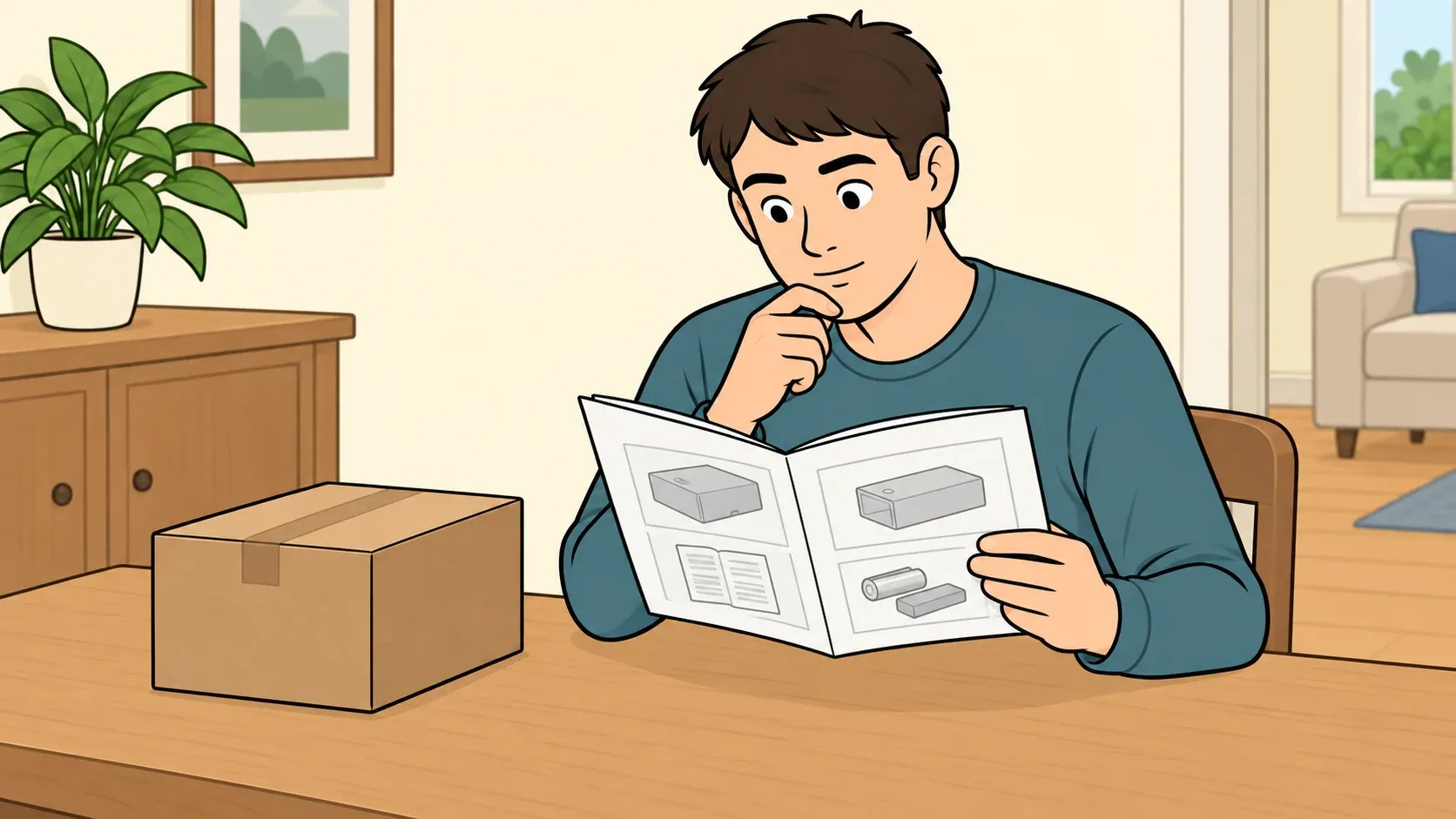
Illustration: reading the trap’s instruction leaflet before pre-baiting.
There is no universal “five-day rule.” A field study by Bytheway and colleagues on black rats (roof rats) and tracking tunnels found only partial support for the idea that pre-baiting works by overcoming fear of a new object; mostly, it gave more rats time to find the device.
Change one thing at a time, not everything at once, so you can tell what worked. For setup, see how to set a mouse trap; for bait, compare bait choices.
How to Confirm the Rats Are Gone
Check every trap each morning and note which ones catch.
Clean up old droppings so new ones stand out, then look along the same walls.
Watch for fresh urine spots or gnawing as well as droppings.
Count a full week. Nothing caught for a week and no new signs means the rats are gone, according to the CDC.
What to Do Next
Trapping only clears the rats already inside. Seal the gaps they use while you trap, as in how to get rid of rats in your house, and if it’s mice, follow how to get rid of mice. Both cover when to call a pro.
- Buy rat-size traps with an expanded trigger, and fasten them down.
- Place them on the route, next to fresh droppings along the wall.
- Bait with a pea-sized amount, pressed in or tied on.
- Put away pet food and other easy meals at night.
- Leave traps unset until the bait is taken, then set them all the same night.
- Keep traps out of reach of children and pets.
Common questions
Sometimes, but an empty trap usually means the wrong spot, not a genius rat. Move it next to fresh droppings first, and check that it’s a rat-size trap.
Mostly by getting away. UC IPM warns that a rat that sets off a trap and escapes becomes very hard to catch, which is why it pays to pre-bait and set several traps the same night.
Probably not. The ICWDM says human and dead-rat odors aren’t known to reduce trapping success, and an older extension chapter says the same for mice. Wear gloves anyway, for hygiene.
There’s no reliable number of days. The CDC notes that several days may pass before some rats approach traps, so watch for fresh signs rather than counting down.
Usually the bait comes off too easily, or a mouse took it: UC IPM notes that mice and small young rats often won’t trip a rat trap. Press the bait into the trigger, and check whether the droppings are mouse-size.
Sources and further reading · 11
- CDC: How to Trap Up to Remove Rodents — trap choice, placement, pre-baiting and safety.
- Clapperton, New Zealand Department of Conservation (2006): A review of rodent behaviour in relation to control devices — findings vary by species, population and study.
- Bytheway et al. (2021): A mechanistic understanding of prebaiting to improve interaction with wildlife management devices — field research on black rats and tracking tunnels.
- Koizumi et al. (2020): Existence of wild brown rats that are indifferent to novel objects — different responses among wild rat populations.
- Drickamer et al. (1992): Use of odor baits in traps to test reactions to chemical cues in house mice — outdoor-enclosure tests of odor cues, not of bare-hand handling of indoor traps.
- UC IPM: Pest Notes — Rats — trap numbers and spacing, bait amount, pre-baiting and trap shyness.
- UC IPM: House Mouse — spacing mouse traps no more than about 10 feet apart.
- ICWDM: Norway Rat Prevention and Control — leaving traps unset until bait is taken, expanded-trigger traps, placement near holes, and odor.
- New York State Department of Health: Controlling the Rat — household trap tips, including enlarging the trigger.
- Predator Free NZ: Troubleshooting tips, Five more things and Disappearing bait — New Zealand community trapping advice, written for outdoor tunnel traps.
- Timm (1994): House Mice, in Prevention and Control of Wildlife Damage — human and dead-mouse odors on traps not known to reduce trapping success.