How to Get Rid of Drugstore Beetles in Your Pantry
Find the one package they’re breeding in, toss or freeze it, clean the shelves and seal the rest. No sprays.
To get rid of drugstore beetles, find the food they’re breeding in, often old spices, pet food, flour or dried flowers, and throw it out. Freeze anything you want to keep at 0°F for 4 days, vacuum and wash the shelves, and move dry food into jars with tight lids. UC IPM doesn’t recommend insecticides for pantry pests, so you don’t need to spray.
Cost: about $16 in supplies. Time: about 1 afternoon + 2–3 weeks of checks. Difficulty: easy. Call a pro if you’ve thrown out every infested package and sealed your dry goods, but beetles still turn up after several weeks and you can’t find a source.
Drugstore beetles are tiny reddish-brown beetles that UC IPM says will “eat anything except cast iron.” The beetles you see crawling on the counter or flying to a window came from a package somewhere nearby, and until you find it, more will keep appearing. This guide covers telling them apart from look-alikes, the five steps to clear them out, and how to keep them from coming back. We haven’t tested these methods ourselves; this rests on University of Kentucky and UC IPM entomology guidance.
Just found beetles in a jar of spices? Bag that container and put it in the outdoor trash. Then check every other dry food in the same cupboard tonight, starting with anything that’s been open a long time. The source is often a package you haven’t touched in months.
What Works and What Doesn’t Against Drugstore Beetles
| Method | Works? | Cost | Main limitation |
|---|---|---|---|
| Finding and throwing out infested food | Yes, the core fix (UKY, UC IPM) | The food | You have to check everything, not just one shelf |
| Freezing suspect food at 0°F for 4 days | Yes, kills them (UKY) | Freezer space | Needs a freezer that isn’t self-defrosting |
| Vacuuming and washing shelves | Yes, removes beetles, eggs and spilled food | Free | Corners and cracks need a crevice tool |
| Airtight jars and hard containers | Yes, stops spread and new problems | $16.49 for 12 jars | Plastic bags aren’t enough (UC IPM) |
| Pantry moth pheromone traps | No, they don’t attract beetles (UC IPM) | $9.99 | Made for Indian meal moths |
| Insecticide sprays in the pantry | Not recommended (UC IPM) | — | Puts pesticide near your food |
Drugstore Beetle, Cigarette Beetle or Flour Beetle?
Several tiny brown beetles show up in pantries, and they’re handled the same way. UC IPM says the drugstore beetle and the cigarette beetle look so alike that the easiest way to tell them apart is the wing covers: lengthwise grooves on the drugstore beetle, smooth on the cigarette beetle. Both are about ⅛ inch long. The cigarette beetle is the more common of the two.
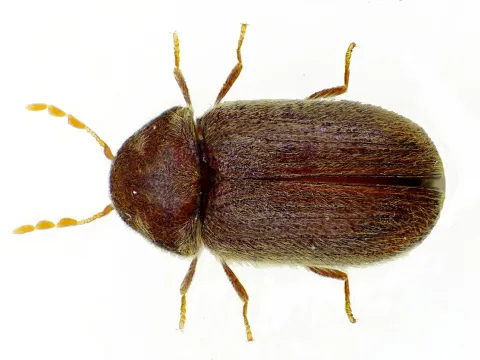 This guideDrugstore beetleReddish brown, grooved wing covers. Eats almost anything dry.
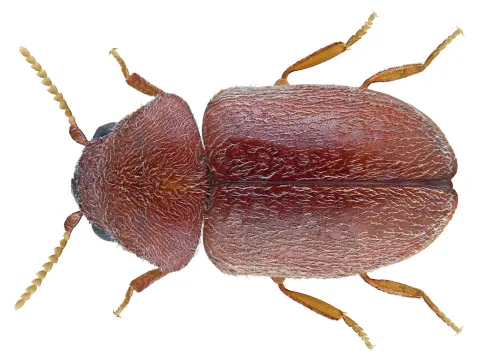 Same stepsCigarette beetleSame size and color, smooth wing covers. Same fix.
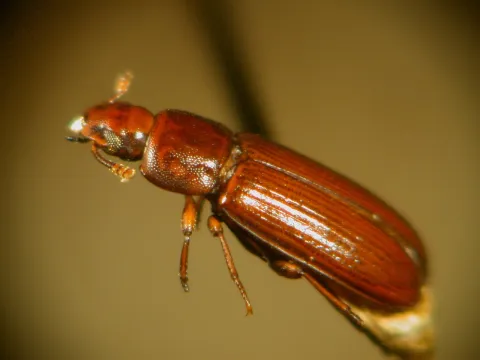 Same stepsRed flour beetleFlatter and longer. Usually in flour and cereal.
Beetles with a long snout in rice, beans or whole grain are weevils; see how to get rid of weevils. Small moths flying around the kitchen are a different pantry pest; see how to get rid of pantry moths. The cleanup is almost the same.
Step 1: Find the Source
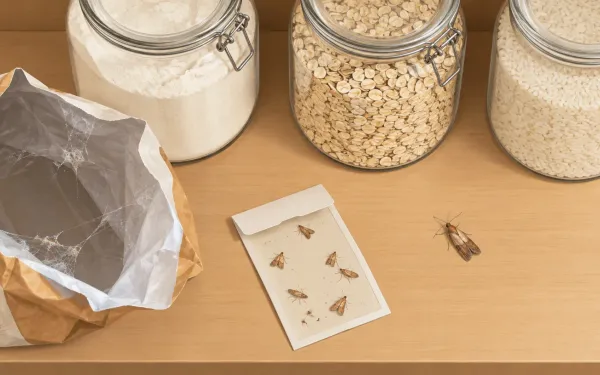
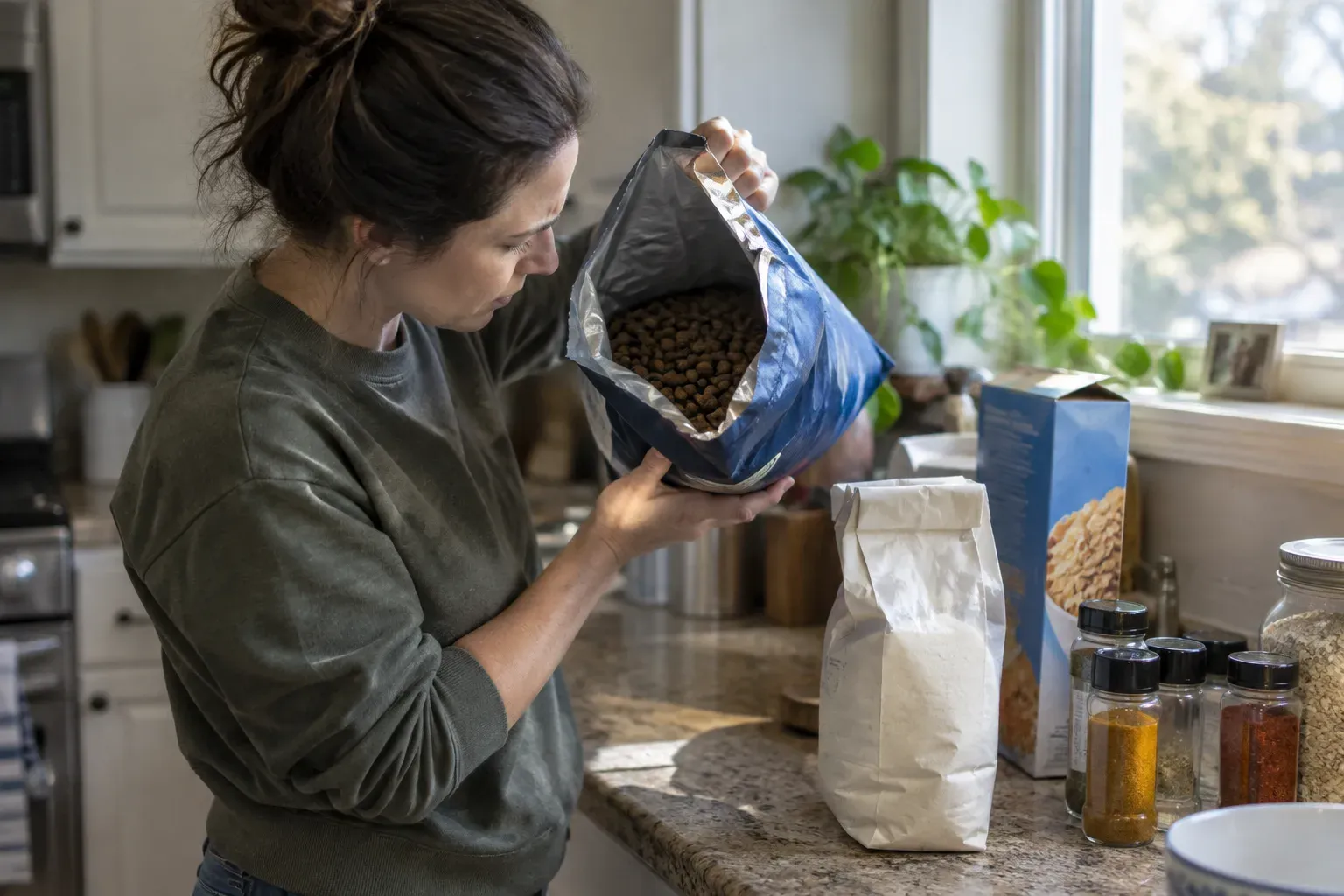
Take everything out of the cupboard where you’ve seen beetles, and open every package. UKY lists bread, flour, meal, breakfast foods and spices like red pepper as common drugstore beetle foods, and UC IPM adds pet food, pastry mixes and seeds. Look for:
- Live beetles inside the package or on the lid.
- Tiny round holes in paper or cardboard packaging.
- Powdery or clumped food at the bottom of the bag.
- Small white grubs when you sift through the food.
Check outside the kitchen too. UKY says that if the source isn’t in the pantry or cupboards, look at decorative items such as dried flower arrangements and Indian corn, and birdseed. Pet food in the garage and old spices at the back of a drawer are the usual suspects.
Step 2: Throw Out or Freeze Infested Food
Throw out any food with beetles, grubs or holes in it. UC IPM says to throw away any food that shows signs of infestation. Bag it and take it to the outdoor trash so the beetles don’t spread back into the house.
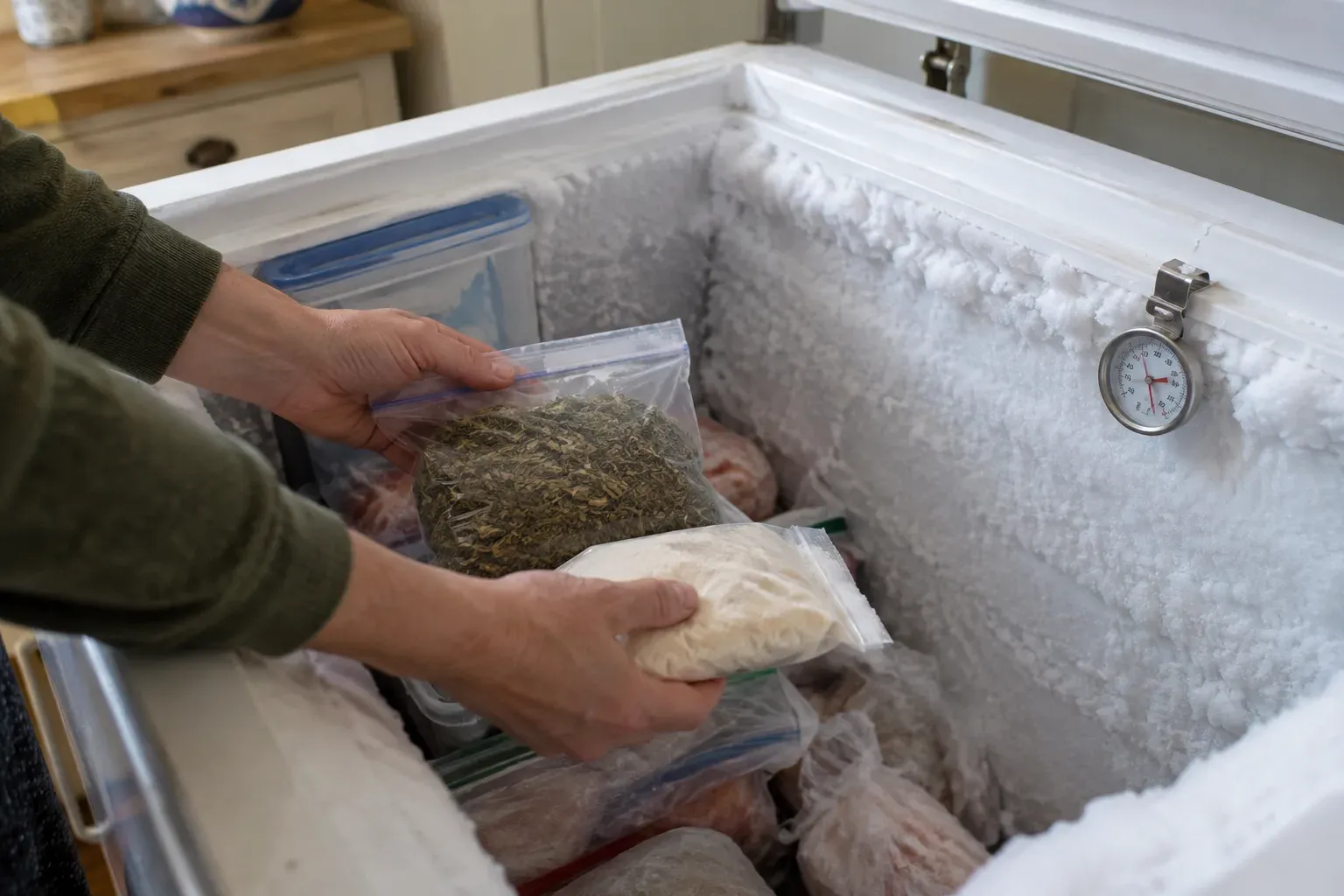
For things you’re not sure about, or non-food items like dried flowers and birdseed, UKY gives two options: a freezer at 0°F for 4 days (one that isn’t self-defrosting), or heating at 155°F for about 20 minutes with the oven door propped open. Freezing is the easier choice for most kitchens.
Step 3: Vacuum and Wash the Shelves
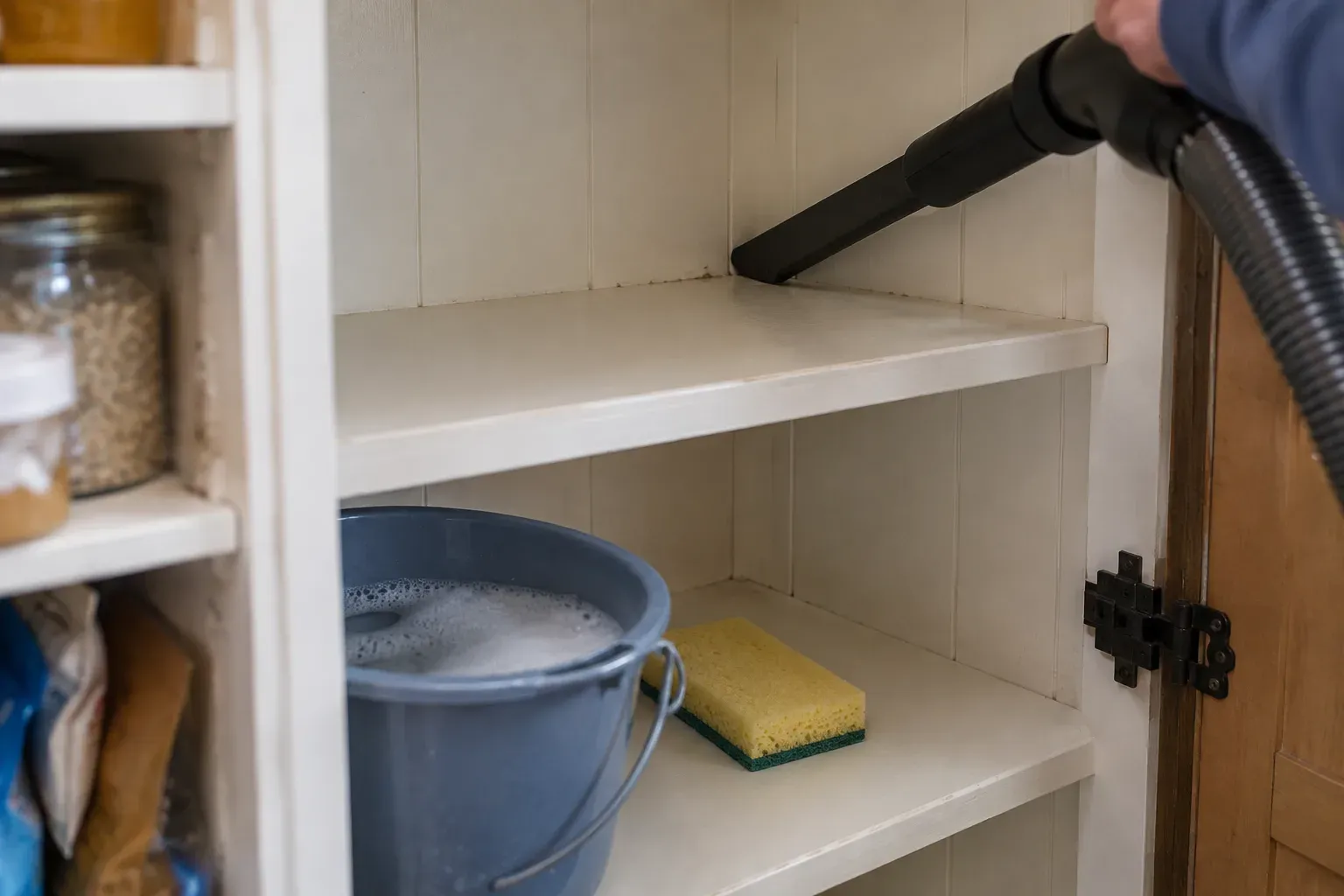
With the cupboard empty, vacuum the shelves, top and bottom, and use a crevice tool on cracks and corners (UKY). Then wash the shelves with soap and water (UC IPM). That removes beetles, eggs and the spilled crumbs they feed on. Empty the vacuum or its bag outside when you’re done.
Step 4: Move Dry Food Into Sealed Containers
Put flour, spices, cereal, rice, pasta and pet food into glass jars or hard containers with tight-fitting lids. UC IPM says plastic bags aren’t enough. Wash old containers before refilling them, and don’t pour new food on top of old (UC IPM). For flour, spices and grains you don’t use often, the freezer is the safest place to store them.

Step 5: Watch for Stragglers for a Few Weeks
A few beetles may still turn up for a while, crawling on counters or sitting on window sills. That’s normal right after a cleanup. UC IPM says pantry pests can live for many weeks without food, so check the cupboard again in 2–3 weeks. If you keep finding new beetles in the same spot, there’s still a source you missed: check pet food, birdseed and anything in other rooms.
Pheromone traps sold for pantry moths won’t help here. UC IPM notes that traps for the Indian meal moth don’t attract beetles.
Do You Need to Spray?
No. UC IPM says insecticides aren’t recommended for any pantry pests, and spraying on or near food may cause more harm to your family than the beetles would. Even large infestations clear up with removal, cleaning and sealed storage.
Are Drugstore Beetles Harmful?
They don’t bite or sting, and they don’t damage the house. The harm is to food: UC IPM notes that pantry pests contaminate food with their bodies and droppings, and can bring in microbes that rot food in warm, humid conditions. Throw out what they’ve been in.
How Long Does It Take?
UC IPM says the drugstore beetle’s whole life cycle can take place in fewer than two months. That’s why one forgotten package can turn into beetles all over the kitchen, and why the 2–3 week recheck matters.
How to Keep Drugstore Beetles Out
- Check packages when you bring them home, especially spices, pet food and birdseed.
- Buy dry goods in amounts you’ll use within a few months.
- Store flour, spices, grains and pet food in sealed containers, or in the freezer if you use them rarely.
- Clean shelves and bins regularly, and don’t let crumbs build up in corners (UC IPM).
What It Costs
| Item | Typical cost |
|---|---|
| 12 quart glass jars with lids | $16.49 |
| DIY total | About $16 |
| Pro pantry pest treatment | $150–$200 |
DIY: Target list price, October 1, 2026, before tax, plus a vacuum, soap and freezer space you likely have. Pro: the pantry moth treatment range from Fixr (January 2025), the closest published price for a pantry pest visit. Since sprays aren’t recommended for pantry pests, most of what you’d pay for is the same cleanout.
When to Call a Pro
Call one only if beetles keep turning up several weeks after you’ve thrown out every infested package and sealed your dry goods, and you can’t find a source anywhere in the house. Be wary of a quote that’s built around spraying food shelves. Our guide to what an exterminator does lists what to ask.
Common questions
Usually from an infested package of dry food brought home from the store, or an old one at the back of a shelf. From there they spread to other open packages nearby.
No. They feed on dry food and don’t bite people or pets.
Throw it out. Pantry pests contaminate food with their bodies and droppings, and UC IPM advises discarding food that shows signs of infestation.
The Bottom Line
Find the infested package, toss it or freeze it at 0°F for 4 days, vacuum and wash the shelves, and move dry food into sealed jars. Skip the sprays, check again in 2–3 weeks, and look at pet food and birdseed if the beetles keep coming.
Sources and further reading · 3
- University of Kentucky Entomology: Stored Product Pests in the Pantry (EF612): common foods, finding the source, decorative items and birdseed, freezing at 0°F for 4 days, heat at 155°F, vacuuming.
- UC IPM: Pantry Pests: drugstore vs. cigarette beetle, life cycle, discarding infested food, sealed containers, cleaning, pheromone traps, why not to use insecticides.
- Price: Target list price for 12 quart glass jars, October 1, 2026; pro range from Fixr (January 2025).