What Do Exterminators Do for Mice? Visits and Red Flags
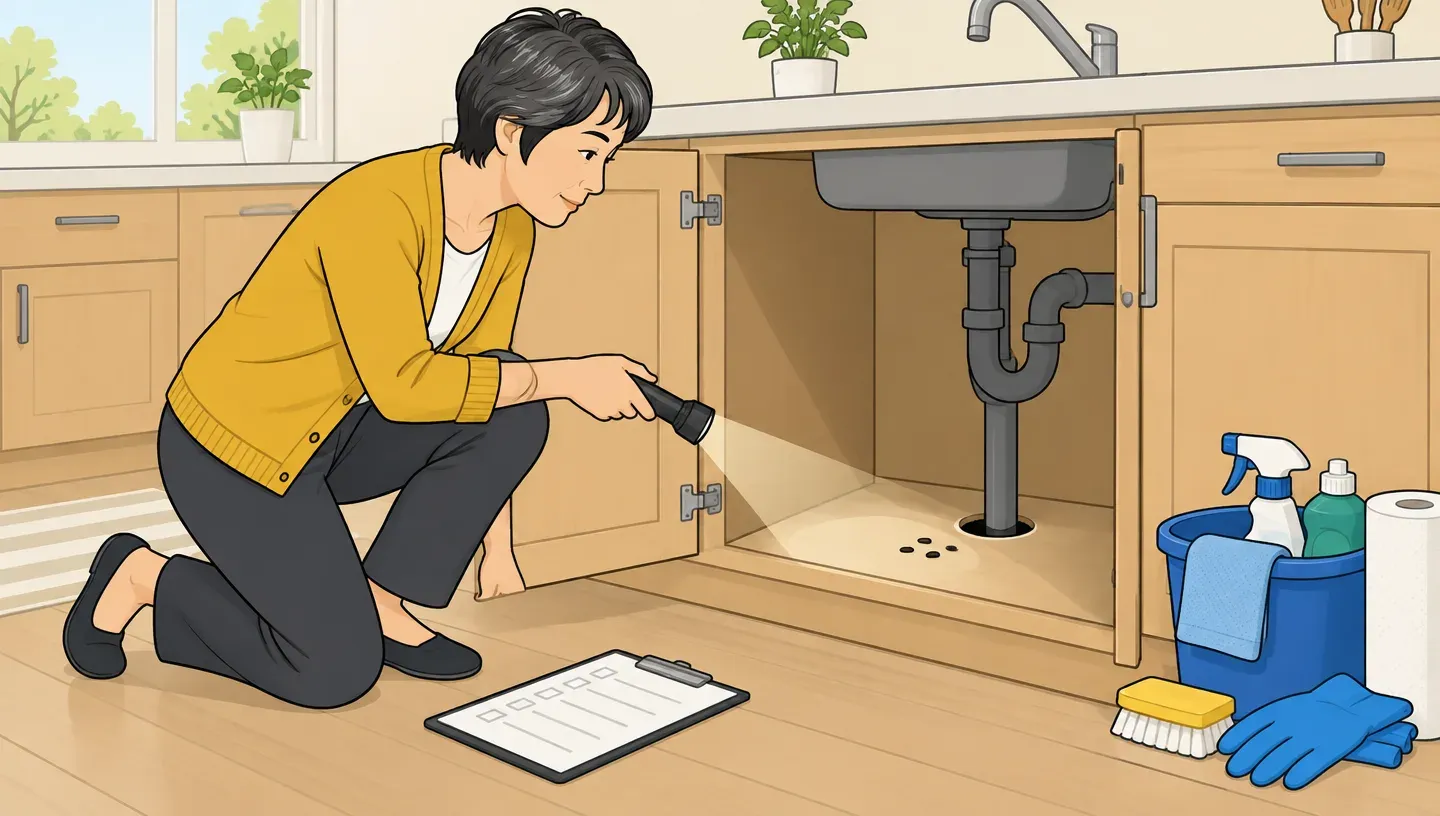
Illustration: checking under the sink, where pipes pass through the cabinet floor.
What exterminators do for mice is inspect inside and out, set snap traps or locked bait stations, seal holes ¼ inch and larger, and come back to check: the same plan the CDC gives homeowners. Hire one for ducts, rooflines or trapping that hasn’t worked in 15 days. Walk away from bait-only plans and prices given without an inspection.
Cost: about $57–71 in supplies. Difficulty: moderate. Call a pro if mice are in your heating or cooling ducts, the entry holes are on the roof or eaves, or at least 15 days of trapping and re-baiting hasn’t stopped new signs.
This guide walks through each visit, compares the ways to buy the job, from a one-time visit to a monthly plan to doing it yourself, and lists the quote red flags. We haven’t hired or shadowed an exterminator ourselves; this rests on CDC, EPA, NPIC and university extension guidance, published price ranges and two Reddit accounts.
Saw a mouse tonight? Don’t sweep or vacuum the droppings: that puts tiny virus-carrying droplets in the air, and breathing them is the main way rodent diseases reach people (CDC). Wear rubber gloves, spray them with 1.5 cups of bleach in a gallon of water until very wet, wait 5 minutes, then wipe up with paper towels.
How We Compared Exterminator Options
We set each way of handling a mouse problem side by side on five things:
- What’s included: inspection, removal, sealing and follow-up.
- Safety around kids and pets: traps versus poison, and where it goes.
- Price: national ranges from April and June 2026; DIY list prices from September 2026.
- How the bill grows: one price, per visit or ongoing.
- Your effort: what you still have to do.
Sources are listed at the end.
What Do Exterminators Do for Mice?
Traps or bait only work alongside removing food and sealing the way in, say University of California pest experts. So a real mouse job has four parts:
- Inspection: find droppings, nests and entry holes.
- Removal: snap traps, sometimes bait in locked stations.
- Sealing: close gaps ¼ inch and larger, often priced separately.
- Follow-up: check traps and confirm the mice are gone.
A plan that’s only bait, with no sealing or follow-up, skips half the job.
Ways to Handle Mice at a Glance
| Option | Typical cost | Main limitation |
|---|---|---|
| Trap-and-bait visit only | $150–$550 | Usually no sealing, so mice come back |
| Pro job with sealing | $1,400–$3,000 (53 shared quotes, middle half) | Insulation work is often pitched on top |
| Per-visit service | $75–$125 a visit | Total depends on how many visits it takes |
| Monthly or quarterly plan | Priced by phase; monitoring $50–$150 per service | Keeps billing after the mice are gone |
| Hire only the sealing | $200–$600 and up | You still trap and check daily |
| Do it yourself | $57–71 | You handle every catch and every ladder |
Trap-and-bait visit: This Old House citing HomeGuide (April 2026). Pro job with sealing: the middle half of 53 trap-and-seal quotes homeowners shared on Reddit (see the quote table). Sealing alone: HomeAdvisor’s low end (June 2026); the exterminator vs. DIY cost page breaks each one down. DIY: Victor, DoMyOwn and Target list prices, September 30, 2026.
One-Time Pro Job: For Ducts, Rooflines and Failed Trapping
One price usually covers the inspection, trapping visits and a final check. It earns its money where you can’t safely work: the CDC says to call a professional rodent service for mice in heating or cooling ducts, and entry holes on the roof or eaves need a tall ladder.
Best for: ducts, roofline gaps, or 15 days of trapping that hasn’t stopped new droppings.
Main limitation: sealing and insulation work are often separate lines on the quote.
Per-Visit Service: Ask Who Checks Traps Between Visits
Some exterminators charge $75 to $125 a visit. For an active problem, one visit rarely finishes the job: traps need checking daily until a week passes with no catches (CDC). Ask how often the technician comes back, and who checks and empties traps in between.
Best for: a small problem where you’ll check traps yourself between visits.
Main limitation: you don’t know the total until the mice are gone.
Monthly or Quarterly Plans: Know Which Phase You’re Paying For
Companies offer monthly, quarterly or yearly service, priced differently while mice are active and during the monitoring phase afterward (University of Florida). Ask which phase you’re paying for, what each visit includes, and what the contract costs in total and how to cancel.
Best for: people who want someone checking on a schedule.
Main limitation: the bills keep coming until you cancel.
Hiring Only the Sealing: A Common Split
You can hire just the part you can’t do, such as sealing the roofline, and handle the trapping yourself. Ask for a list of the holes they’ll close and the material for each; our checklist of how mice get in the house helps you check the work.
Best for: gaps at the eaves or anywhere you’d need a tall ladder.
Main limitation: sealing doesn’t remove the mice already inside.
Doing It Yourself: The Same Plan for $57–71
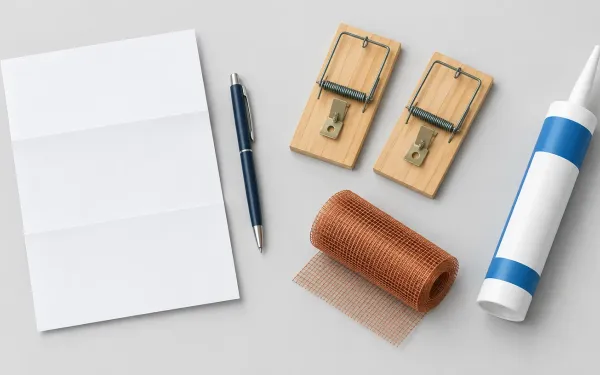
Most of what an exterminator does for mice, you can do with our plan to get rid of mice. The kit is 12 to 24 snap traps, about 20 feet of copper mesh, nitrile gloves and bleach. Use about two dozen traps for a new infestation in a 1,500-square-foot home (University of Nebraska), no more than about 10 feet apart, baited with a small dab of peanut butter; our guide to setting a mouse trap covers the rest.
Check traps daily. Wearing gloves, spray a caught mouse with the bleach mix, wait 5 minutes and seal it in a plastic bag (CDC). Skip glue boards, which the CDC advises against, and plug-in sound repellers, which have little evidence behind them.
Best for: most mouse problems you can reach.
Main limitation: you do the daily checks and the sealing.
What Happens on Each Visit
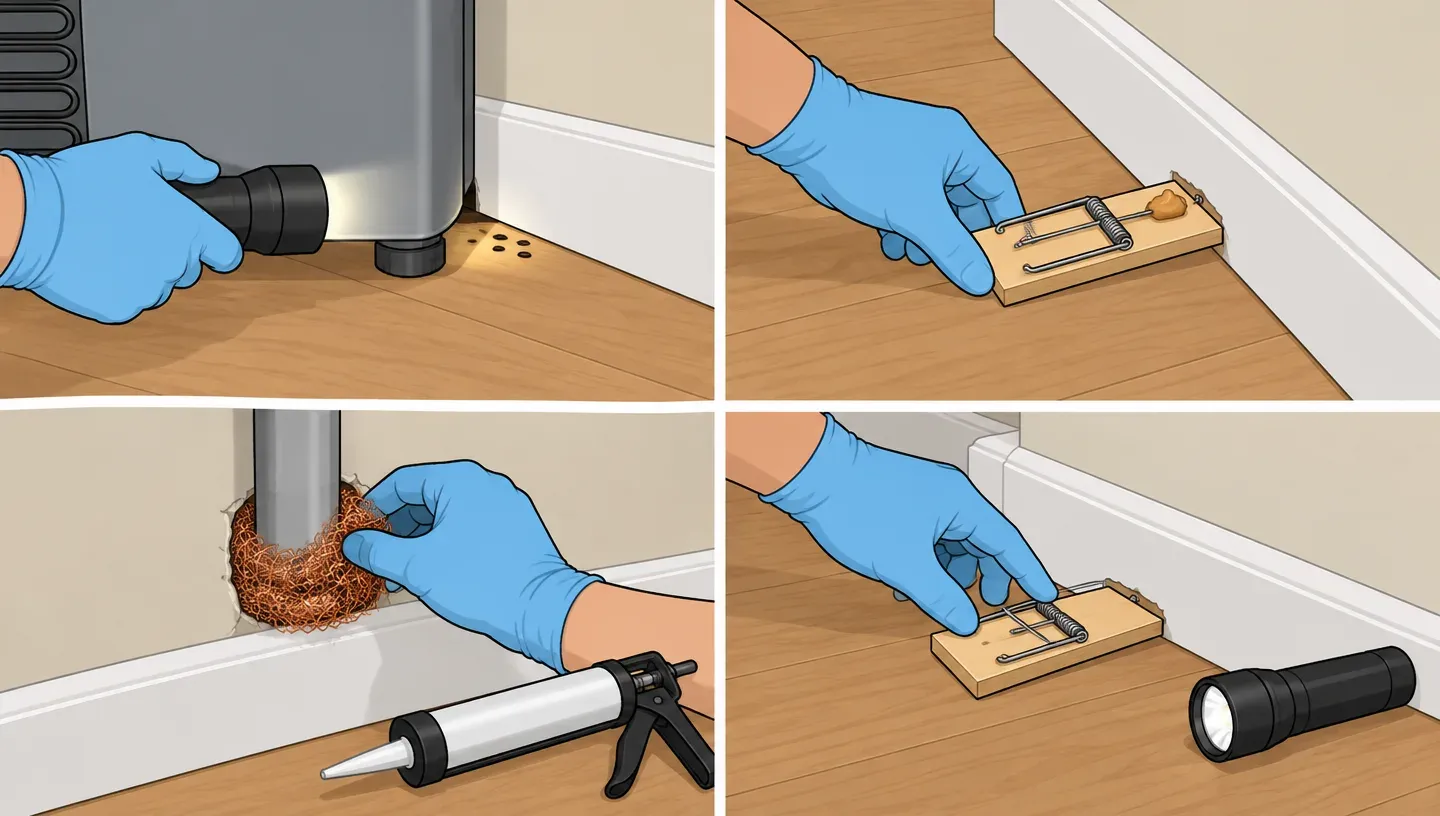
Illustration: inspect, trap, seal, then check the traps again.
Step 1: Prepare. Note where you’ve seen droppings, chewing or scratching, ask what prep they need, such as clearing out cabinets, and ask in writing how long kids and pets should stay away from any treated area.
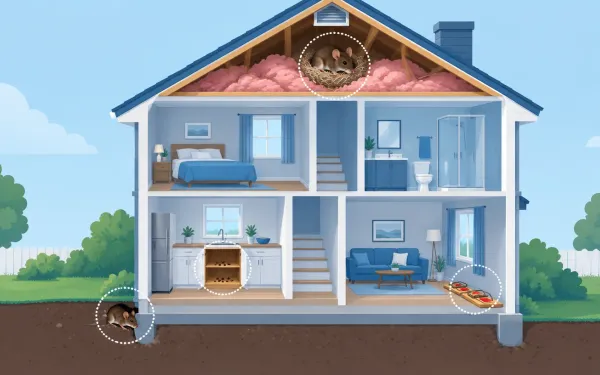
Step 2: The inspection. Expect a flashlight walk looking for droppings, gnaw marks, nesting material and gaps. Inside, that’s under cabinets, behind appliances, around pipes, the attic and the basement; outside, eaves, vents, the foundation line and holes for plumbing, cable and gas lines. Ask for the plan in writing, and ask to be shown the evidence.
Step 3: Traps first, bait in locked stations. Snap traps are a great first step in most homes, set along walls and where droppings turn up. Pros can use rodent poisons stores can’t sell to homeowners, and the labels require tamper-resistant stations wherever children under six, pets or wildlife could reach them (EPA).
Step 4: Sealing with metal, not foam alone. University of California experts call sealing the most successful and permanent form of mouse control. Small holes get steel wool or copper mesh held in with caulk; larger ones get hardware cloth, metal sheeting or cement. Mice get through foam, rubber, vinyl and wood, though foam holding steel wool in place is fine.
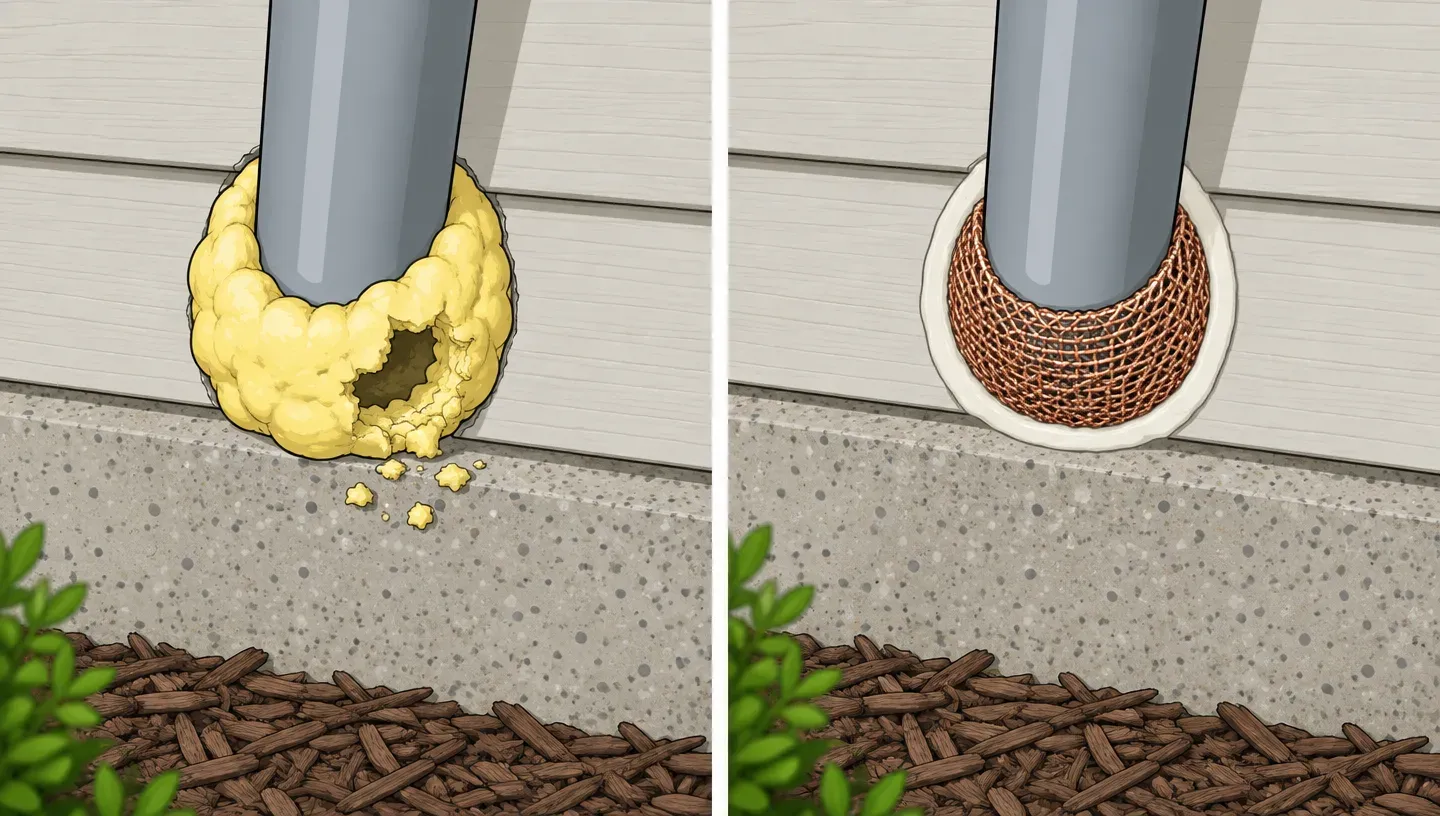
Illustration: a hole plugged only with foam (left) next to one packed with copper mesh and caulked (right).
Step 5: Follow-up. The job is done when a week passes with no catches and no new droppings (CDC).
Do Exterminators Use Poison or Fumigation for Mice?
Fumigation, almost never: HomeAdvisor calls it a last resort most pros don’t offer, and University of Georgia experts say fumigants should be used only by licensed operators. Poison, sometimes, as blocks, paste or pellets in locked stations, not sprays; if a mouse plan centers on spraying, ask what the product is and why.
Poison has two catches indoors. House mice seldom go more than 30 feet from their nest (University of California), so bait often means mice dying inside the house, and a possible smell. And a cat or dog that eats a poisoned mouse can be poisoned too. With kids or pets, ask for traps only; more in why we skip mouse poison.
Why Did the Exterminator Leave the Traps Unset?
One Reddit poster found the technician “didn’t even arm the traps.” For mice, ask when they’ll be armed: house mice aren’t very cautious and may be caught quickly (CDC). Not sure whether it’s mice or rats? Our mouse vs. rat guide covers droppings, size and sounds. For rats it can be deliberate: rats are wary of new objects, so baiting traps unset until the bait gets eaten, then setting them, helps.
Exterminator Quote Red Flags
One Reddit poster was quoted $1,700 over the phone and told an inspection was “a waste of time.” In 5,315 quotes homeowners shared, the same job often cost twice as much depending on who came out. Watch for:
- No inspection before the price. Nobody looked for droppings or holes. Many companies give free written estimates (NPIC).
- Pressure to sign today. The federal three-day right to cancel has exceptions, including some visits you asked for.
- Bait only, or foam as the only sealing. Either way, the way in stays open.
- A bundled quote to replace all the attic insulation. Ask to see the soiled areas and get it priced separately; replacing insulation after mice is its own decision.
- No written total, guarantee terms or license. Verify a license with your state pesticide office, listed on a state-by-state map.
Which Option Fits Your Situation
| Situation | What to choose | Why |
|---|---|---|
| A few mice in the kitchen | Do it yourself | Traps and sealing are the same plan a pro follows. |
| Mice in heating or cooling ducts | One-time pro job | The CDC says to call a professional rodent service. |
| Entry holes at the roof or eaves | Hire only the sealing, trap yourself | Pay for the ladder work, not the whole job. |
| Kids, cats or dogs at home | Any option, traps only, no loose bait | Poisoned mice can poison pets; bait must be in locked stations. |
| You rent | Tell the landlord in writing first | Ask before anyone drills or patches walls, vents or the roofline. |
| 15 days of trapping, still droppings | Pro help or bait stations | That’s the CDC’s point for considering either. |
What It Might Still Cost
Price guides put a mouse visit at $150 to $550 (This Old House citing HomeGuide, April 2026), but quotes homeowners shared for jobs that include sealing run higher: 53 of them had a $2,000 median, with the middle half at $1,400 to $3,000 (see the quote table). Watch for the upsell: 35 shared quotes that added attic insulation replacement ran $7,500 to $14,000 in the middle, and some topped $20,000. Ongoing monitoring runs $50 to $150 per service. On the DIY side, caulk and a ladder aren’t in the $57–71 kit.
Before You Sign: A Quick Checklist
The EPA suggests bids from two or three companies, comparing value more than price.
- Ask what they found, and to be shown it.
- Get the holes and materials listed, hole by hole.
- Ask which products go where, with their EPA registration numbers.
- Confirm how many visits the price includes and who checks traps between them.
- Read the guarantee for what it covers and what voids it.
- Get the contract total and the cancellation terms in writing.
What Do Exterminators Do for Rats?
The same steps, but slower: rats often avoid new traps and baits for days or weeks (University of California), which is why pre-baiting unset traps helps; why rats avoid traps explains it. For roof rats traveling along overhead utility wires, contact a pest professional or the utility company. The DIY plan is in getting rid of rats in your house, and monthly outdoor rat bait stations get their own page.
Common questions
There’s no fixed timeline. House mice may be trapped more quickly than rats, and the CDC counts them gone after a week with no catches and no new signs.
Traps where mice come and go, such as behind appliances and around pipes under sinks, then sealing the entry holes. Traps beat poison here, since poisoned mice often die inside the wall; see mice in walls.
The Bottom Line
A good exterminator inspects, traps, seals and comes back; a bad quote skips the inspection or the sealing. Do the reachable parts yourself, hire out what needs a ladder or a duct, and get every visit and product in writing.
Sources and further reading · 8
- CDC: Trap Up, Seal Up and Clean Up.
- EPA: Tips for Hiring a Rodent Control Professional, Restrictions on Rodenticide Products and Citizen’s Guide to Pest Control and Pesticide Safety.
- National Pesticide Information Center (NPIC): Selecting a Pest Control Company, Rodenticides fact sheet and State Pesticide Regulatory Agencies.
- University of Florida IFAS Extension: Homeowner’s Guide to Selecting a Pest Control Service.
- University of California Statewide IPM Program (UC IPM): House Mouse and Rats.
- University of Nebraska–Lincoln Extension: Controlling House Mice.
- FTC: The Cooling-Off Rule.
- Costs: This Old House and HomeAdvisor; DIY kit from Victor, DoMyOwn and Target list prices, September 30, 2026.