Mosquito Bites: Why They Itch and How to Stop It
Mosquito bites itch because of the mosquito’s saliva. While a female mosquito feeds, she injects saliva into your skin, and your immune system reacts to it with an itchy bump (Colorado State University, MedlinePlus). The bump shows up a few minutes after the bite and usually goes away in a day or two.
Difficulty: easy. Call a pro if you’ve emptied every container of standing water around the house and still get bitten constantly, or there’s standing water you can’t drain, such as a neglected pool.
To ease the itch, wash the bite, cool it, and use an anti-itch cream or antihistamine if you need one (MedlinePlus). Below is why some people react more than others, what bigger reactions look like, when to get medical help and how to avoid the next bite. This page can’t diagnose a bite.
Why Do Mosquito Bites Itch?
- Only females bite. They need protein and iron from blood to make eggs (MedlinePlus).
- Saliva goes in as she feeds. A mosquito pierces the skin and sucks blood, injecting saliva as she does (Colorado State).
- Your body reacts to the saliva. That immune response is the itchy bump, and it’s the most common reaction to a bite (MedlinePlus).
How strongly you react varies: some people get a mild bump, others a large area of swelling, soreness and redness (Colorado State).
What Mosquito Bites Look Like
- An itchy bump, most often red or brown (Colorado State).
- Fast: it shows up a few minutes after the bite (Colorado State).
- Anywhere skin was bare, and several can appear in one day (Colorado State).
- Short-lived: the bumps usually go away after a day or two (MedlinePlus).
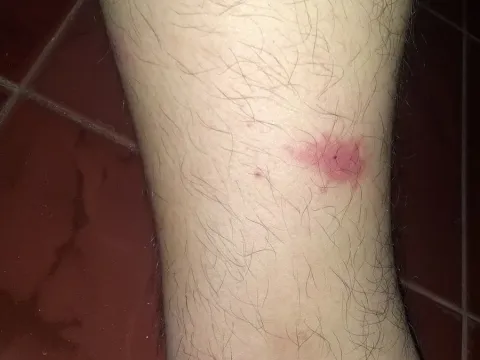 Typical bitesSeparate bumps on bare skin.
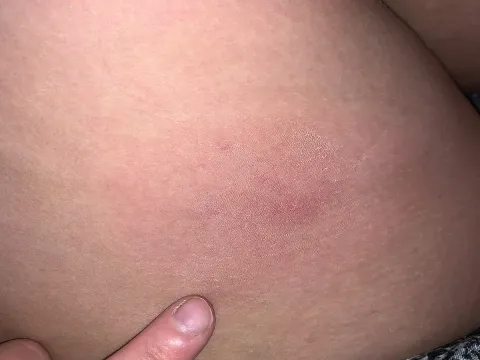 A big reactionSome people swell much more.
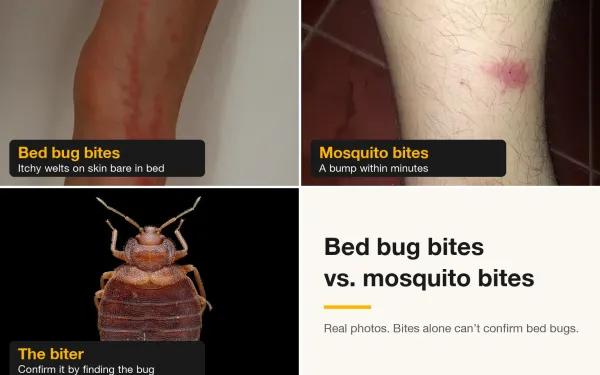
The photographers labeled these as mosquito bites. Other bites and rashes can look the same.
Mosquito Bites vs. Bed Bug and Flea Bites
| Mosquito bites | Bed bug bites | Flea bites | |
|---|---|---|---|
| Where on the body | Any exposed skin (Colorado State) | Skin left bare in bed (Univ. of Kentucky) | Lower legs and ankles (Univ. of Kentucky) |
| When they show up | A few minutes after (Colorado State) | Within a day or so; sometimes days later (Univ. of Kentucky) | Not a reliable clue |
| Usually linked to | Standing water nearby (UC IPM) | Bugs or dark spots in the bed (Univ. of Kentucky) | Pets, or wildlife in the house (Univ. of Kentucky) |
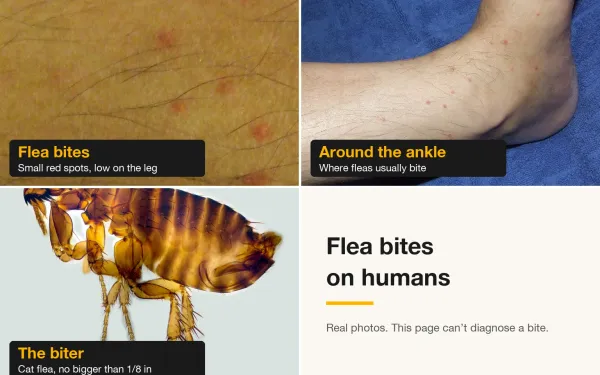
Bites that keep appearing overnight indoors, with no mosquitoes around, are worth a closer look: see bed bug bites, flea bites or bug bite patterns.
How to Stop the Itch
MedlinePlus gives these first-aid steps for insect bites:
- Wash the bite with soap and water.
- Cool it: ice wrapped in a washcloth, 10 minutes on and 10 minutes off.
- For itching, take an antihistamine or use an anti-itch cream if needed.
- Over the next several days, watch for signs of infection, such as increasing redness, swelling or pain.
Bigger Reactions
Besides the usual bump, MedlinePlus says mosquito bites can cause allergic reactions, including blisters, large hives and, rarely, anaphylaxis, a severe whole-body allergic reaction that is a medical emergency.
When to Get Medical Help
Call 911 for trouble breathing, wheezing or shortness of breath, swelling anywhere on the face or in the mouth, throat tightness or trouble swallowing, feeling weak, or turning blue (MedlinePlus).
See a doctor:
- if a bite shows signs of infection over the next several days, such as increasing redness, swelling or pain (MedlinePlus);
- if you get a fever, headache, body aches, vomiting or a rash after mosquito bites. MedlinePlus lists these as mild symptoms of West Nile virus;
- right away for high fever, a stiff neck, numbness or muscle weakness, which MedlinePlus lists as serious West Nile symptoms.
Can Mosquito Bites Make You Sick?
Most mosquito bites are harmless (MedlinePlus). The mosquito-borne disease to know about in the U.S. is West Nile virus, which has spread across the continental United States. Most infected people have no symptoms or mild ones, but people over 60 and people with conditions such as cancer, diabetes, high blood pressure or kidney disease are at higher risk of serious illness (MedlinePlus).
Dengue, malaria, chikungunya and Zika are mostly problems in tropical areas, and most U.S. cases of chikungunya and malaria are in people who traveled (MedlinePlus). Traveling? MedlinePlus suggests seeing a travel medicine provider, ideally 4 to 6 weeks before the trip.
How to Prevent Mosquito Bites
From MedlinePlus:
- Use an EPA-registered repellent with DEET, picaridin, IR3535, oil of lemon eucalyptus or para-menthane-diol, and follow the label. The EPA’s search tool helps you pick one.
- Cover up with long sleeves, long pants and socks. Mosquitoes can bite through thin fabric, so treat clothes, not skin, with permethrin.
- Keep them out with window and door screens, and use air conditioning if you have it.
- Empty standing water from flowerpots, gutters, buckets, pool covers, pet dishes, tires and birdbaths. UC IPM says even a bottle cap of water can raise larvae.
- Stay indoors between dusk and dawn when you can, when mosquitoes are most active (MedlinePlus).
Skip the gadgets: UC IPM says outdoor sprays and repellent devices vary widely in effectiveness and have no lasting effect, so focus on standing water. More in how to get rid of mosquitoes in the house and the mosquito Library page.
Common questions
Usually a day or two (MedlinePlus). A big reaction with lots of swelling can take longer; see a doctor if it shows signs of infection.
Female mosquitoes are drawn to carbon dioxide and compounds in sweat (Colorado State), which vary from person to person. How much a bite itches also varies, so two people can be bitten equally while only one notices.
No. Only females bite, because they need blood to make eggs (MedlinePlus).
Sources and further reading · 8
- MedlinePlus: Mosquito Bites: why bites itch, how long bumps last, allergic reactions, diseases, prevention, travel.
- MedlinePlus: West Nile Virus: symptoms, who’s at higher risk, staying in from dusk to dawn.
- MedlinePlus: Insect Bites and Stings: first aid, when to call 911, signs of infection.
- Colorado State University: Mosquitoes and West Nile Virus: saliva and the itchy bump, how bites look and when they appear, what attracts mosquitoes.
- UC IPM: Mosquitoes: standing water, bottle caps, outdoor sprays and devices.
- University of Kentucky: Bed Bugs (EF636) and Mystery Bites (EF649): bed bug and flea bite comparison.
- EPA: Find the Repellent That Is Right for You.
- Cover photos: house mosquito by Janet Graham (CC BY 2.0); Asian tiger mosquito by Exonie (CC BY 4.0); larvae by James Gathany, CDC (public domain); via Wikimedia Commons.