How to Get Rid of Mosquitoes in Your House
To get rid of mosquitoes in your house, take away the water they breed in and close the way in. Any small amount of standing water, even a bottle cap, can support larvae, and the whole life cycle from egg to adult can take a week or less (UC IPM). Empty plant saucers, vases and buckets, change pet and bird water every week, and make sure doors and windows have screens with no holes (UC IPM). For the ones already inside, run a fan and use a repellent with DEET or picaridin on your skin. Skip ultrasonic devices, vitamin B1 and bug zappers; UC IPM lists them as ineffective or counterproductive.
Difficulty: easy. Call a pro if mosquitoes keep breeding in water you can’t reach, such as a neglected pool, pond or clogged gutters, or your area has mosquito-borne illness; contact your local mosquito control district.
This guide covers where mosquitoes in the house come from, how to clear them indoors and out, what doesn’t work, and what mosquitoes eat. We haven’t run our own trials; it rests on UC IPM and a 2023 field study, with the mosquito entry in our Pest Library for identification.
One whining in the bedroom tonight? Turn on a fan aimed across the bed, close the window if the screen has a hole, and use a DEET or picaridin repellent if you need to sleep with the window open. Tomorrow, check every saucer, vase and bucket in and around the house for standing water.
Where Mosquitoes in the House Come From
Usually from water close by. UC IPM says any small amount of standing water can support larvae. Check:
- Indoors: plant saucers, vases, pet water bowls, buckets, and anything left holding water in a garage or basement.
- Right outside: flower pot saucers, birdbaths, buckets, toys, tarps, clogged gutters, old tires and rain barrels without screens.
- The way in: UC IPM says to make sure doors and windows have screens and that any holes or openings are repaired.
Because egg to adult can take a week or less in warm water (UC IPM), a saucer that sits full for a week can produce a new batch.
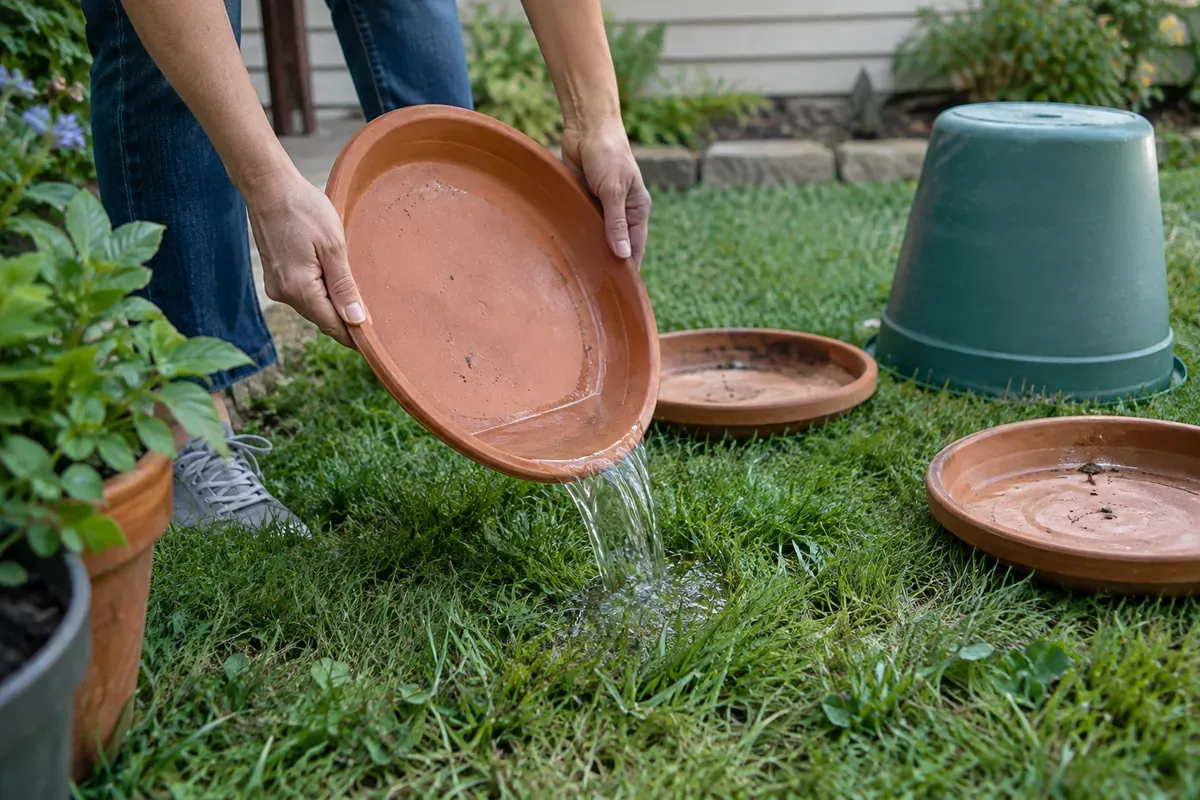
Illustration: emptying plant saucers so mosquitoes can’t breed in them.
How to Get Rid of Mosquitoes Indoors
Step 1: Empty standing water inside. Plant saucers, vases, pet bowls and buckets. Change water in pet dishes every week (UC IPM).
Step 2: Fix screens and gaps. Repair holes in window and door screens and close openings (UC IPM).
Step 3: Run a fan. In a 2023 field study in rural Gambia, a ceiling fan cut mosquito entry into an experimental house by 91% compared with an unventilated house (Carrasco-Tenezaca et al.). It was one study of malaria mosquitoes in Africa, not U.S. house mosquitoes, but a fan aimed across the bed is cheap to try.
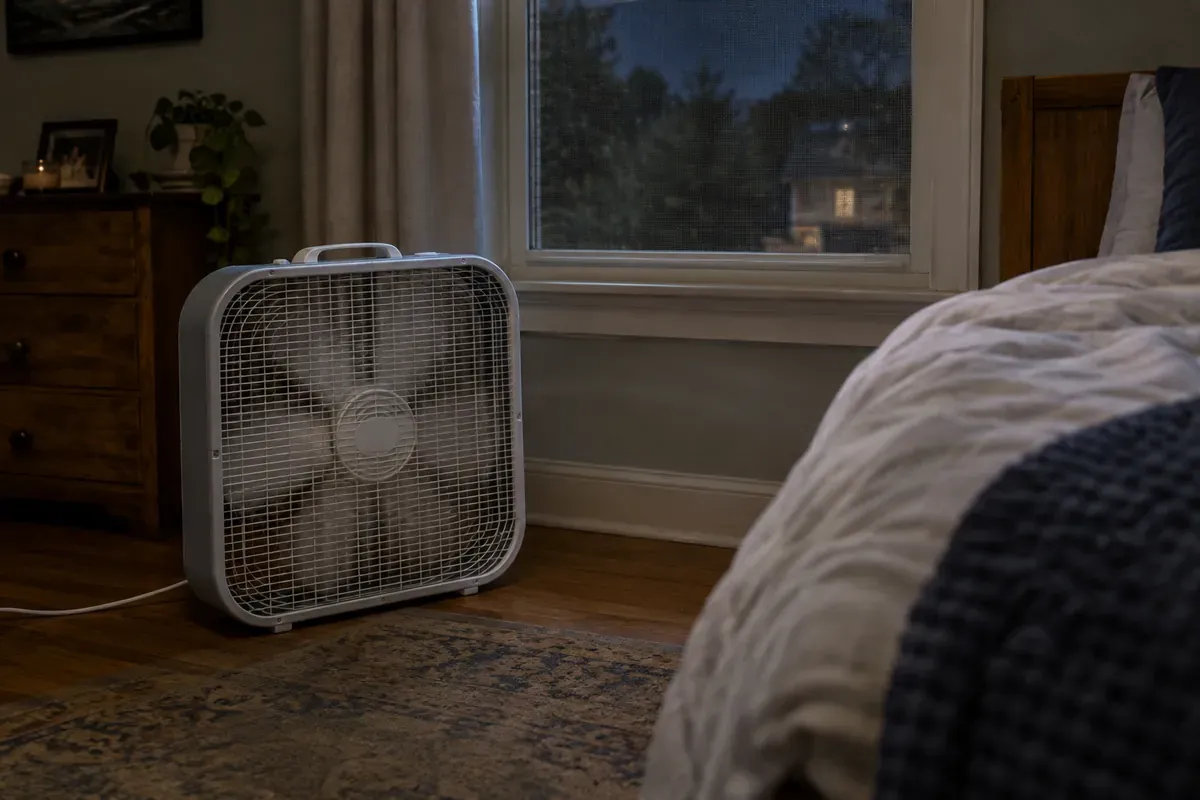
Illustration: a fan aimed across the bed at night.
Step 4: Protect your skin. UC IPM recommends repellents containing DEET or picaridin, and calls oil of lemon eucalyptus another effective repellent derived from natural materials. Follow the label. Check the label before using it on a child: some oil of lemon eucalyptus products shouldn’t be used on children under 3 (EPA).
Step 5: Swat the stragglers with a swatter or a vacuum. Tiny biting flies that aren’t mosquitoes are covered in do gnats bite.
How to Cut Mosquitoes Around the House
Dump water weekly. Empty saucers, buckets, toys and tarps; change birdbath water every week (UC IPM); clean gutters.
Treat water you can’t dump. For rain barrels, ponds and similar standing water, UC IPM describes Mosquito Dunks: time-release rings that float on the water and contain a bacterial agent, Bti, that kills the larvae. Mosquito-eating fish (Gambusia affinis) can also control larvae in ponds and troughs (UC IPM); check local rules before stocking them.
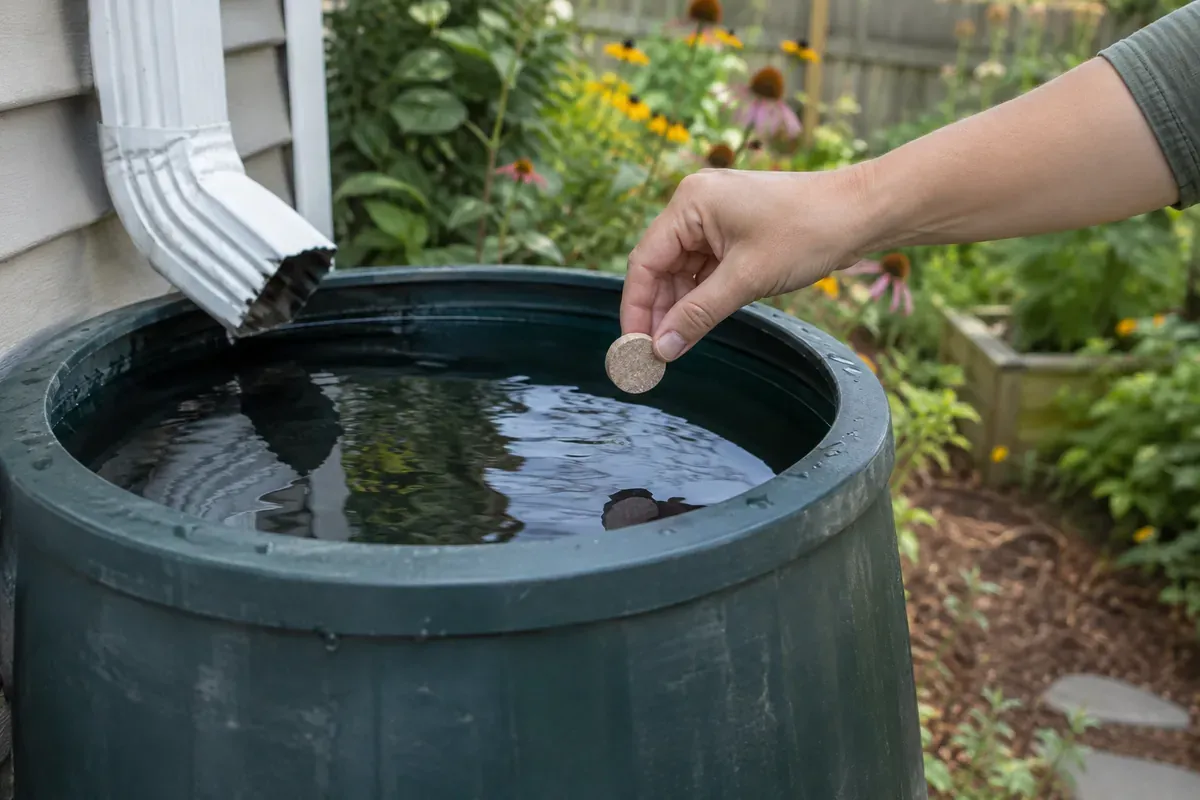
Illustration: a Bti mosquito dunk going into a rain barrel.
Screen rain barrels so mosquitoes can’t lay eggs on the water.
What Doesn’t Work
UC IPM lists these as ineffective:
| Product or remedy | UC IPM’s verdict |
|---|---|
| Ultrasonic emitters | Ineffective |
| Wristbands with an aromatic repellent | Ineffective |
| Vitamin B1 | Ineffective as a repellent |
| Electric grids and bug zappers | Ineffective; zappers counterproductive |
Bug zappers kill lots of insects, but UC IPM calls them counterproductive for mosquito control. Put the money into fixing screens and emptying water instead.
What Do Mosquitoes Eat?
Only female mosquitoes feed on blood; males don’t (UC IPM). Males feed on plant juices and other sources of sugar instead. So the mosquito biting you is always a female, which needs the blood to make eggs, as our mosquito entry explains.
When to Call a Pro
If mosquitoes keep breeding in water you can’t reach, such as a neglected pool, pond or clogged gutters, or your area has mosquito-borne illness. Start by contacting your local mosquito control district.
Common questions
They breed in standing water nearby, sometimes indoors in a vase, plant saucer or pet bowl, and get in through gaps or torn screens. Find the water and fix the screens (UC IPM).
No. UC IPM lists ultrasonic emitters among products that don’t work against mosquitoes.
No. UC IPM lists vitamin B1 among ineffective mosquito repellents. Use DEET or picaridin.
The Bottom Line
Mosquitoes in the house come from standing water nearby and get in through gaps. Empty anything holding water every week, fix the screens, run a fan at night and use a DEET or picaridin repellent. Skip ultrasonic gadgets, vitamin B1 and bug zappers.
Sources and further reading · 4
- EPA: Using Insect Repellents Safely and Effectively: oil of lemon eucalyptus and children under 3.
- UC IPM: Mosquitoes: life cycle, standing water, weekly water changes, screens, repellents, ineffective products, mosquito dunks, mosquitofish, what mosquitoes eat.
- Carrasco-Tenezaca et al. (2023): Effect of passive and active ventilation on malaria mosquito house entry and human comfort: an experimental study in rural Gambia: ceiling fan and mosquito house entry.
- Pest Library: Mosquito: identification and breeding sites.