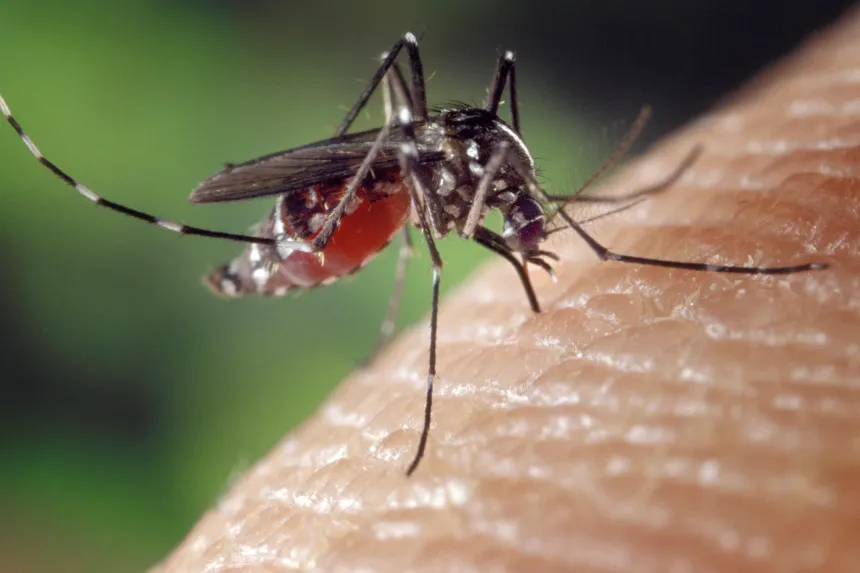
- Scientific name
- Culicidae (family)
- Also called
- Asian tiger mosquito, house mosquito
- Size
- About 1/8–1/4 in, long legs
- Color
- Brown to black; Asian tiger mosquito black with white stripes
- Found in
- Near standing water in containers, gutters, birdbaths and ponds
- Harmful?
- Itchy bites; some spread West Nile and other viruses
- Active
- Warm months; some bite at dusk and night, tiger mosquitoes by day
Mosquitoes are small, long-legged flies whose females bite for the blood they need to make eggs. Around homes most come from small containers of standing water, not big ponds, and some species spread viruses such as West Nile. The one thing to do: dump and scrub anything that holds water once a week, and wear an EPA-registered repellent outdoors.
This page covers how to identify mosquitoes and their larvae, where they breed and how to cut bites. It rests on UC IPM, CDC and EPA guidance; your county mosquito and vector control agency has local advice.
How to Identify Mosquitoes: Long Beak, Scaly Wings
- Small, slender flies about 1/8 to 1/4 inch with long, thin legs.
- Long, straight beak (proboscis) for piercing skin; only females bite. Males use theirs for nectar.
- Scales on the wings, visible under a magnifier, and a high-pitched whine in flight.
- Asian tiger mosquito: black with bright white stripes on the legs and one white stripe down the back; bites during the day.
- House mosquitoes (Culex): plain brown; bite mostly at dusk and night.
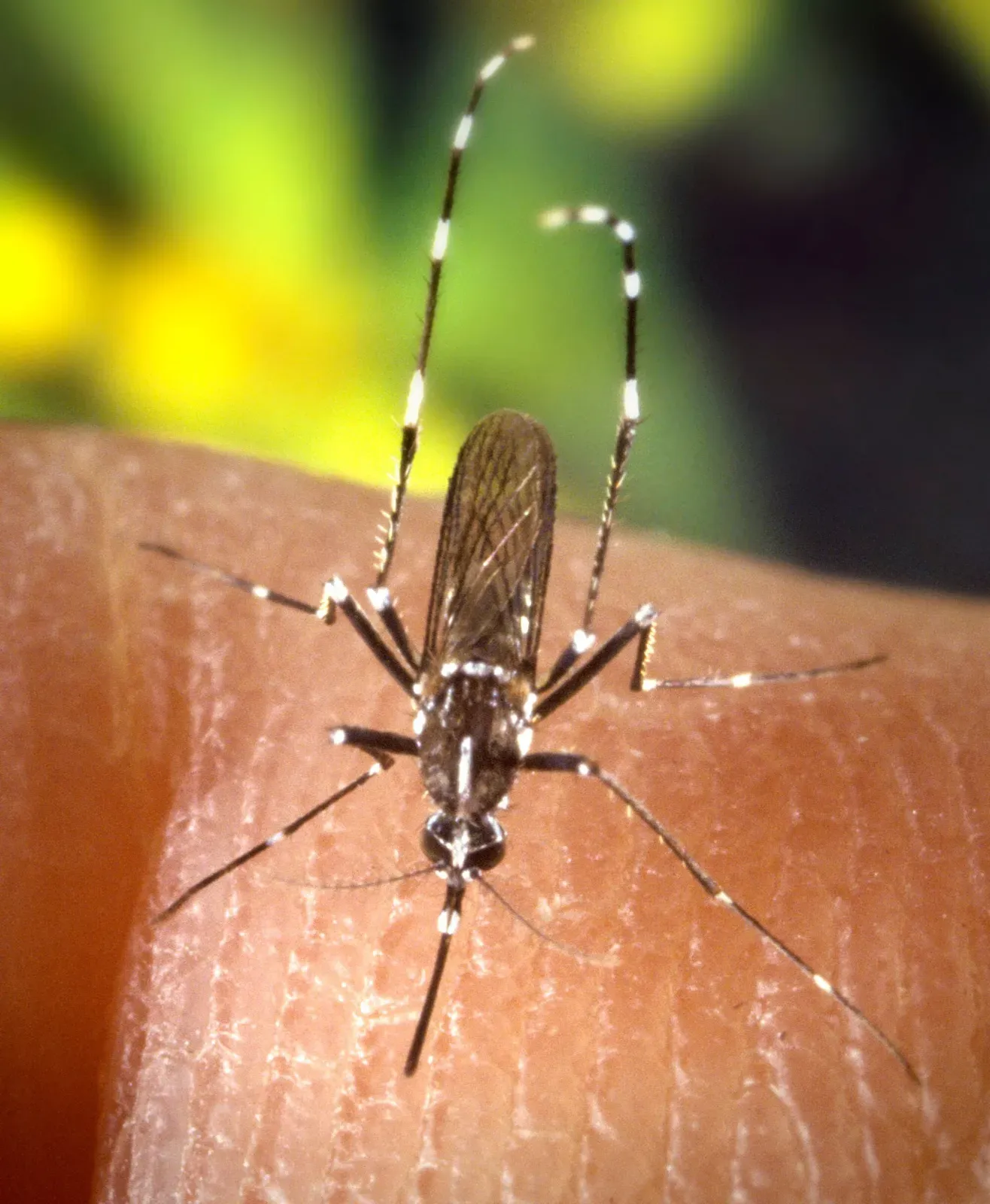
An Asian tiger mosquito biting a finger. This daytime biter breeds in small containers of water. Photo: James Gathany, CDC (Public domain), via Wikimedia Commons.
Mosquito vs. Look-Alikes: Only Mosquitoes Have the Beak
| Insect | How it differs | How to tell |
|---|---|---|
| Mosquito | Slender, long legs, biting beak | Scaly wings; whine; bites |
| Crane fly (“mosquito hawk”) | Much larger, very long legs | No biting beak; doesn’t eat mosquitoes |
| Non-biting midge | Similar size and shape | No long beak; doesn’t bite |
| No-see-um | Tiny, about 1/16 in | Painful bites from something you can barely see |
| Fungus gnat | Tiny, dark, weak flier | Around houseplants; doesn’t bite |
UC IPM notes that crane flies and midges are often mistaken for mosquitoes.
Mosquito Larvae and Life Cycle: About a Week in Summer
Females lay eggs on the water surface, in rafts of 100 or more, or just above the water line where later flooding will reach them. Larvae, called wigglers, are black or brown, hang at the surface to breathe and live in still water. Pupae, called tumblers, are comma-shaped and also live in water. In summer the whole cycle, egg to adult, can take a week or less (UC IPM). Wigglers next to other pests’ young are shown in bug eggs and larvae.
Where They Breed: Any Standing Water
- Buckets, flower pot saucers, toys and tarps holding water
- Clogged gutters and downspout extensions
- Birdbaths and pet water bowls left outdoors
- Old tires, tree holes and rain barrels without screens
- Ornamental ponds without fish, and unused plastic pools
UC IPM says Aedes mosquitoes such as the Asian tiger mosquito can breed in water as small as a bottle cap, which makes them hard to control in yards full of debris.
Are Mosquitoes Harmful? Itchy Bites, Some Disease Risk
Bites itch, and some species spread viruses such as West Nile (CDC). In parts of the US, Asian tiger mosquitoes and their relatives can also carry dengue and other viruses. About 80% of people infected with West Nile have no symptoms; about 20% get fever, headache or body aches; and about 1 in 150 develop a serious neurological illness (UC IPM). Mosquitoes can also transmit dog heartworm. Bites can lead to secondary infections or allergic reactions. Other bite marks are compared in bug bite pictures.
How to Confirm It’s a Mosquito
- Look for the long, straight beak on a biting insect.
- Check standing water nearby for wigglers hanging at the surface.
- Note the time: daytime biters with white-striped legs are Asian tiger mosquitoes; dusk and night biters are often Culex.
What to Do: Dump Water, Repel, Screen
Dump and scrub anything that holds water once a week, change pet and birdbath water weekly, clean gutters and screen rain barrels. Use Bti dunks in water you can’t empty, like ponds and rain barrels: the EPA says Bti kills mosquito larvae and doesn’t affect people, pets or plants. It’s the same bacterium used against fungus gnats. Wear an EPA-registered repellent with DEET, picaridin or oil of lemon eucalyptus, keep window screens in good repair, and run a fan on the patio. UC IPM says outdoor sprays and repellent devices only reduce adults for a while and have no lasting effect. For other pests, browse all pest guides.
Often confused with
Sources
Last reviewed Oct 4, 2026.