How to Get Rid of Earwigs in the House and Garden
Earwigs are reddish-brown insects with a pair of pincers at the tail end. They live outside in damp, dark places and come indoors when it gets too dry, too hot or too cold (UC IPM). Indoors they are a nuisance, not a danger: UC IPM says they present no health hazard and eventually die inside because there is little for them to eat.
Cost: about $0–5 in supplies. Time: about 1–2 weeks of daily trapping. Difficulty: easy. Call a pro if you see large numbers indoors week after week even after sealing gaps and clearing mulch from the foundation; a pro can find the damp spot or entry you missed.
So the fix happens outside. Indoor sprays don’t stop more from coming in (UC IPM). Clear their hiding places by the house, seal the gaps and trap the rest. The traps below cost almost nothing.
In this guide:
- What Earwigs Look Like
- Why Earwigs Come in the House
- How to Get Rid of Earwigs Indoors
- How to Trap Earwigs Outside
- Are Earwigs Harmful?
What Earwigs Look Like
- Pincers at the tail. Curved in males, straighter in females (UC IPM).
- About 5/8 to 3/4 inch long, reddish brown (Colorado State, UC IPM).
- Short wing covers. Most have wings but seldom fly (UC IPM).
- Young ones look like small adults without wings (UC IPM).
The European earwig arrived in the eastern U.S. around 1907 and spread across the country (Colorado State). UC IPM says it’s the most common earwig in California gardens.
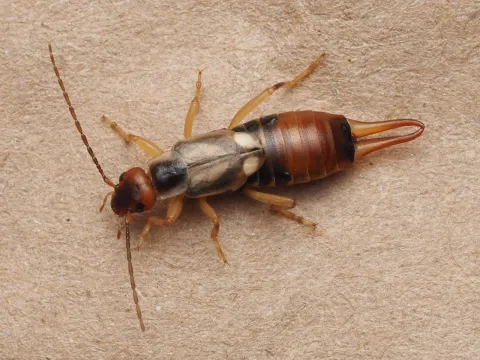 HarmlessEuropean earwigAbout 5/8–3/4 inch; pincers at the tail.
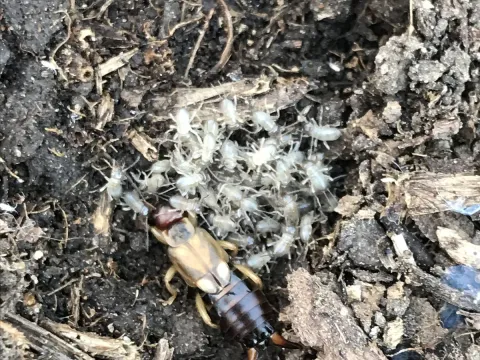 Mother and youngNests in damp soil outdoors.
Why Earwigs Come in the House
Earwigs hide by day in dark, tight, damp spots and come out at night (Colorado State, UC IPM). Outside, that means under mulch, stones, boards, leaf piles and ivy. Indoors, Colorado State lists under rugs, under potted plants and in stacks of newspapers.
They come in for three reasons:
- The weather. They move indoors when it’s too dry, hot or cold outside (UC IPM).
- Cover right by the door. Mulch, ivy and debris against the house give them a place to gather near the entry (UC IPM, Colorado State).
- Lights. Outdoor lights draw them, and UC IPM says yellow bulbs are less attractive than white ones.
In Colorado, problems tend to peak from mid-July to mid-September (Colorado State).
How to Get Rid of Earwigs Indoors
- Sweep or vacuum them up. Throw them out promptly so they don’t come back in (UC IPM).
- Seal the gaps. Entry points are usually small gaps along doors, windows and vents. Caulk them (Colorado State).
- Clear the strip by the house. Remove ivy, ground cover, bark mulch, leaf litter, woodpiles and debris along the walls, and clean leaves out of gutters (UC IPM).
- Dry it out. Fix downspouts, slope soil away from the house and ventilate crawl spaces (UC IPM). Earwigs need moisture.
- Change the porch bulb to a yellow one (UC IPM).
Skip the indoor spray. UC IPM says indoor insecticides do little to prevent invasions and are not recommended.
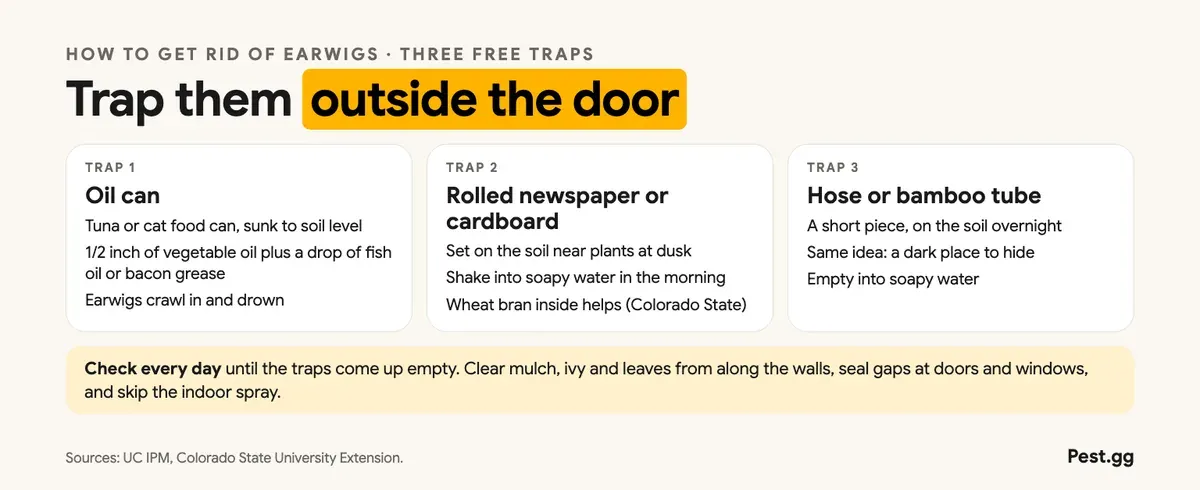
Infographic: three free traps. Sources: UC IPM, Colorado State University Extension.
How to Trap Earwigs Outside
Trapping is the main tool. UC IPM says daily trapping brings numbers down to tolerable levels, and that with trapping and less cover, insecticides usually aren’t needed.
- Oil can trap. Sink a low can, such as a tuna or cat food can, so its rim is at soil level. Add 1/2 inch of vegetable oil with a drop of bacon grease or fish oil. Earwigs crawl in and drown (UC IPM). Colorado State says to keep the oil at least an inch below the rim.
- Rolled newspaper or cardboard. Set it on the soil near plants just before dark. In the morning, shake the earwigs into a pail of soapy water (UC IPM). Colorado State found that adding wheat bran or wheat germ inside makes these traps more effective.
- Hose or bamboo tube. A short piece of hose or bamboo works the same way (UC IPM).
Put many traps around the yard, near shrubs, ground cover and fences (UC IPM). Check them daily (UC IPM) or every 2 to 3 days (Colorado State), and keep going until the traps come up empty.
Baits? UC IPM says earwig baits often don’t work well when other food is around. Spinosad baits are the most effective and environmentally sound option if you want one.
Are Earwigs Harmful?
Not to people. UC IPM says earwigs generally don’t attack humans, but they can bite if trapped in clothing or sat on. Colorado State calls the bite mildly painful, and says the stories about earwigs crawling into ears have little basis in fact.
In the garden they’re mixed. They eat aphids and insect eggs (UC IPM, Colorado State), but they can also chew seedlings, flowers, soft fruit and corn silks. UC IPM says yards with mostly lawn, trees and woody plants usually don’t need to manage them.
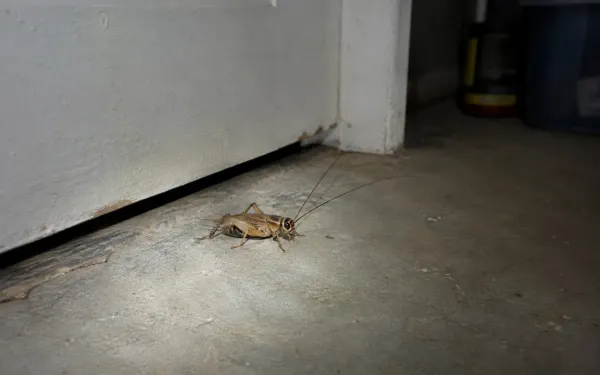
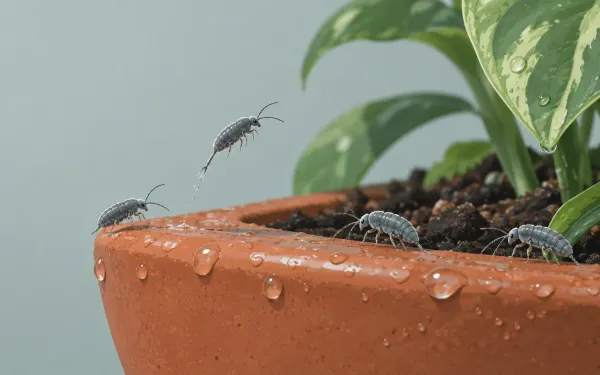
Other bugs that come in from damp spots outside include crickets and springtails. For a room-by-room guide, see common house bugs.
Common questions
Damp, dark cover next to the walls (mulch, ivy, leaves, woodpiles), outdoor lights, and dry or hot weather outside (UC IPM, Colorado State).
Colorado State says the stories about earwigs crawling into ears have little basis in fact. The name comes from that old superstition.
Unlikely. UC IPM says earwigs die indoors because there is little for them to eat. If you keep seeing them, they’re coming in from outside, so seal the gaps and clear the cover by the house.
It may help in a damp basement, since UC IPM advises keeping moisture down, but most earwigs come from outside. Clearing mulch and fixing drainage by the walls matters more (UC IPM). See dehumidifier for bugs.
Sources and further reading · 2
- UC IPM: Earwigs: appearance, why they come indoors, no health hazard, oil and newspaper traps, yellow bulbs, no indoor spray, baits, bites.
- Colorado State University Extension: European Earwig: size, history in the U.S., indoor hiding places, sealing gaps, bran-baited traps, the ear myth, mild bite.