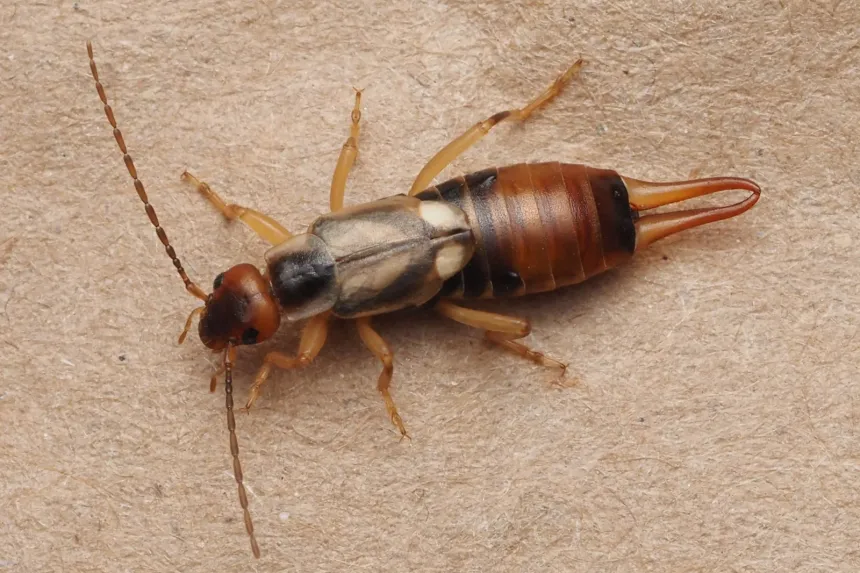
- Scientific name
- Forficula auricularia
- Also called
- European earwig, pincher bug
- Size
- About 1/2–3/4 in
- Color
- Reddish brown, lighter legs
- Found in
- Mulch, flower beds, under boards and pots; damp spots indoors
- Harmful?
- No. Can pinch but rarely breaks skin
- Active
- Summer, at night
Earwigs are flat, reddish-brown insects with pincers on the tail that hide in damp mulch and wander indoors at ground level. They don’t harm people or crawl into ears; at most they pinch if picked up. The one thing to do: clear damp hiding spots next to the foundation.
This page covers how to identify an earwig, the ear myth, and how to keep them out. It rests on university extension guidance.
How to Identify an Earwig: Pincers on the Tail
- Pincers (forceps) on the tail end. They’re curved in males and straighter in females.
- Flat, long body, about 1/2 to 3/4 inch, reddish brown.
- Short wing covers near the front; many species rarely fly.
- Fast runner that hides as soon as light hits it.
- Young earwigs look like small, wingless adults (UC IPM).
The common species in North American yards is the European earwig, brought over from Europe in the early 1900s. In Southern California, the striped earwig also turns up at outdoor lights; it smells bad when crushed but doesn’t damage plants (UC IPM).
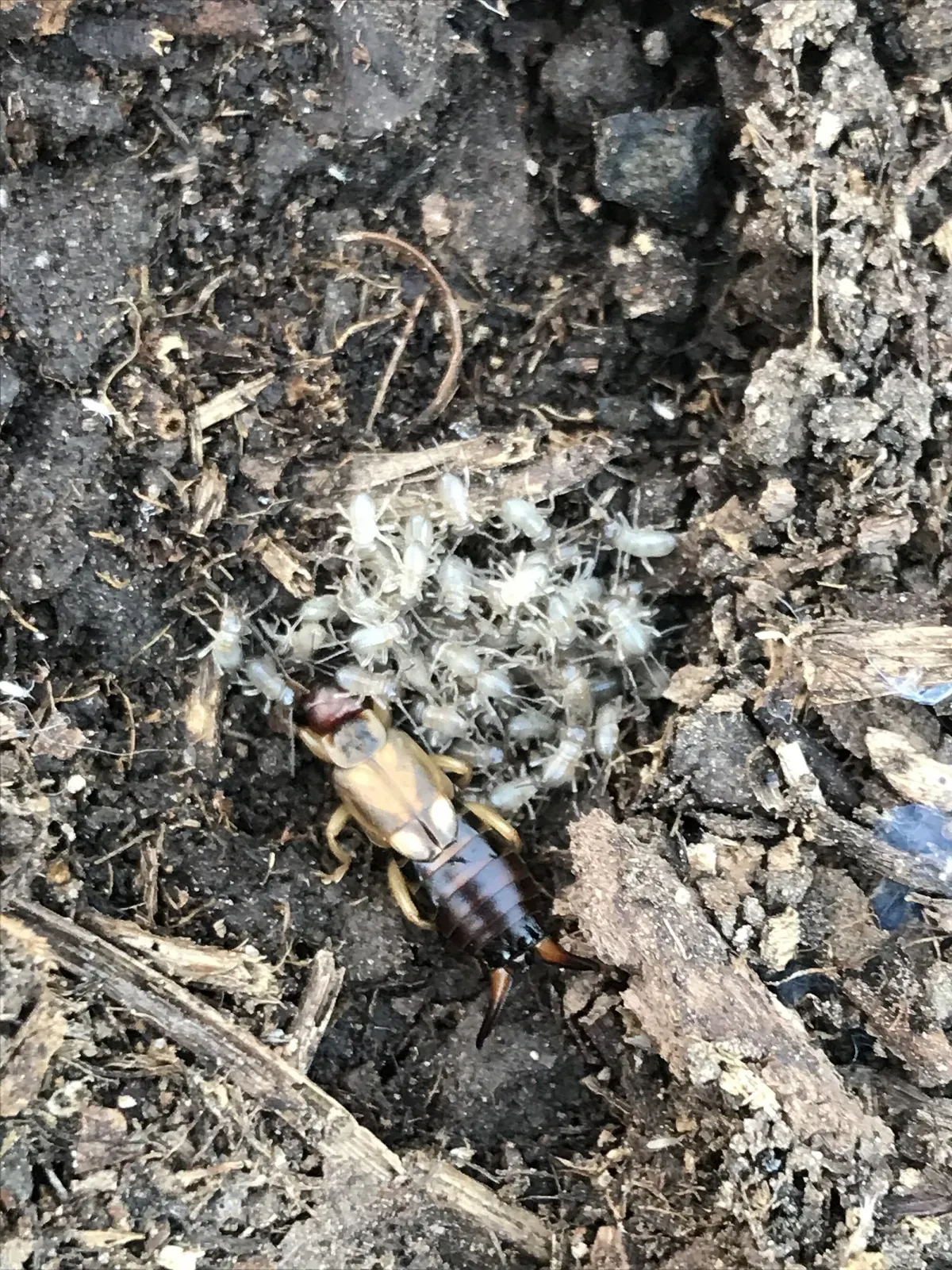
A female earwig guarding her pale young in damp garden soil. Photo: Janna Layton (CC BY-SA 4.0), via Wikimedia Commons.
Earwig vs. Look-Alikes: Pincers, Not Tails
| Insect | How it differs | How to tell |
|---|---|---|
| Earwig | Flat, reddish brown, short wing covers | Pincers on the tail end |
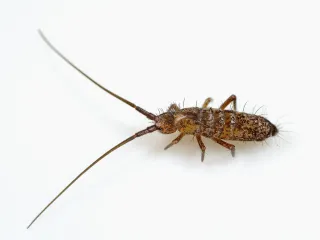
| Silverfish | Silvery and carrot-shaped | Three long thin tails, no pincers |
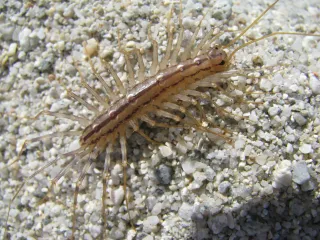
| House centipede | Many long legs, one pair per segment | Legs, not pincers; moves in bursts |
Do Earwigs Crawl Into Ears? No
The name is an old myth. Earwigs don’t seek out people’s ears and don’t lay eggs in them. UC IPM says that, despite their fierce look, earwigs generally don’t attack people; they can pinch if trapped in clothing or sat on. The pincers are for defense.
Where You’ll Find Them: Damp, Tight Spaces
They’re active at night and hide by day in dark, cool, moist places, coming indoors through gaps at ground level.
- Mulch, leaf litter and ground cover next to the foundation
- Under pots, stones, boards and doormats
- In damp spots indoors: bathrooms, laundry rooms, basements
- Inside flowers, corn ears and fruit in the garden
Why Earwigs Come Inside: Too Dry, Hot or Cold Outside
UC IPM says earwigs move indoors when conditions outside get too dry, too hot or too cold. Large numbers can be annoying but aren’t a health hazard, and earwigs eventually die indoors because there’s little for them to eat. Earwigs in a bathroom or basement are usually a sign of damp ground and mulch right outside, the same conditions that bring in springtails.
When You’ll See Them: Summer Nights, Most of the Year
Females dig cells in the soil in fall and winter and lay masses of 30 or more eggs. The mother guards and feeds the young nymphs until their first molt. There’s usually one generation a year, though females produce two broods, and some adults spend winter in pairs buried in the soil (UC IPM). In mild climates some stay active all year.
Are Earwigs Harmful? Not to People
They may pinch if picked up, which can surprise but rarely breaks the skin. They eat decaying plants and small insects; in gardens they chew holes in seedlings, leaves and soft fruit, though they also eat aphids and can help control them (UC IPM). They don’t harm hard fruit such as apples.
How to Confirm It’s an Earwig
- Look for the pincers on the tail end.
- Lift a pot, board or doormat by the foundation during the day.
- Set a rolled-up damp newspaper out overnight and check it in the morning.
- Check chewed plants at night with a flashlight. Earwig damage looks like caterpillar damage, but caterpillars leave webbing or droppings (frass), and snails and slugs leave slime trails.
What to Do: Thin the Mulch, Trap the Strays
Reduce damp hiding places near the house: thin mulch, move pots and boards, and fix leaky outdoor faucets. Rolled-up damp newspaper or a shallow can of vegetable oil set out overnight traps them. Indoors, sweep or vacuum strays; a dehumidifier helps in damp basements.
To keep them out, UC IPM suggests:
- Sealing cracks and entry points at ground level.
- Clearing ivy, ground cover, bark mulch, leaf-filled gutters and wood piles from the walls.
- Moving water away with downspouts and grading, and ventilating crawl spaces.
- Switching to yellow outdoor bulbs, which attract fewer earwigs.
Indoor insecticides aren’t recommended, since they do little to stop new earwigs coming in. Drying out the foundation works the same way it does for springtails. For other pests, browse all pest guides.
Often confused with
Sources
Last reviewed Oct 4, 2026.