How to Get Rid of Ticks in Your Yard and Home
The CDC’s yard plan, the 10-minute dryer trick, and why spraying the lawn alone won’t keep you safe.
To get rid of ticks around your home, make the yard a bad place for them: mow often, rake out leaf litter, clear tall grass and brush at the lawn’s edge, and lay a 3-foot strip of wood chips or gravel between the lawn and any woods (CDC). Then protect the people and pets who go outside. Treat clothes with permethrin, toss clothes in the dryer on high for 10 minutes after outdoor time, and check everyone for ticks.
Time: about A weekend, then ongoing. Difficulty: moderate. Call a pro if your yard backs onto woods and you keep finding ticks after the yard work, or you want a pesticide applied and aren’t sure which product or timing is right for your area.
You can’t remove every tick from a yard, and the CDC says not to rely on spraying alone. What works is fewer ticks where you spend time, plus habits that catch the ones that get on you. This guide covers the yard plan, protecting people and pets, ticks indoors, spraying, and what a pro charges. We haven’t tested these methods ourselves. It rests on CDC guidance, the Connecticut Agricultural Experiment Station’s tick handbook, and a Fixr price guide.
In fall, adult blacklegged ticks are active on days above freezing, so the steps below matter now, not just in summer.
Found a tick on you right now? Grab it as close to the skin as you can with fine-tipped tweezers and pull straight up with steady pressure. Don’t twist, and don’t use petroleum jelly, heat or nail polish. Clean the spot with soap and water or rubbing alcohol. If you get a rash or fever in the days or weeks after, see a doctor (CDC).
What Works and What Doesn’t Against Ticks
| Method | Works? | Cost | Main limitation |
|---|---|---|---|
| Mowing, raking leaves, clearing brush | Yes, the CDC’s first step | Your time | Has to be kept up all season |
| 3-foot wood chip or gravel barrier | Yes, keeps ticks out of play areas (CDC) | Mulch or gravel | Only helps where the yard meets woods |
| Permethrin on clothes, shoes and gear | Yes, lasts through several washes (CDC) | A bottle of spray | Clothes only, not skin |
| EPA-registered repellent on skin | Yes (CDC) | A bottle of repellent | Has to be reapplied per the label |
| Dryer on high for 10 minutes | Yes, kills ticks on dry clothes (CDC) | Free | Damp clothes need longer |
| Spraying the yard with pesticide | Cuts numbers in treated areas | $50–$150 a visit (Fixr) | The CDC says not to rely on it |
| Washing clothes in cold or warm water | No, doesn’t kill ticks (CDC) | — | Use hot water, or the dryer |
Which Tick Is It?
The three ticks most people find in U.S. yards look different, and they carry different diseases. Size matters too: a blacklegged tick nymph is about the size of a poppy seed, so many bites come from ticks you never saw.
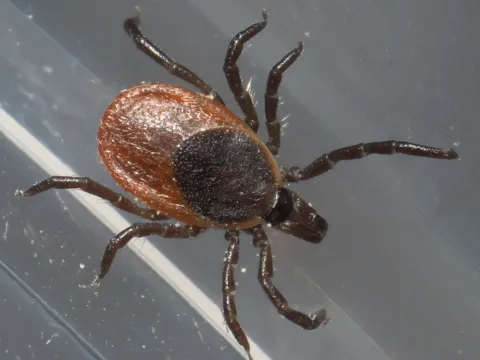 Lyme riskBlacklegged (deer) tickTiny, black legs, dark shield. Spreads Lyme disease.
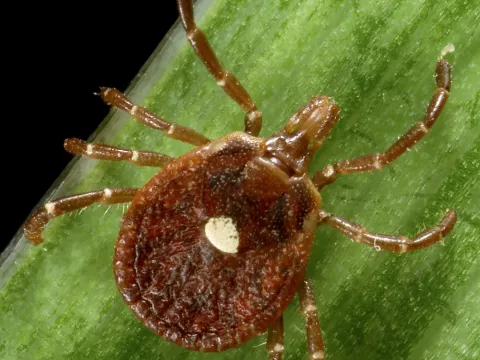 Bites peopleLone star tickOne white spot on the female’s back. Aggressive biter.
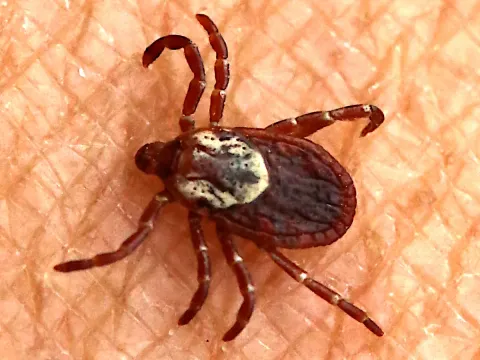 Bites peopleAmerican dog tickBigger, brown with a cream-mottled shield. Grassy edges.
Itchy red bumps around your ankles and waistband after time in tall grass are more likely chiggers, which are mites, not ticks.
Step 1: Mow Often and Rake Out the Leaf Litter
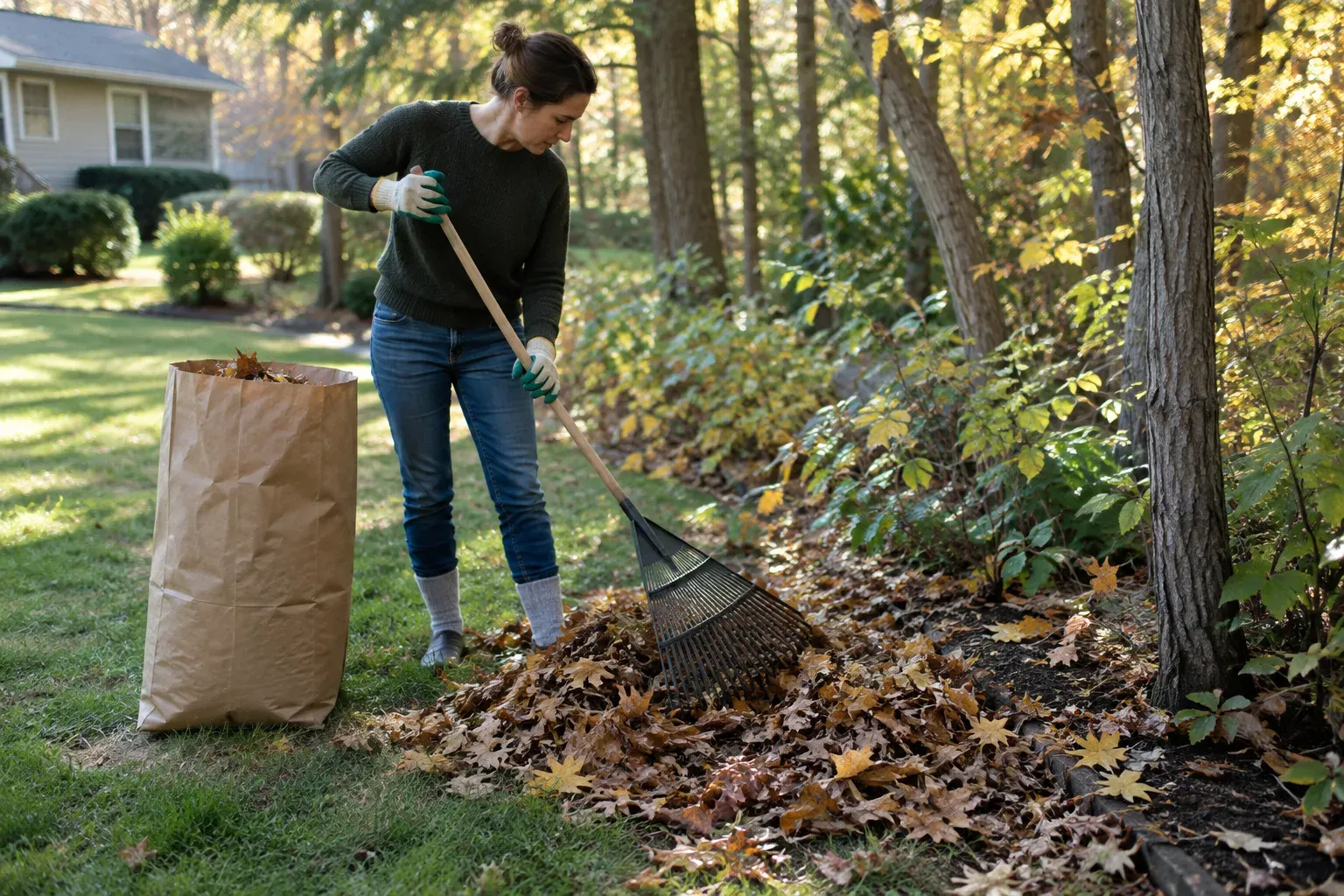
Ticks live in grassy, brushy and wooded spots, and many people pick them up in their own yard (CDC). The CDC’s yard plan starts with removing leaf litter and mowing the lawn often. Rake out the leaves along fences, under shrubs and at the edge of the woods, where they pile up. Wear long pants tucked into socks while you do it; you’re working right where ticks wait.
Step 2: Clear Tall Grass and Brush at the Lawn’s Edge
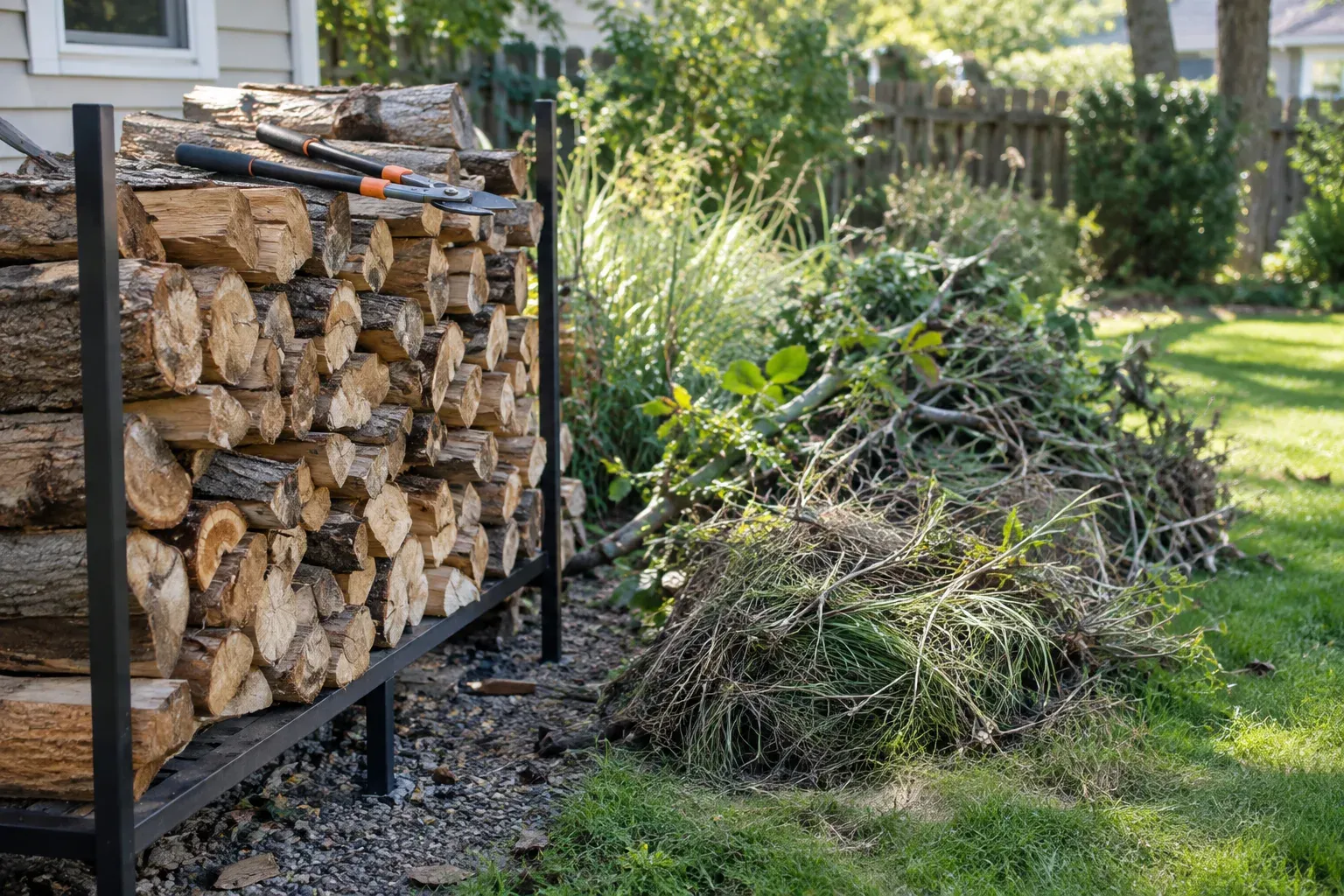
Cut back tall grass and brush around the house and at the edges of the lawn (CDC). The CDC also recommends stacking firewood neatly in a dry spot, which discourages the mice and other rodents that ticks feed on, and hauling away old furniture, mattresses and trash that give ticks a place to hide.
Step 3: Lay a 3-Foot Wood Chip or Gravel Barrier
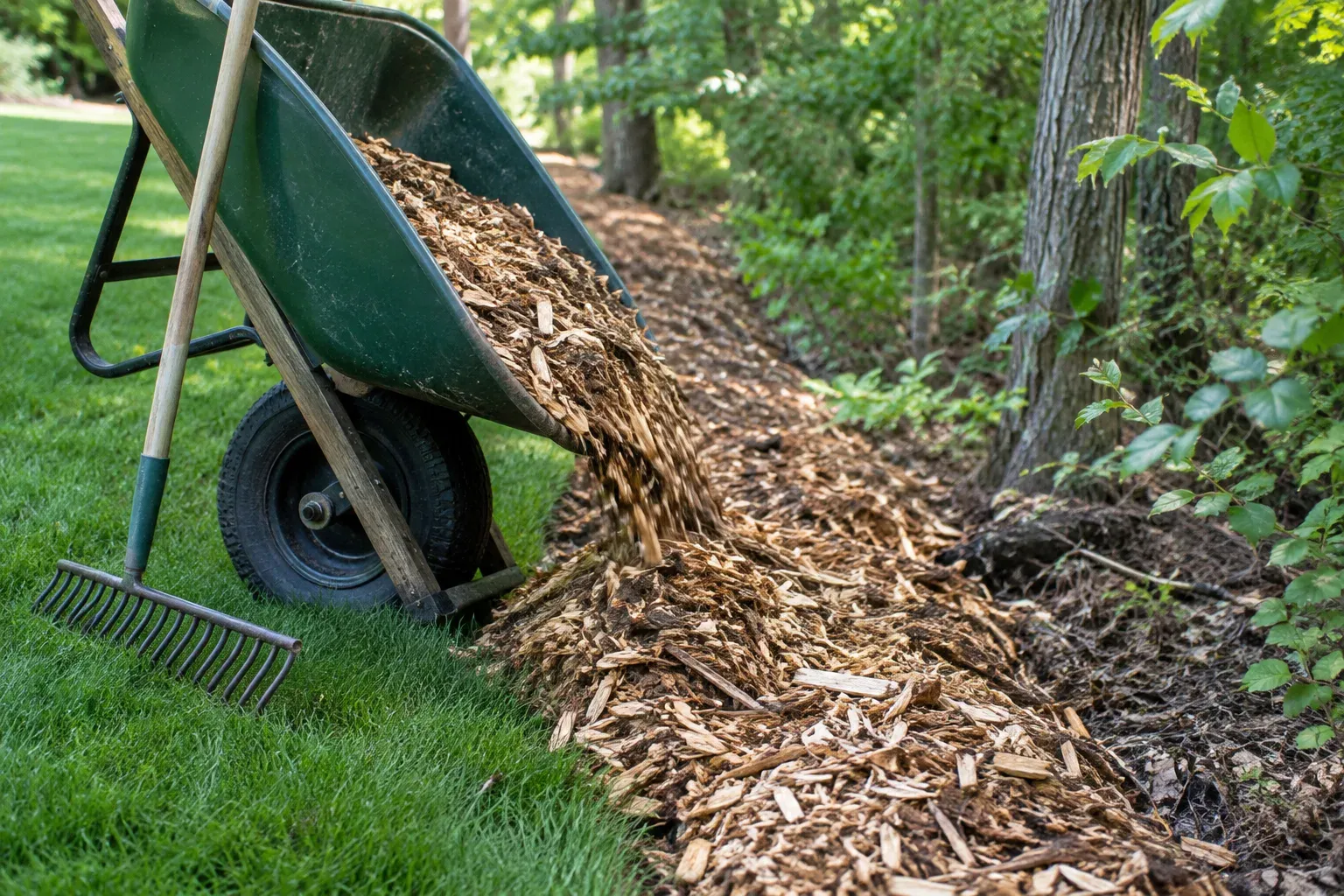
Where your lawn meets woods, put down a strip of wood chips or gravel about 3 feet wide (CDC). The CDC says this restricts ticks from moving out of the woods into the parts of the yard where you spend time. The CDC credits this and the other yard steps to the Connecticut Agricultural Experiment Station’s Tick Management Handbook.
Step 4: Keep Play Areas Away From the Woods
Move swing sets, sandboxes, decks and patio furniture away from yard edges and trees, into the sunny middle of the yard (CDC). Kids spend the most time there, so it should be the least tick-friendly part of the yard. If deer, raccoons or stray dogs wander through, the CDC suggests a fence to keep them out, since they carry ticks in.
Step 5: Treat Clothes and Use Repellent
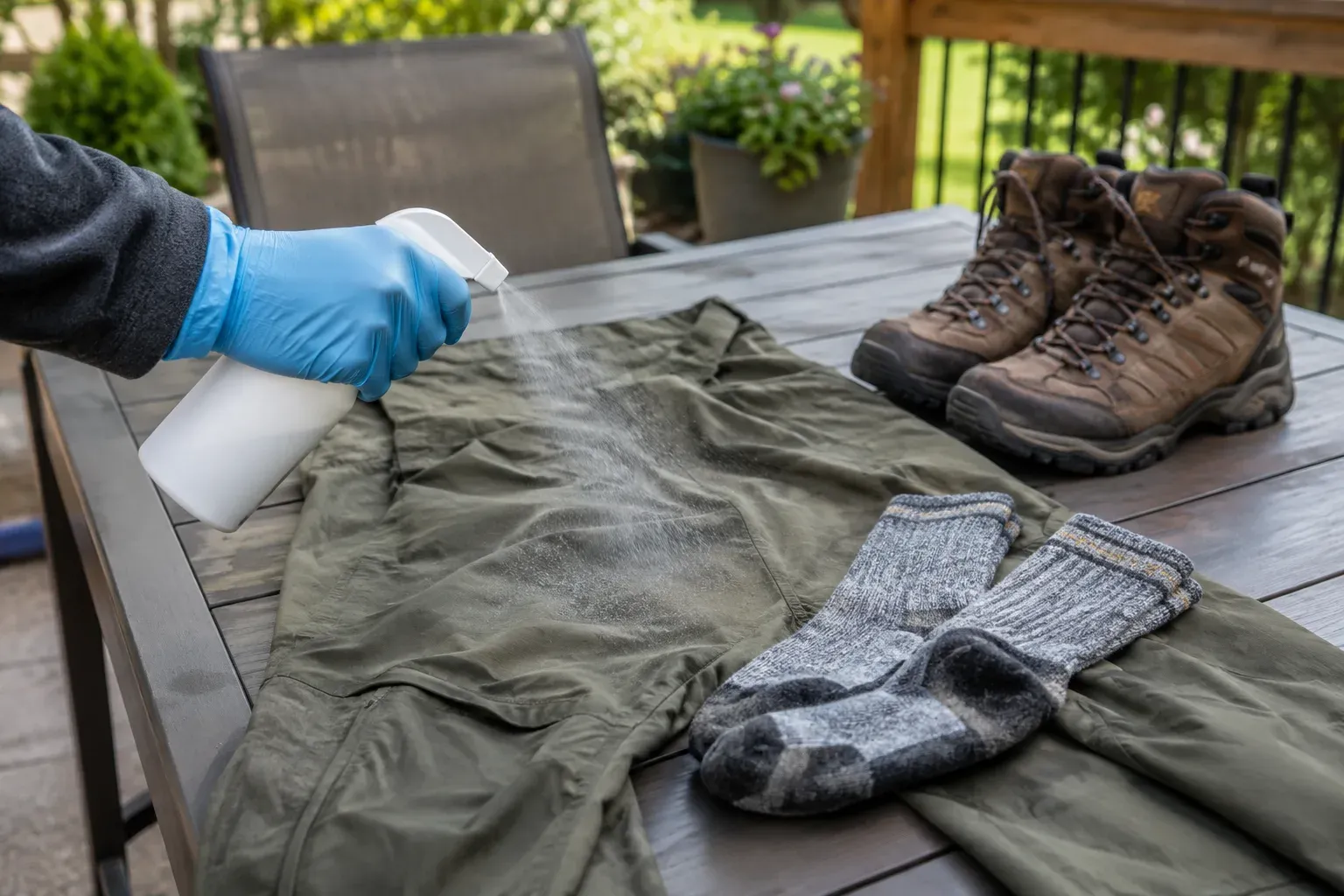
For the people who go into the yard or the woods, the CDC recommends treating boots, clothing and gear with a 0.5% permethrin product, which stays protective through several washes. You can also buy clothing that comes pre-treated. Permethrin goes on clothes, not skin.
On skin, use an EPA-registered repellent with DEET, picaridin, IR3535, oil of lemon eucalyptus (OLE), para-menthane-diol (PMD) or 2-undecanone, and follow the label. Don’t use OLE or PMD on children under 3. If you’re wearing sunscreen, put it on first and repellent second (CDC).
Step 6: Dry Clothes on High, Shower, Then Check
When you come inside from tick country, including your own backyard:
- Dryer first. Tumble dry clothes on high heat for 10 minutes to kill ticks on dry clothes. Damp clothes need longer. If they need washing first, use hot water: cold and medium water won’t kill ticks (CDC).
- Shower within 2 hours. The CDC says this has been shown to lower the risk of Lyme disease, and it washes off ticks that haven’t attached yet.
- Do a full tick check with a mirror: under the arms, in and around the ears, inside the belly button, behind the knees, in the hair, between the legs and around the waist (CDC). Check kids the same way.
- Check coats and bags too. Ticks can ride in on gear and bite someone later.

Step 7: Check and Protect Your Pets
Dogs pick up ticks easily and carry them inside, where the ticks may then bite people (CDC). Check dogs that go outdoors every day, and remove any tick right away; long, dark fur makes them hard to spot. The CDC says it’s important to use a tick preventive product on dogs; ask your vet which one suits your dog and the diseases in your area. Don’t put any tick product on a cat without asking your vet first. Cats are very sensitive to many chemicals.

Should You Spray the Yard?
A pesticide can reduce the number of ticks where it’s applied, but the CDC says you shouldn’t rely on spraying to protect yourself from tick-borne disease. If you want to spray, the CDC suggests checking with your local health or agricultural officials first about the best time, the best product for your area, and local rules on spraying homes. Always follow the label.
For most homes, the yard steps above plus permethrin and tick checks do more than a spray program.
Ticks in the House
Most ticks that come inside on clothes or a dog are looking for someone to bite, not a place to live. That’s why the dryer and the tick checks matter. The exception is the brown dog tick. The CDC says it is unusual in that it can infest homes and kennels. If you keep finding ticks on your dog or around its bed even after treating it, talk to your vet, wash the bedding in hot water, and consider a pro.

What It Costs
Fixr puts a single tick treatment of a yard at $50–$150, $125 on average, and up to about $1,250 at the high end (updated January 31, 2025). Ticks come back through the season, so most companies sell programs:
| Option | Typical price |
|---|---|
| One-time yard treatment | $50–$150, avg. $125 |
| Quarterly contract | $250–$600 a year |
| Yearly contract | $550–$700 a year |
| Monthly contract | $800–$2,000 a year |
| DIY yard work and permethrin | Your time, mulch, a bottle of spray |
A monthly program can cost more than a year of everything else on this page. The yard work is the part a spray can’t replace, and you can do it yourself. If you’re comparing quotes, what an exterminator does covers the questions to ask, and our study of 5,315 exterminator quotes shows how much prices vary for the same job.
When to Call a Pro
Call one if your yard backs onto woods and you keep finding ticks after doing the yard work, if your dog keeps bringing in ticks and you suspect brown dog ticks indoors, or if you want a yard treatment and aren’t sure which product or timing fits your area. Ask what they’ll spray, where, how often, and what’s included between visits.
Common questions
A dryer on high heat for 10 minutes kills ticks on dry clothes. Damp clothes need longer. If you wash first, use hot water; cold and medium water won’t kill ticks (CDC).
Ticks can be out year-round, but the CDC says they’re most active from April to September. Adult blacklegged ticks are the exception: they’re active from fall through early spring, on days above freezing.
Generally no. The CDC doesn’t recommend commercial tick testing for treatment decisions. Watch for a rash or fever over the following days to weeks, and see a doctor if one appears.
The Bottom Line
Mow, rake, clear the edges and lay a 3-foot wood chip barrier; keep play areas in the sun. Treat clothes with permethrin, use the dryer for 10 minutes, shower and check everyone, including the dog. A yard spray can help, but the CDC says not to rely on it.
Sources and further reading · 5
- CDC: Preventing Tick Bites: permethrin, repellents, dryer and hot water, showering, tick checks, yard pesticides and the tick-safe zone.
- CDC: What to Do After a Tick Bite: removing a tick, when to see a doctor, tick testing.
- CDC: Preventing Ticks on Pets: daily checks, preventive products, cats, the brown dog tick indoors.
- Connecticut Agricultural Experiment Station: Tick Management Handbook (PDF): the yard methods the CDC’s plan is based on.
- Fixr: Tick Extermination Cost (updated January 31, 2025): single treatments and contract prices.