Silverfish in the House: Why They're Here and How to Get Rid of Them
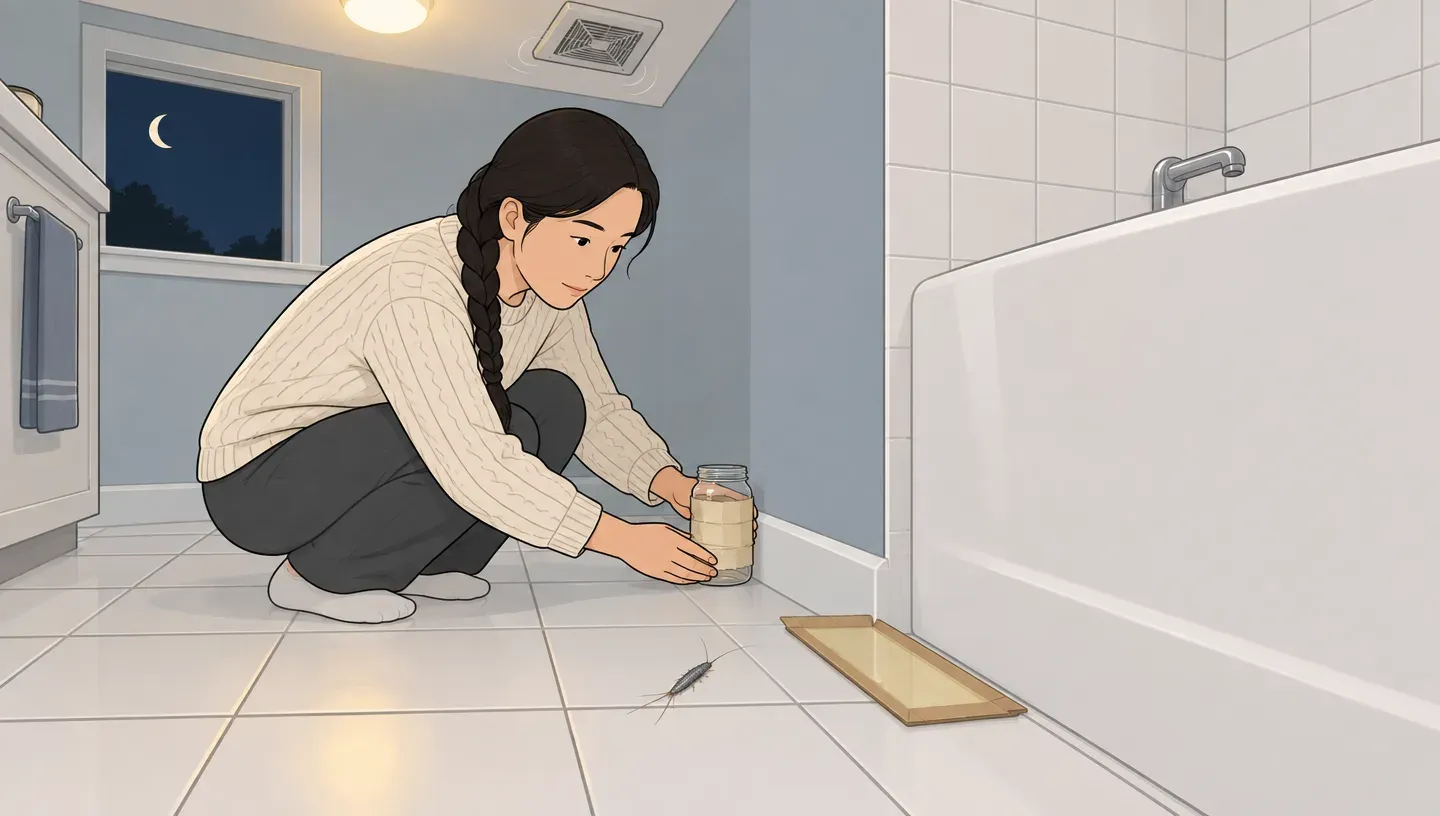
Illustration: a glass jar wrapped in masking tape in the bathroom corner, and a flat sticky trap along the baseboard beside the tub.
Silverfish in your house mean a damp room with paper, starch or dust to eat: they need high humidity and feed on dry goods like cereal and book glue. To get rid of silverfish, fix leaks and get humidity below 60%, trap to find where they gather, then dust those cracks with boric acid or diatomaceous earth. Empty traps mean it’s working.
Saw a silverfish tonight? Squash or vacuum it, then set a glass jar wrapped in masking tape (or a sticky trap) in that room’s corners. Run the bathroom fan, wipe the tub dry and put cereal and pet food in sealed containers. Found it in the tub? It fell in; it didn’t come up the drain.
Cost: about $47–52 in supplies. Time: about 2–3 weeks. Difficulty: moderate. Call a pro if traps still catch silverfish 2–3 weeks after you dried out and treated the area, or they hide in wall voids or an attic you can’t reach.
This guide covers silverfish (and their hot-spot look-alike, firebrats) in bathrooms, basements, closets and bookshelves. It won’t promise that a spray ends them: while the room stays damp, any insecticide fails, and eggs keep hatching for weeks.
What Works and What Doesn’t Against Silverfish
| Method | Works? | Cost | Main limitation |
|---|---|---|---|
| Taped jars and sticky traps | Yes, find the hot spots | Free–$12.50 | Catch, don’t cure |
| Fixing leaks, humidity under 60% | Yes, the step that lasts | $9.99 gauge; dehumidifier extra | Works slowly |
| Sealed food, less paper clutter | Yes, alongside drying | Containers you may own | They survive months without food |
| Boric acid or DE dust in cracks | Yes, once the room is dry | About $24–29 | DE cakes when wet; keep from kids and pets |
| Pyrethrin or bifenthrin spray | Large infestations only | — | Fails if the damp stays |
| Foggers, bug bombs, baits alone | No | — | Don’t reach them or don’t get eaten |
Is One Silverfish a Problem?
Usually not. Iowa State Extension says silverfish are pests mainly because they’re a nuisance, their damage matters only in very large, long-running infestations, and a few with no damage may not need control at all. Their jaws are so weak they scrape paper rather than bite through it.
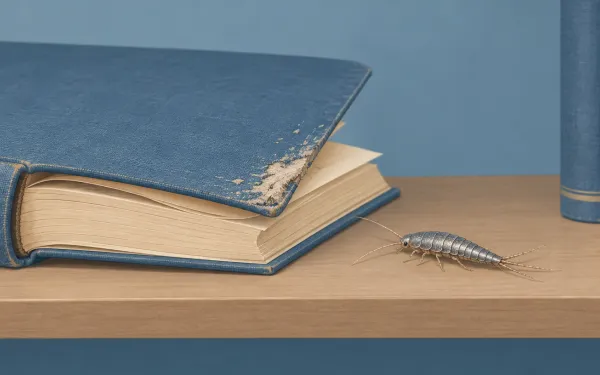
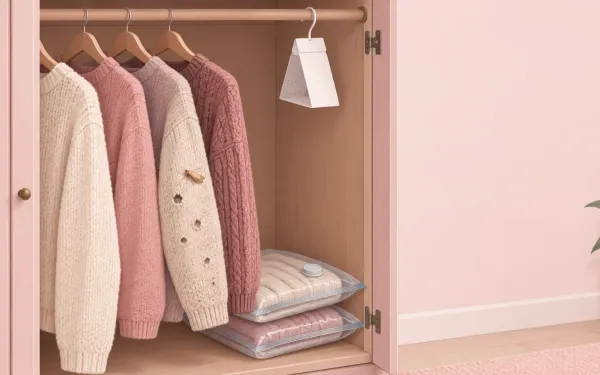
They eat book bindings, glue, wallpaper paste, starched fabric and dry food like cereal and pet food. Holes in wool sweaters are more likely clothes moths, which you hot-wash, freeze or dry-clean out of your clothes.
Step 1: Trap Silverfish to Find Where They Hide
Silverfish come out at night, so traps show you where they live. UC IPM suggests cockroach sticky traps, or a small glass jar wrapped in masking tape: silverfish climb the tape, fall in and can’t climb the slick glass.
- Where: under sinks, behind the toilet, in closets, by bookcases and along basement walls. Keep sticky traps inside cabinets or behind the toilet if you have a toddler or a cat.
- When: check each morning. The trap with the most catches marks your hot spot.
- Then: infestations are often small and scattered, so treat where the catches are, not the whole house. For an occasional silverfish bug in the house, drying the area and trapping is enough.
Step 2: Dry Out the Rooms Silverfish Love
Silverfish need damp air to survive, so this is the step that lasts. Your one number: get the gauge under 60%. The EPA’s target for homes is below 60% relative humidity, ideally 30% to 50%.
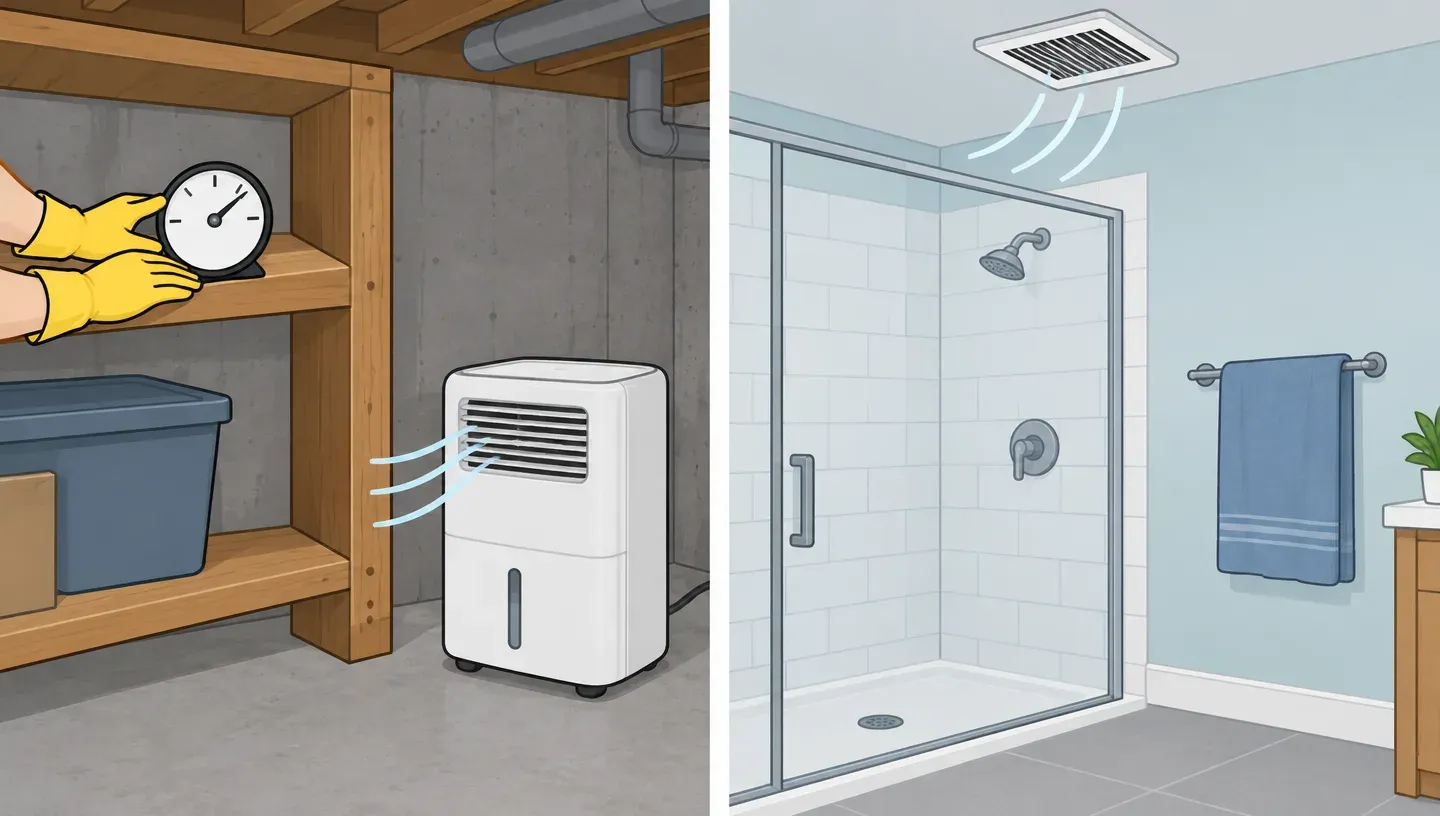
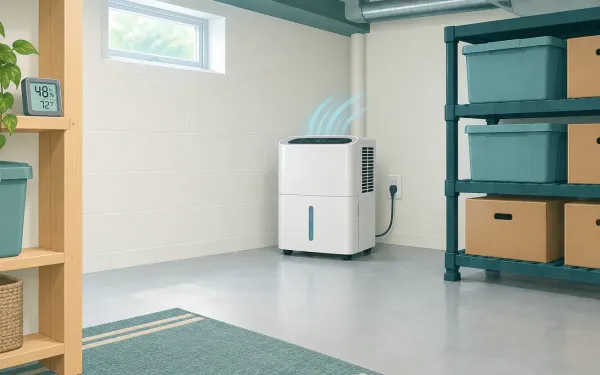
Illustration: a humidity gauge beside a running dehumidifier in the basement (left), and the bathroom fan running over a wiped-down shower (right).
- Measure first. A humidity gauge (hygrometer) costs $10 to $50 at hardware stores.
- Fix leaks and drips under sinks, around the toilet, at the water heater and in the laundry area.
- Ventilate. Run the bathroom fan during and after showers, and wipe the shower and tub dry.
- Dehumidify closed, damp spaces like basements and closets with a dehumidifier set below 60%, then recheck the gauge after a week.
Does a Dehumidifier Get Rid of Silverfish?
Not on its own, but it removes the one thing they can’t live without: UC IPM says silverfish need humidity above 75% when it’s warm. Keeping a basement or closet under 60% makes it unlivable for them over time; traps and dust deal with the ones already there.
Renting? Report leaks, a broken bathroom fan or gaps around pipes to your landlord in writing, with photos.
Step 3: Take Away Food and Hiding Places
Dust, debris and dead insects feed silverfish too, so routine cleaning is part of silverfish insect control (UC IPM). Then:
- Food: cereal, flour, pasta and pet food go in containers with tight lids.
- Paper: recycle old newspapers, magazines and cardboard boxes.
- Storage: keep long-term items in airtight bags or sealed plastic bins, not cardboard, and shift books on the shelf now and then.
- Gaps: seal cracks and holes around pipes and conduits, which give them shelter and a way in.
They survive several months without food, so this works slowly and best alongside Step 2.
Step 4: Dust Cracks With Diatomaceous Earth or Boric Acid
Still catching them once the room is dry? Dust the hiding spots with one silverfish killer:
- Boric acid dust works on silverfish, is very low in toxicity and lasts in dry voids, says Iowa State Extension.
- Diatomaceous earth (DE) isn’t a poison: it dries insects out. UC IPM says it stays effective indefinitely where it’s dry, but cakes once wet.
Which one: near a furnace, water heater or boiler, pick DE, because UC IPM says several boric acid dusts don’t work on firebrats. In a bathroom or basement you’ve dried out, either works. “Food grade” DE just means purified for use in food and feed; for silverfish, buy one labeled as an insecticide.
With kids or pets, read this first:
- Dust only where they can’t reach: wall voids, behind the toe-kick panel at the base of cabinets, attics, basements and storage closets. NC State says dusts work best in places people and pets don’t regularly go.
- Boric acid is low in toxicity, but infants are more sensitive, and NPIC says it affects animals in a similar way. After dusting, get down to your child’s level to check nothing is reachable.
- DE can irritate the nose, eyes and skin.
- If someone swallows a dust, call Poison Control at 800-222-1222.
- For a light problem, skip dust entirely.
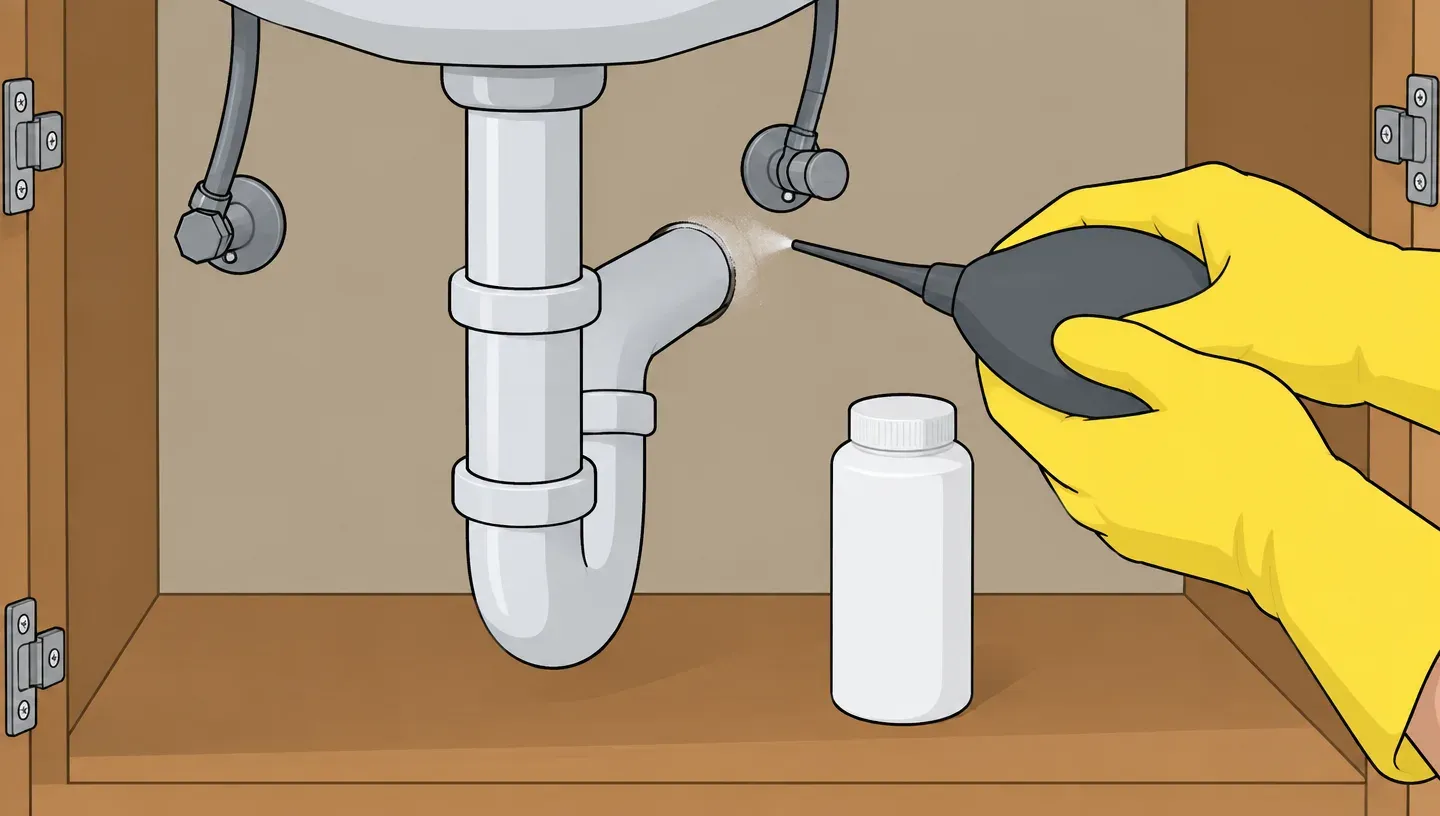
Illustration: a bulb duster puffing a thin layer of dust into the gap around the pipe under the sink.
How to apply it:
- Use a bulb duster or squeeze bottle.
- Puff a barely visible layer into cracks along baseboards, door and window frames, closets, bookcases and pipe openings. Thicker isn’t better.
- Keep it out of open floors.
- Re-dust damp spots once they’ve dried.
Pest Control Spray for Silverfish: When to Use It
For large infestations only. UC IPM says sprays with pyrethrins or a pyrethroid such as bifenthrin (check the ingredient list on the label) kill silverfish on contact and leave some residue. Spray small amounts into cracks, not open floors. If the label says the spray is oil-based, keep it away from motors and pilot lights, and out of drains and food.
Skip these:
- Foggers and bug bombs. Not recommended for silverfish; fog can’t reach under attic insulation and stored boxes.
- Baits alone. Silverfish tend not to eat most baits.
- Spraying without fixing the damp. Any insecticide for silverfish fails if moisture, food and hiding places remain.
Why Do Silverfish Keep Coming Back?
Usually one of these:
- The moisture is still there. UC IPM says large populations are almost impossible to control until dripping water and moist surfaces are gone.
- The source isn’t where you see them. Silverfish travel long distances for food, so the colony may be in a basement, closet or wall void.
- The dust got wet. Wet DE cakes and stops working; re-dust once the spot is dry.
- Eggs keep hatching. Eggs take 19 to 32 days to hatch.
What to expect:
- First nights: catches show you the hot spots.
- Within 2 to 3 weeks: UC IPM says a thorough treatment shows results in a few weeks. No change means they’re coming from untreated areas.
- A month or more: keep traps out after catches stop, to catch late hatchers.
Tiny jumping bugs in the same damp basement are likely springtails, which also fade once the damp spot dries out.
What Attracts Silverfish to Your House?
Three things, usually together:
- Moisture. Damp air is the big one. Bathrooms, basements, laundry rooms and leaky spots under sinks hold the humidity they need. UC IPM adds that freshly poured concrete and green lumber supply humidity, which is why new homes can have them too.
- Food. Their gut enzymes digest cellulose, so they eat paper with glue or paste, book bindings, wallpaper paste and starch in clothing, plus dry foods like cereal, flour, pasta and pet food (UC IPM). NC State says they’re especially drawn to glazed paper and the starch and glue in old book bindings.
- Hiding places. Clutter, stored boxes and old newspapers give them food and shelter (NC State), and cracks, crevices and wall voids are where they gather.
Take away the moisture first; food and clutter come next (Step 3).
Silverfish or Firebrat?
Found them by a furnace, water heater or boiler? They may be firebrats, a look-alike that changes which dust to use. The common silverfish is shiny, about ½ inch long and up to ¾ inch, with two long antennae and three thin “tails”.
| Silverfish | Firebrat |
|---|---|
| Silver or pearl gray, shiny | Mottled gray or brown |
| Damp spots: bathrooms, basements, laundry rooms | Hot spots: furnaces, water heaters, ovens, summer attics |
| Needs humidity above 75% when it’s warm | Thrives at 90°F and above, even in dry air |
Source: UC IPM. Young silverfish look like smaller, whiter adults, says NC State Extension.
Which Plan Fits Your Situation
| Your situation | Start with | Then |
|---|---|---|
| One silverfish, no damage | Taped jars and the bathroom fan, $0 | Nothing more if traps stay empty |
| Several a week in one room | Gauge and glue boards, about $22 | Fix leaks, get under 60% |
| Still catching once the room is dry | One dust in the hot-spot cracks | Re-dust damp spots once dry |
| Near a furnace or water heater | Check for firebrats | DE, not boric acid |
| Kids or pets at home | Traps and drying first | Dust only where they can’t reach |
| Coming from wall voids or the attic | A pro, or your landlord if renting | Ask where the moisture comes from |
What It Might Still Cost
| Item | Typical cost |
|---|---|
| Taped glass jar trap | Free |
| Digital hygrometer | $9.99 |
| 12 insect glue boards | $12.50 |
| Boric acid powder labeled for silverfish, 16 oz | About $24–29 |
| DIY total | About $47–52 |
| Pro silverfish treatment | $200–$700 (average $400) |
| Whole-home fumigation, severe cases | $1,000–$2,000 or more |
DIY: Target and DoMyOwn list prices, October 1, 2026, before tax; a dehumidifier is extra. Pro: Fixr and Today’s Homeowner, checked October 1, 2026.
Fixr’s typical $400 job treats a 2,000 sq. ft. home with diatomaceous earth plus a follow-up visit: the same dust you can buy.
A quote may be more than you need if it’s a quarterly contract for a few silverfish and no damage, or fumigation or fogging for a light problem.
Before You Start: A Quick Checklist
- Buy a humidity gauge before a dehumidifier or dust.
- Set traps in every damp room and check each morning.
- Fix drips under sinks, by the toilet and at the water heater.
- Move cereal, flour and pet food into containers with tight lids.
- Swap cardboard storage boxes for sealed plastic bins.
- Check the dust label says silverfish, and buy a bulb duster.
- Report leaks or a broken fan to your landlord in writing.
When to Call a Pro
- Traps still catch silverfish 2 to 3 weeks after you dried out and treated the area.
- They’re coming from wall voids or an attic you can’t reach. NC State notes that dusting wall voids may mean drilling small holes, which renters should leave to the landlord.
- Books, papers or stored fabrics you can’t replace are being damaged.
Ask where the moisture comes from, which product goes where, and how many visits the price covers. See what an exterminator does for more.
Common questions
It was probably passing through. Silverfish travel long distances at night looking for food (UC IPM), and a bedroom next to a damp bathroom or closet is on the way. They don’t feed on people, and their jaws are too weak to bite. Set a jar trap or sticky trap by the bed and in the nearest damp room to see where they’re coming from.
Not while the room stays damp. A few with no damage may need nothing more than a drier room and a couple of traps.
The Bottom Line
Silverfish are a damp-room problem. Trap to find where they gather, fix leaks and keep the humidity gauge under 60%, seal dry food and cut paper clutter, then dust the hot-spot cracks only if traps keep catching once the room is dry. Expect results in two to three weeks; keep traps out a month after catches stop.
Sources and further reading · 6
- UC IPM: Silverfish and Firebrats, Pest Notes 7475: identification, humidity, life cycle, traps, dusts, sprays and foggers.
- NC State Extension: Silverfish and Firebrats: sticky traps, drying, storage, fogging and wall voids.
- Iowa State Extension: Silverfish and Firebrats: nuisance status, when control isn’t needed, boric acid dust.
- EPA: A Brief Guide to Mold, Moisture and Your Home: indoor humidity target and hygrometer cost.
- National Pesticide Information Center: Diatomaceous Earth Fact Sheet and Boric Acid Fact Sheet.
- Costs: Fixr, Silverfish Extermination Cost and Today’s Homeowner, How Much Does It Cost to Get Rid of Silverfish?