- Scientific name
- Sphecius speciosus
- Also called
- eastern cicada killer, ground hornet
- Size
- Up to about 2 in
- Color
- Black to rusty red with pale yellow bands on the abdomen
- Found in
- Bare, sunny, sandy soil in lawns, gardens, banks and along sidewalks
- Harmful?
- Rarely stings; males can't sting
- Active
- Mid to late summer
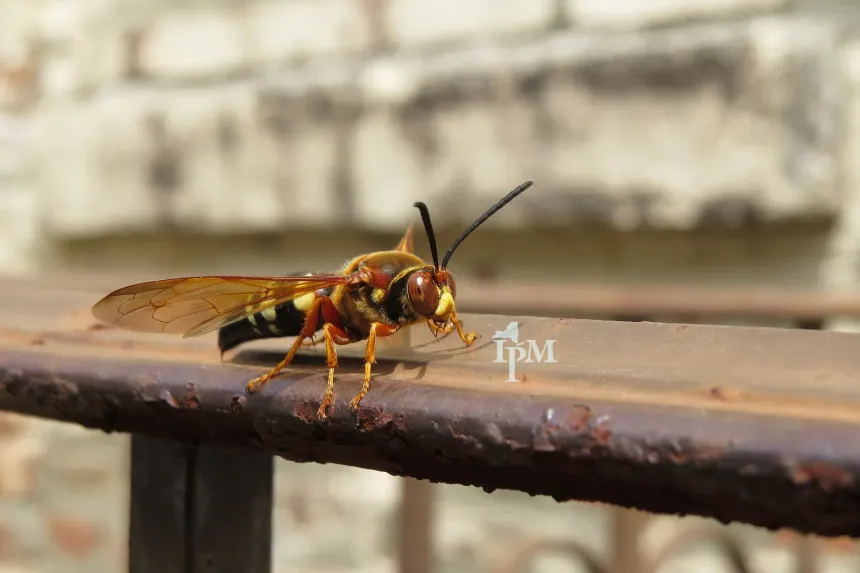
The cicada killer is one of the largest wasps in North America: about 2 inches long, black with pale yellow bands, digging holes in bare, sunny soil in mid to late summer. It looks alarming but isn’t aggressive, males can’t sting, and females seldom do. The one thing to do: usually nothing, since nesting lasts only a few weeks; thicken thin turf or mulch bare soil to keep them away next year.
This page covers how to identify a cicada killer, how it differs from hornets and yellowjackets, and how to discourage it. It rests on University of Maryland and University of Kentucky guidance.
How to Identify a Cicada Killer: Huge Wasp, Holes in Bare Soil
- Very large: up to about 2 inches long; it resembles a giant yellowjacket.
- Black to rusty red, with pale yellow bands on the abdomen and amber-tinted wings.
- Burrows: holes about 1/2 inch wide in bare, sunny soil, each with a U-shaped pile of loose dirt at the entrance.
- Behavior: males patrol the burrow area and dive at anything that moves, which is unnerving but harmless.
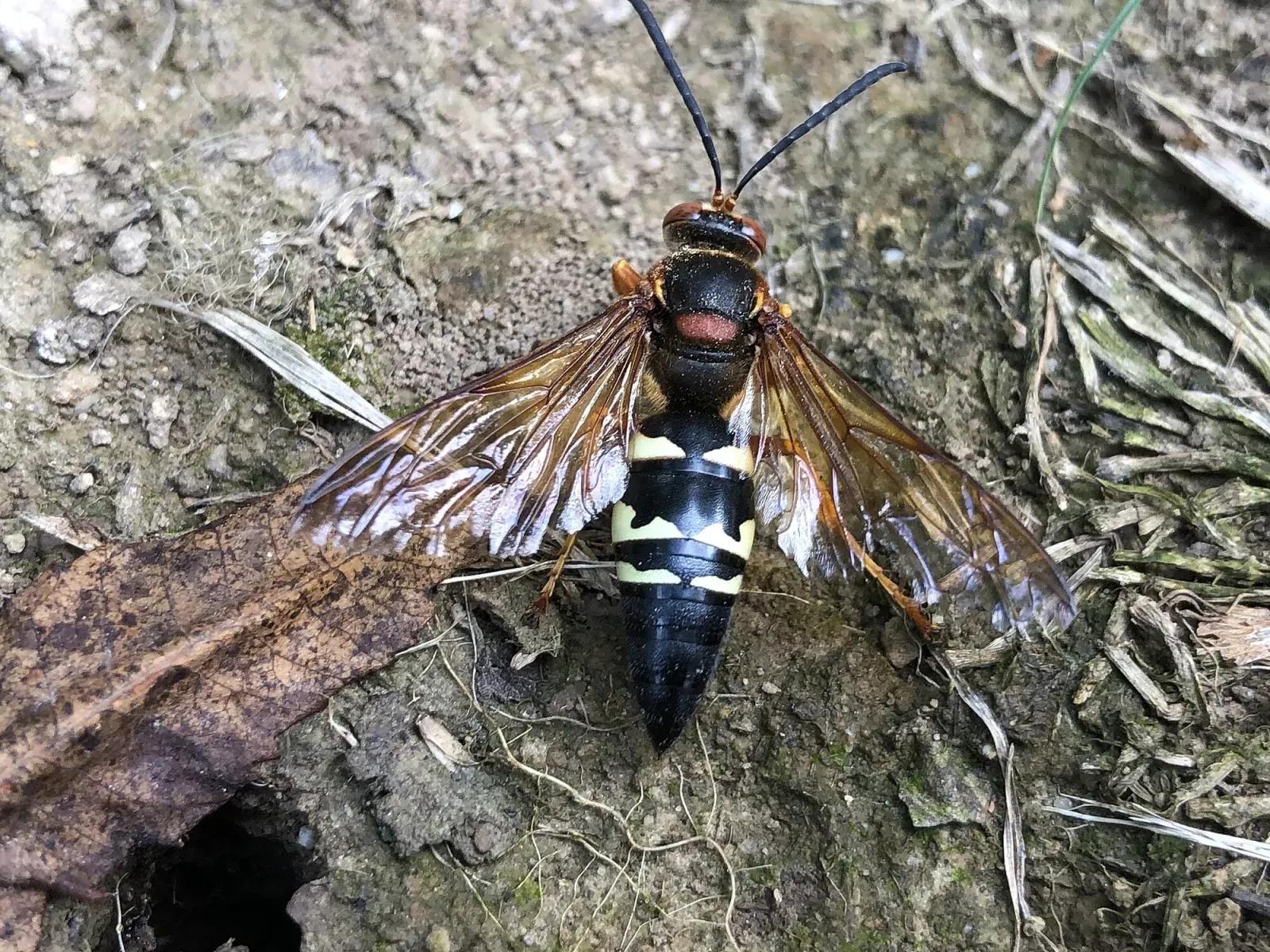
A cicada killer next to its burrow. A small mound of loose soil at the hole is the giveaway. Photo: Famartin (CC BY-SA 4.0), via Wikimedia Commons.
Cicada Killer vs. Look-Alikes: Solitary and in the Ground
| Wasp | How it differs | How to tell |
|---|---|---|
| Cicada killer | About 2 in, solitary, active by day | Burrows with a U-shaped dirt pile |
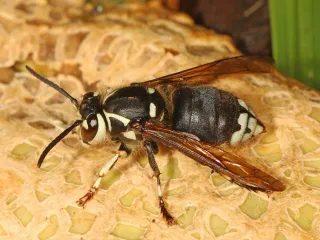
| European hornet | A bit smaller, brown, red and yellow | Paper nest in a tree hollow or wall; flies toward lights at night |
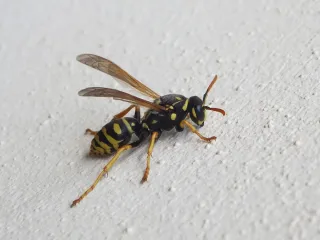
| Yellowjacket | About 1/2 in, lives in colonies | Steady traffic at one hole; aggressive near it |
A hole in the lawn with many small wasps going in and out is yellowjackets, which are dangerous; holes in the yard sorts the two.
Where You’ll Find Them: Bare, Sunny, Sandy Soil
- Bare patches in sunny lawns
- Sandy garden beds, banks and the edges of sidewalks and patios
- Sand volleyball courts and playgrounds
They prefer sunny spots with sparse, well-drained or sandy soil. Many nests can end up close together, which is why one lawn can suddenly have dozens of holes (University of Maryland).
When You’ll See Them: A Few Weeks in Midsummer
In mid to late summer, each female digs a burrow and stocks its cells with cicadas she has paralyzed, laying an egg on each one. The larva feeds on the cicada and spends the winter in the burrow (University of Kentucky). Adults feed on flower nectar. Nest building is temporary, so activity fades within a few weeks.
Do Cicada Killers Sting? Rarely
Males have no stinger. Females can sting, but their sting is meant for paralyzing cicadas, and they seldom sting people unless grabbed or stepped on barefoot, as the University of Maryland notes. The University of Kentucky says they generally want nothing to do with people and rarely sting even when bothered. They’re also beneficial: they help reduce cicada numbers.
How to Confirm It’s a Cicada Killer
- Measure by eye: a wasp close to 2 inches long.
- Look at the holes: about 1/2 inch, each with a U-shaped pile of loose soil.
- Watch the behavior: single wasps at separate holes, not a stream into one opening.
- Check the timing: mid to late summer, the few weeks females spend digging and stocking burrows.
What to Do: Wait, or Thicken the Turf
Usually nothing: they’re gone within a few weeks. To discourage them, thicken thin turf by overseeding in fall, water bare spots, or cover bare soil with 2 to 3 inches of mulch or a groundcover. Running a sprinkler over the nesting area discourages them for a while. In planted beds, landscape fabric under the mulch reduces or prevents digging. In the long run, fixing whatever makes the spot attractive, usually thin turf over sandy soil, works better than any spray (University of Maryland). The University of Kentucky adds that good fertilizing and watering give the thick turf that keeps them from burrowing. The University of Maryland says to use insecticide only as a last resort, since many wasps survive it anyway. If young children use the area and the nests are thick, a dust labeled for ground-nesting wasps can be applied to the holes. For nest comparisons see wasp nests, or browse all pest guides.
Often confused with
Sources
- Cicada Killer Wasps (University of Maryland Extension)
- Yard Wasps (University of Kentucky Entomology, EF411)
Last reviewed Oct 4, 2026.
.jpg)