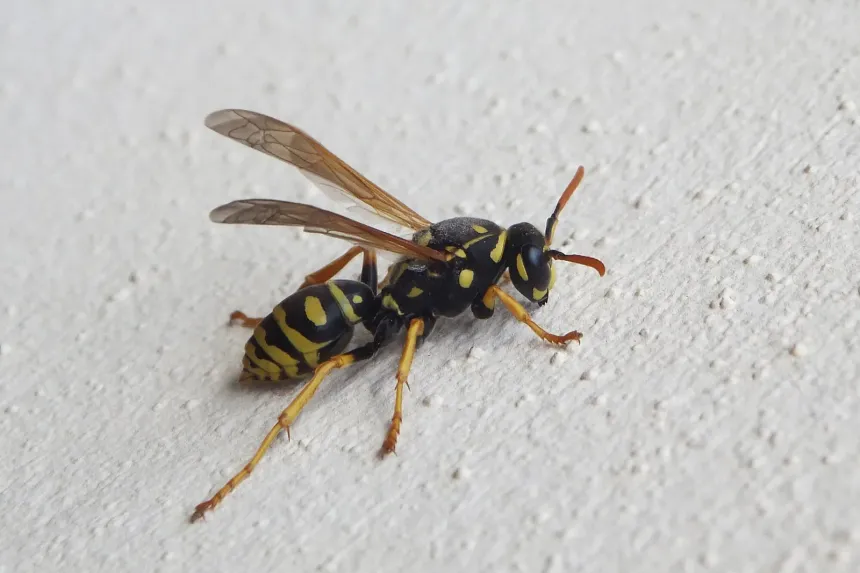
- Scientific name
- Polistes species
- Also called
- umbrella wasp
- Size
- About 3/4–1 in
- Color
- Brown to reddish with yellow or orange markings
- Found in
- Under eaves, porch ceilings, railings, shutters, grills
- Harmful?
- Stings if the nest is disturbed
- Active
- Spring to fall; mated queens overwinter in sheltered spots
Paper wasps build the open, gray paper nests that hang like upside-down umbrellas under eaves and porch roofs. They’re not very aggressive and hunt caterpillars and other insects, but they sting when a hidden nest is bumped. The one thing to do: check eaves, shutters and grills in spring, and leave nests that are well away from doors.
This page covers how to identify paper wasps, tell them from yellowjackets and hornets, and when to remove a nest. It rests on University of Kentucky guidance.
How to Identify a Paper Wasp: Slender, Long Legs, Open Nest
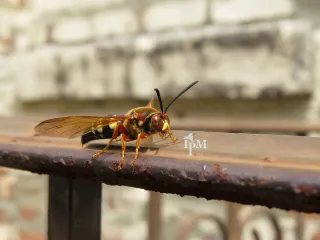
- Slender, about 3/4 to 1 inch, with a very thin waist.
- Long legs that dangle below the body in flight.
- Brown to reddish, with yellow or orange markings, depending on the species.
- Nest: a single comb of open paper cells, no outer covering, hanging from one stalk. You can see the developing young inside.
Most paper wasps are brownish or rust-colored. One kind, the European paper wasp, has yellow and black markings much like a yellowjacket; the very thin waist tells them apart (University of Kentucky).
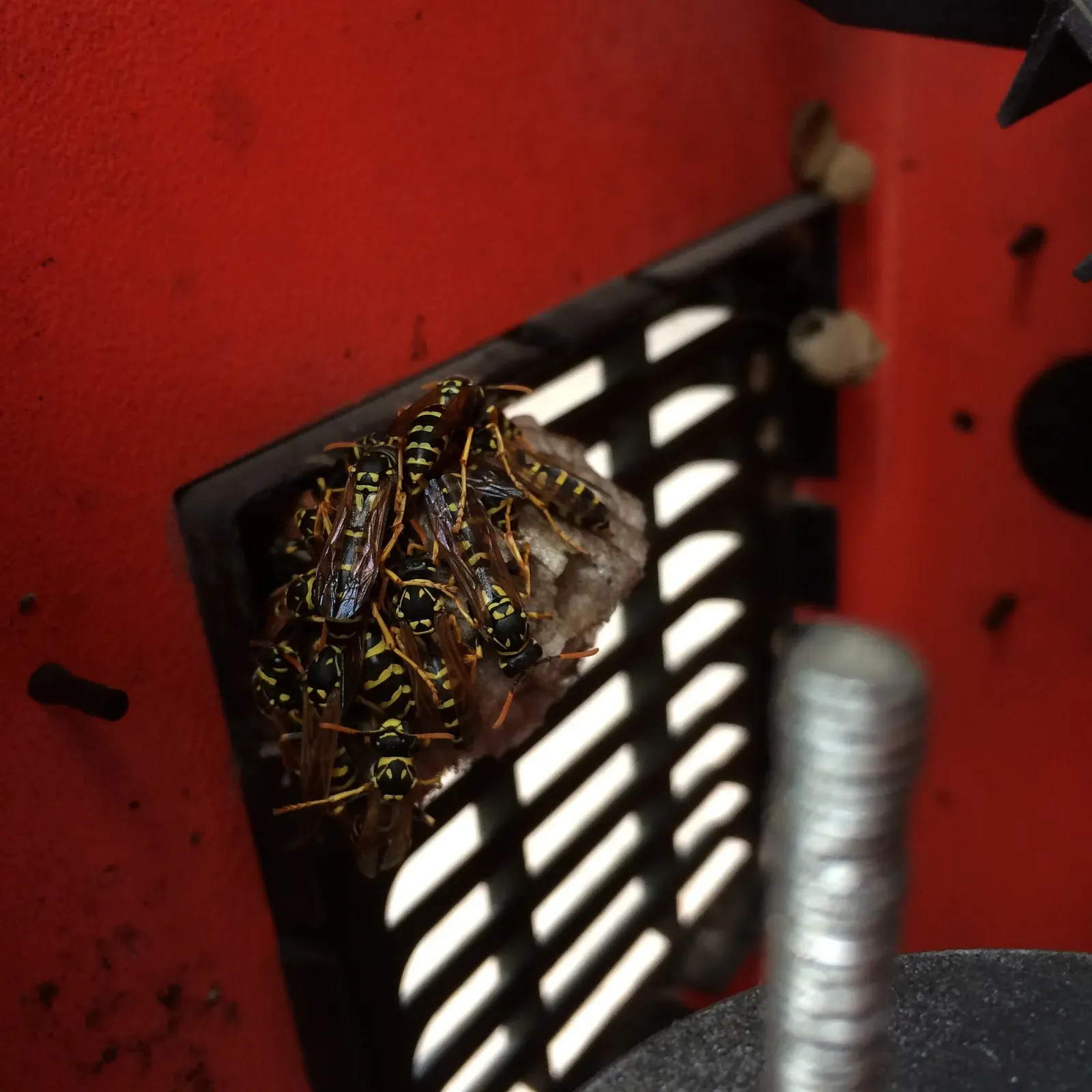
Paper wasps nesting in a grill vent. They pick sheltered spots around the house like this. Photo: Thomas Voekler (CC BY-SA 4.0), via Wikimedia Commons.
Paper Wasp vs. Look-Alikes: Waist and Nest
| Wasp | How it differs | How to tell |
|---|---|---|
| Paper wasp | Slender, thin waist, dangling legs | Open comb in plain view |
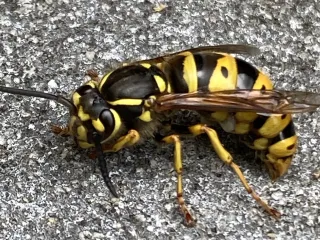
| Yellowjacket | Stocky, bright yellow and black, legs tucked | Covered nest in the ground or a wall |
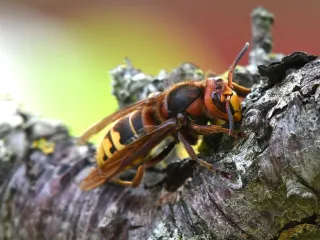
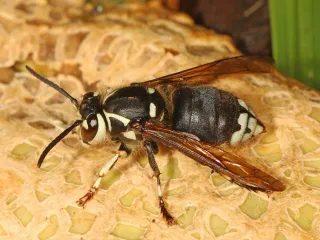
| Bald-faced hornet | Larger, black and white | Enclosed gray paper ball with one hole |
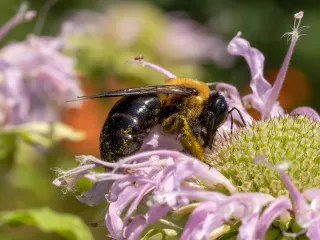
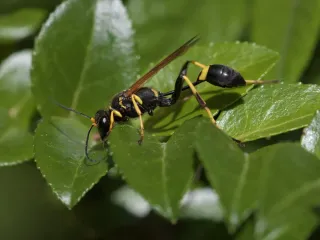
| Mud dauber | Very thin “thread” waist, solitary | Nest made of mud, not paper |
Where Paper Wasps Nest: Sheltered Spots Around the House
- Under eaves, gutters, ledges and porch ceilings
- Railings, deck undersides and behind window shutters
- Inside porch lights, barbecue grills and mailboxes
- Attics, barns and sheds, where queens look for winter shelter in fall
All paper wasps, hornets and yellowjackets build nests from finely chewed wood mixed with saliva (University of Kentucky).
When You’ll See Them: Spring to First Frost
Nests start small in spring and grow through summer. In cold-winter states, colonies die off when the weather turns cold, and the paper nest falls apart over winter. Last year’s empty nest is not reused. Paper wasps are social, living in colonies, and social wasps readily sting when they sense the nest is threatened; solitary wasps such as mud daubers sting only when handled (University of Kentucky). An open comb compared with other nest shapes is on wasp nests.
Are Paper Wasps Harmful? Painful Stings Near the Nest
They aren’t very aggressive, but they sting when the nest is threatened, and the sting is painful. Stings often happen when someone bumps a nest they couldn’t see, such as one inside a grill or behind a shutter. People allergic to stings can have serious reactions (University of Kentucky) and should get medical help right away for swelling of the face or throat, trouble breathing or dizziness. Only female wasps sting. Most people get pain, itching, redness and local swelling, which an over-the-counter antihistamine and an ice pack can ease; washing the sting with soap and water helps prevent infection (University of Kentucky).
How to Confirm It’s a Paper Wasp Nest
- Look up at the nest: open cells visible from below, hanging from one stalk.
- Watch a wasp land: slender body and legs dangling.
- Check hidden spots like grills, mailboxes and shutters before using them in spring.
What to Do: Leave It or Treat It From a Distance
Leave nests that are well away from doors and paths: paper wasps help control garden caterpillars. An accessible nest can be treated with a wasp and hornet spray, which reaches up to 20 feet. Night is best, but paper wasps can be treated by day as long as you don’t stand directly under the nest, since sprayed wasps drop at once. Wait a few days, then scrape the nest down (University of Kentucky); the step-by-step is in how to remove a wasp nest. Call a professional if you’re allergic or the nest is hard to reach. Skip folk remedies such as blasting the nest with a garden hose: the University of Kentucky says they seldom work and can lead to several stings. Garden-sized digging wasps are a different story: see cicada killers. For other pests, browse all pest guides.
Often confused with
Sources
- Controlling Wasps, Hornets, and Yellowjackets (University of Kentucky Entomology, EF620)
- Yard Wasps (University of Kentucky Entomology, EF411)
Last reviewed Oct 4, 2026.