- Scientific name
- Vespula species
- Also called
- yellow jacket, ground hornet, meat bee
- Size
- About 1/2 in
- Color
- Bright yellow and black bands
- Found in
- Ground holes in lawns, wall voids, attics; trash cans and picnics
- Harmful?
- Yes. Stings repeatedly when the nest is disturbed
- Active
- Spring to fall; most aggressive in late summer
Yellowjackets are stocky yellow-and-black wasps that nest in covered paper nests, most often underground in old rodent burrows. The University of Kentucky calls them arguably the most dangerous stinging insects in the US: they’re unpredictable and usually sting if the nest is disturbed. The one thing to do: find the nest entrance in daylight, keep away from it, and leave large or hidden nests to a professional.
This page covers how to identify yellowjackets, where they nest, why they swarm picnics in late summer and what to do. It rests on University of Kentucky guidance.
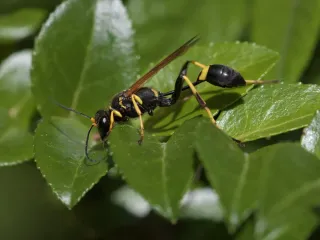
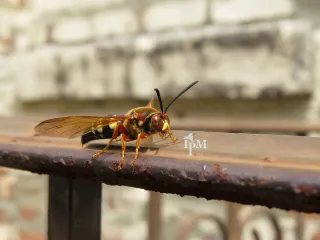
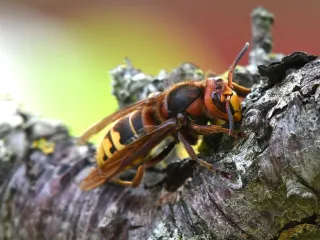
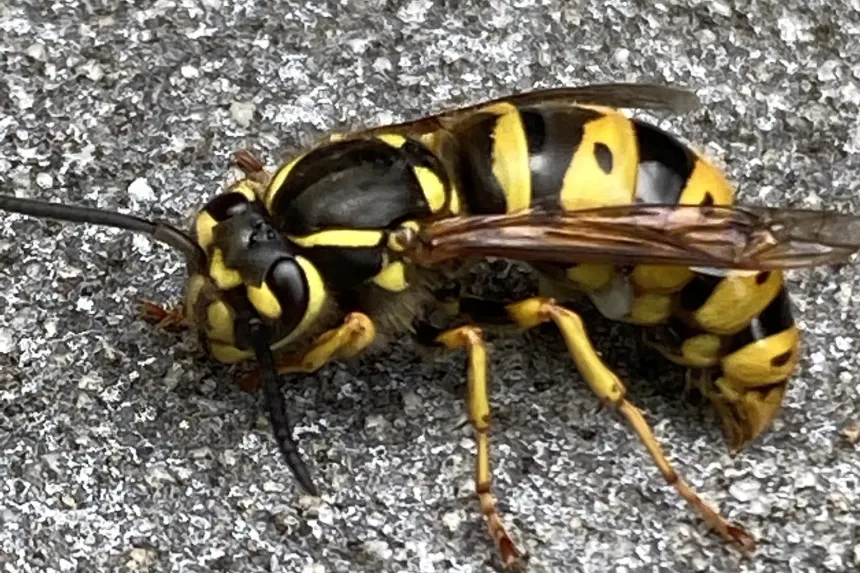
How to Identify a Yellowjacket: Stocky and Brightly Banded
- About 1/2 inch, stocky, with bright yellow and black bands.
- Smooth and shiny, not fuzzy.
- Fast, side-to-side flight, with legs tucked in.
- Nest entrance: a hole in the ground or a gap in siding with a steady stream of wasps flying in and out.
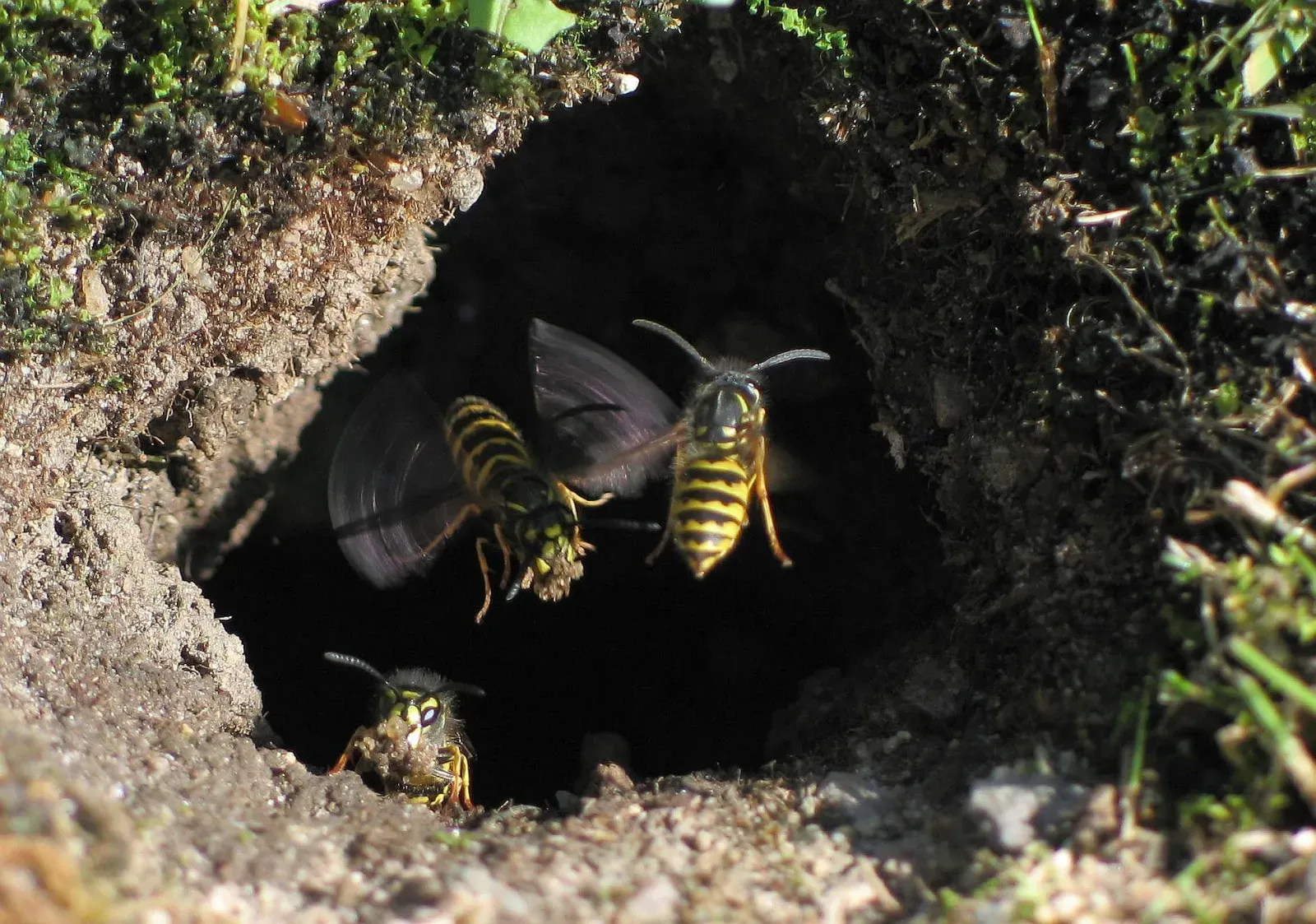
Yellowjackets at a ground nest entrance, the way most people first spot them. Photo: Soebe (CC BY-SA 3.0), via Wikimedia Commons.
Yellowjacket vs. Look-Alikes: Body Shape and Nest
| Insect | How it differs | How to tell |
|---|---|---|
| Yellowjacket | Stocky, smooth, bright yellow and black | Covered nest in the ground or a wall |
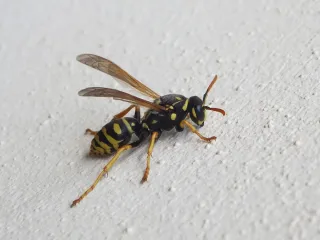
| Paper wasp | Slender, very thin waist, legs dangle in flight | Open umbrella-shaped comb in plain view |
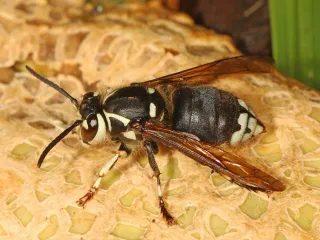
| Bald-faced hornet | Larger, black and white | Gray paper ball hanging in a tree or shrub |
| Honey bee | Fuzzy and golden brown | Hive, not a paper nest |
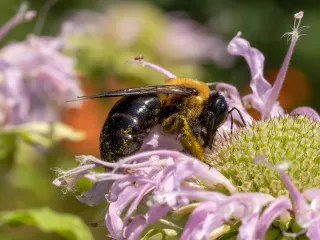
| Carpenter bee | About 3/4–1 in, black and yellow, shiny black abdomen | Round holes in bare wood, no paper |
The European paper wasp has yellow-and-black markings much like a yellowjacket, but its very thin waist gives it away (University of Kentucky).
Where Yellowjackets Nest: Underground, in Walls and Attics
- Old chipmunk or rodent burrows in lawns and banks
- Under rocks, gutter splash blocks and landscape timbers
- Stone walls, crawl spaces, attics and behind siding
A hole in the lawn with wasps flying straight in and out is a yellowjacket nest; holes in the yard helps sort it from other diggers. Nests are paper, football-shaped and either in the ground or above it.
Why Yellowjackets Swarm Picnics: Late Summer Hunger
Fertilized queens spend winter hidden, start a colony in spring and raise the first workers. The colony grows all summer. By late summer and early fall it’s nearing maturity and huge numbers of workers forage for the developing queens. With insect prey getting scarce, they scavenge sweets such as fruit, soft drinks, beer and ice cream, plus meat and fish. Colonies die off in late autumn with the cold, and abandoned nests aren’t reused (University of Kentucky).
Are Yellowjackets Dangerous? Yes, Near the Nest
Workers foraging away from the nest seldom sting unless swatted or trapped against skin. Near the nest they defend it aggressively, and alarm signals call more defenders. Be careful drinking from cans outdoors: a sting inside the mouth can be especially dangerous. About 1% of people are hypersensitive to the venom. Hives, widespread itching, trouble breathing or swallowing, swelling of the face, throat or mouth, dizziness or a rapid pulse after a sting need medical attention right away, as the University of Kentucky advises. More on sting and bite marks in bug bite pictures.
How to Confirm It’s a Yellowjacket Nest
- Watch in daylight from a distance: a steady stream of wasps flying straight into one hole.
- Look for paper: a covered nest, if you can see one, rather than an open comb.
- Mark the spot so nobody mows over it.
- Check the yard in summer, before mowing or gardening, so nobody stumbles onto a nest.
What to Do: Cover Food, Avoid the Nest, Call a Pro
Keep food and drinks covered outdoors, clean up spills, use trash cans with tight lids and rake up fallen fruit. Don’t swat; move away slowly. Mosquito repellents won’t stop foraging yellowjackets, and scented soaps and perfumes attract them. Traps catch many but rarely make a noticeable dent in a late-season colony.
Ground and wall nests are best treated by a professional, especially when they’re hard to reach. Never seal a nest entrance in a wall, which can drive the wasps indoors. Nests out of the way can be left alone until cold weather kills the colony. If a ground nest is in open lawn, how to remove a wasp nest covers treating it at night with dust. Compare nest types on wasp nests, or browse all pest guides.
Often confused with
Sources
- Controlling Wasps, Hornets, and Yellowjackets (University of Kentucky Entomology, EF620)
- Foraging Yellowjackets (University of Kentucky Entomology, EF634)
Last reviewed Oct 4, 2026.