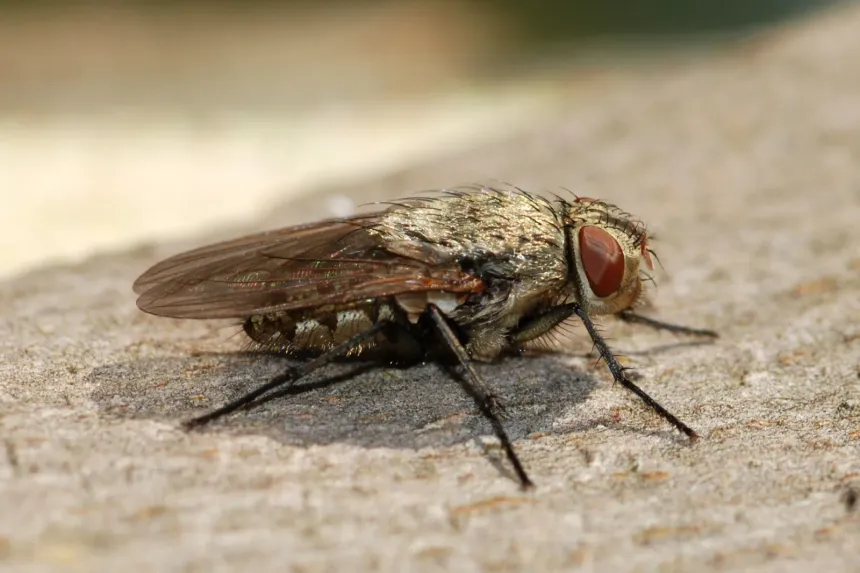
- Scientific name
- Pollenia species
- Also called
- attic fly
- Size
- About 3/8 in, a bit bigger than a house fly
- Color
- Dark gray, golden crinkly hairs on the back
- Found in
- Attics, wall voids and upper-floor windows
- Harmful?
- No. Dead flies can attract carpet and larder beetles
- Active
- Enter in late summer and fall; appear at windows on sunny winter days
Cluster flies are the sluggish, dark gray flies that buzz at upper-floor windows on sunny days in fall, winter and early spring. They don’t breed or feed indoors and aren’t a health hazard: they’re just overwintering in the walls and attic. The one thing to do: seal gaps around windows, eaves, vents and siding in late summer, before they arrive.
This page covers how to identify cluster flies, tell them from house flies and why they gather in your house. It rests on University of Kentucky and Colorado State University Extension guidance.
How to Identify Cluster Flies: Golden Hairs, Slow Flight
- About 3/8 inch, a little larger than a house fly.
- Dark gray, with short, golden, crinkly hairs on the thorax that rub off with age.
- Wings overlap over the back when resting.
- Sluggish: easy to catch, often found dead on windowsills.
Cluster Fly vs. Look-Alikes: Season and Setting
| Fly | How it differs | How to tell |
|---|---|---|
| Cluster fly | Dark gray, golden hairs, slow | At windows in cool months, in rooms without food |
| House fly | Smaller, four dark stripes on the back | Active around food and trash in warm weather |
| Bluebottle or blow fly | Large, shiny metallic blue or green | Loud buzzing; drawn to lamps |
| Face fly | Looks like a house fly | Near pastures and cattle; only an expert can tell |
Why Cluster Flies Are in Your House: Winter Shelter
Their maggots develop outdoors as parasites inside earthworms. Adults emerge in late summer and early fall and look for protected places to spend the winter, often inside walls, attics and basements. Window screens don’t stop them, because they crawl in through small openings in the walls. On warm days in winter and spring they wake and get into rooms through gaps around baseboards, window frames and light fixtures (University of Kentucky). Like Asian lady beetles, they’re fall invaders, not indoor breeders.
Where You’ll Find Them: Attics and Upper Windows
- Attics, especially near the gable ends and eaves
- Upper-floor windows on the sunny side, often in rooms that aren’t used much
- Light fixtures and ceiling corners
Are Cluster Flies Harmful? No
They don’t breed indoors, don’t feed on food indoors and aren’t known to spread disease. Large numbers of dead flies in attics and walls can feed larder beetles and carpet beetles, so vacuum up piles of dead flies.
How to Confirm It’s Cluster Flies
- Look for golden hairs on the thorax of a slow fly.
- Check the season: late fall through early spring, on warm, sunny days.
- Note the room: windows with no food or garbage nearby.
What to Do: Seal in Late Summer, Vacuum in Winter
Seal gaps around windows, eaves, vents and siding in late summer, before they arrive; it’s a long job, but it’s the step that lasts. Vacuum flies at windows, and window fly traps help in the rooms where they gather. The University of Kentucky notes that once they’re inside the walls, they’re hard to get rid of completely. The full plan is in how to get rid of cluster flies. For other pests, browse all pest guides.
Often confused with
Sources
Last reviewed Oct 4, 2026.