How to Get Rid of Cluster Flies in the Attic and Windows
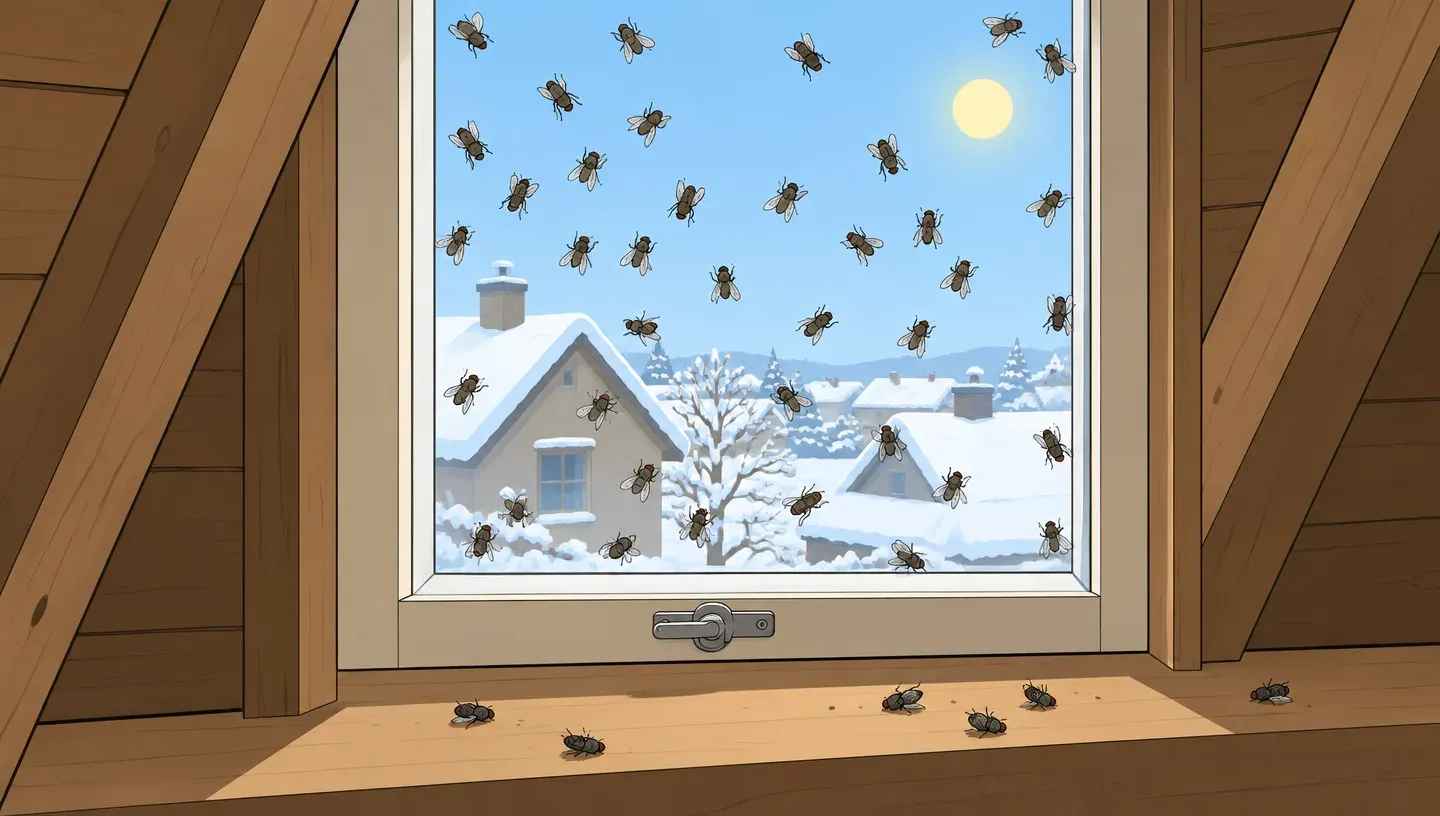
Illustration: cluster flies crowding an attic window on a sunny winter day.
How to get rid of cluster flies: vacuum or swat the slow flies at your windows, use a UV light trap in the attic, and seal cracks around windows, eaves, vents and siding on the sunny south and west walls by mid-August. Fly paper and lawn sprays don’t help. They’re under control when next winter brings only a few.
Cost: about $5 in supplies. Difficulty: easy. Call a pro if large numbers return every year and you want a residual insecticide applied to the sunny upper walls in late summer, or dust injected into wall voids where they gather.
This page covers how to tell cluster flies from house flies, why they pick your attic, the three steps (vacuum, attic light trap, seal), which sprays are worth it and the roughly $5 in supplies. We haven’t tested these methods ourselves; this rests on Colorado State and University of Minnesota Extension guidance, plus a store list price.
Sluggish flies at the window tonight? They’re almost certainly cluster flies sheltering for winter, not a sign of something rotting. Vacuum them or use a swatter. Darken the room and leave one window bright, and they’ll gather there (University of Minnesota Extension). They can’t breed indoors.
What Works and What Doesn’t Against Cluster Flies
A vacuum, an attic light trap and caulk before late August do the work; fly paper, baited traps and lawn sprays don’t.
| Method | Works? | Cost | Main limitation |
|---|---|---|---|
| Vacuum or swatter | Yes, for flies indoors | Probably already yours | More wake up on every warm winter day. |
| UV light trap with a sticky card | Yes, in attics | — | Best in large open spaces; cards fill fast with big numbers. |
| Sealing cracks by mid-August | Yes, the main fix | $4.99 for a tube of caulk | Too late once they’ve moved in; high eaves need a ladder. |
| Residual spray on outside walls | Partly, as a supplement | — | Only in late August to mid-September; Minnesota suggests a professional. |
| Drying dust in wall voids | Partly | — | Dead flies left in walls can draw rodents and other pests. |
| Indoor aerosol for flying insects | Short-term only | — | Clears a batch but doesn’t stop the next. |
| Fly paper and baited fly traps | No | — | Cluster flies aren’t drawn to food or chemical lures. |
| Lawn insecticides and spring sprays | No | — | Never shown to cut next year’s flies; spring flies are already leaving. |
Are They Cluster Flies?
Cluster flies are dull grayish-brown, about 3/8 to 1/2 inch long, slightly bigger than a house fly, with golden, tangled hairs on the thorax; indoors they fly lazily and erratically (Colorado State). The house fly is the usual mix-up, and the fix is completely different:
| Fly | Looks | When and where | Breeds indoors? |
|---|---|---|---|
| Cluster fly | Slightly larger, dark gray, golden hairs on the thorax | Fall to early spring, upstairs windows and attics | No; maggots live on earthworms outdoors |
| House fly | Smaller, four clear dark stripes on the back | Warm weather, around food and garbage | Yes, in garbage and moist waste |
Our cluster fly page has more on telling them apart.
Why Are Cluster Flies in My House?
They’re looking for a winter shelter, not food. Cluster fly maggots live in the soil as parasites of earthworms, so the adults have nothing to breed on in your house (University of Minnesota Extension). There’s no garbage or rotting food to find and clean up.
From as early as mid-August into early October, they rest on sun-warmed south and west walls, especially the upper half of the building, and crawl in through cracks around windows, soffits, vents and siding (Colorado State). Inside, they cluster in attics and wall voids and stay dormant. On warm, sunny winter days, some stir and wander toward the light, which is why they show up at upstairs windows. Most move back outdoors in early spring.
Houses near irrigated lawns, pastures, streams or other moist ground, where earthworms are common, tend to have more (Colorado State). They don’t harm people or property (University of Minnesota Extension).
Step 1: Vacuum or Swat the Ones Indoors
Swat them or vacuum them up as you see them; that’s the easiest control (University of Minnesota Extension).
Darken the room and leave one window bright. They’re drawn to light and will gather there, so you vacuum one window, not the whole room.
Put a stocking in the hose. A knee-high stocking held with a rubber band keeps them out of the bag.
Plan on several rounds. Once they’re in the walls, there’s no practical way to stop them coming out on warm days, so expect to vacuum through winter and early spring.
Best for: the flies you can see, at windows and on ceilings.
Main limitation: it never reaches the dormant ones still in the walls.
Step 2: Light Traps for the Attic
Use a UV light trap with a sticky surface, not fly paper. Cluster flies aren’t drawn to most fly traps, including fly paper and traps with food or chemical lures (Colorado State). UV traps do attract them and are most useful in large open spaces where they gather, like attics, or along suspended ceilings they travel through.
Best for: attics and suspended ceilings where hundreds gather.
Main limitation: with big numbers, you’ll replace the sticky card often.
Step 3: Seal by Mid-August
Sealing is the main fix; Colorado State says that without it, cluster fly problems inside buildings can’t be controlled. They start moving in during late August and most arrive in September, so seal by mid-August and no later than Labor Day.
| Spot | What to do |
|---|---|
| Cracks around windows, gaps in siding | Caulk, starting on the south and west upper floors |
| Eaves and soffits | Screen unscreened vents; seal gaps under the eaves |
| Where cables and meters attach | Seal around each one |
| Chimneys and vents | Seal the gaps around them (University of Minnesota Extension) |

Illustration: caulking around an upper-floor window on the sunny side before cluster flies move in.
High work on a ladder is the part worth hiring out.
Do Cluster Fly Sprays Work?
Only as a supplement to sealing. Colorado State lists two uses:
- A residual spray on cracks of the outside walls in late summer can kill some flies before they get behind the walls. The University of Minnesota gives late August to mid-September as the window and suggests hiring a professional. Best for big, repeat invasions on a house you can’t fully seal; the main limitation is that short timing window.
- Drying dusts (diatomaceous earth or silica aerogel) injected into wall voids can kill flies that already got in, but dead flies left in walls can attract rodents and other pests, including carpet beetles. Best for wall voids where flies are already packed in; the main limitation is the dead flies it leaves behind.
Indoors, an aerosol labeled for flying insects is a short-term fix for a big batch, not a solution (University of Minnesota Extension). Two sprays to skip:
- Lawn insecticides won’t reduce next year’s flies; that approach has never been shown to kill developing cluster flies, and adults can fly in from far away (Colorado State).
- Spring sprays outdoors aren’t needed: flies on the outside walls in spring are leaving, and killing them doesn’t change next fall’s numbers (University of Minnesota Extension).
Which Plan Fits Your Situation
| Situation | What to do | Why |
|---|---|---|
| You rent | Vacuum inside; ask the landlord in writing to seal gaps and screen attic vents before late August | Eaves, vents and siding are the building’s job. |
| Kids or pets at home | Vacuum, swatter and a UV trap; skip indoor aerosols | The flies are harmless, so there’s nothing to spray for. |
| Hundreds in the attic | UV light trap in the attic, then vacuum the dead ones | Attics are where light traps work best, and dead flies feed other pests. |
| A few at upstairs windows in winter | Dark room, one bright window, vacuum | They’re waking on warm days; there’s no practical way to stop it. |
| House near lawns, pastures or a stream | Seal the south and west upper walls by mid-August every year | Earthworm-rich ground means more flies. |
| Dead flies piling up in the attic | Vacuum them up after each warm spell | Dead flies can feed carpet and larder beetles. |
| Big numbers back every year | A pro for high sealing or a late-summer exterior treatment | The timing window is short, and upper walls need a ladder. |
What It Might Still Cost
| Item | Price |
|---|---|
| 100% silicone caulk, 2.8 oz tube | $4.99 |
| Flyswatter and a vacuum | Probably already yours |
| DIY total | About $5 |
Caulk: Target list price, October 2, 2026, before tax. A UV light trap for the attic and screening for vents are extra.
Before You Start: A Quick Checklist
- Confirm the fly: dark gray, golden hairs, slow, and no food or garbage nearby.
- Darken the room and vacuum the flies at the one bright window.
- Skip fly paper and baited traps.
- Hang a UV light trap in the attic if that’s where they gather.
- Mark the gaps on the sunny south and west upper walls now.
- Seal by mid-August, no later than Labor Day.
When to Call a Pro
You can usually manage with a vacuum and caulk. Consider a pro for sealing high eaves and upper walls you can’t reach safely, or for a late-summer exterior treatment if large numbers come back every year. Book that treatment for late August, not winter, when the flies are already inside.
Other Fall Invaders
The same sunny-side cracks let in:
- Asian lady beetles: orange “ladybugs” swarming windows.
- Boxelder bugs: black and red bugs on sunny walls.
- Clover mites: tiny red specks on windowsills.
- Stink bugs: brown, shield-shaped bugs that smell when disturbed.
Common questions
They’re dormant in your walls and attic, and warm, sunny days wake some of them up. They aren’t breeding; every one got in during late summer or fall.
No. They don’t harm people or property (University of Minnesota Extension), and unlike filth flies they don’t develop in garbage or carrion. Piles of dead ones are just a cleanup job.
For the season, yes: most move back outdoors in early spring. They’ll be back next fall, though, unless the cracks on the sunny walls are sealed by mid-August.
It probably has what they look for: sun-warmed south and west walls, gaps in the upper half of the building, and moist ground nearby where earthworms are common (Colorado State).
The Bottom Line
Vacuum cluster flies at a bright window, hang a UV trap in the attic, and skip fly paper and lawn sprays. The real fix is about $5 of caulk on the sunny upper walls, applied by mid-August before they move in.
Sources and further reading · 3
- Colorado State University Extension: Cluster Flies and Other “Winter Flies” — identification, earthworm hosts, timing, sealing by mid-August, light traps, dusts, lawn sprays.
- University of Minnesota Extension: Flies — cluster flies overwintering in attics, no indoor reproduction, sealing entry points, spray timing, vacuuming and the bright-window trick, spring treatments.
- Price: Target (silicone caulk).