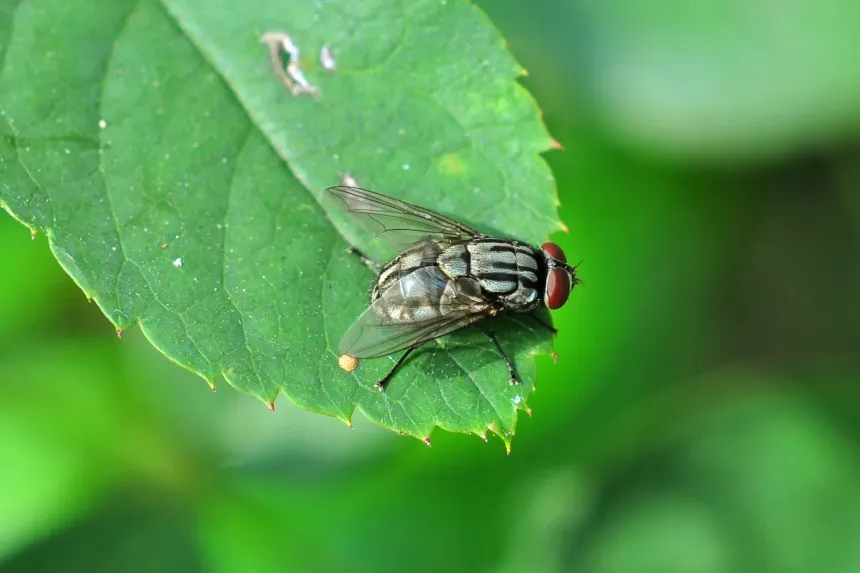
- Scientific name
- Musca domestica
- Size
- About 1/4 in
- Color
- Gray, four dark stripes on the back, red eyes
- Found in
- Kitchens, trash areas, near pet waste, farms
- Harmful?
- Yes. Can carry bacteria onto food
- Active
- Warm months
The house fly is the familiar gray fly that lands on food. It breeds in moist, decaying material such as garbage, pet waste, manure and compost, and can carry bacteria that cause food poisoning. The one thing to do: remove what it breeds in: lidded trash cans emptied weekly, pet waste picked up and compost managed.
This page covers how to identify a house fly, tell it from look-alikes and find where it breeds. It rests on Colorado State, Texas A&M AgriLife and University of Maryland Extension guidance.
How to Identify a House Fly: Four Stripes on the Back
- About 1/4 inch, gray.
- Four dark stripes running lengthwise on the back of the thorax.
- Large reddish eyes.
- Sponge-like mouthparts; house flies don’t bite.
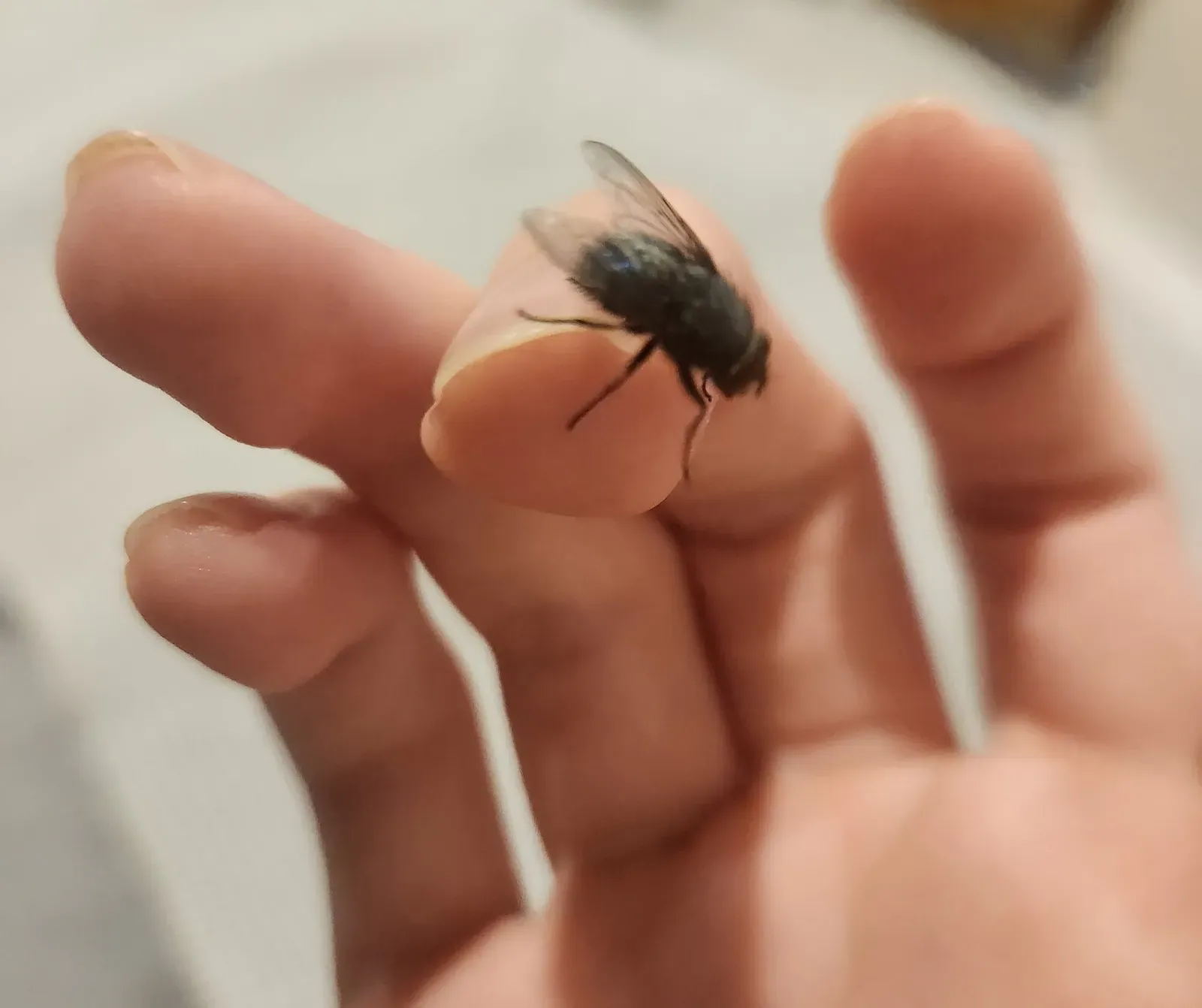
A house fly on a fingertip, about 1/4 inch long. Photo: Panamitsu (CC BY-SA 4.0), via Wikimedia Commons.
House Fly vs. Look-Alikes: Stripes and Season
| Fly | How it differs | How to tell |
|---|---|---|
| House fly | Gray, four stripes | Around food and trash in warm months |
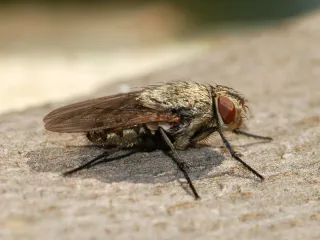
| Cluster fly | Bigger, darker, golden hairs | Sluggish at windows in fall and early spring |
| Blow fly or bluebottle | Larger, shiny metallic | Scavenges animal material; loud buzz |
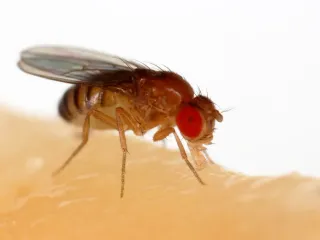
| Fruit fly | Tiny, tan, red eyes | Around ripe fruit and drains |
Where House Flies Breed: Moist Waste
- Garbage cans, especially with food waste and no lid
- Dog droppings in the yard
- Compost piles and grass clippings
- Livestock manure on farms
The maggots are pale and legless; full-grown larvae usually wander a little away from the breeding site before turning into pupae. Many flies can go from egg to adult in a week or two and produce many generations a year (Colorado State). House fly maggots are shown next to other pests’ young in bug eggs and larvae.
Are House Flies Harmful? They Carry Germs
Yes. They feed and lay eggs in waste, then land on food and surfaces. Colorado State says flies that develop in manure, carrion and garbage may carry disease-causing bacteria, including those linked to food poisoning.
How to Confirm It’s a House Fly
- Look for four dark stripes on the back of a gray fly.
- Check the setting: warm weather, near food, trash or pet waste.
- Find the source: a trash can, compost bin or droppings with maggots.
What to Do: Remove Breeding Spots, Then Screen
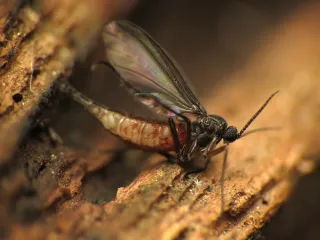
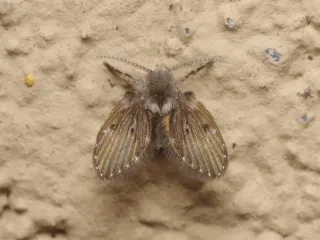
Remove breeding material: lidded trash cans emptied weekly, pet waste picked up, compost managed. Keep window and door screens in repair. Fly swatters, traps and sticky ribbons handle the ones that get in. Small flies that hump and scuttle rather than fly are phorid flies, which point to a different source. For other pests, browse all pest guides.
Often confused with
Sources
- Flies in the Home (Colorado State University Extension)
- Indoor Flies and Their Control (Texas A&M AgriLife Extension)
- Flies Indoors (University of Maryland Extension)
Last reviewed Oct 4, 2026.
.JPG)