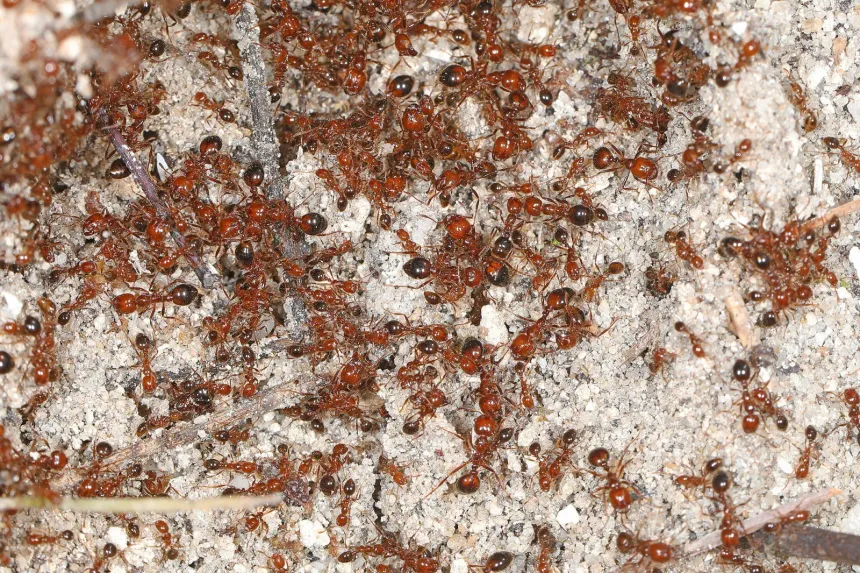
- Scientific name
- Solenopsis invicta
- Also called
- fire ant, red fire ant, RIFA
- Size
- 1/8–1/4 in, mixed sizes in one mound
- Color
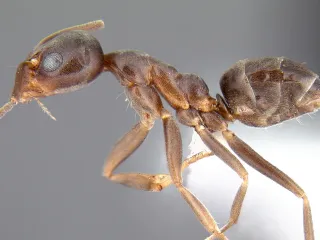
- Reddish brown, darker abdomen
- Found in
- Sunny lawns, fields, roadsides; southern US and parts of California
- Harmful?
- Yes. Painful stings; serious for allergic people
- Active
- Warm months; mounds rise after rain
Red imported fire ants are small reddish ants that build domed mounds of loose soil in sunny lawns across much of the South and parts of California. Disturb a mound and hundreds pour out and sting over and over, and some people react severely. The one thing to do: broadcast fire ant bait over the whole yard while ants are foraging, then treat remaining mounds.
This page covers how to identify fire ants and their mounds, tell them from other ants and handle stings. It rests on UC IPM and University of Kentucky guidance.
How to Identify Fire Ants: Mixed Sizes, Domed Mounds
- Small reddish-brown ants, 1/8 to 1/4 inch, in mixed sizes within the same colony.
- Mounds of loose, fluffy soil, often a foot across, with no opening on top. The ants come and go through underground tunnels.
- Aggressive swarming: disturb the mound and hundreds pour out within seconds.
They arrived in the US in the 1930s and now cover much of the South, from Texas to the Carolinas, plus parts of California. UC IPM asks Californians who suspect fire ants to report them to the county agricultural commissioner.
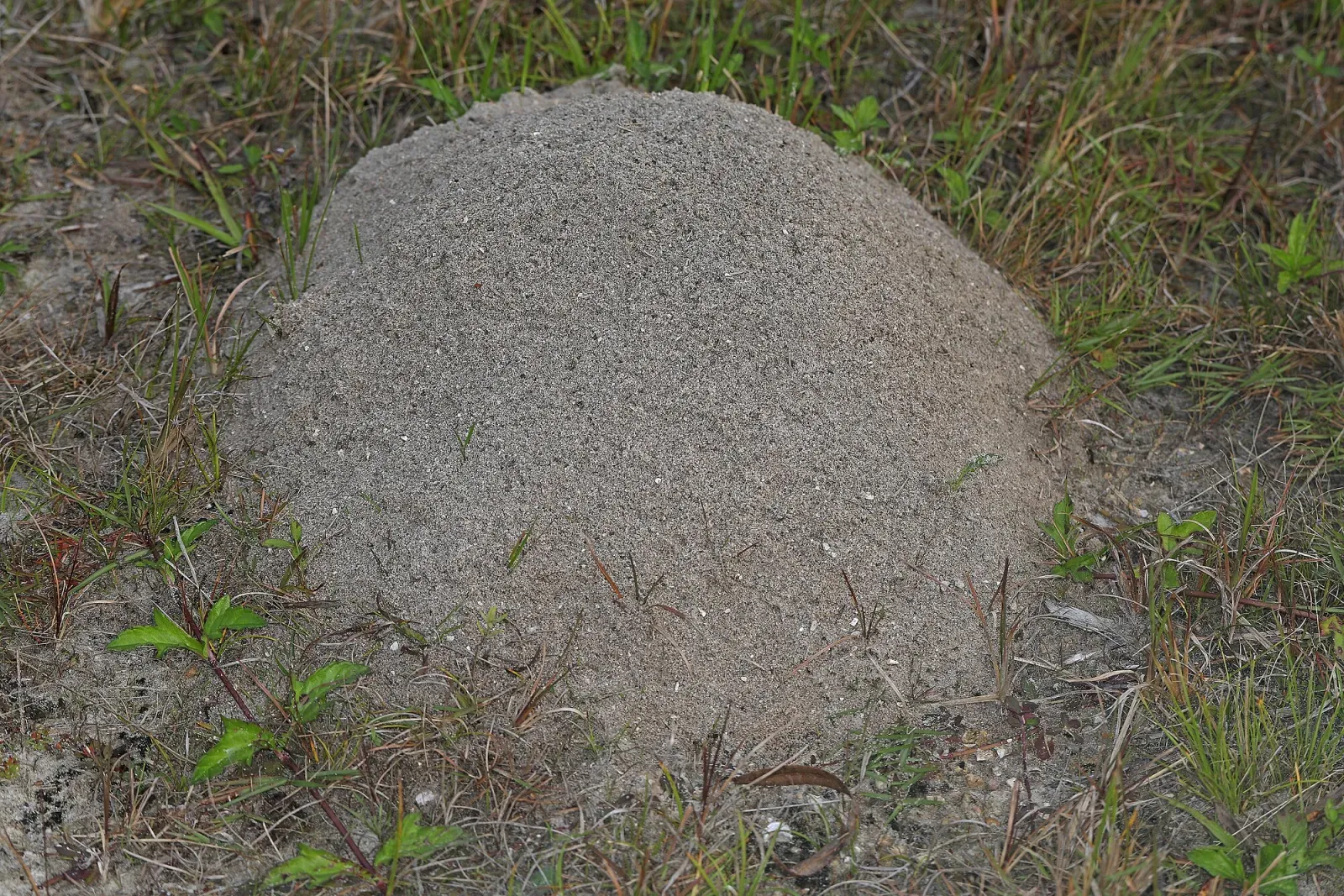
A fire ant mound: loose, domed soil with no central entrance hole. Photo: Judy Gallagher (CC BY 2.0), via Wikimedia Commons.
Fire Ants vs. Look-Alikes: Mound and Temper
| Ant | How it differs | How to tell |
|---|---|---|
| Red imported fire ant | Reddish, mixed sizes | Domed mound with no top opening; swarms and stings |
| Pavement ant | Dark, one size | Small soil piles in sidewalk cracks |
| Native fire ants and harvester ants | Also sting | Mostly outdoor species; less aggressive |
Most ants run away when their nest is disturbed. Fire ants run up legs and sting.
Where You’ll Find Them: Sunny, Open Ground
- Sunny lawns, pastures, playgrounds and roadsides
- Along driveways, sidewalks and foundations
- Occasionally in electrical boxes, AC units and wall voids
New mounds often appear after rain.
Are Fire Ants Harmful? Yes
Each ant can sting several times. Stings burn, then form white pustules within a day or so. Don’t pop the pustules, which can get infected. People allergic to the venom can have severe reactions (UC IPM); get medical help right away for swelling of the face or throat, trouble breathing or dizziness. Clusters of stings on the ankles after walking on grass are a typical sign; other bite patterns are on bug bite pictures.
How to Confirm It’s Fire Ants
- Look at the mound: domed, loose soil, no opening on top.
- Check the ants from a distance: reddish, in mixed sizes.
- Check after rain: new mounds popping up in sunny lawns after a rain are typical of fire ants.
What to Do: Bait the Whole Yard, Then Mounds
Broadcast fire ant bait over the whole yard when ants are foraging, then treat individual mounds that remain. Disturbing or flooding mounds usually just moves them. For other pests, browse all pest guides.
Often confused with
Sources
- Red Imported Fire Ant (UC IPM)
- Ant Control for Householders (University of Kentucky Entomology, EF619)
Last reviewed Oct 4, 2026.

.jpg)