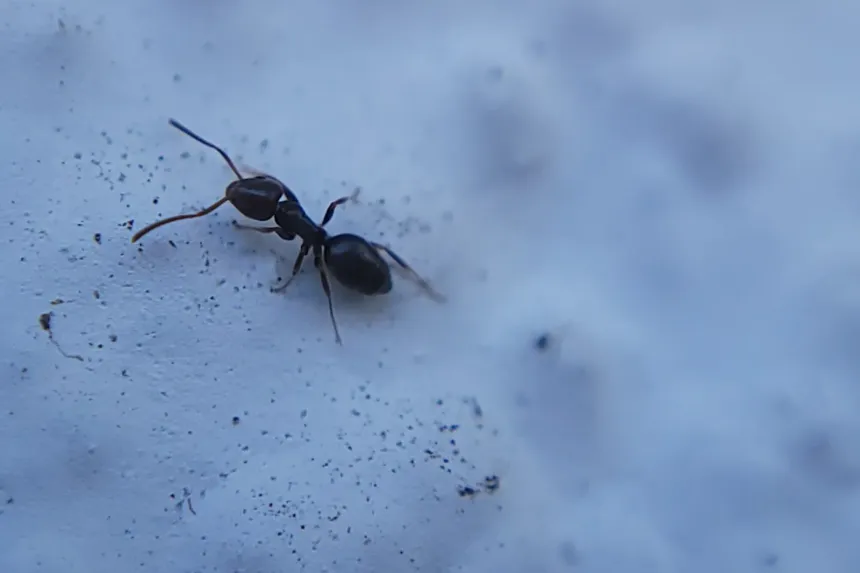
- Scientific name
- Tapinoma sessile
- Also called
- sugar ant, coconut ant
- Size
- 1/16–1/8 in
- Color
- Dark brown to black
- Found in
- Kitchens, bathrooms; nests in walls, under floors and outside under stones
- Harmful?
- Nuisance; contaminates sweet food
- Active
- Spring to fall; often after rain
- Pro quotes
- $250–$500
The odorous house ant is a tiny dark ant that trails fast across kitchen counters and smells like rotten coconut when crushed. It’s harmless but persistent, because colonies have many queens. The one thing to do: put sugar-based baits on the trails and let the workers carry them home.
This page covers how to identify odorous house ants, tell them from look-alikes and why they come inside. It rests on University of Kentucky and UC IPM guidance.
How to Identify an Odorous House Ant: The Coconut Smell
- Small: 1/16 to 1/8 inch.
- Dark brown to black, all one size within a colony.
- The smell test: crush one and it gives off a sharp smell like rotten coconut.
- Erratic, fast trails that follow edges, pipes and wires.
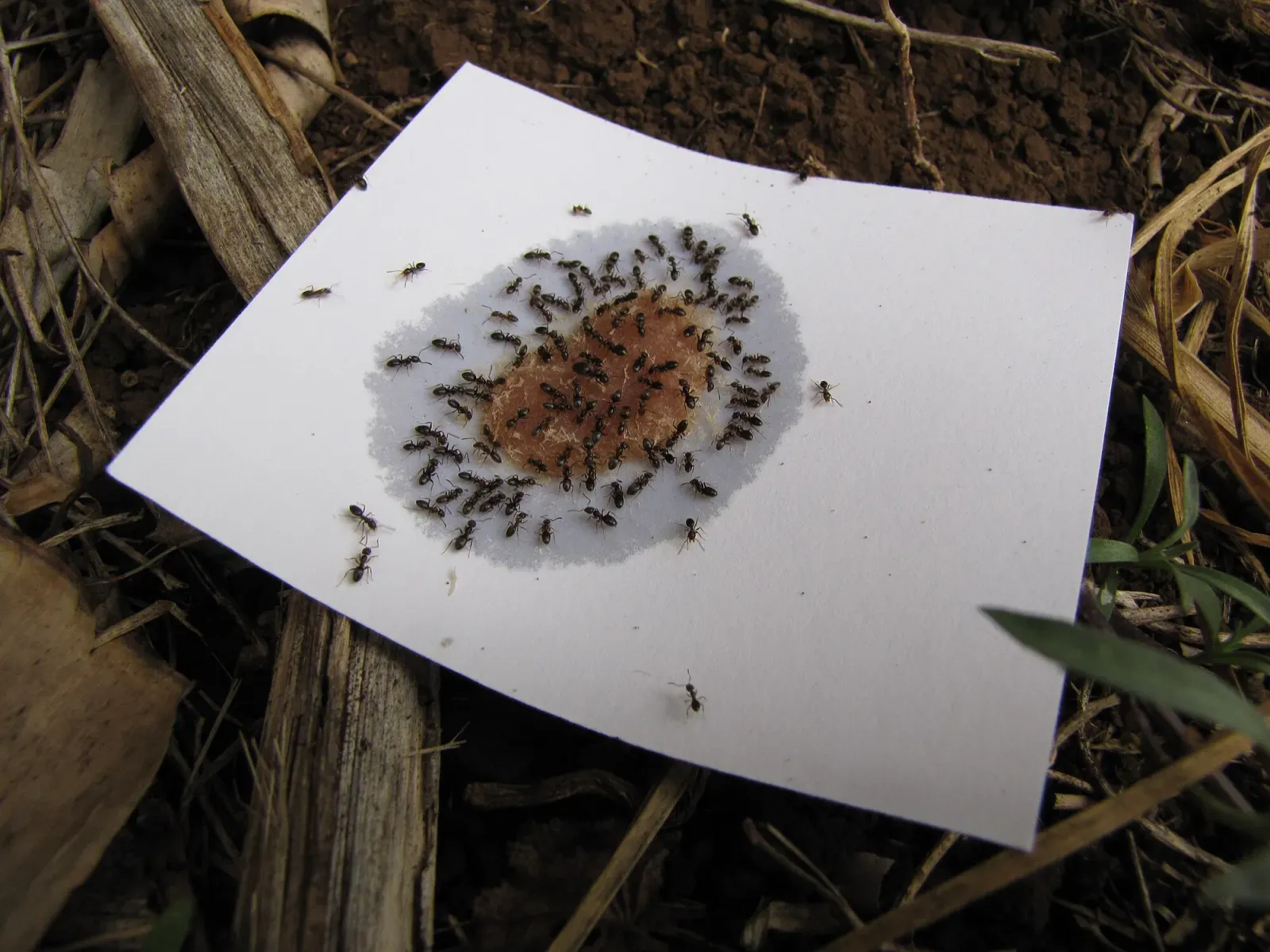
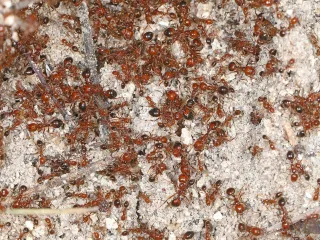
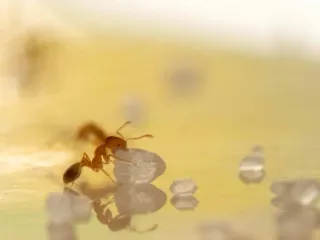
Odorous house ants swarming a bait card. A crowd like this is what you see on a kitchen trail. Photo: Forest and Kim Starr (CC BY 3.0 us), via Wikimedia Commons.
Odorous House Ant vs. Look-Alikes: Crush and Sniff
| Ant | How it differs | How to tell |
|---|---|---|
| Odorous house ant | Dark, tiny | Coconut smell when crushed |
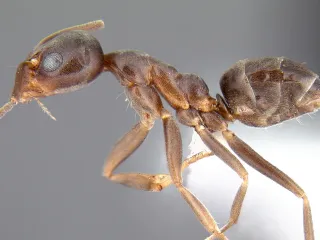
| Argentine ant | Similar size, lighter brown | No strong smell; huge trails |
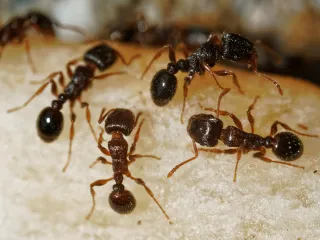
| Pavement ant | A bit bigger, grooved head and back | Soil piles in sidewalk cracks |
| Pharaoh ant | Much paler, yellowish | Nests in warm wall voids |
Why Odorous House Ants Come Inside: Rain and Hunger
They nest outdoors under stones, mulch and logs and indoors in walls and under floors. They move inside in big numbers when rain floods their nests or the honeydew they feed on runs short.
Where You’ll Find Them: Kitchens and Warm Wall Voids
- Counters, sinks, pet food and trash
- Wall voids near water pipes and heat
- Outdoors under stones, mulch, firewood and potted plants
Are Odorous House Ants Harmful? No
They don’t sting or damage the house. They contaminate sweet foods and can be hard to get rid of because colonies have many queens.
How to Confirm It’s Odorous House Ants
- Crush one and sniff for rotten coconut.
- Watch the trail: fast and erratic along edges and pipes.
- Look outside under stones and mulch near where the trail enters.
What to Do: Bait, Then Be Patient
Place sugar-based baits on the trails and give the workers time to carry them back. Wipe trails with soapy water, store sweet foods sealed, fix leaks, and trim plants touching the house. UC IPM says baits beat sprays for ants: workers carry the bait back so the whole colony, queens included, can be killed, while sprays mostly kill foragers. If you hire a pest control company, ask for baits and spot treatments rather than monthly perimeter sprays. For other pests, browse all pest guides.
Often confused with
Sources
Last reviewed Oct 5, 2026.