- Scientific name
- Belostomatidae (family)
- Also called
- toe-biter, electric light bug, water bug
- Size
- About 1–2 1/2 in, depending on species
- Color
- Brown, flat and oval
- Found in
- Ponds, lakes and streams; under porch and parking lot lights at night
- Harmful?
- Painful bite if handled; not dangerous
- Active
- Spring to fall; flies to lights on warm nights
The giant water bug is a big, flat, brown pond insect that flies to lights on summer nights and lands on porches, sidewalks and pool decks. It isn’t dangerous and can’t infest a house, but its bite is extremely painful. The one thing to do: don’t pick it up bare-handed; scoop it into a container or net and release it near water.
This page covers how to identify a giant water bug, tell it from the cockroaches also called “water bugs,” and why it shows up near your lights. It rests on Mississippi State University and University of Maine Extension guidance.
How to Identify a Giant Water Bug: Pincer Legs, Paddle Legs
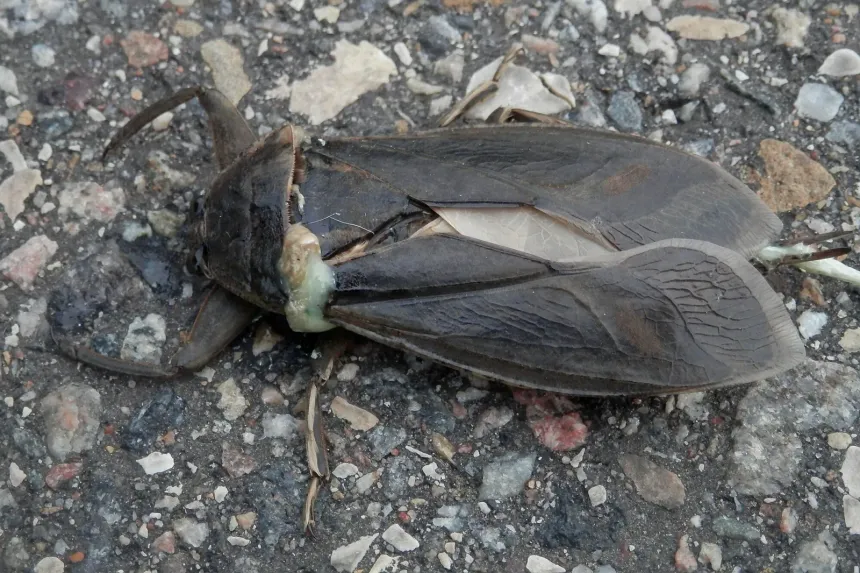
- Large and flat: brown and oval. Mississippi State puts US adults at up to 2 1/2 inches; the University of Maine lists Lethocerus americanus at 2 to 4 inches, the largest true bug in the US and Canada.
- Front legs thick and hooked, like pincers, for grabbing prey.
- Short, stout beak under the head, used to stab prey and inject saliva that paralyzes it and starts digesting it.
- Hind legs flattened like paddles for swimming.
- Antennae shorter than the head, hard to spot.
Other names include toe-biter, electric light bug and water roach (University of Maine).
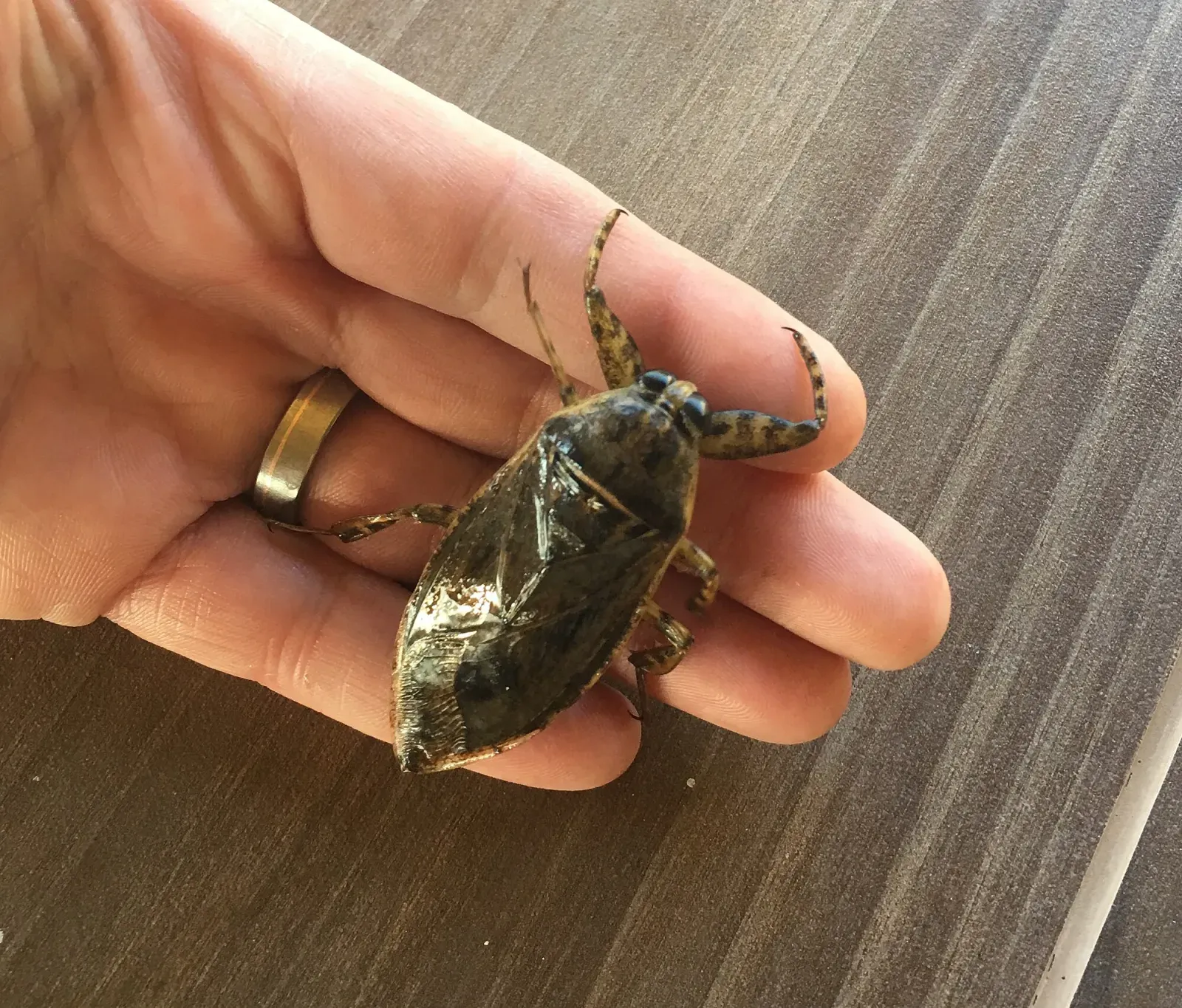
A giant water bug in a hand, showing how big these insects get. Photo: Ericlyons (CC BY-SA 4.0), via Wikimedia Commons.
Giant Water Bug vs. Cockroaches: Check the Legs and Antennae
| Insect | How it differs | How to tell |
|---|---|---|
| Giant water bug | Pond insect, flat and oval | Pincer-like front legs, paddle hind legs |
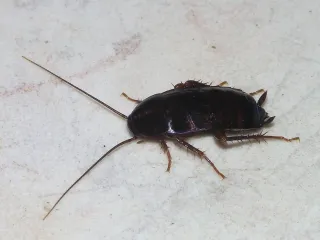
| Oriental cockroach | Shiny, nearly black, about 1 in; can’t fly | Long antennae; basements and floor drains |
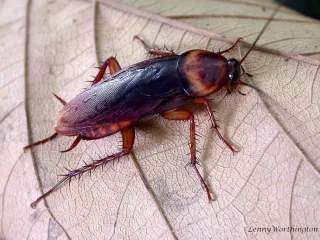
| American cockroach | Reddish brown, 1 1/2–2 in; pale band behind head | Long antennae; sewers, drains, after rain |
| Wood roach | Brown outdoor roach that flies to lights near woods | Slender running legs, long antennae |
Size and color won’t settle it: both are brown to black, flat and an inch or two long. A “water bug” by a floor drain, tub or sink is almost always a cockroach; the full side-by-side is in water bug vs. cockroach.
Why Giant Water Bugs Show Up Near Your House: Lights at Night
They live in ponds, lakes and streams throughout the country and are relatively common but rarely seen. On summer nights adults crawl out and fly off to find mates, spread to new water or escape ponds that are drying up. Like moths, they’re drawn to artificial lights and sometimes crash-land and get stranded below them (Mississippi State). That’s why they turn up under porch lights, streetlights, lit tennis courts and parking lots, and sometimes in swimming pools.
What Giant Water Bugs Eat: Fish, Tadpoles and Frogs
They’re strictly meat-eaters. Small nymphs eat other insects and small water creatures; large nymphs and adults catch minnows, tadpoles, frogs, small snakes and turtles, and occasionally young waterfowl (Mississippi State). They don’t feed on anything in your house.
Are Giant Water Bugs Dangerous? Painful, Not Harmful
Not dangerous, but they do bite. People who’ve been bitten describe it as more painful than any other insect sting or bite they’ve had. The pain is fairly short-lived, with no long-term effects. Bites are rare because few people handle them; entomologists and children are bitten most often, and barefoot waders sometimes are (Mississippi State). Compare bite marks in bug bite pictures.
How to Confirm It’s a Giant Water Bug
- Look at the front legs: thick and pincer-like means water bug; slender running legs mean cockroach.
- Check the antennae: long and threadlike means cockroach.
- Note where it is: near water or under a light on a summer night, not by a drain.
What to Do: Leave It Outside
Nothing is needed for an occasional visitor; it won’t breed indoors. Scoop it into a container or net and release it near water, and don’t poke it with a sandaled toe. Switching outdoor lights to yellow bulbs or turning them off at night draws fewer of them. For other pests, browse all pest guides.
Often confused with
Sources
- Giant Water Bug (Mississippi State University Extension)
- Giant Water Bug (University of Maine Cooperative Extension)
Last reviewed Oct 4, 2026.
_-_Saskatoon,_Saskatchewan_01.jpg)