Water Bug vs Cockroach: How to Tell Which One You Have
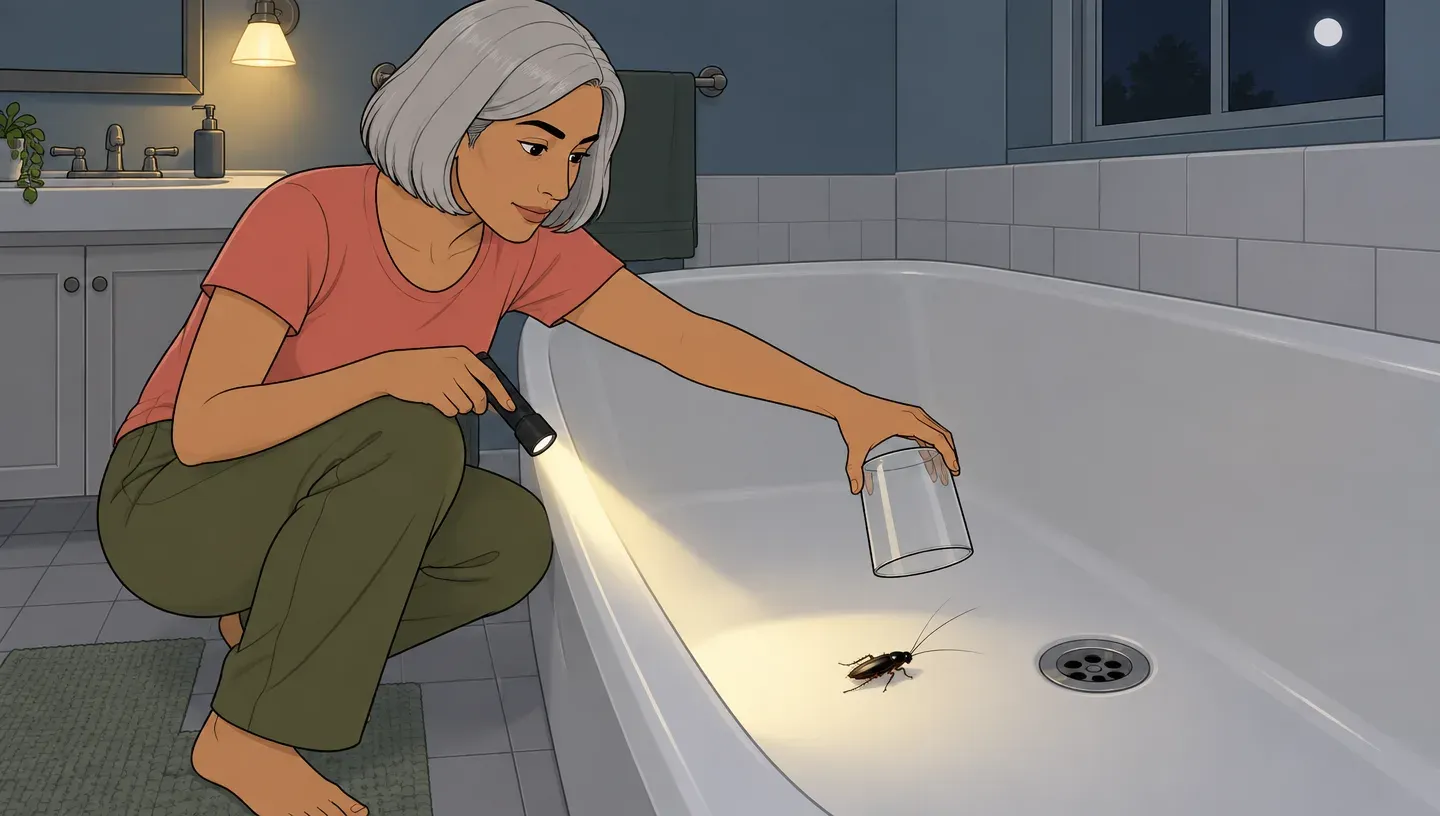
Illustration: a large dark roach in the bottom of a white bathtub, lit by a flashlight, with a clear glass held above it.
Water bug vs cockroach? The big, dark “water bug” in your tub, basement or sink is almost always an oriental or American cockroach. A true water bug is a pond insect with thick, pincer-like front legs and antennae shorter than its head. Check the antennae: long and threadlike means cockroach. Skip the spray for one visitor; refill dry drains instead.
Cost: about $10–20 in supplies. Time: about 1 night to several days. Difficulty: easy. Call a pro if sticky traps keep catching young roaches after you’ve sealed and cleaned, roaches keep coming up the drains after repairs, or they’re moving between apartments.
This page compares the three animals called water bugs side by side, then covers bites, what draws them in, how to confirm which one you have and what to do next. We haven’t tested anything ourselves; it rests on UC IPM, University of Kentucky, Mississippi State and other extension guidance, the EPA and list prices.
Water Bug vs Cockroach: Side-by-Side Differences
The antennae and front legs settle it; size and color don’t, since all three are brown to black, flat and 1 to 2 inches or more.
| Oriental cockroach | American cockroach | Giant water bug | |
|---|---|---|---|
| Looks | Shiny black or very dark brown | Reddish brown, pale band behind head | Brown, flat, oval |
| Size | About 1 inch | 1½ to 2 inches | 1 to 2 inches or more |
| Antennae | Long, threadlike | Long, often as long as the body | Shorter than the head, hard to spot |
| Front legs | Slender, built for running | Slender, built for running | Thick and pincer-like; oar-like hind legs |
| Where | Basements, floor drains, sump pumps | Sewers, drains, tubs, after heavy rain | Ponds, pools, porch lights in summer |
| Flies? | No | Can, but mostly runs | Yes, well |
| Bites? | No | No | Yes, painfully |
Sources: University of Kentucky, Virginia Tech, University of Florida and Mississippi State.
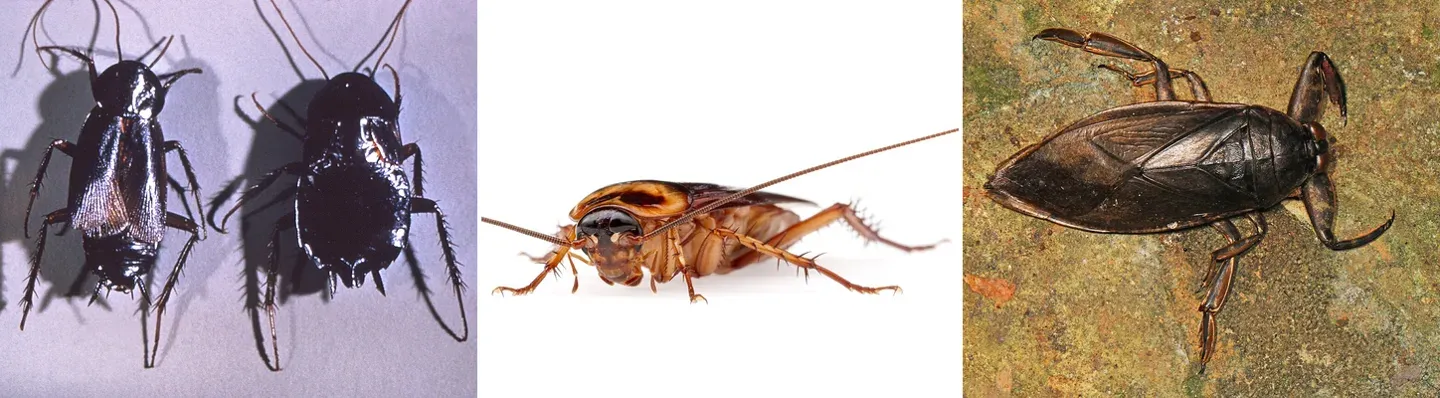
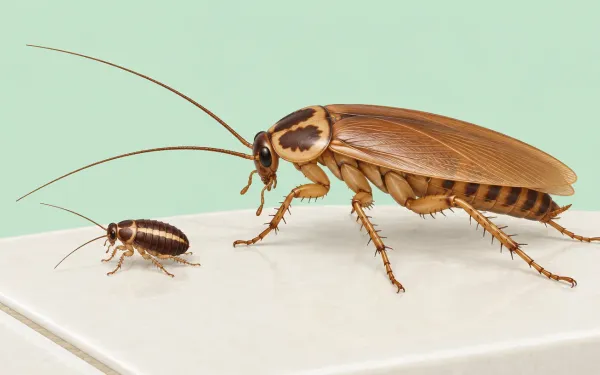
Left to right: oriental cockroaches (CDC, public domain); an American cockroach (Alex Wild, Insects Unlocked, CC0); a giant water bug (Judy Gallagher, CC BY 2.0). Photos via Wikimedia Commons.
Already squashed it? By a drain, tub or sump pump, it’s almost always a cockroach.
What Is a Water Bug?
“Water bug” is a nickname for three different animals: the oriental cockroach, the American cockroach and the giant water bug, a real pond insect. Even “water roach” means both: the University of Kentucky lists it as a name for the giant water bug, while landlords use it for sewer roaches. A roach in your sink means there’s an open route up from the drain.
Oriental Cockroach: The Basement “Water Bug”
The oriental cockroach is the one extension guides call the “water bug” or “black beetle.” It’s shiny, nearly black and slow, about 1 to 1¼ inches long; females have only wing stubs, and neither sex can fly. It likes cool, damp basements, crawl spaces and floor drains, and outdoors hides under leaf litter and woodpiles.
It can’t climb smooth porcelain, so one that falls in or comes up a damaged drain gets stuck in the tub or sink. It does climb rougher water pipes, which is how it reaches upper-floor apartments.
American Cockroach: The Sewer Roach
The American cockroach is the largest roach common in homes: reddish brown, 1½ to 2 inches, with a pale yellowish band on the plate behind the head. Adults can fly but mostly run. It lives mainly in sewers, basements and drains, rests by day near pipes, sinks, tubs and toilets, and often shows up after heavy rain.
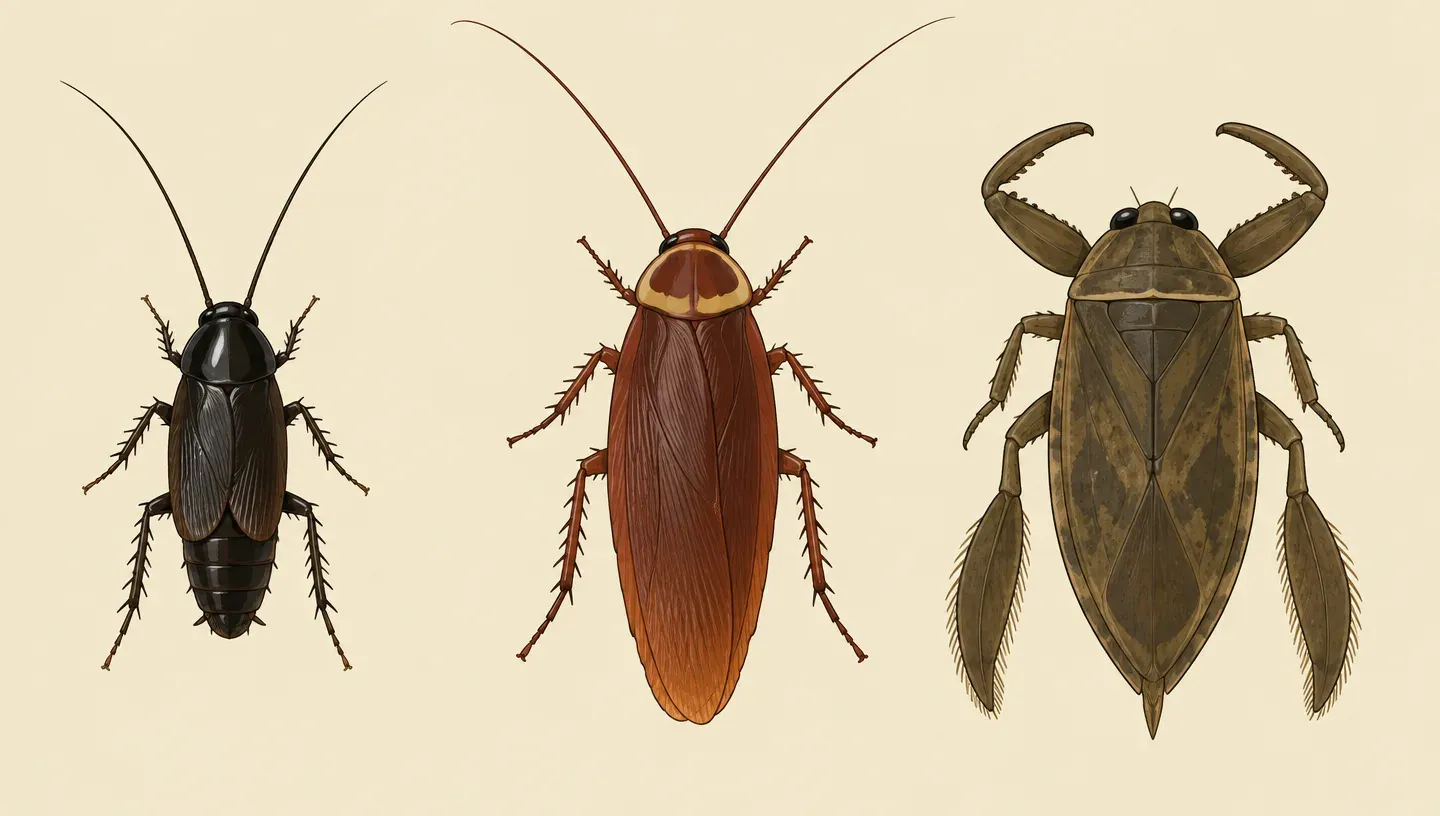
Illustration: an oriental cockroach (left), an American cockroach (center) and a giant water bug (right) at the same scale; only the water bug has thick, pincer-like front legs.
Giant Water Bug: A Pond Insect That Won’t Breed Indoors
The giant water bug looks like a cross between a cockroach and a praying mantis: brown, flat and oval, with big grabbing front legs and paddle-like hind legs. It lives in ponds, slow streams and wetlands and spends every life stage in water. One on your patio is a lost pond insect, not an infestation.
Do Water Bugs Bite or Fly?
Giant water bugs do both; cockroaches don’t bite. A giant water bug bites with its beak, and Mississippi State says the bite is extremely painful but short-lived, with no long-term effects. Kids get bitten most often, so tell them not to pick one up.
With cockroaches, the risk is what they leave behind. The EPA says proteins in cockroach droppings and saliva can trigger allergies and asthma in some people, a risk that grows with the number of roaches. Sewer roaches can also carry bacteria such as Salmonella, so wash the tub after finding one and keep food and pet food sealed.
What Attracts Water Bugs to Your House?
Water and an open way in, for the roaches; lights, for the real water bug. Cockroach “water bugs” come from the yard or the sewer, under doors, through vents and pipe gaps and up drains, often when the weather turns cooler. Leaks, dry drain traps, damaged pipes, food and garbage keep them coming.
Giant water bugs fly toward bright porch and pool lights on summer nights and sometimes crash-land near them.
A roach doesn’t mean your house is dirty: the University of Kentucky says even clean homes can become infested. And they won’t reliably die indoors; the University of Arizona says American cockroaches can breed indoors in humid climates.
How to Confirm Which One You Have
- Catch it or photograph it with a glass or jar, and check the antennae and front legs against the table. Never grab anything with pincer-like front legs.
- Set sticky traps overnight beside floor drains, the sump pump and the tub, under the sink and near outside doors. With a toddler or cat around, put them inside cabinets or behind the toilet; if a pet gets stuck, work vegetable oil into the glue.
- Check them each morning for several days. UC IPM says roaches are often caught within the first 24 hours.
- Read the catch. Small roaches without full wings are baby cockroaches, which means breeding nearby. Big adults now and then, mostly after rain, are visitors.
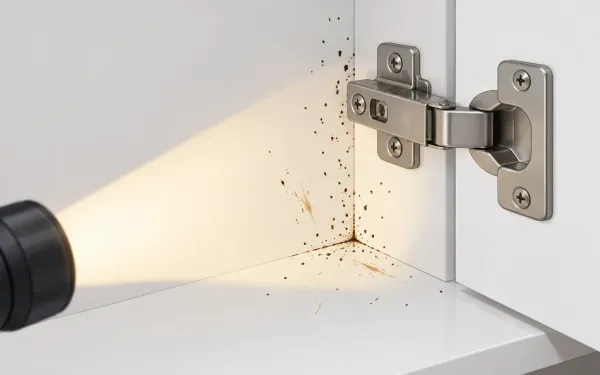
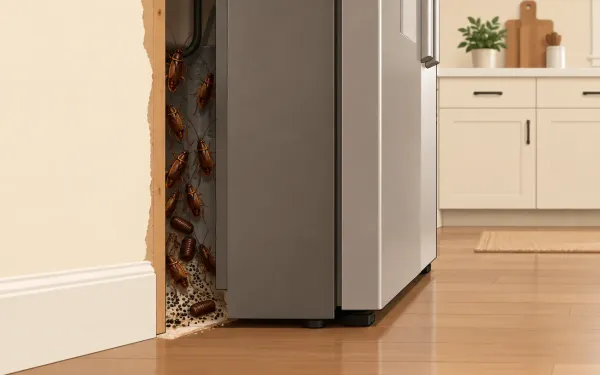
- Look under sinks and at the back of cabinets with a flashlight for pepper-like droppings and dark red-brown egg cases about 3/8 inch long; signs of a roach infestation covers the rest.
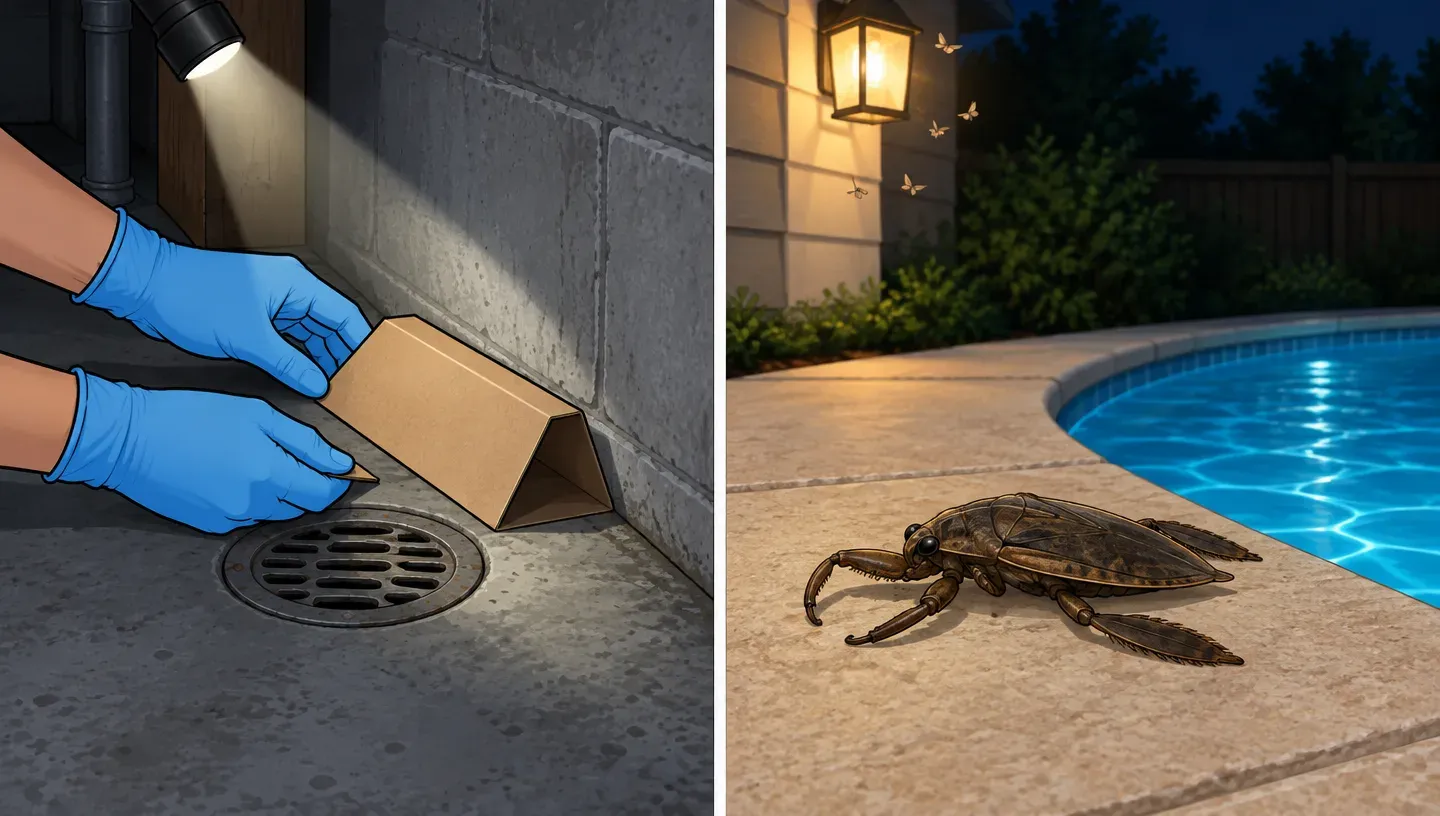
Illustration: a sticky trap beside a basement floor drain (left), and a giant water bug on a pool deck under a porch light (right).
What to Do Next: Close the Drain Route First
A giant water bug needs no spray; it isn’t considered a pest. Scoop it into a jar or net and release it outdoors, near water.
For roach visitors, fix the route, not the bug. UC IPM says indoor pesticides make sense only once a population is established, and aerosol sprays can scatter roaches without killing them (more in do roach bombs work). Pour water now and then into floor drains, sinks and tubs you rarely use, close stoppers at night, add door sweeps and seal around pipes, and repair leaks and damaged drain pipes. A roach that keeps using one drain may need a plumber more than a pest plan.
If traps catch young roaches indoors, switch to small dabs of gel bait in cracks, which the University of Kentucky rates as minimal hazard to children and pets. Bait stations keep bait away from toddlers and cats, but small ones can be too tight for big American roaches. The full plan is in how to get rid of roaches. Renting? Send your landlord dated photos and ask in writing for drains and gaps to be repaired.
| Item | Typical cost |
|---|---|
| 12 plain glue boards | $10.49 |
| 10 baited cockroach glue traps | $19.99 |
| Gel bait, 4 × 30 g tubes (only if traps catch young roaches) | $26.98 |
| Pro cockroach visit, 25 shared quotes (middle half) | $200–$400 |
| Pro cockroach treatment, price-guide range | $100–$600 a round |
| Pro full treatment with follow-ups, 10 shared quotes (middle half) | $450–$1,500 |
| Pro annual pest plan | $200–$1,000 per year |
DIY: store list prices, checked October 1, 2026, before tax and shipping. Pro: the middle half of 25 single-visit and 10 full-treatment quotes homeowners shared on Reddit. Price-guide range and annual plans: This Old House (March 2026).
Call a pro if traps keep catching young roaches after sealing and repairs, roaches keep coming up the drains, or they travel between apartments. Ask which species they found and whether sealing is included.
- Check the antennae before anything else.
- Refill dry drain traps in floor drains, sinks and tubs you rarely use.
- Close tub and sink stoppers at night.
- Set plain sticky traps by drains and doors for several nights.
- Bait only if traps catch young roaches.
- Release a giant water bug outdoors with a net or jar.
Common questions
Usually. Indoor water bugs are mostly cockroaches; the true giant water bug is a pond insect.
Giant water bugs fly toward lights at night and sometimes land in pools. Because the bite hurts, the Missouri Department of Conservation says to remove them with a net.
Maybe not. A brown roach flying to your lights near woods may be a wood roach, an outdoor species that comes in by accident.
Sources and further reading · 13
- UC IPM: Cockroaches (Pest Notes 7467)
- University of Kentucky: Cockroach Elimination in Homes and Apartments (ENTFACT-614)
- Virginia Tech: Cockroaches Found in Living Spaces (ENTO-528)
- University of Kentucky: Giant Water Bugs (Critter Files)
- Mississippi State Extension: Giant Water Bug
- Missouri Department of Conservation: Giant Water Bugs
- University of New Hampshire: Belostomatidae
- Texas A&M: Water Bug
- University of Florida IFAS: American Cockroach (IN298)
- University of Arizona: The American Cockroach
- Oklahoma State, Utah State and Purdue Extension: oriental cockroach
- EPA: Asthma Triggers — Cockroaches and Pests
- This Old House: Roach Exterminator Cost