- Scientific name
- Ixodes scapularis
- Also called
- deer tick
- Size
- Adult females about 1/8 in; nymphs about the size of a poppy seed
- Color
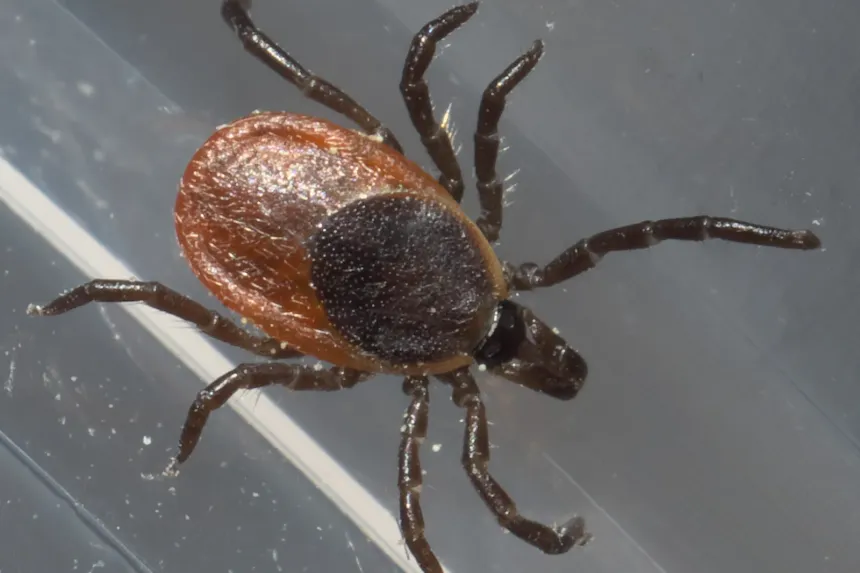
- Female reddish-orange body with a black shield; black legs
- Found in
- Wooded areas, leaf litter, tall grass; Northeast, mid-Atlantic, upper Midwest
- Harmful?
- Yes. Spreads Lyme disease and other infections
- Active
- Nymphs late spring and summer; adults fall through early spring
The blacklegged tick, often called the deer tick, is the small tick with black legs that spreads the bacteria behind Lyme disease. Its nymphs, about the size of a poppy seed, cause most infections because they’re so easy to miss. The one thing to do: check yourself, children and pets after time outdoors, and remove any tick promptly with fine-tipped tweezers.
This page covers how to identify a blacklegged tick at each stage, where it lives and the signs to watch for after a bite. It rests on CDC and University of Kentucky guidance; see a doctor about any symptoms after a tick bite.
How to Identify a Blacklegged Tick: Black Shield, Black Legs
- Adult female: about 1/8 inch, with a reddish-orange body, a black shield behind the head and black legs.
- Adult male: smaller and all dark brown to black.
- Nymph: about the size of a poppy seed, semi-transparent with dark legs.
- Engorged ticks swell and turn grayish; a fed adult female reaches about 3/8 inch.
The CDC notes that Lyme disease is most common in the Northeast, mid-Atlantic and upper Midwest. A close relative, the western blacklegged tick, lives along the Pacific Coast.
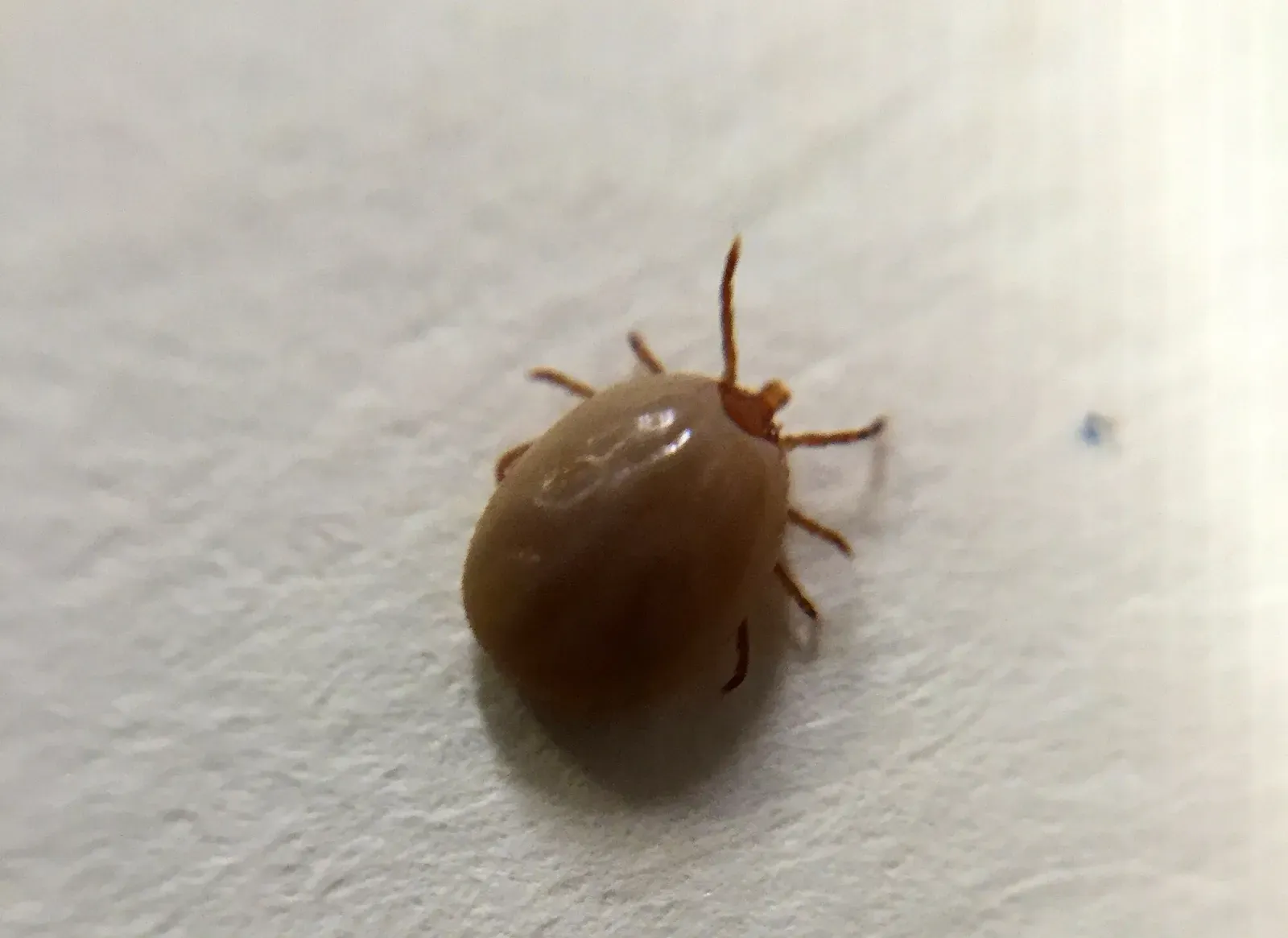
A blacklegged tick after feeding: swollen, brown and bean-shaped, looking very different from an unfed one. Photo: NIAID (CC BY 2.0), via Wikimedia Commons.
Blacklegged Tick Life Stages: Smaller Than You Think
| Stage | Size | Legs | When active |
|---|---|---|---|
| Larva | Smaller than a poppy seed | Six | Late summer |
| Nymph | About the size of a poppy seed | Eight | Late spring and summer |
| Adult | About the size of a sesame seed | Eight | Fall through early spring, on days above freezing |
Each stage feeds once, on a different host. Unlike most ticks, adults stay active through winter whenever it’s above about 40°F (University of Kentucky), so a warm winter walk can still bring one home.
Deer Tick vs. Other Ticks: Small and Plain
| Tick | Look for | Main diseases |
|---|---|---|
| Blacklegged (deer) tick | Small; female reddish-orange with a black shield and black legs | Lyme disease, anaplasmosis, babesiosis |
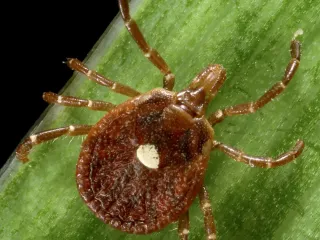
| Lone star tick | Female has one white spot on the back | Ehrlichiosis, alpha-gal syndrome |
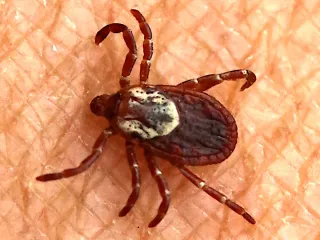
| American dog tick | Larger, brown with white or silvery markings | Rocky Mountain spotted fever |
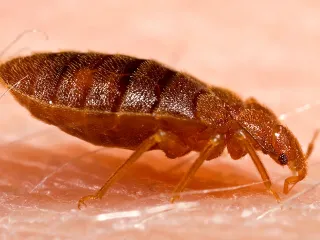
Only ticks in this genus (Ixodes) can transmit the Lyme bacteria; a lone star tick bite carries no Lyme risk (University of Kentucky). A tiny, flat, reddish-brown bug in a mattress seam is more likely a bed bug.
Where You’ll Find Them: Leaf Litter and Woodland Edges
- Leaf litter and shaded, humid woodland edges
- Tall grass and brush along trails
- Yards next to woods, stone walls and woodpiles
- On pets and on people after outdoor activities
White-footed mice are a common natural reservoir for the Lyme bacteria, which is one reason ticks near woods and stone walls matter.
How Ticks Find People: Questing, Not Jumping
Ticks don’t jump or fly. They wait at the tips of grass and low plants with their front legs outstretched, a behavior called questing, and climb onto people and pets brushing past. They often crawl for a while before biting, usually at the hairline, behind the ears, in the armpits, behind the knees and around the waist.
Are Blacklegged Ticks Dangerous? Lyme and More
Yes. Besides Lyme disease they can spread anaplasmosis, babesiosis, Powassan virus and other infections. The good news: a blacklegged tick has to feed for a long time, about 36 hours, before it passes on the Lyme bacteria (University of Kentucky), so finding and removing ticks the same day matters.
The CDC lists fever, headache, fatigue and an expanding red rash called erythema migrans as typical symptoms of Lyme disease. The rash can look like a bull’s-eye, but often doesn’t. See a doctor if any of these appear in the weeks after a tick bite, and mention the bite. Untreated, Lyme disease can spread to the heart, nervous system and joints. Other bite marks are compared in bug bite pictures.
How to Confirm It’s a Blacklegged Tick
- Look at the legs and shield: both black on an adult female.
- Check the size: a sesame seed for adults, a poppy seed for nymphs.
- Keep the tick in a sealed bag, on tape or in a small jar with rubbing alcohol, and note the date. If symptoms appear, it helps a doctor know what kind of tick it was.
What to Do: Remove It, Then Prevent the Next One
Use fine-tipped tweezers to grip the tick as close to the skin as possible and pull upward with steady, even pressure. Clean the area afterward. Don’t twist, burn or smother the tick.
Wear repellent and long pants on trails, check yourself, children and pets daily after being outdoors, and shower soon after. In the yard, keep grass short and leaf litter cleared, and put a strip of wood chips or gravel between lawns and woods; how to get rid of ticks walks through the whole yard plan. For other pests, browse all pest guides.
Often confused with
Sources
- About Lyme Disease (CDC)
- What to Do After a Tick Bite (CDC)
- Ticks and Disease in Kentucky (University of Kentucky Entomology, EF618)
Last reviewed Oct 4, 2026.