- Scientific name
- Triatoma species
- Also called
- conenose bug, triatomine bug, vampire bug
- Size
- About 3/4–1 1/4 in for most US species
- Color
- Dark brown to black, orange, red or yellow bands around the body edge
- Found in
- Under porches, in dog kennels, woodpiles and rodent nests; southern US
- Harmful?
- Bites people; can carry the Chagas disease parasite
- Active
- Warm months, at night; drawn to porch lights
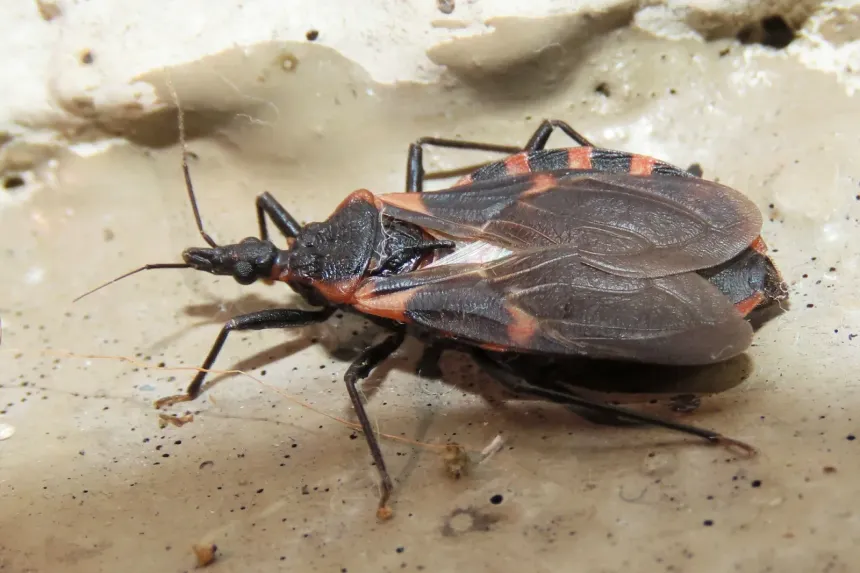
Kissing bugs are blood-feeding insects with a long, cone-shaped head that bite people at night, often near the face. Some carry the parasite behind Chagas disease, though US cases are uncommon. The one thing to do: don’t touch or squash one; scoop it into a plastic bag or container and get it identified.
This page covers how to identify a kissing bug, how to tell it from common look-alikes, how risky it is and what to do. It rests on CDC and Texas A&M guidance.
What Kissing Bugs Are: Blood Feeders of the South
They’re related to assassin bugs and usually feed on wild animals, dogs and rodents, but will bite people at night, which is where the name comes from. Eleven species live in the United States, mostly across the southern half of the country.
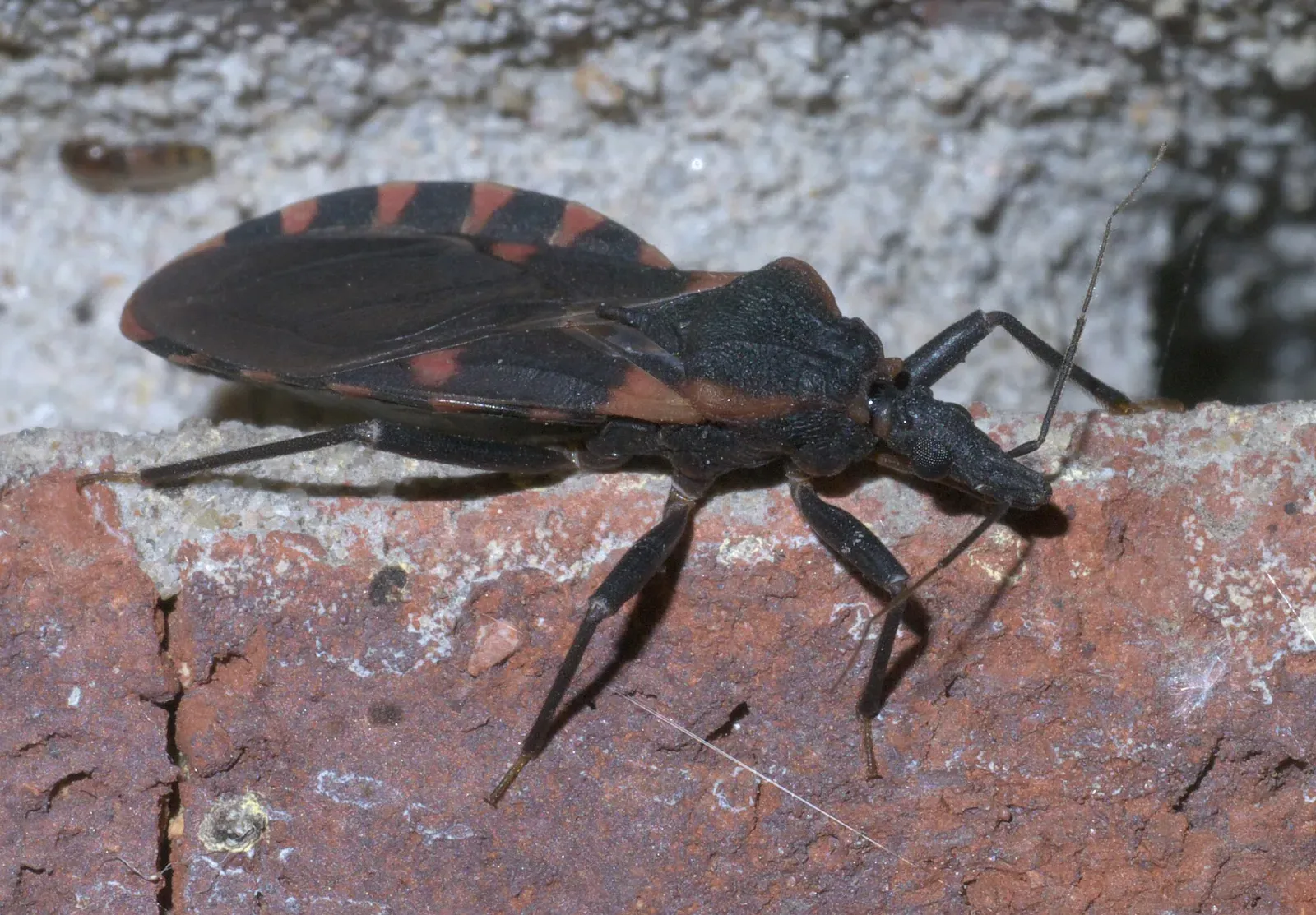
A kissing bug on a brick wall. Look for the orange-red stripes along the flat body edge. Photo: xpda (CC BY-SA 4.0), via Wikimedia Commons.
How to Identify a Kissing Bug: The Cone Head
- Long, cone-shaped head with a thin, straight beak folded underneath.
- About 3/4 to 1 1/4 inches for most US species; the eastern species is about 3/4 inch.
- Dark brown to black, with a band of orange, red or yellow stripes around the flat outer edge of the abdomen.
- Elbowed antennae coming from the sides of the long head.
- Thin legs with no bulging or thickened parts (University of Maryland).
- Nymphs have the same cone-shaped head but no colored bands and no wings.
Kissing Bug vs. Look-Alikes: Check the Head
| Bug | How it differs | How to tell |
|---|---|---|
| Kissing bug | Striped body edge, thin straight beak | Long cone-shaped head |
| Wheel bug | Larger and gray | Cog-shaped crest on its back |
| Leaf-footed bug | Feeds on plants | Leaf-like flattened hind legs |
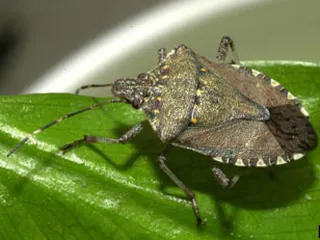
| Stink bug | Shield-shaped body | Short head, no long cone |
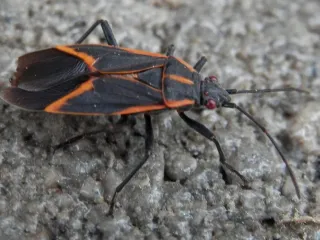
| Boxelder bug | Red and black, feeds on plants | Red along the front-wing edges, not six stripes on the abdomen |
| Western corsair | Orange and black, eats insects | An orange spot on each wing; painful bite if handled |
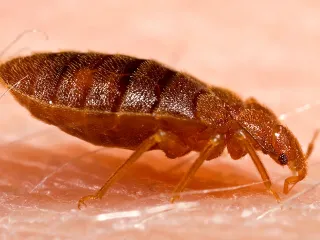
| Bed bug | Smaller, brown to orange, no wings | Round, flat body, no cone head |
Texas A&M notes that many look-alikes feed on plants or insects and can bite painfully if handled, but no insect other than kissing bugs is known to carry the Chagas parasite.
Where You’ll Find Them: Near Pets, Wildlife and Lights
- Under porches and decks, near outdoor lights
- In dog houses and kennels, chicken coops and woodpiles
- In rodent nests and wildlife burrows near the house
- Occasionally indoors in bedrooms, near where people or pets sleep
When They’re Active: Night, Late Spring and Summer
Kissing bugs hide in cracks and tight, dark spots by day and feed at night, often while people sleep. Adults fly and are drawn to outdoor lights. UC IPM says bites usually happen in late spring and early summer.
What a Kissing Bug Bite Looks Like: Painless, Then Itchy
Bites usually come in a group on the face, neck, arms or legs. They’re painless at first, which is how the bugs feed unnoticed, then may itch, swell and leave a welt that lasts several days (UC IPM). Some people are allergic: severe reactions include large painful welts, trouble breathing, low blood pressure and a racing heart from anaphylaxis, which needs emergency care. Anyone who suspects an allergy should see a doctor or allergist.
Are Kissing Bugs Dangerous? Some Carry Chagas Disease
They can carry Trypanosoma cruzi, the parasite that causes Chagas disease. The parasite is in the bug’s droppings, not its saliva, and infection happens when droppings get rubbed into the bite, the eyes or the mouth. The CDC describes Chagas disease and its long-term heart effects.
Many kissing bugs are not infected, and human cases picked up in the US are uncommon, but dogs are infected more often in southern states. UC IPM credits the low human risk partly to the bugs rarely moving into homes for good. The University of Maryland adds that US species don’t usually defecate right after feeding the way many Central American species do. After a bite, wash it with soap and water, wash soiled bedding, and don’t scratch the bite or rub your eyes, nose or mouth. For other night-time bites, see bug bite pictures.
How to Confirm It’s a Kissing Bug
- Look at the head: long and cone-shaped, with a thin straight beak.
- Check the body edge for a band of orange, red or yellow stripes.
- Send it for identification: Texas A&M accepts bugs for identification and testing. Keep it in a closed bag or container; a few hours in the freezer kills it.
What to Do: Bag It, Don’t Squash It
Pick it up with a plastic bag or container, not bare hands, and clean any surface it touched with bleach solution. Then seal cracks around doors, windows and screens, switch outdoor lights to yellow bulbs or move them away from doors, keep pets indoors at night, and clear woodpiles, brush and rodent nests away from the house. UC IPM also suggests:
- Screening windows and vents, and making pet doors insect-proof.
- Moving indoor lights away from doors and windows at night.
- Removing rodent nests within 300 feet of the house.
Red-and-black bugs on a sunny wall in fall are more likely boxelder bugs, which very rarely bite. For other pests, browse all pest guides.
Often confused with
Sources
- Kissing Bugs (University of Maryland Extension)
- Found a Bug? (Texas A&M Kissing Bugs & Chagas Disease)
- About Chagas Disease (CDC)
- Conenose Bugs (UC IPM)
Last reviewed Oct 4, 2026.