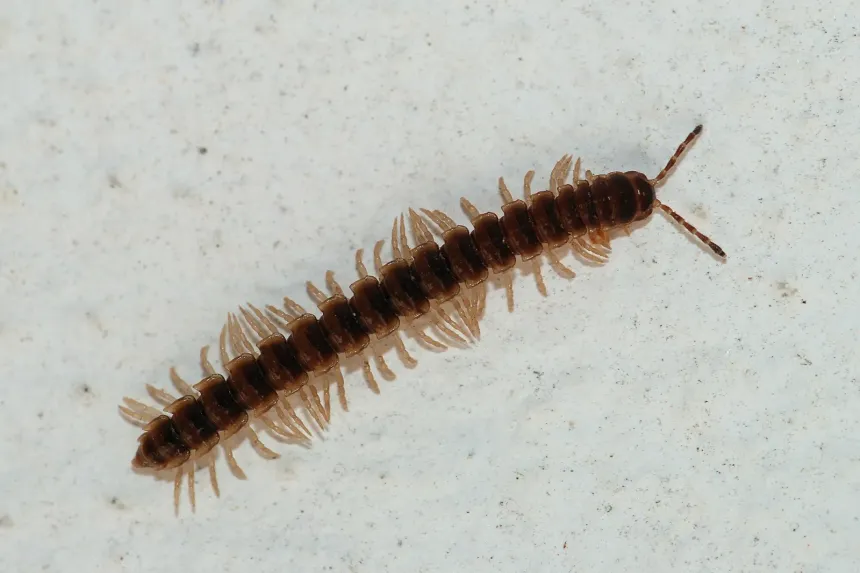
- Scientific name
- Diplopoda (class)
- Size
- About 1–1 1/2 in for common house invaders
- Color
- Brown to black, some with orange or reddish markings
- Found in
- Mulch, leaf litter, lawns; indoors on ground floors and basements
- Harmful?
- No. Some release a fluid that can stain skin
- Active
- Fall and after heavy rain
Millipedes are slow, round, worm-like creatures that live outdoors in damp soil and mulch and sometimes move indoors in large numbers, often in fall or after heavy rain. They’re harmless to people and the house, and they dry out and die indoors within a few days. The one thing to do: sweep them up and pull mulch and leaves back from the foundation.
This page covers how to identify millipedes, tell them from centipedes and pill bugs, and why they come in. It rests on University of Kentucky and University of Maryland Extension guidance.
How to Identify a Millipede: Round Body, Rippling Legs
- Long, round, worm-like body, about 1 to 1 1/2 inches for the common house invaders.
- Two pairs of short legs on most body segments, so the legs ripple in waves.
- Slow-moving, and curls into a tight coil when disturbed.
- Brown to black, sometimes with orange or reddish markings.
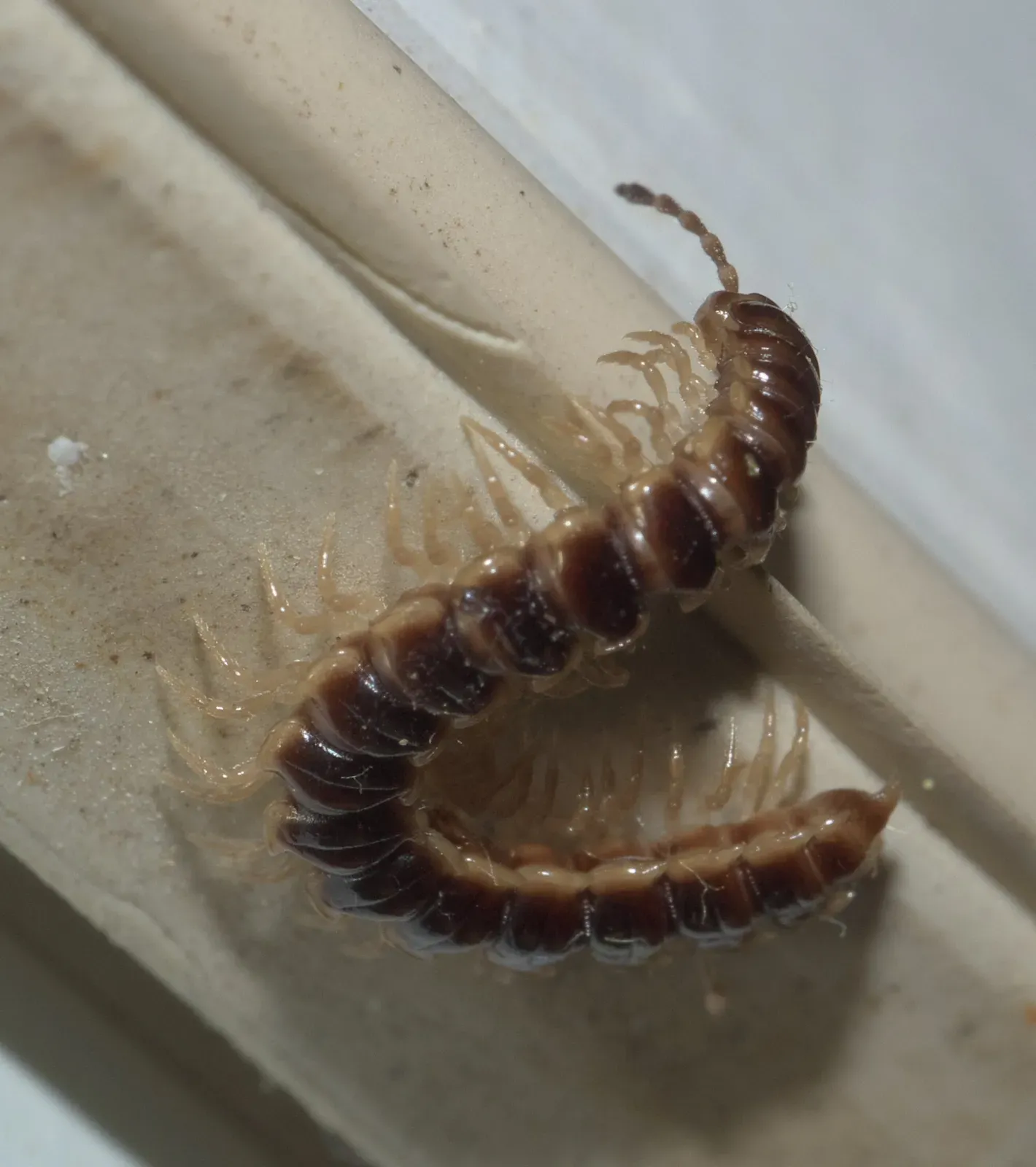
A millipede indoors in a window track, a typical spot after heavy rain. Photo: xpda (CC BY-SA 4.0), via Wikimedia Commons.
Millipede vs. Look-Alikes: Slow and Round
| Creature | How it differs | How to tell |
|---|---|---|
| Millipede | Round, slow, short legs | Two pairs of legs per segment; coils up |
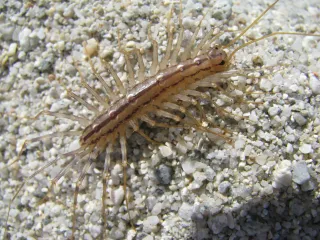
| House centipede | Flat-looking, very fast | One pair of very long legs per segment |
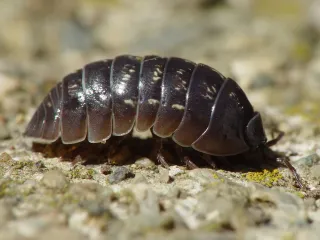
| Pill bug | Short, oval, armored | Seven pairs of legs; rolls into a ball |
Why Millipedes Come Inside: Mass Migrations
They feed on decaying plant material in damp soil, leaf litter and mulch. The University of Kentucky says they sometimes migrate in large numbers onto walls, patios and foundations, or indoors into basements and garages, often around heavy rain, though the cause isn’t fully clear. Mulch and plants close to the house keep the soil moist and draw them in.
Where You’ll Find Them: Ground Level, Near Damp Soil
- Mulch beds, leaf piles, compost and lawn thatch
- Under doors, along garage and basement floors, patios
- Window wells and crawl spaces
Indoors they can’t survive the dry air and are usually found dead in piles.
Are Millipedes Harmful? No
They don’t bite, sting or damage the house. Many release a strong-smelling defensive fluid that can stain or irritate skin with a burn-like reaction, so pick them up with a paper towel or sweep them up. Some can give off tiny amounts of hydrogen cyanide, but not enough to harm people (University of Kentucky).
How to Confirm It’s a Millipede
- Count the legs: two short pairs on most segments.
- Touch it gently with a stick: it coils up rather than running.
- Check the weather: groups after heavy rain or in fall.
What to Do: Sweep Up, Dry Out the Foundation
Sweep or vacuum the ones indoors; pesticides inside are rarely needed because they die without moisture. Rake mulch and leaves back from the foundation, reduce woodpiles and pavers next to the house, check for leaks at outdoor faucets, sprinklers and AC units, make sure downspouts carry water away, and seal gaps under doors and around the foundation. Drying out a damp basement helps too; see dehumidifiers for bugs. For other pests, browse all pest guides.
Often confused with
Sources
- Centipedes & Millipedes in & Around the Home (University of Kentucky Entomology, EF645)
- Millipedes (University of Maryland Extension)
Last reviewed Oct 4, 2026.