- Scientific name
- Scutigera coleoptrata
- Size
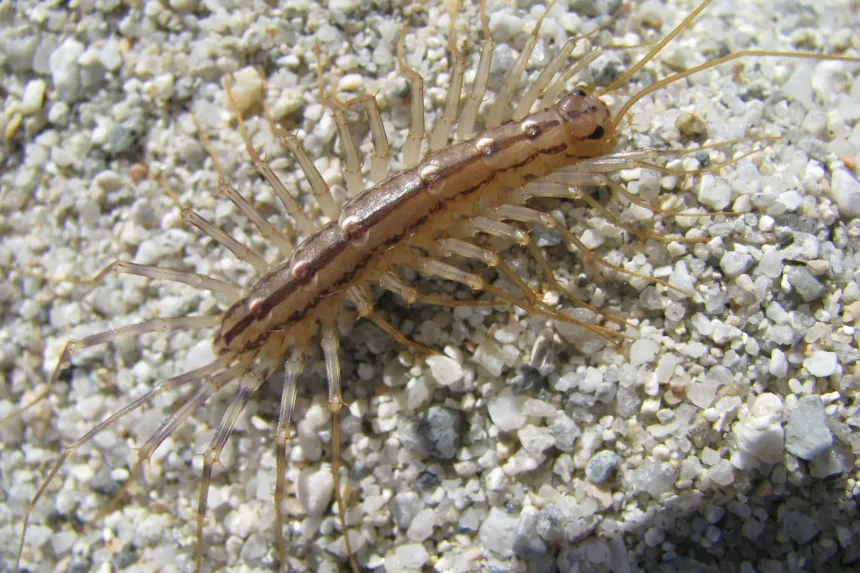
- Body 1–1 1/2 in, legs much longer
- Color
- Yellowish gray with three dark stripes; banded legs
- Found in
- Basements, bathrooms, closets, crawl spaces
- Harmful?
- No. Rarely bites; eats insects and spiders
- Active
- Year-round indoors, at night
The house centipede is the long-legged, fast-running centipede that lives indoors and hunts silverfish, cockroaches and spiders at night. It’s harmless to people and homes. The one thing to do: dry out the basement, because fewer centipedes follow less damp and fewer prey insects.
This page covers how to identify a house centipede, tell it from a millipede and keep numbers down. It rests on university extension guidance.
How to Identify a House Centipede: 15 Pairs of Long, Banded Legs
- 15 pairs of very long legs, banded light and dark, much longer than the body.
- Body about 1 to 1 1/2 inches, yellowish gray with three dark stripes down the back.
- Very long antennae at the front and long rear legs that look like a second pair of antennae.
- Very fast, often stopping and starting.
It’s not nearly as big as it looks: the body is only about an inch long, and the legs make it look much larger (UGA). The last two legs are so long that it’s hard to tell the front from the back. House centipedes are thought to have come to North America from the Mediterranean (University of Kentucky).
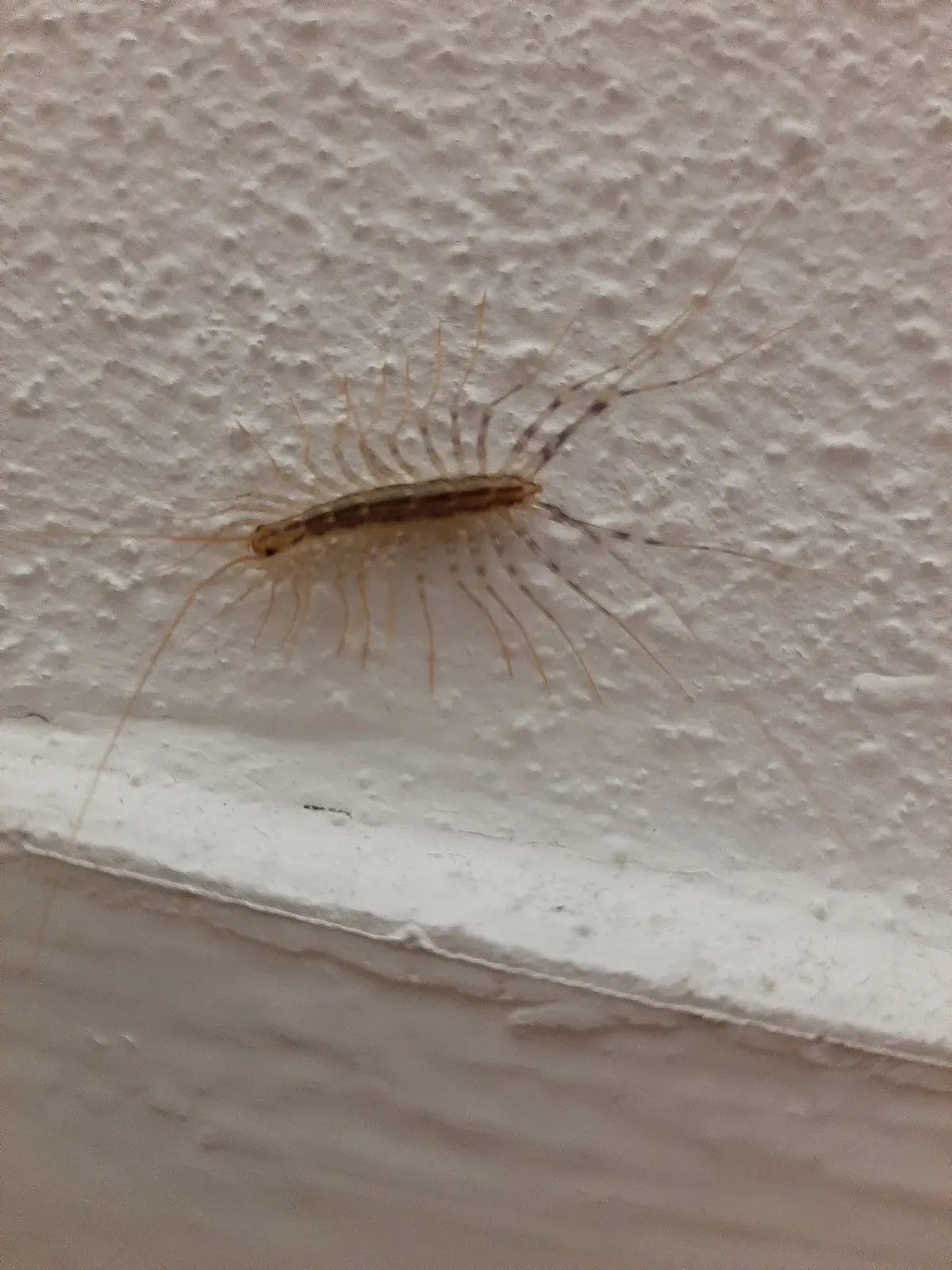
A house centipede on a wall near the baseboard, where people usually spot them indoors. Photo: Shi Annan (CC BY-SA 4.0), via Wikimedia Commons.
House Centipede vs. Look-Alikes: Speed and Legs
| Creature | How it differs | How to tell |
|---|---|---|
| House centipede | Fast hunter, yellowish gray, three stripes | 15 pairs of very long legs |
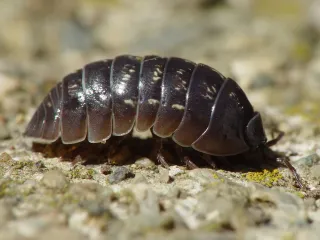
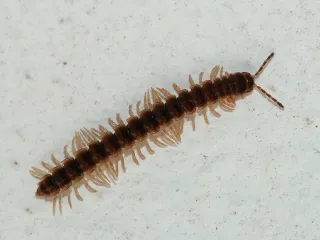
| Millipede | Slow, round, worm-like and dark; eats decaying plants | Two short pairs of legs per segment; curls up when touched |
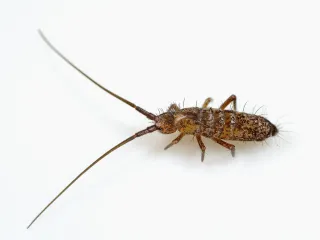
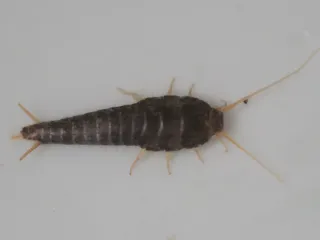
| Silverfish | Silvery, carrot-shaped, much smaller | Three tails, short legs; wiggles like a fish |
Why House Centipedes Are in Your House: Damp and Prey
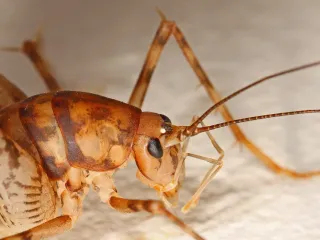
The University of Kentucky says the house centipede is the only centipede that can survive inside buildings; most centipedes and millipedes that wander in die quickly from moisture loss. House centipedes stay because they find damp hiding spots and food. They hunt cockroaches, crickets, pillbugs, sowbugs and silverfish, running down prey and wrapping it in their legs. Seeing several often means other insects are living in the same damp rooms, such as German cockroaches or house crickets.
Damp mulch, leaf litter and soil next to the foundation attract centipedes and the insects they eat. Outdoors, house centipedes also live under logs, rocks and loose bark (UGA).
Where You’ll Find Them: Damp Rooms
- Damp basements, bathrooms and laundry rooms
- Closets, crawl spaces and under sinks
- Sinks and bathtubs, which they fall into and can’t climb out of
They’re nocturnal: they hide in dark, damp places by day and hunt at night. Because they’re shy, most people only see one when it’s stuck in a sink or tub (UGA).
Are House Centipedes Harmful? No, They Eat Other Pests
A bite is very unlikely. The University of Kentucky says house centipedes pose little bite risk because their fangs are so small they have trouble piercing human skin, and the University of Georgia says no one has been known to be bitten by one. They don’t damage homes or food, and they reduce other household pests.
How to Confirm It’s a House Centipede
- Count the legs: very long and many, not short and stubby.
- Look for the three dark stripes on a yellowish-gray back.
- Check the tub or sink in the morning; they often get stuck there.
What to Do: Dry Out, Seal, Declutter
If one is a problem, catch it and put it outside. Run a dehumidifier, fix leaks, seal cracks and clear clutter in basements, so there’s less damp and fewer insects for them to hunt. To catch one, cover it with a glass, slide a piece of cardboard underneath and release it outside (UGA).
To keep more from coming in, the University of Kentucky suggests:
- Pulling back mulch, woodpiles and pavers from the foundation so the soil dries.
- Checking for leaks in crawl spaces and around AC units, outdoor faucets and sprinklers.
- Making sure downspouts and gutters carry water away from the house.
- Sealing foundation openings, door thresholds and windowsills with caulk, door sweeps or weather stripping.
Indoor pesticides are rarely needed; glue traps catch house centipedes indoors. Fewer prey insects means fewer centipedes, so dealing with the silverfish they hunt helps too. For other pests, browse all pest guides.
Often confused with
Sources
- Centipedes & Millipedes in & Around the Home (University of Kentucky Entomology, EF645)
- House Centipedes Are Allies in Home Pest Control (University of Georgia)
Last reviewed Oct 4, 2026.