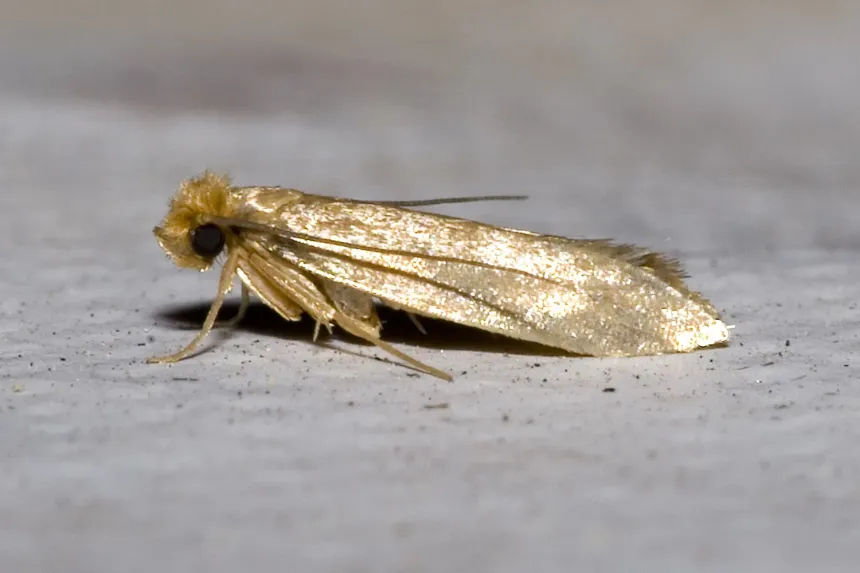
- Scientific name
- Tineola bisselliella
- Also called
- clothes moth, clothing moth
- Size
- About 1/4 in long; wingspan about 1/2 in
- Color
- Plain golden buff with a tuft of reddish hair on the head
- Found in
- Closets, drawers, stored wool, rugs, upholstered furniture
- Harmful?
- Damages wool, silk, fur and feathers
- Active
- Year-round indoors; avoids light
- DIY cost
- $11 in suppliesSee the plan
What to do
The webbing clothes moth is the common clothes moth in homes: a small, plain golden moth that hides in closets while its larvae chew holes in wool, cashmere, silk and fur. It doesn’t bite. The one thing to do: empty the affected closet, wash, dry-clean or freeze every animal-fiber item, and store woolens clean and sealed.
This page covers how to identify clothes moths and their larvae, tell them from pantry moths and find where they breed. It rests on UC IPM and University of Kentucky guidance.
How to Identify a Clothes Moth: Small, Plain and Golden
- Small: about 1/4 inch long at rest.
- Plain golden or buff, with no spots or bands, and a tuft of reddish-gold hair on the head.
- Behavior: tends to run or hop into folds rather than fly; flutters near the floor in dim rooms and rarely flies toward light.
- Larvae: creamy white with a brown head, up to about 1/2 inch, spinning silk tunnels and patches on the fabric.
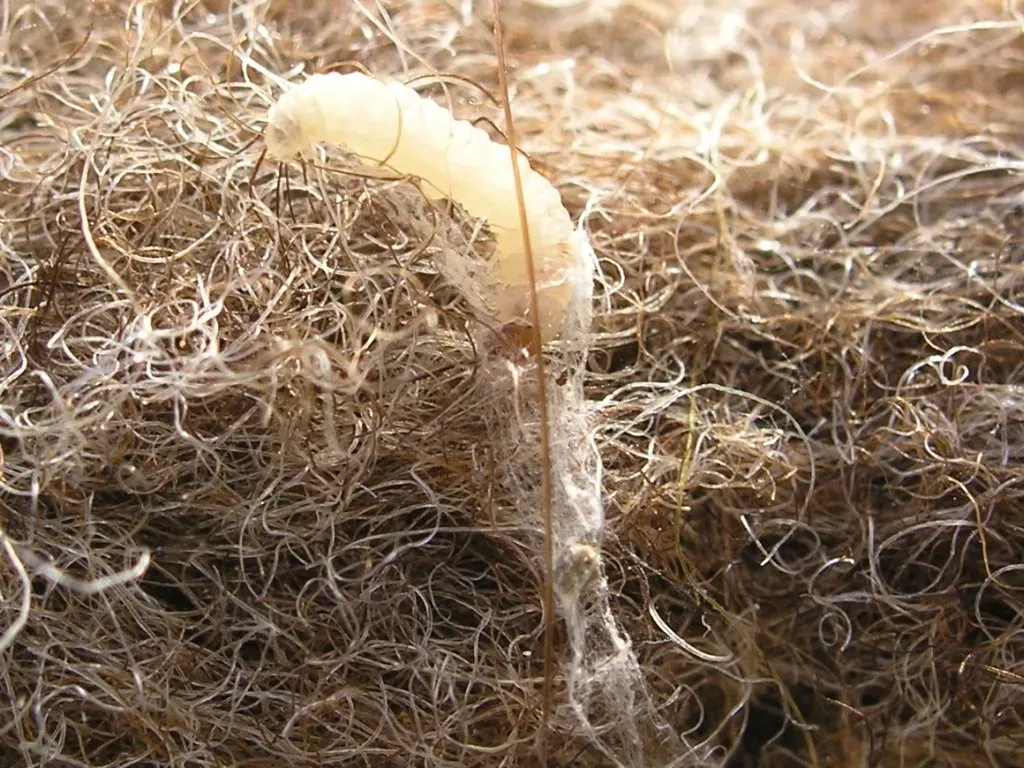
A clothes moth larva on wool felt. The larvae, not the moths, eat the holes. Photo: Guido Gerding (CC BY-SA 3.0), via Wikimedia Commons.
Clothes Moth vs. Look-Alikes: Webbing or Skins
| Pest | How it differs | How to tell |
|---|---|---|
| Webbing clothes moth | Small, plain golden | Silk webbing and tubes on wool |
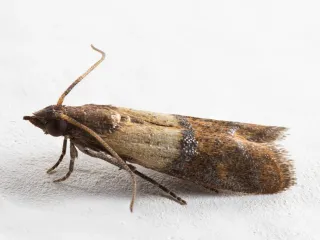
| Indian meal moth | Bigger, two-tone copper and gray | Flies around the kitchen; webbing in food |
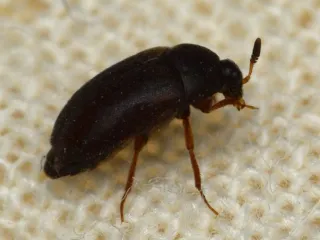
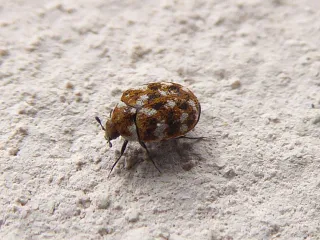
| Varied carpet beetle | A tiny spotted beetle | Shed bristly skins, no webbing |
UC IPM calls the webbing clothes moth the most common clothes moth in the US. The casemaking clothes moth’s larva carries a silk case the color of the fabric, and needs its own trap lure.
Where You’ll Find Them: Dark, Undisturbed Wool
- Wool sweaters, suits, coats and blankets, especially stored ones
- Wool rugs, under heavy furniture where it’s dark
- Felt, fur, feathers, down, silk and natural-bristle brushes
- Upholstery and piano felts
Larvae prefer fibers stained with sweat or food. Clothing worn often is rarely damaged; wool left untouched for months is the usual source.
Are Clothes Moths Harmful? To Fabric, Not People
They don’t bite or carry disease, but they chew holes in wool, cashmere, silk and fur, and can ruin rugs and heirlooms. Signs include irregular holes, silk webbing or tubes with fiber-colored droppings, and larvae or cocoon cases in folds and seams. Holes in clothes helps sort moth damage from carpet beetles and friction.
How to Confirm It’s Clothes Moths
- Shake out an item over white paper and look for webbing, larvae and droppings.
- Check collars, cuffs and folds of wool you rarely wear.
- Hang a clothes moth pheromone trap for a few weeks; small golden moths confirm it.
What to Do: Clean, Freeze, Seal
Clean everything in the affected closet: hot-wash, dry-clean, or seal items in bags and freeze them for two weeks at 0°F. Vacuum along edges and under furniture, then store clean woolens in sealed bags or bins. Pheromone traps help confirm the problem is gone. The full plan is in how to get rid of clothes moths. For other pests, browse all pest guides.
Often confused with
Sources
Last reviewed Oct 5, 2026.