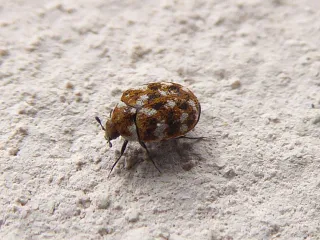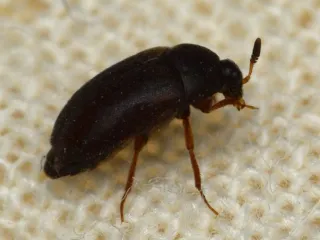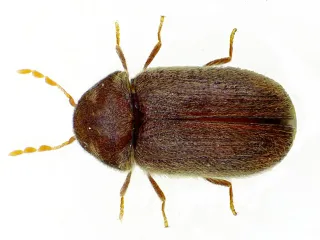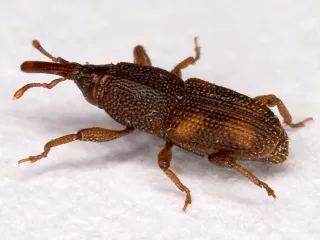
- Scientific name
- Plodia interpunctella
- Also called
- pantry moth, Indianmeal moth, flour moth
- Size
- About 1/2 in long at rest
- Color
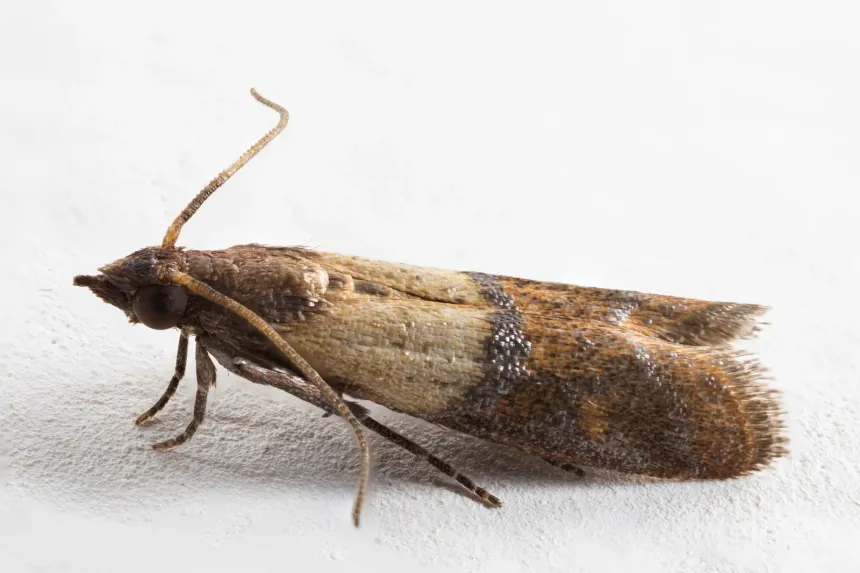
- Wings pale gray near the body, coppery red-brown on the outer two-thirds
- Found in
- Pantries; flour, cereal, nuts, dried fruit, birdseed, pet food
- Harmful?
- Spoils food; not a health risk
- Active
- Year-round indoors; flies at night
- DIY cost
- $26 in suppliesSee the plan
What to do
The Indian meal moth is the small moth fluttering around the kitchen at night, the most common “pantry moth.” The adults don’t eat; the damage comes from the caterpillars, which live inside dry foods and leave silk webbing behind. The one thing to do: find and throw out every infested package, then store dry food in containers with tight lids.
This page covers how to identify Indian meal moths and their larvae, tell them from clothes moths and find the source. It rests on UC IPM, Clemson and University of Kentucky guidance.
How to Identify an Indian Meal Moth: Two-Tone Wings
- About 1/2 inch long with wings folded.
- Two-tone wings: pale gray or cream near the body, coppery red-brown on the outer part. This pattern is the giveaway.
- Larvae: off-white caterpillars up to about 1/2 inch, with a brown head.
- Webbing: silky threads and clumps in food, along shelf edges and in package folds.
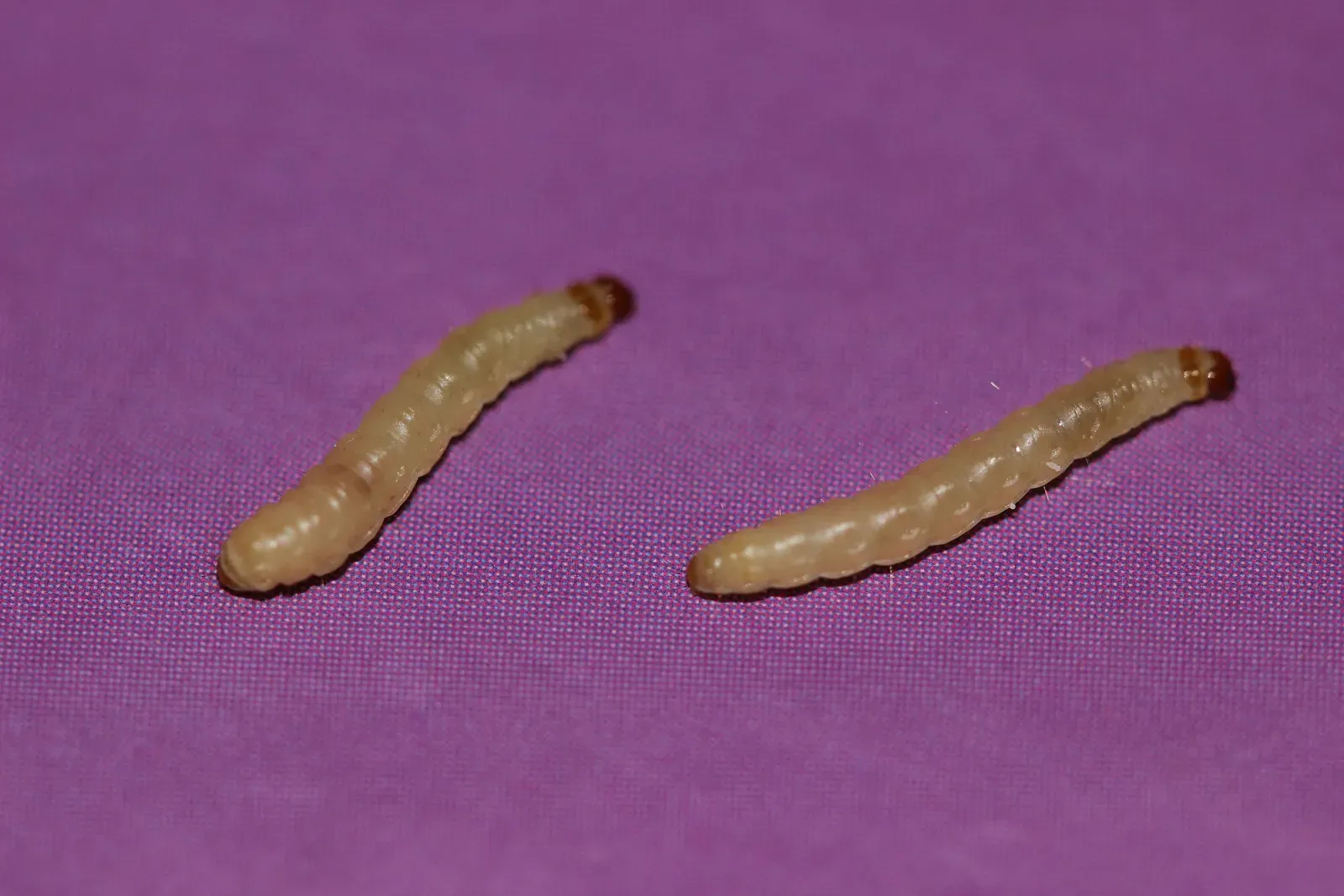
Indian meal moth larvae: the small cream caterpillars you find in flour, cereal or pet food. Photo: Fvukajlovic (CC BY 4.0), via Wikimedia Commons.
Pantry Moth vs. Clothes Moth: Kitchen or Closet
| Moth | How it differs | How to tell |
|---|---|---|
| Indian meal moth | About 1/2 in, two-tone copper and gray | Flies around the kitchen at night; webbing in food |
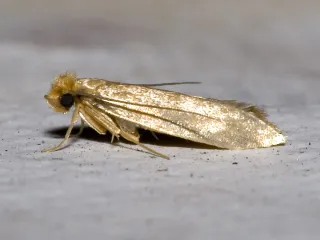
| Webbing clothes moth | About 1/4 in, plain golden-buff | Hides in closets; holes in wool, not food |
A moth flying in the kitchen at night is almost always a pantry moth; the full comparison is in pantry moths vs. clothes moths.
Where You’ll Find Them: Dry Food and Pet Food
- Flour, cereal, rice, pasta, cornmeal and baking mixes
- Nuts, dried fruit, chocolate, spices and dried peppers
- Birdseed and dry pet food, a common starting point
- Larvae climbing walls and ceilings to spin cocoons in corners
Just before pupating, the larva may travel a long way from its food, which is why caterpillars turn up on ceilings (Clemson).
Indian Meal Moth Life Cycle: Hundreds of Eggs at a Time
A female starts laying about 3 days after becoming an adult and lays 200 to 300 sticky eggs directly on food. Eggs hatch in 7 to 8 days, larvae feed for 6 to 8 weeks inside a silk tunnel, and the pupal stage lasts 15 to 20 days (Clemson). One missed package can restart an infestation within a month or two. Eggs and larvae next to other pests’ young are shown in bug eggs and larvae.
Are Indian Meal Moths Harmful? They Spoil Food
They don’t bite, sting or spread disease. They spoil food, and an infestation grows quickly if the source isn’t found. Signs include webbing and clumped food inside packages, small caterpillars on shelves, walls or the ceiling, and moths near the pantry in the evening.
How to Confirm It’s Indian Meal Moths
- Look at a resting moth for the copper outer wings.
- Open packages, opened ones first, and check folds for webbing and caterpillars.
- Check pet food and birdseed in the garage and laundry room too.
What to Do: Toss, Clean, Seal
Find and throw out every infested package, vacuum shelves and cracks, and store dry foods in airtight glass or hard plastic. Freezing new flour or nuts at 0°F kills eggs. Pheromone traps catch males and show whether the problem is gone, but don’t control it on their own. The full plan is in how to get rid of pantry moths. For other pests, browse all pest guides.
Often confused with
Sources
- Pantry Pests (UC IPM)
- Indian Meal Moth (Clemson Cooperative Extension)
- Stored Product Pests in the Pantry (University of Kentucky Entomology, EF612)
Last reviewed Oct 4, 2026.