Pantry Moths vs. Clothes Moths: How to Tell Them Apart
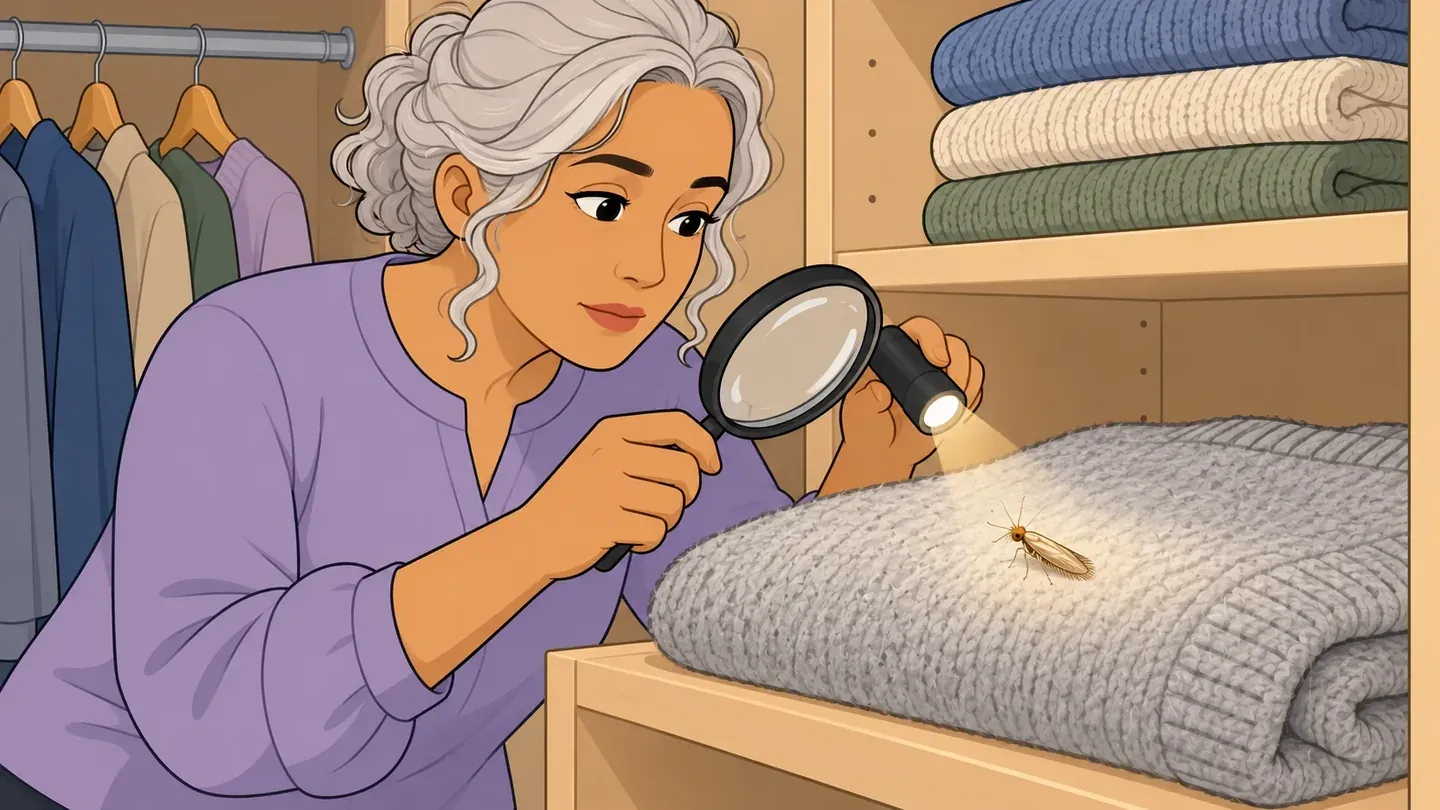
Illustration: a woman checks a small gold moth on a folded wool sweater with a hand lens.
Pantry moths vs. clothes moths: pantry moths are about twice as long, with two-tone gray and copper wings, and fly around the kitchen. Clothes moths are small, plain gold, flutter weakly and hide in dark closets near wool. Identify yours before buying traps, because a pheromone lure attracts only its own kind of moth.
Cost: about $10–11 in supplies. Difficulty: easy. Call a pro if clothes moths have spread through the house, or into stuffed furniture, pillows or mattresses you can’t wash, freeze or bag.
This page compares the two side by side, then covers the larvae, the look-alikes, which trap to buy and what to do next. We haven’t tested traps ourselves; it rests on UC IPM, NPIC, University of Kentucky, Rutgers and Colorado State extension guidance, plus list prices and a cost guide.
Pantry Moth vs. Clothes Moth at a Glance
“Pantry moth” almost always means the Indian meal moth, which UC IPM calls the most common moth found in food in the home. “Clothes moth” usually means the webbing clothes moth.
| Pantry moth | Clothes moth | |
|---|---|---|
| Size at rest | About ½ inch, twice a clothes moth | About ¼ inch |
| Wings | Gray near the body, copper on the outer two-thirds | Plain pale gold, no markings |
| Head | No tufts | Reddish-gold tuft of hair |
| Flight | Steady line across rooms, drawn to light | Weak flutter close to its source, avoids light |
| Where you see it | Kitchen and around the house | Dark closets near wool |
| Larvae | White with a greenish or pinkish tint, about ½ inch | Shiny white with a dark head, up to ½ inch, in silk tubes |
| Damage | Webbing and clumps in flour, cereal, pet food | Holes in wool, fur or felt, often under collars |
| Trap | Labeled for Indian meal or pantry moths | Labeled for clothes moths |
Sources: UC IPM, University of Kentucky and Rutgers.
Size and Color: Size Is the Fastest Clue
UC IPM says a resting clothes moth is only about ¼ inch long, while most food-infesting moths are about double that. The pantry moth’s two-tone wings are whitish gray near the body and coppery reddish brown on the outer part; the webbing clothes moth is plain gold all over. The less common casemaking clothes moth is browner, with faint spots.
Check the head, not just the wings: clothes moths have little tufts of hair there, food moths don’t. A magnifying glass shows them; a zoomed-in phone photo is worth a try.
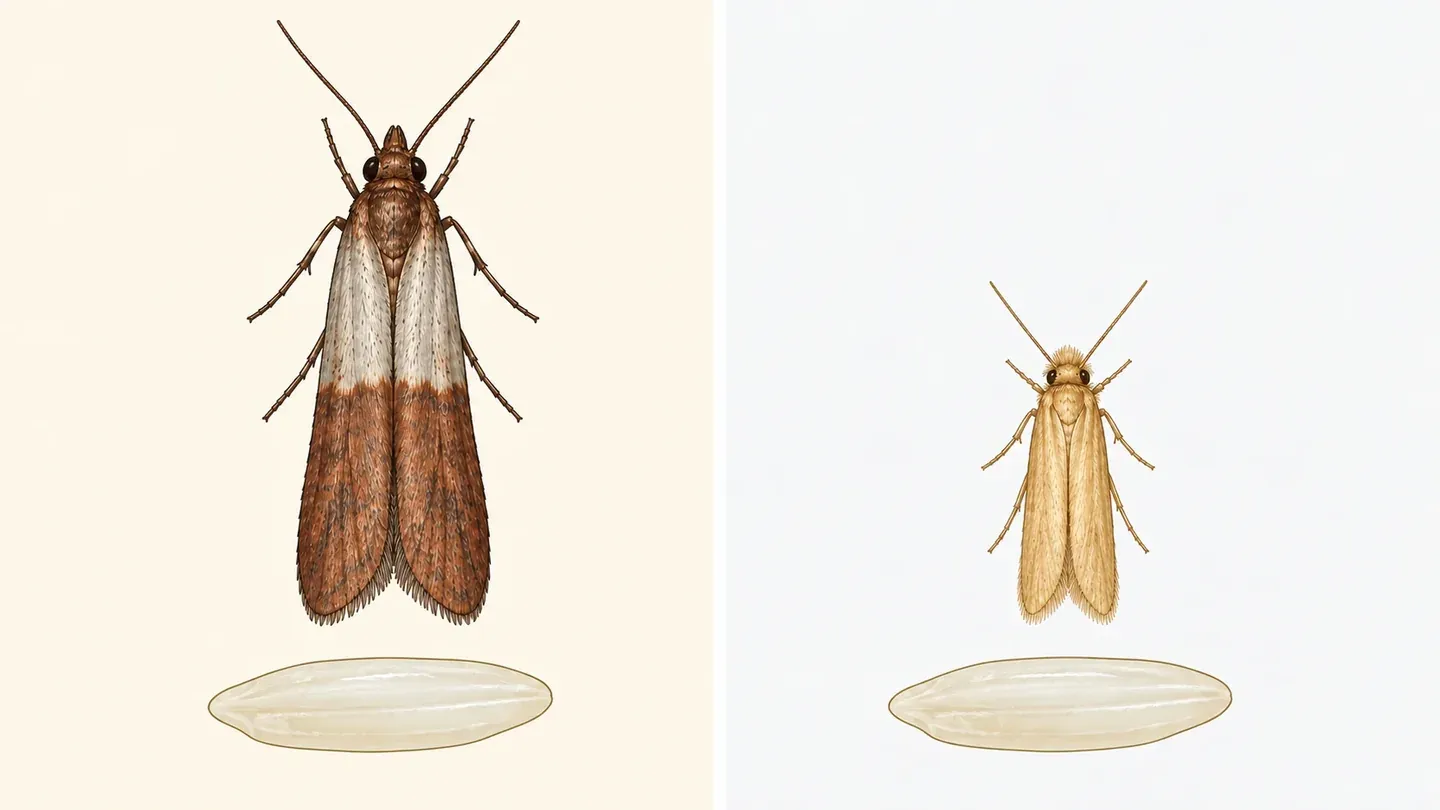
Illustration: drawn to the same scale. The pantry moth (left) is about twice as long as the clothes moth (right); a grain of long rice gives the scale.
Flight: Pantry Moths Travel, Clothes Moths Stay Put
Clothes moths are weak flyers, aren’t attracted to lights and stay close to the infested items, so you may notice the damage before the moth. Food moths often fly around the house in a direct, steady way, and grain-infesting moths are drawn to light and fly during the day.
Larvae and Damage: Food or Fabric
Only the larvae do damage; adult moths don’t eat food or fabric. The larvae look alike, so where you find them matters most.
Pantry moth larvae spin silk as they crawl, leaving webbing, clumped flour and tiny holes in bags of flour, cereal, nuts, dried fruit, spices, birdseed and dry pet food. Clothes moth larvae feed from silk tubes or cases on wool, fur, feathers, felt, carpets and upholstery, and on cotton or synthetics only if blended with wool. Match fabric damage in holes in clothes.
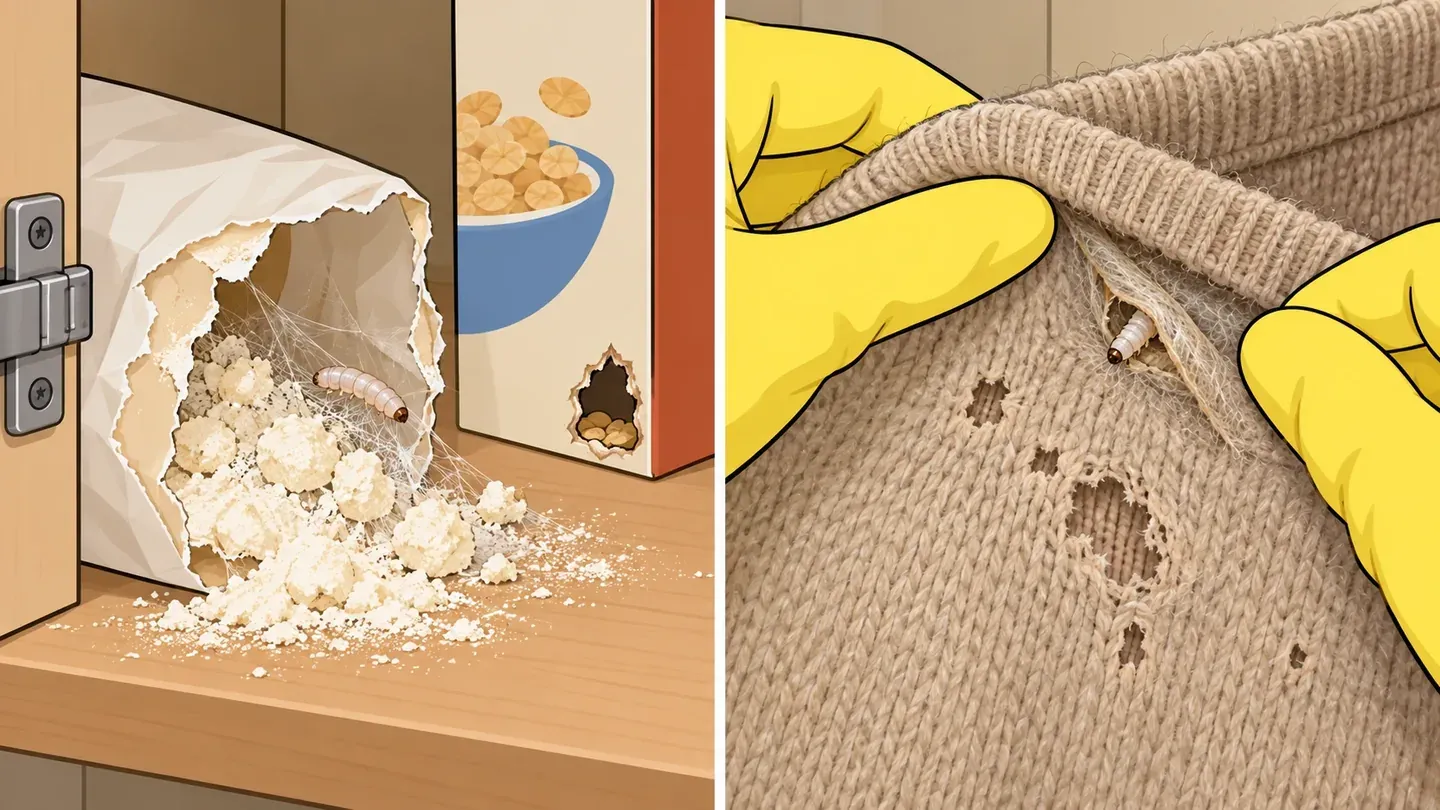
Illustration: webbed flour with a pale caterpillar (left); a sweater collar with holes and a silk tube (right).
Do Pantry Moths Eat Clothes? No
Colorado State University Extension says few insects can digest wool and names clothes moths and carpet beetles, not pantry moths. Pantry moth food lists hold only dry food.
So why is there a pantry moth caterpillar in your closet? In heavy infestations, grown Indian meal moth larvae often turn up far from their food because they travel to pupate. Check nearby drawers and folded towels for cocoons.
Grain Moth vs. Clothes Moth: The Angoumois Look-Alike
“Grain moth” usually just means a pantry moth; trap labels list grain, flour, meal and seed moths together. The true look-alike is the Angoumois grain moth: pale yellowish brown, about ½ inch long and fluttering in the house (University of Kentucky). Its larvae grow inside whole kernels such as corn, oats and rice, and decorative ear corn is a common source, so check fall decorations too.
Carpet Beetles and Pantry Beetles: Rule Them Out
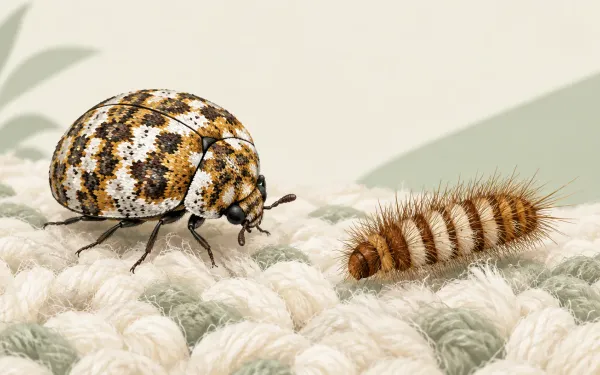
Colorado State says clothing damage in that state more often comes from carpet beetles than moths. Holes in wool with bristly shed skins and no webbing are usually signs of carpet beetles. Small beetles in flour are a different pest, and Indian meal moth traps won’t attract them.
How to Confirm Which Moth You Have
- Measure the moth against a grain of rice: about ¼ inch is a clothes moth, double that a pantry moth.
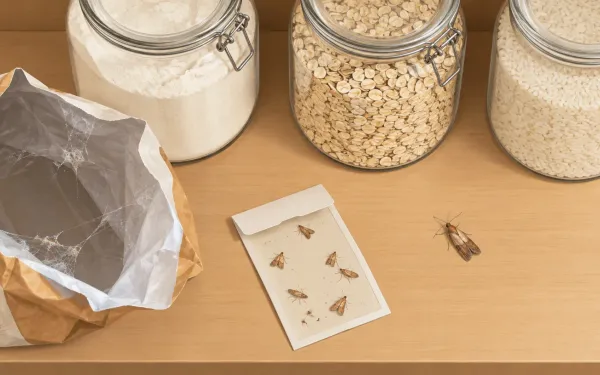
- Check flour, cereal, pet food and birdseed for webbing or clumps.
- Fold back a wool sweater collar and look for holes and silk tubes.
- Set the matching trap and check it weekly; a catch confirms your moth.
UC IPM says clothes moth traps attract only clothes moths, and grain moth traps won’t attract clothes moths, so a wrong trap catches nothing and can look like the problem is gone. Kitchen moths plus holes in a sweater are two problems: get one of each. If a trap catches a moth that doesn’t match its label, go by size and color, not the box.
What to Do Next
The trap confirms your moth and shows whether the cleanup worked; it won’t end an infestation, because the lures catch only males while larvae keep feeding.
Pantry moths: remove food, don’t spray. Throw out anything with webbing or larvae, freeze what you’re unsure of and move dry goods into glass or sturdy plastic containers. Getting rid of pantry moths walks through the full cleanout.
Clothes moths: wash, dry-clean or freeze every infested wool item, vacuum the closet and store woolens sealed. The clothes moth removal plan gives temperatures and times.
Keep bug spray and mothballs out of the kitchen: UC IPM doesn’t recommend insecticides near food, and mothballs belong only in airtight containers, as mothball labels spell out.
| Item | Typical cost |
|---|---|
| Pantry moth traps, 2 with lures | $9.99 |
| Clothes moth traps, 2 traps | $10.99 |
| Pro pantry moth treatment | $150–$200 |
| Pro clothes moth treatment | $150–$250 |
Trap prices: TERRO 2-packs, list price on October 1, 2026, before tax and shipping. Pro prices are per treatment from Fixr (January 2025); one homeowner shared a $600 quote for a single room of clothes moths, a single example; Fixr notes the two moths need different products, so tell the company which one you have.
Pantry moths rarely need a pro; removing infested food works even for a large infestation. For clothes moths, call one if the infestation is widespread, or if moths are in hair- or feather-stuffed furniture, mattresses or pillows that spraying can’t reach.
- Compare the moth’s size with a grain of rice.
- Check the pantry for webbing and clumps.
- Check wool collars and cuffs for holes.
- Buy one trap labeled for your moth, not a mixed guess.
- Throw out or freeze infested food or wool.
- Store dry goods and woolens in sealed containers.
Common questions
No. Clothes moth larvae eat animal fibers like wool; Indian meal moth larvae eat stored food.
Neither is a fix. We found no extension guide that tests bay leaves, and UC IPM calls cedar debatable: its oil kills small clothes moth larvae but not large ones.
Sources and further reading · 7
- UC IPM: Pantry Pests (Pub. 7452) and Clothes Moths (Pub. 7435)
- NPIC: Pantry Moths and Clothes Moths
- University of Kentucky: Stored Product Pests in the Pantry (ENTFACT-612)
- Rutgers NJAES: Clothes Moths (FS1182)
- Colorado State University Extension: Clothes Moths, Identification and Control in the Home (5.599) (hosted by the Maine Department of Agriculture)
- TERRO (manufacturer): Pantry Moth Traps and Clothes Moth Alert
- Cost guide: Fixr: Moth Extermination Cost