What Do Cockroaches Eat? The Foods Feeding Roaches in Your Home
Cockroaches eat almost anything organic: crumbs, grease, sugar and starch, meat, pet food, and when that runs out, paper, cardboard, glue, hair and their own droppings. UC IPM describes them as feeding on a wide range of organic matter. Water matters even more than food: a German cockroach without water dies in under two weeks, even with food around (University of Florida). Cut off both, and the bait you put out becomes the best meal left.
Cost: about $24–$54 in supplies. Difficulty: easy. Call a pro if roaches are still out in the open during the day after you have cleared food and water and baited for two weeks, or they keep coming in from a neighboring apartment.
This guide covers what roaches eat in a home, what each common species prefers, how long they last without food or water, and five steps to cut them off. We haven’t tested anything ourselves; it rests on UC IPM, University of Florida, NC State, Penn State, NPIC and NIEHS guidance.
What Attracts Cockroaches in a House
The ten things below feed most indoor roaches. Each has a quick fix, and none costs much.
| What feeds them | Why it matters | What to do |
|---|---|---|
| Crumbs in cracks and under appliances | NPIC names crumbs trapped in cracks as roach food | Vacuum cracks and behind the stove and fridge |
| Spilled drinks and sticky spots | NPIC lists spilled drinks too | Wipe spills the same day, including inside cabinets |
| Dishes left overnight | Roaches feed at night | Wash dishes before bed or leave them soaking in clean water |
| Open trash and recycling | NC State lists decomposing material from trash cans | Use a lidded can; take trash out at night |
| Pet food left in the bowl | Kibble is an easy, steady meal | Pick up bowls at night; keep the bag sealed |
| Grease on the stove and range hood | Fats are food, and the stove is warm | Degrease the stovetop, hood and the gap beside the range |
| Cardboard boxes and paper bags | Brown-banded roaches favor starchy glue (UC IPM); American roaches eat paper (University of Florida) | Recycle stacked boxes and bags |
| Leaks and standing water | Water decides how long they survive | Fix drips; empty the fridge drip pan; dry the sink at night |
| Droppings and dead roaches | German roaches eat droppings and dead roaches (NC State) | Wipe droppings off open surfaces |
| Dry food in bags and open boxes | Flour, cereal and snacks are easy to get into | Move them into containers with tight lids |
Roaches aren’t proof of a dirty home. They find food and water even in homes cleaned regularly, which is why removing the easy food matters most when you’re baiting.
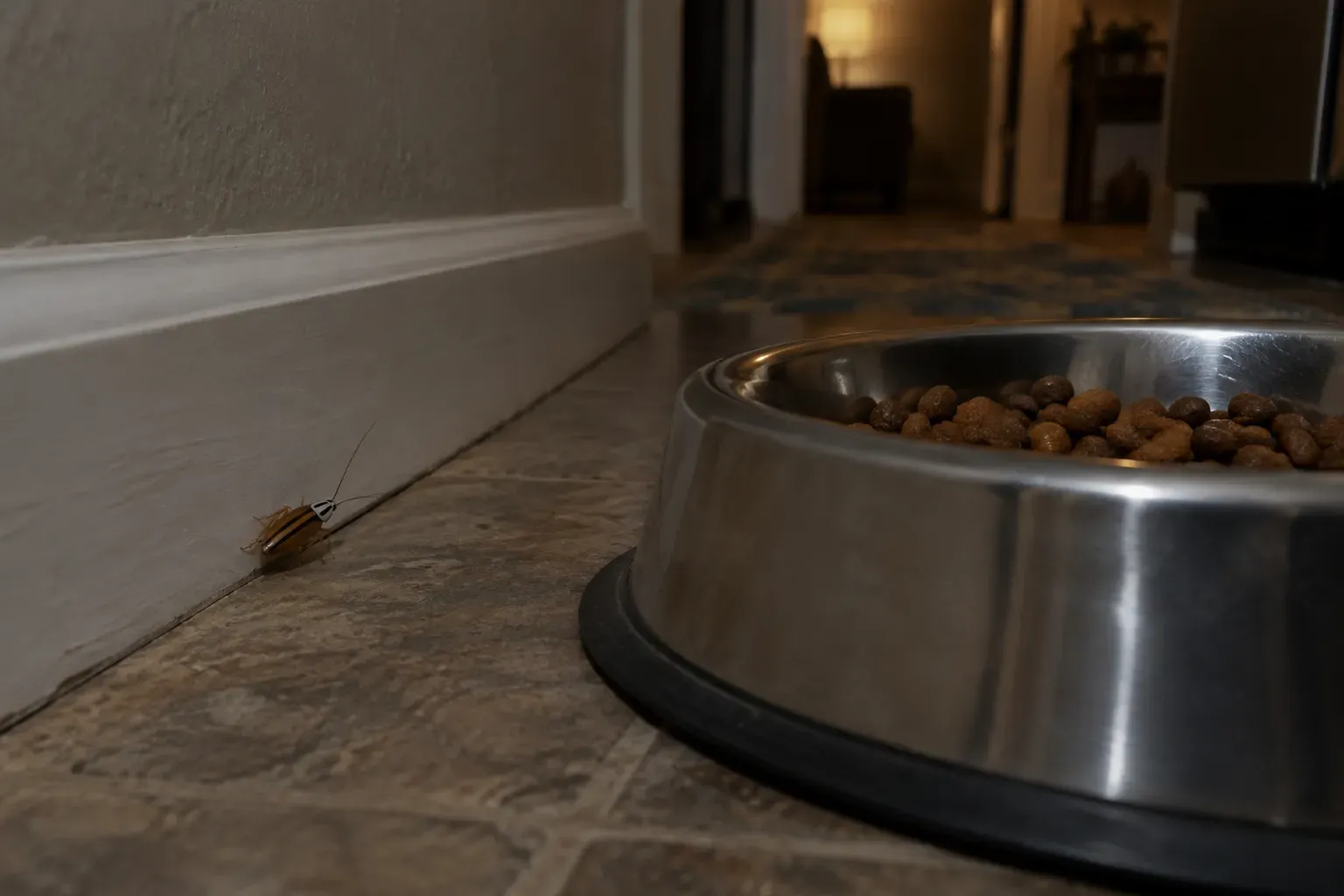
Illustration: a pet bowl left out overnight, with a roach coming along the baseboard.
What Each Kind of Cockroach Eats
The common indoor species all eat broadly, but each has habits that tell you where to look.
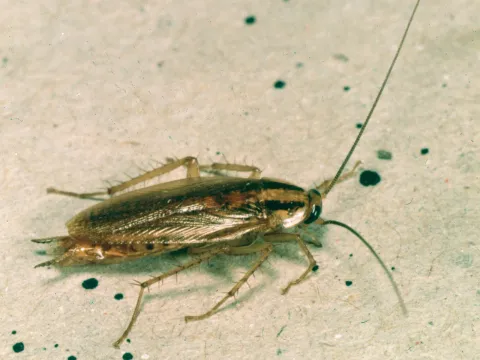 Kitchens, bathroomsGerman cockroachCrumbs, plant material, dead insects and trash, even droppings and dead roaches (NC State).
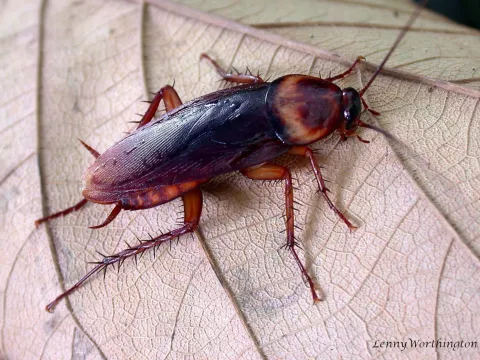 Basements, drainsAmerican cockroachPrefers sweets; also paper, hair, book bindings, cloth and dead insects (University of Florida).
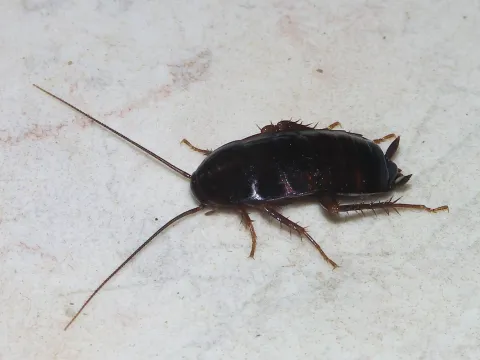 Damp basementsOriental cockroachFilth, rubbish and decaying organic matter (Penn State).
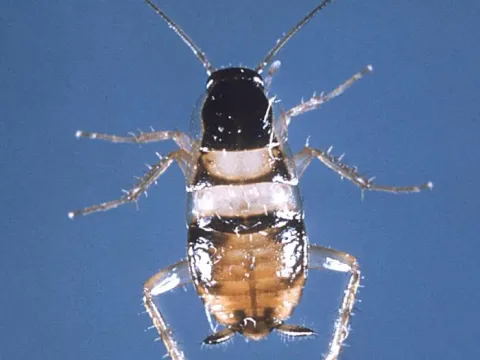 Near appliancesBrown-banded cockroachStarchy foods, such as the glue on stamps and envelopes (UC IPM).
That’s why the German roach is a kitchen problem and the oriental roach is a drain and basement problem. A big roach coming up a floor drain isn’t eating your groceries; it’s living on what’s down there.
How Long Can Roaches Live Without Food or Water?
Longer without food than without water, and the big species last longest.
| Cockroach | Without food (water available) | Without water | Source |
|---|---|---|---|
| German | About 42 days | About 2 weeks, even with food around | University of Florida |
| American | Two to three months | About a month | Penn State |
NIEHS sums it up for most roaches: up to a month without food, but about a week without water. So drying out the sink, the drip pan and the leaky trap under the sink hits them faster than any amount of crumb hunting. Neither number means you can starve them out; how long cockroaches live explains why bait works better than waiting.
How to Cut Off Their Food and Water
Step 1: Clean where they actually feed. Pull out the stove and fridge, vacuum the gaps and wipe the grease and spills behind them. Do the same under the sink and in the cabinet where you keep the trash.
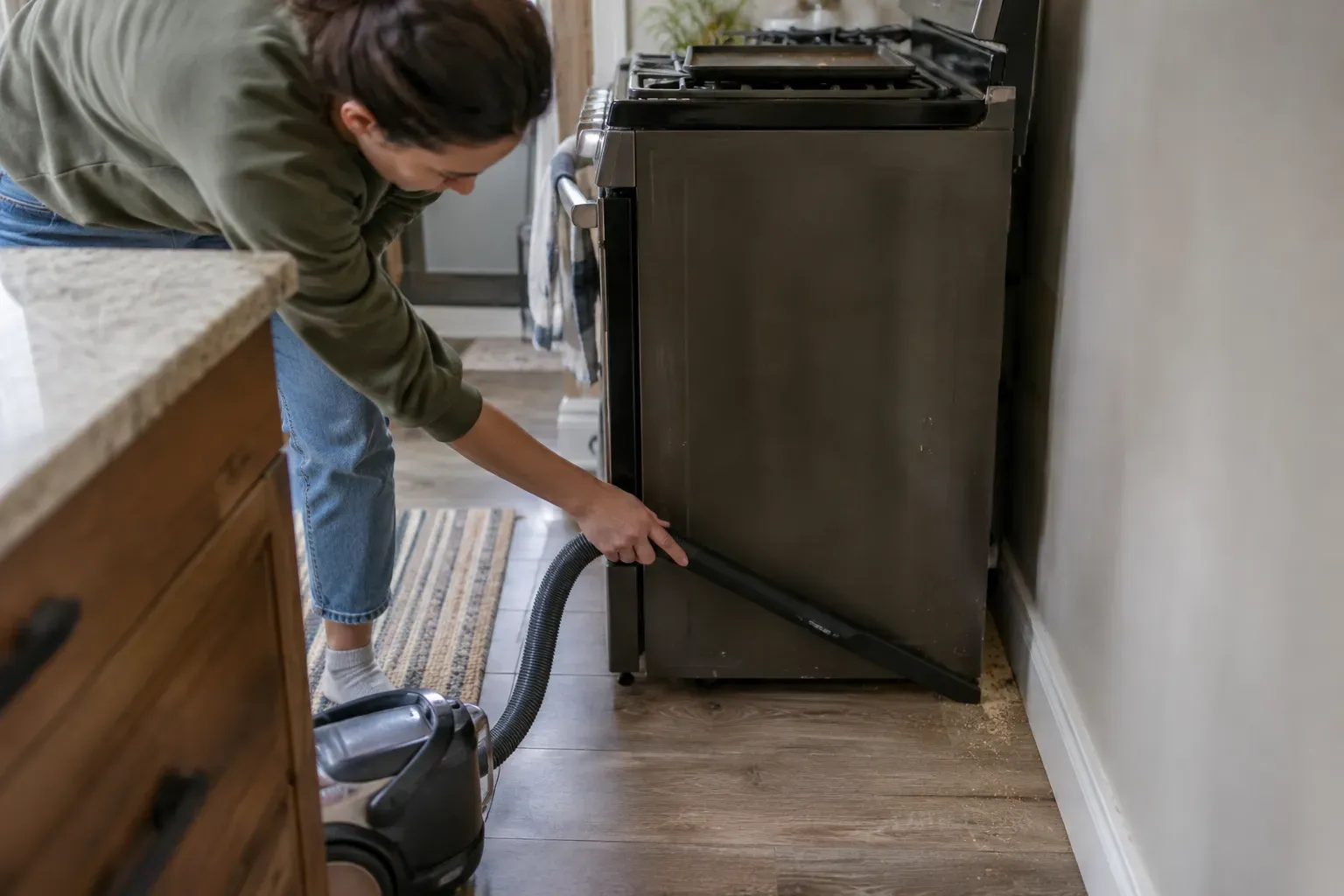
Illustration: vacuuming the crumbs and grease in the gap beside the stove.
Step 2: Fix the water. Fix dripping taps and leaky traps, empty the fridge drip pan, and don’t leave water standing in the sink overnight. Renting? Report leaks to your landlord in writing.
Step 3: Seal and lid the food. Pantry food in containers with tight lids, pet food bowls picked up at night, a lid on the trash can, dishes washed before bed.
Step 4: Clear the clutter. Recycle stacked cardboard, paper bags and newspapers. They’re hiding places and, for some species, food.
Step 5: Bait while the food is gone. The less other food roaches find, the more bait they eat (NC State). Put pea-sized dabs of gel bait in hinge gaps and cracks near where you see them, and don’t spray near it. How to get rid of roaches has the full plan.
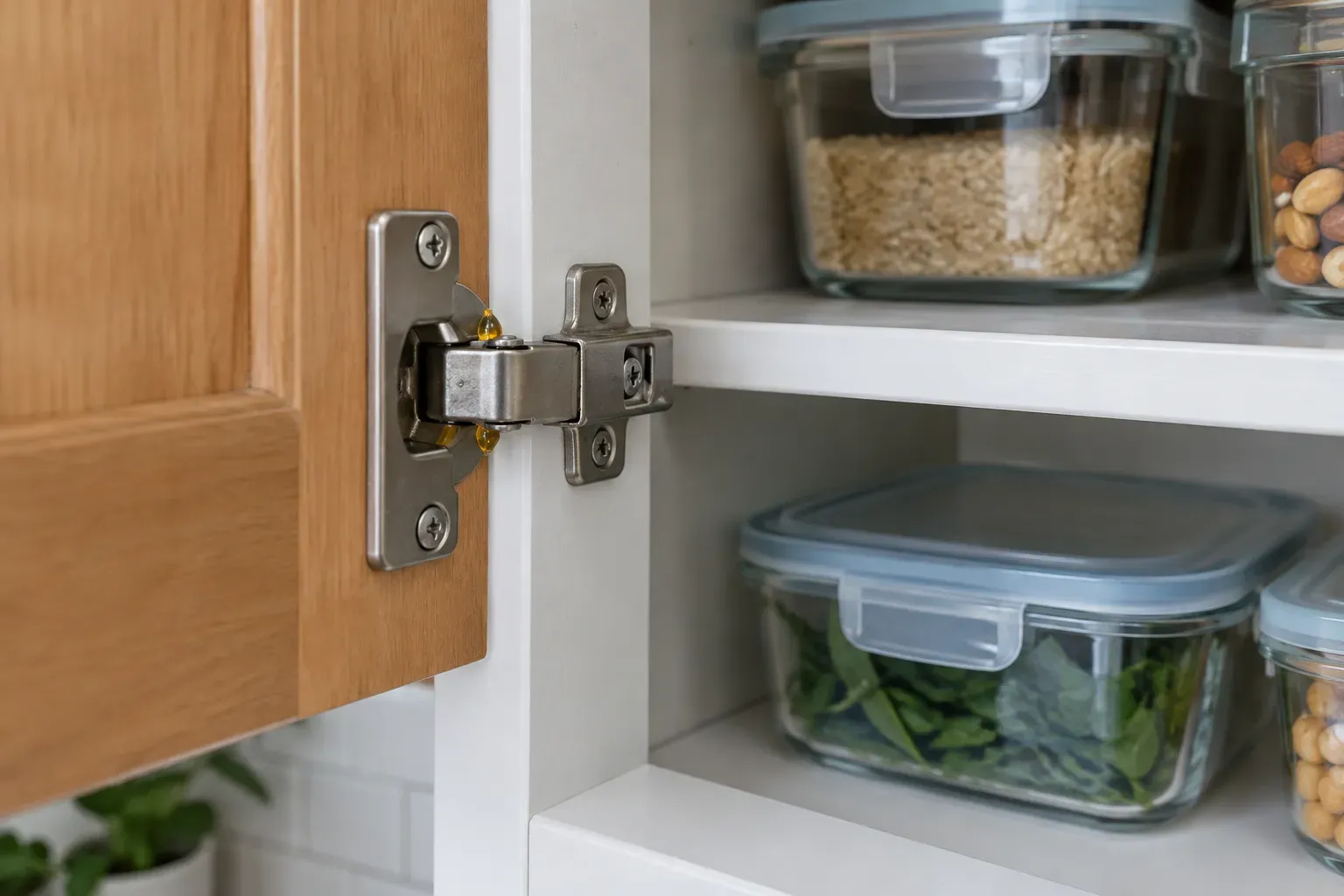
Illustration: small dabs of gel bait in a cabinet hinge, with the food sealed away behind it.
What It Costs
Cleaning, sealing food in containers you already own and fixing a drip cost mostly time. The one purchase that matters is bait and a few sticky traps: about $24–54 in supplies at October 1, 2026 list prices, as itemized in our roach guide.
When to Call a Pro
If roaches are still out in the open during the day after you have cleared food and water and baited for two weeks, or they keep coming in from a neighboring apartment. Signs of roaches helps you judge how big the problem is first.
Common questions
Yes. NC State says German cockroaches regularly eat other German cockroaches that have died, and they eat droppings too. Wiping up dead roaches and droppings removes food as well as the smell that draws them back.
Sometimes, but don’t count on it. The Connecticut Agricultural Experiment Station calls cockroaches opportunistic predators that were used in the past to hunt down and kill bed bugs. No modern guidance treats them as bed bug control; see our bed bug page for what to do.
The same food as adults. NC State says all stages show the same food preference, and young nymphs rely heavily on droppings at their hiding spots. That’s why gel bait placed right by the hiding spot reaches the baby cockroaches too.
For weeks, not forever: about 42 days for a German cockroach with water, and two to three months for an American cockroach (University of Florida, Penn State). Without water they last far less time.
The Bottom Line
Cockroaches eat almost anything, so starving them out doesn’t work. Take away the easy food and water, especially crumbs, grease, pet food, trash and leaks, then bait where they hide so the bait is the best meal left.
Sources and further reading · 9
- UC IPM: Cockroaches (Pest Notes 7467): feeding on a wide range of organic matter, German and brown-banded roach habits.
- University of Florida IFAS: American Cockroach (IN298): American roach diet.
- University of Florida IFAS: Least Toxic Methods of Cockroach Control (ENY-258), hosted by the Maine Department of Agriculture: German roach survival without food or water.
- NC State Extension: Biology and Behavior of the German Cockroach: diet, droppings, cannibalism, nymphs.
- NC State Extension: German Cockroach Surveillance and Management: removing food so roaches eat bait.
- Penn State Extension: American Cockroaches and Oriental Cockroaches: diet and survival.
- NPIC: Cockroaches: crumbs, spilled drinks, attraction to their own debris.
- NIEHS: Cockroach Myths and Misconceptions: survival without food or water.
- Connecticut Agricultural Experiment Station: Cockroaches (Order Blattodea): roaches and bed bugs.