Do Silverfish Bite? Are Silverfish Harmful?
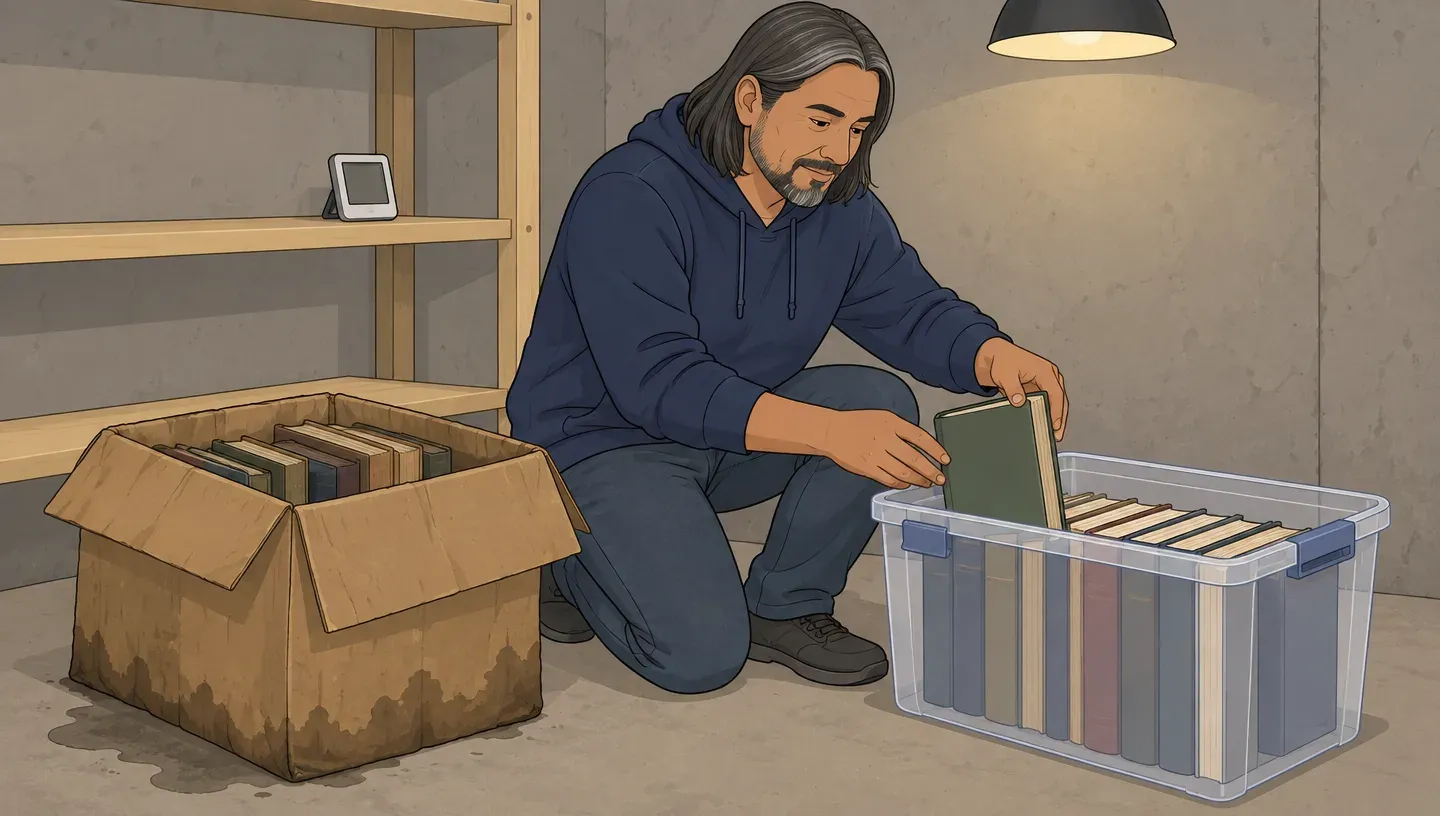
Illustration: old books moving from a damp cardboard box into a clear latching bin, with a humidity gauge on the shelf.
Do silverfish bite? No. Silverfish can’t bite or sting, don’t feed on blood and aren’t known to spread disease to people or pets. The harm is to your things: paper, book bindings, starched clothes and dry food, and only after a large, long-running infestation. Seal stored items, dry damp rooms and freeze anything infested for a week.
Cost: about $0–10 in supplies. Difficulty: easy. Call a pro if irreplaceable books, documents or photos keep showing fresh damage, or silverfish still turn up 2–3 weeks after you’ve dried out and treated the area.
This page covers what bit you if it wasn’t a silverfish, the real risks to people, pets and your house, what the damage looks like and how to protect books and clothes for free. We haven’t tested anything ourselves; it rests on UC IPM, Virginia Tech, Nebraska and other extension guidance, the Library of Congress and the Canadian Conservation Institute, plus one list price.
Silverfish vs. Bugs That Do Bite
| Bug | Looks and size | Where you find it | Bites you? |
|---|---|---|---|
| Silverfish | Silvery, carrot-shaped, ½ to ¾ inch, three long tails | Damp bathrooms, basements, at night | No |
| Bed bug | Flat, reddish-brown, apple-seed size (about 3/16 inch) | Mattress seams, with dark spots | Yes |
| Flea | Tiny (1/16–1/8 inch), jumps | Homes with pets | Yes |
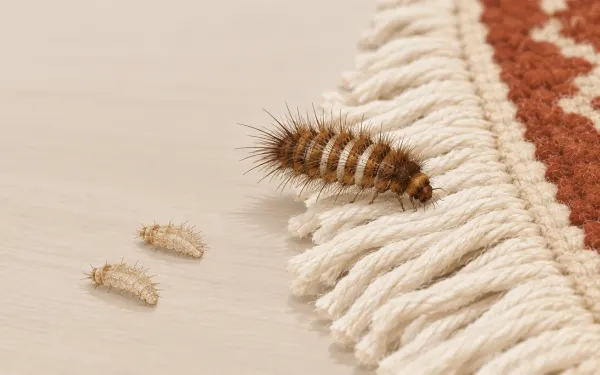
| Carpet beetle larva | Fuzzy, banded grub, up to about ¼ inch | Closets, rugs, under furniture | No, but its hairs can cause a rash |
Sources: Virginia Tech, UC IPM and our Library pages.
Do Silverfish Bite Humans?
No. Virginia Tech’s extension fact sheet says silverfish and firebrats are harmless to humans and do not bite, sting or transmit diseases.
Their mouthparts are made for grazing. UC IPM says their jaws are so weak that they scrape the surface of paper instead of biting into it, and none of the sources we checked reports a silverfish bite on a person.
Woke up with bites? Look for bed bugs, fleas if you have pets, or mosquitoes, a common nighttime biter even indoors. Bites alone can’t confirm bed bugs, NPIC notes, so find the bug itself; our bug bites guide helps you match the marks.
What Silverfish Look Like: Silvery, ½ Inch, Three Tails
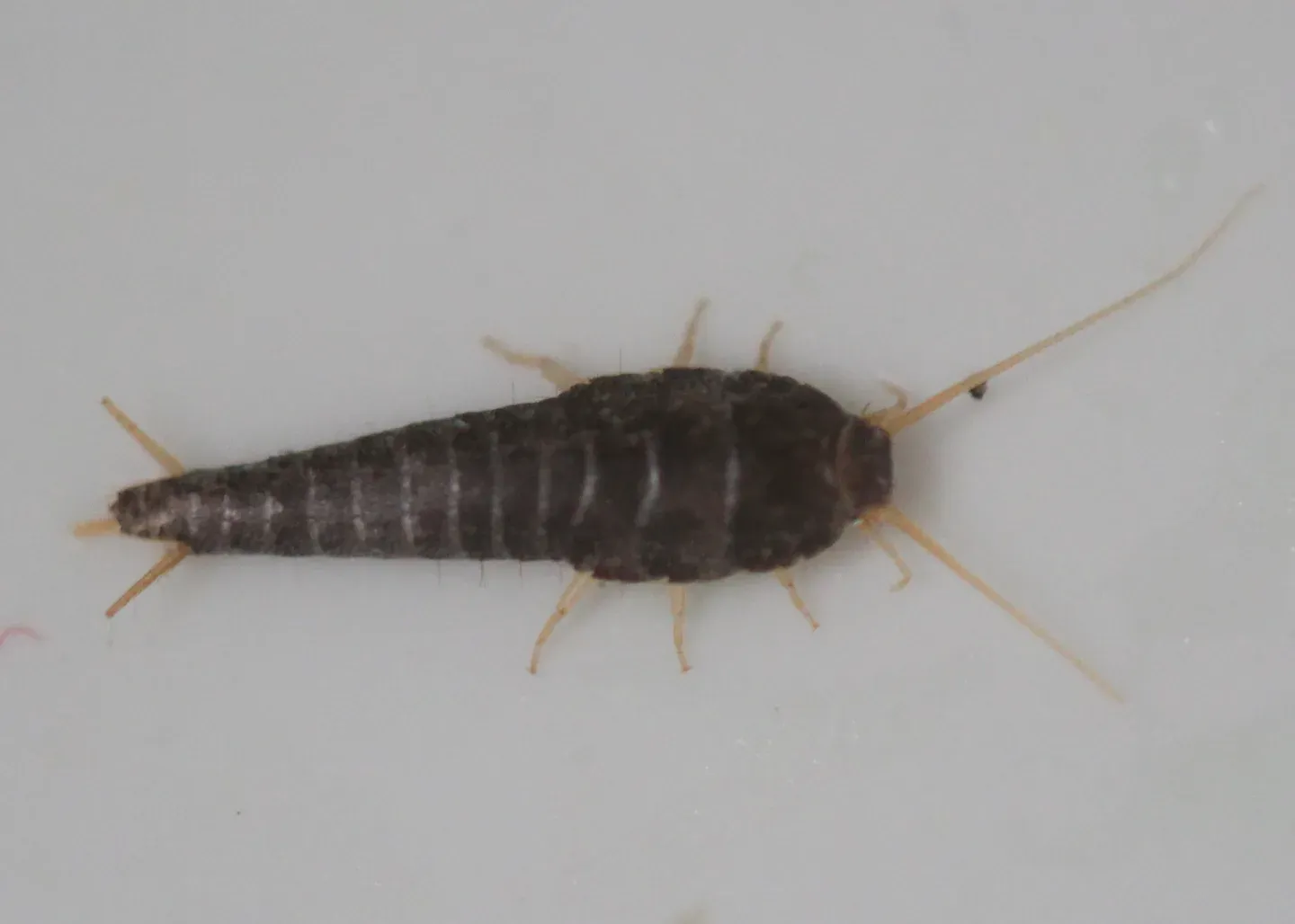
A silverfish, photo by Steven Lamonde (CC BY 4.0), via Wikimedia Commons.
Silverfish are about ½ inch long, growing up to ¾ inch (UC IPM), silvery gray and shiny, with a carrot-shaped body that tapers to three long tail bristles, plus two long antennae. They run fast, wiggle like a fish and come out at night in damp rooms. Full ID is on the silverfish Library page.
They eat starch and protein: paper with glue or paste, book bindings, wallpaper paste, starched clothing, and dry foods like cereal, flour and pet food (UC IPM). That diet is why the damage shows up on books and clothes, not on people.
Are Silverfish Dangerous to People? No, They’re a Nuisance
Not to your body. They don’t transmit diseases (Virginia Tech), though they can contaminate dry food, and allergies are an open question with only lab evidence (see Common Questions).
The bigger cost is stress. Silverfish do very little damage, says the University of Nebraska–Lincoln’s IPM manual, but they may be seriously upsetting to people who are afraid of insects. For kids, the real risk is a pest product left within reach, not the bug.
Are Silverfish Harmful to Cats and Dogs? No, but the Dusts Can Be
We found no authoritative source that lists silverfish as poisonous or as a risk to pets. The pet risk is the dusts and sprays people use on them: Nebraska’s manual says insecticide dusts belong only in cracks, crevices, attics, crawl spaces and other places people and pets can’t reach.
If your pet gets into a pesticide, call your vet or the ASPCA Animal Poison Control Center at (888) 426-4435 (a consultation fee may apply). Silverfish around a pet bowl are after the food, so keep kibble in a container with a tight lid.
Damage to Books, Paper and Clothes: Real, but Slow
This is where silverfish are bad. Beyond the paper and starch above, Virginia Tech adds cotton, linen, rayon and silk, and Nebraska says they may make very small holes in cotton, linen and silk and leave yellowish stains on fabric.
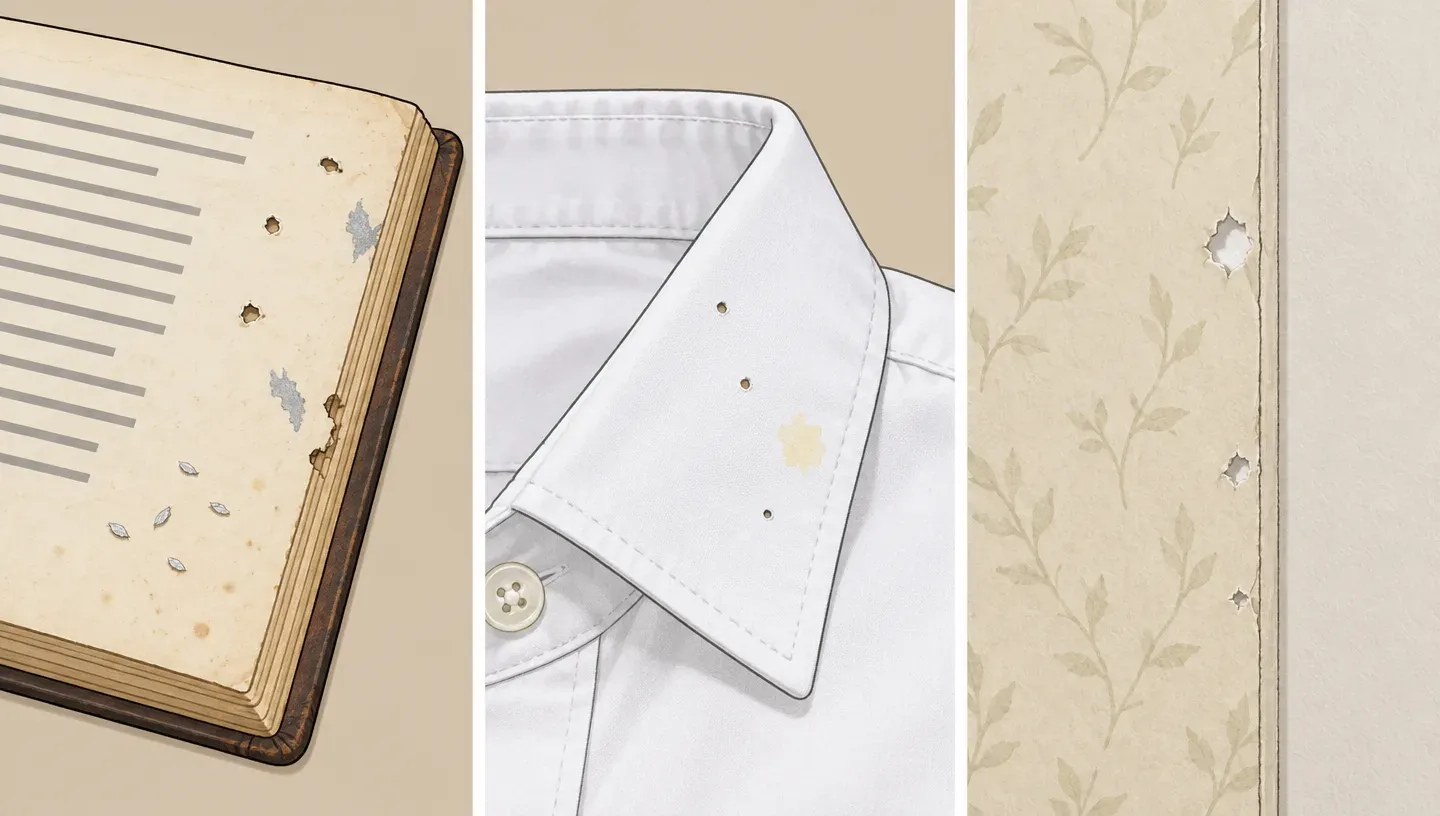
Illustration: grazed holes on a book page, tiny holes and a yellow stain on a shirt collar, and ragged holes in wallpaper near the seam.
Keep it in proportion: Iowa State Extension says the damage is significant only with very large infestations present over long periods.
Wool isn’t on any of these lists. Holes in wool sweaters or rugs point to other pests: clothes moths or carpet beetles.
Silverfish in Your House: A Moisture Warning
Nebraska’s manual calls silverfish, firebrats and booklice living indicators of excess moisture. One silverfish isn’t a pest problem, but moisture left in place can bring worse trouble: termites, carpenter ants and wood rot.
Check under sinks, around the tub and in basement corners for sweating pipes and musty cardboard. Renting? Report leaks, condensation and a weak bathroom fan to your landlord in writing, with photos.
How to Protect Books and Clothes for Free
Most of this costs nothing. The one purchase worth making is a hygrometer; a basic digital one lists at $9.99 at Target (October 1, 2026, before tax).
Step 1: Get stored items off damp floors. The Library of Congress advises against storing valuables in basements, attics or garages. Move books, papers, photos and out-of-season clothes to a closet shelf in the main living space.
Step 2: Swap cardboard for sealed containers. NC State Extension says to use airtight plastic bags or sealable containers and to clear out old newspapers and boxes.
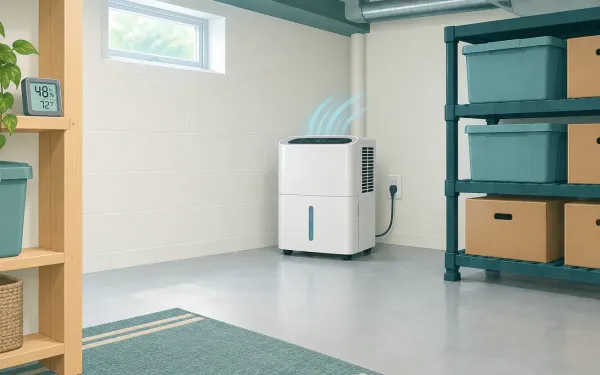
Step 3: Keep the air at 30–55% humidity, not damper. The Library of Congress puts safe book storage at 70°F or below and 30% to 55% relative humidity. If the hygrometer reads high for a week, run the bathroom fan, fix drips or consider a dehumidifier.
Step 4: Dust and rotate shelves. Dust holds moisture (Library of Congress), and stacks of magazines and papers give silverfish food and cover (UC IPM).
Step 5: Freeze anything already infested for a week. Seal each item in its own plastic bag and freeze it for a week to kill all life stages (Nebraska); the Canadian Conservation Institute calls −20°C (−4°F) for one week practical. Leave it sealed a day after thawing so condensation forms outside, not on the pages.
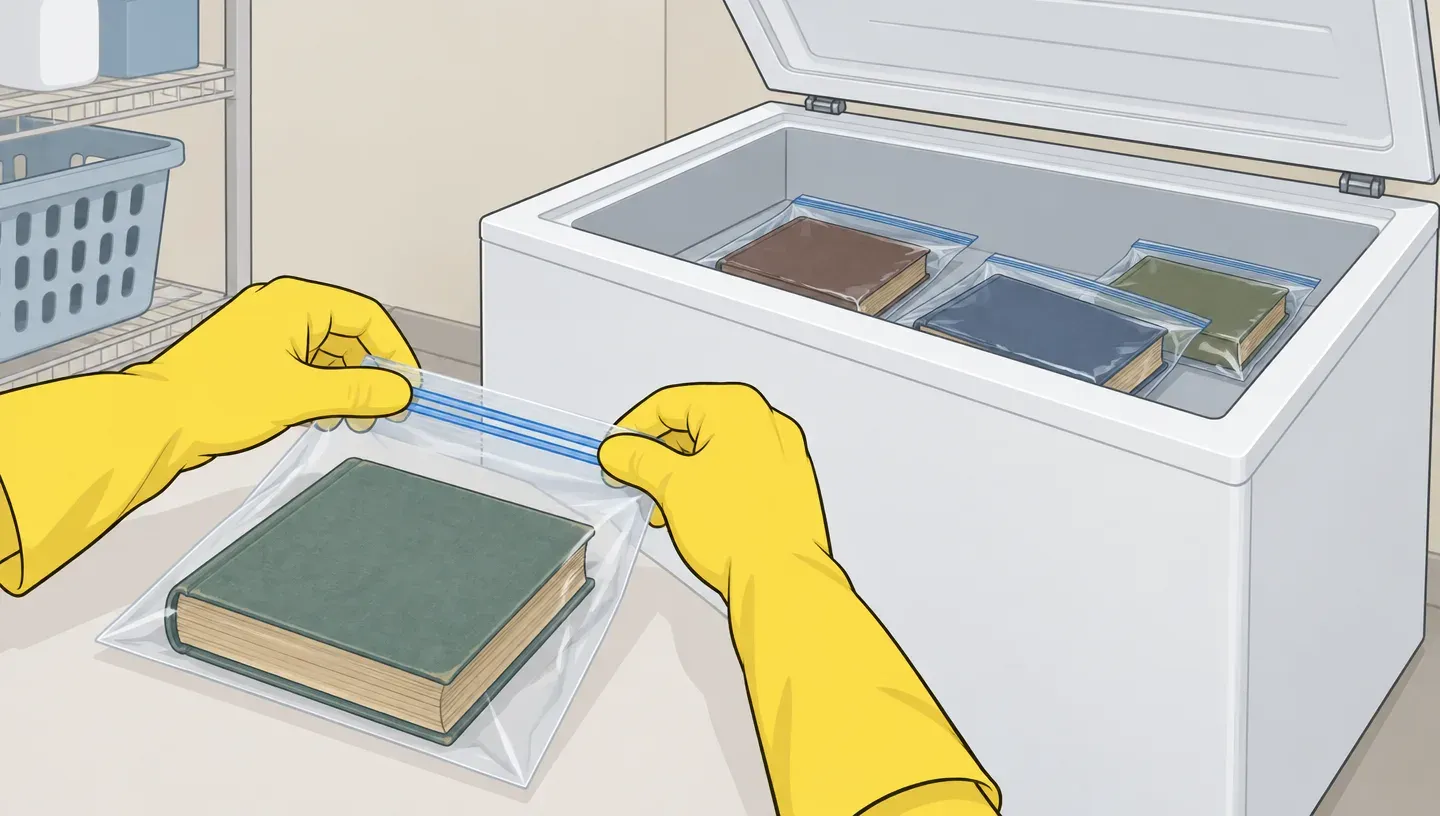
Illustration: an old book sealed in a clear plastic bag, going into a chest freezer beside other bagged books.
Paper, textiles, leather and wood aren’t harmed by cold, but ask a conservator before freezing paintings on canvas or anything rare.
How to Confirm It’s Silverfish
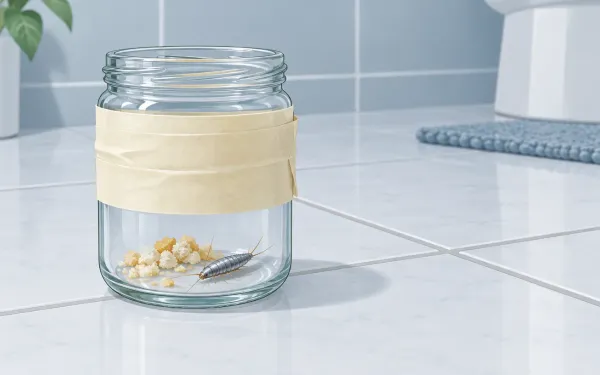
- Catch one on clear tape and look for two long antennae and three long tail bristles.
- Check damaged paper or fabric for irregular, unconnected holes, thin gray grazed patches and dark brown fungus spots (UC IPM).
- Look for scales: dustlike, slightly shiny flecks under the damaged item.
- Check the mattress seams if you have bites; silverfish won’t explain them.
What to Do Next
You may not need pesticides at all: Nebraska’s manual says to lower humidity, freeze infested items and vacuum up the insects you see. If you use a dust such as boric acid, NPIC warns that children may be especially sensitive, so puff it into cracks only. If a child swallows one, call Poison Control at 1-800-222-1222.
Traps, dusts and costs are in the full plan for getting rid of silverfish. Call a pro if fresh damage keeps hitting things you can’t replace, or if silverfish remain after 2 to 3 weeks of treatment, which UC IPM says means untreated hiding places.
- Squash or vacuum the silverfish you see.
- Seal cereal, flour and pet food in containers with tight lids.
- Lift boxes of books and photos off damp floors.
- Put a hygrometer on the shelf for a week.
- Freeze infested items in sealed bags for a week.
- Report leaks to your landlord in writing if you rent.
Common questions
It hasn’t been shown. A 2008 lab study of children with asthma or allergic rhinitis found antibodies that react to silverfish, some cross-reacting with dust mite and cockroach. The authors wrote that a role in causing symptoms “still remains to be proved.”
Virginia Tech says silverfish can contaminate food, and none of our sources says whether eating it makes people sick. Throw the package out and keep the replacement in a container with a tight lid.
Sources and further reading · 11
- Virginia Cooperative Extension: Silverfish and Firebrats (ENTO-24NP): harmless to humans; foods, fabrics and food contamination.
- UC IPM: Silverfish and Firebrats (Pest Notes 7475): jaws, foods, damage signs, when treatment fails.
- University of Nebraska–Lincoln: IPM for Silverfish, Firebrats, and Booklice (hosted by Utah State University Extension).
- NC State Extension: Silverfish and Firebrats
- Iowa State University Extension: Silverfish and Firebrats
- Library of Congress: Storing Your Books
- Canadian Conservation Institute: Controlling Insect Pests with Low Temperature
- Boquete et al., Sensitisation to Lepisma saccharina (silverfish) in children with respiratory allergy, Allergologia et Immunopathologia, 2008.
- National Pesticide Information Center: Bed Bugs and Boric Acid Fact Sheet.
- ASPCA Animal Poison Control and Poison Control.
- Hygrometer price: Target, October 1, 2026.