What Does a Dead Mouse Smell Like? How to Get Rid of It
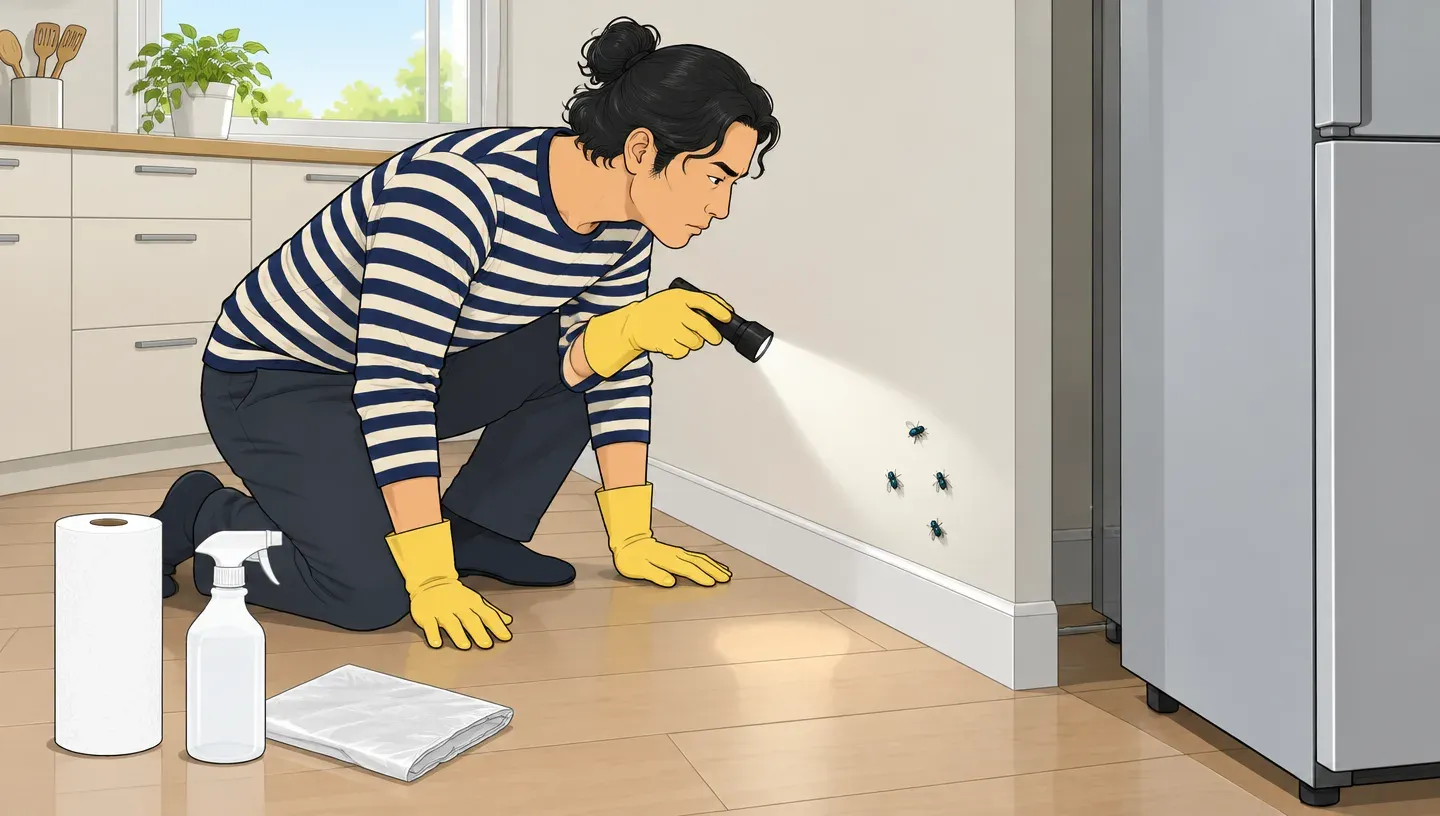
Illustration: follow your nose, then the flies.
A dead mouse smells like rotting meat, a nauseating stench. Follow the smell and any flies to the body, spray it with disinfectant, double-bag it and throw it out. If you can’t reach it, the smell usually fades within a few weeks as the body dries out. Skip ozone generators.
Cost: about $15 in supplies. Difficulty: easy. Call a pro if the smell comes from your heating or cooling ducts, the body is somewhere you can’t safely reach, or flies keep appearing and the smell hasn’t faded after a few weeks.
This guide covers how to tell a dead mouse from live mice or a gas leak, how to find and remove the body, and what a pro costs. We haven’t tested this ourselves; it rests on CDC, EPA, McGill and university extension guidance, plus Target and HomeAdvisor prices.
Rotten eggs or sulfur instead? It may be a gas leak: leave without flipping switches, then call 911 and your gas company.
What Does a Dead Mouse Smell Like?
Like rotting meat, from microbes breaking down the body. It’s the easiest to recognize of the smells that mean pests. Live mice smell musky instead, and a gas leak smells like rotten eggs:
| What you notice | Likely cause |
|---|---|
| Rotten, nauseating smell, often with flies | A dead rodent |
| Musky smell with fresh droppings | Live mice |
| Rotten-egg or sulfur smell, maybe a hissing sound | Possible gas leak: leave now |
Musky, with no flies? That’s live mice and their urine (mouse urine smell), which calls for a plan for getting rid of mice.
How Long Does a Dead Mouse Smell?
Usually a few weeks. McGill says a carcass you can’t reach will probably dry out in that time; then the microbes making the smell die and it goes away. Dozens of blow flies suddenly indoors usually mean the animal has been dead a while.
How to Find a Dead Mouse
Locating a dead mouse comes down to your nose and the flies, because nobody can predict where a mouse dies: Nebraska Extension calls predicting where poisoned mice die “impossible,” and the idea that they go outside for water “hopeful speculation.” So search in this order, wearing gloves.
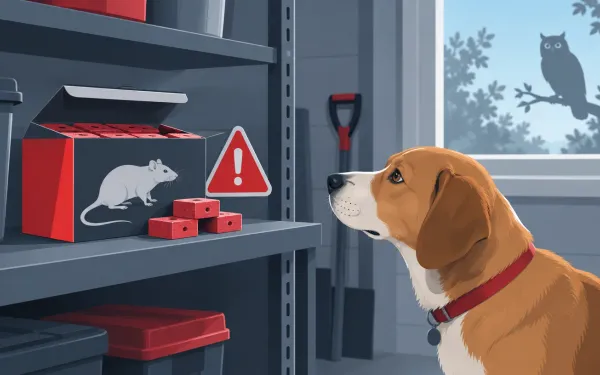
Step 1: Check any traps and bait stations, including forgotten ones; that’s often the whole fix. Renting? Ask whether the building’s pest company put bait down.
Step 2: Follow the smell room by room. Turn off fans, sniff along baseboards, under sinks and inside cabinets, and mark the strongest spot with tape.
Step 3: Follow the flies. Many metallic blue or green blow flies indoors usually means they’re breeding on something inside. Before the adults, you may see maggots wandering from one spot, then small brown pupal cases.
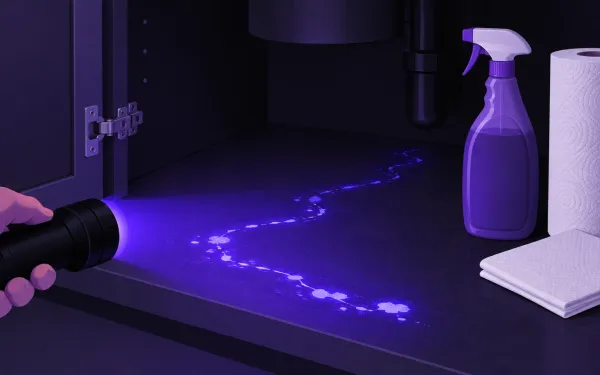
Step 4: Check warm, hidden spots. Fridges, water heaters and furnaces run constantly, which makes them favorite mouse den sites. Shine a flashlight behind them and under kitchen cabinets.
Step 5: Check near the nest, then walls, attic and vents. Poisoned mice often die inside the house, since they rarely range far from their nest. Check near droppings first, then wall voids, attics, crawl spaces and vents.
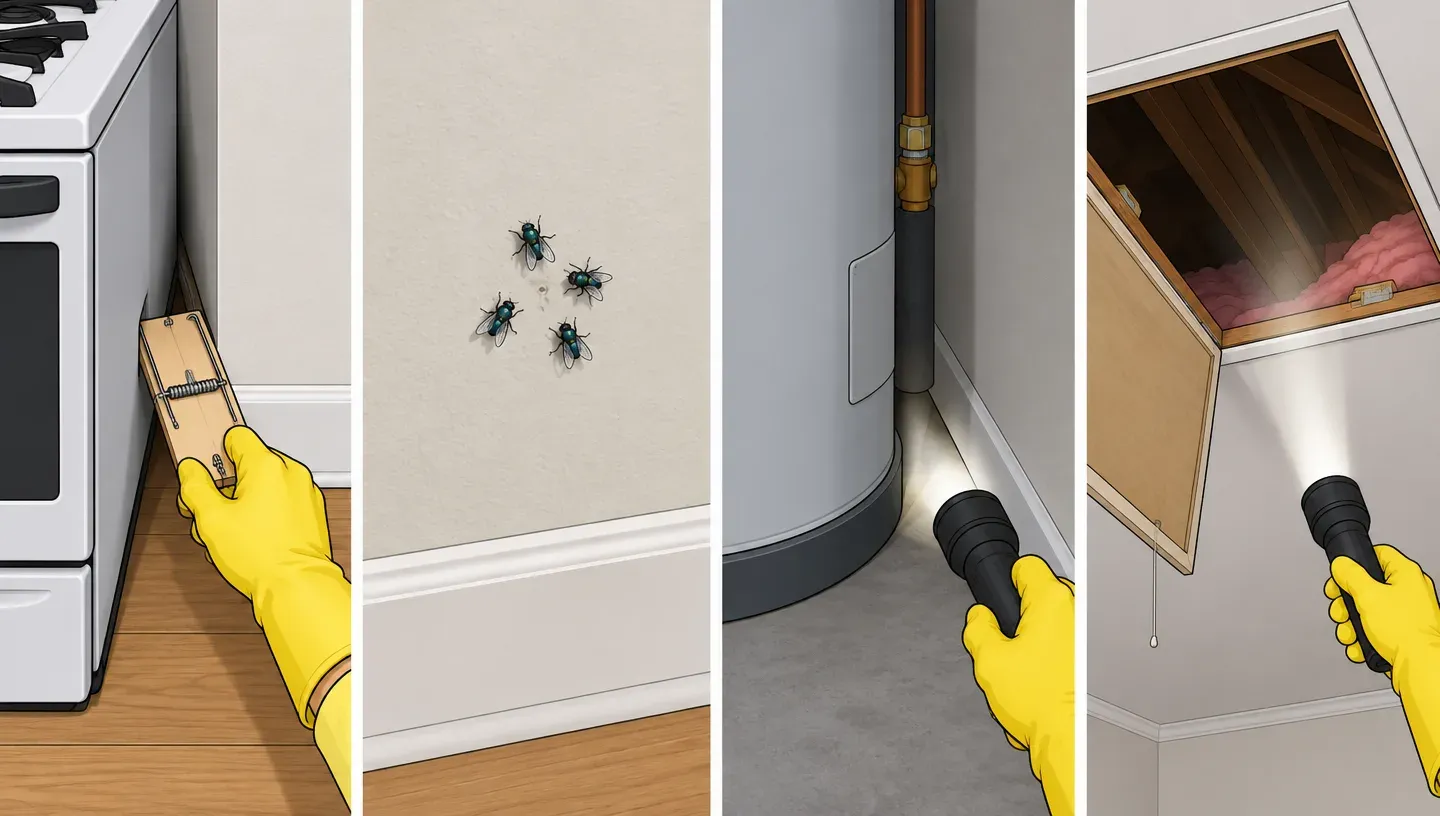
Illustration: traps, flies, warm hidden spots, then the attic and vents.
Removing a Dead Mouse: Soak It, Then Double-Bag It
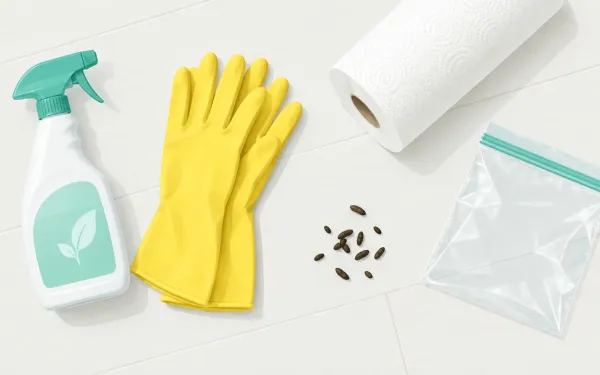
Use rubber gloves, never bare hands, plus paper towels, two plastic bags and any spray whose label says “disinfectant.” No disinfectant? Mix bleach fresh at 1 part to 9 parts water, such as 1/4 cup bleach plus 2 1/4 cups water in a spray bottle, and never mix bleach with ammonia or another cleaner.
The CDC’s method: air the room 30 minutes, spray the mouse and the area around it until wet, and let it soak 5 minutes or as long as the label says. Turn a plastic bag inside out over your gloved hand, grab the mouse, pull the bag right side out around it, knot it, and knot it again in a second bag.
Throw it out in a covered garbage can (some cities don’t allow carcasses in household trash, so check local rules). Wash gloved hands with soap and water, remove the gloves, then wash your hands again.
Mouse in a snap trap? Tossing trap and mouse together is simplest. To reuse it, the CDC says to soak both in a bucket of disinfectant for 5 minutes, lift the bar over a bag to drop the mouse in, then rinse and dry the trap.
Kids and pets: keep them out until the spot is clean and dry. If your pet chewed a mouse that may have eaten poison, call your vet: NPIC notes that dogs and cats can be poisoned by eating poisoned prey.
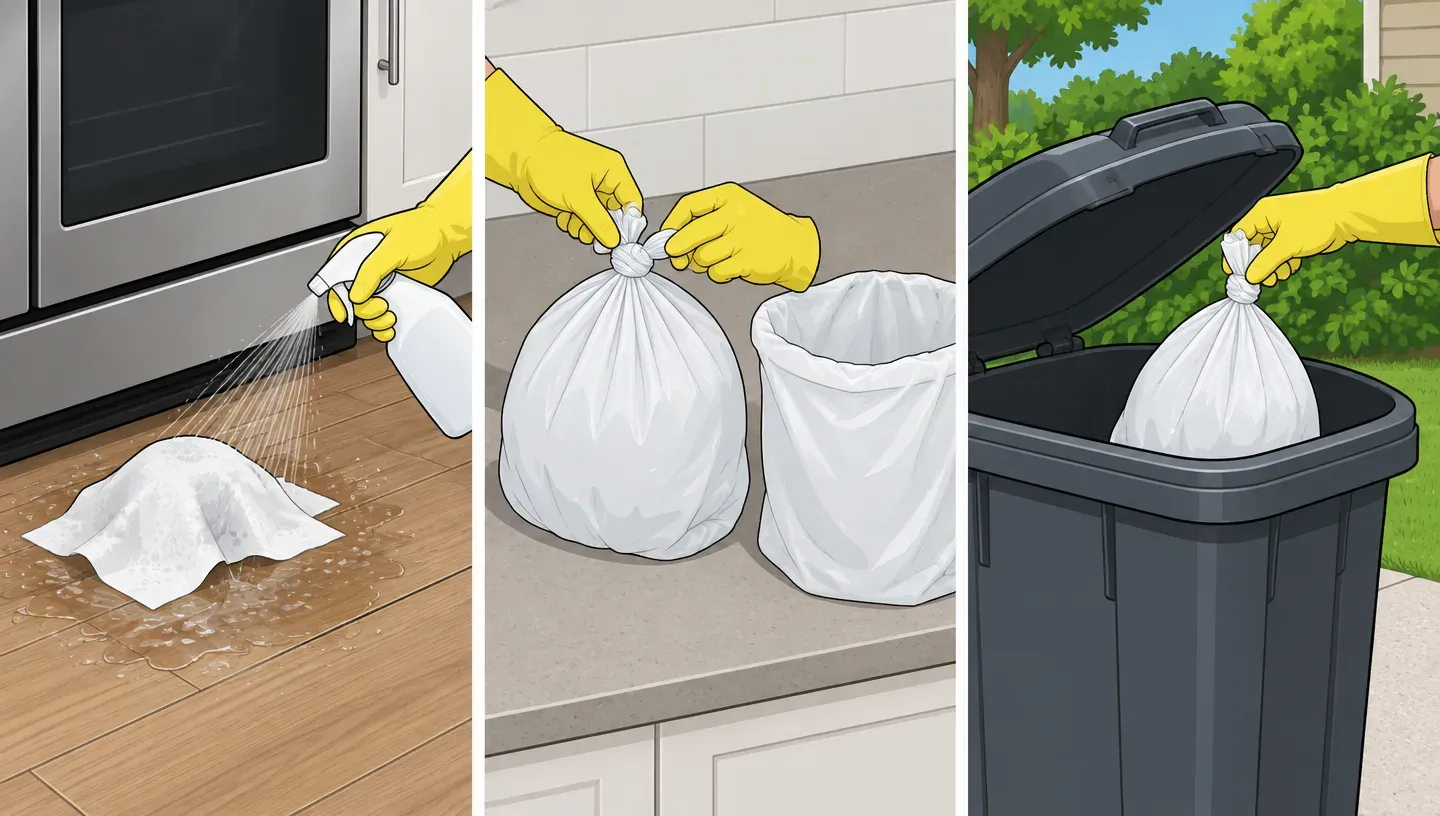
Illustration: spray until wet, double-bag, then a covered trash can.
How to Get Rid of Dead Mouse Smell
Disinfect where the body lay, not just the air: spray the spot, let it soak, wipe with paper towels, then mop hard surfaces with disinfectant; don’t sweep or vacuum first, since that can put tiny droplets carrying viruses into the air (CDC). Hot-wash fabric, shampoo rugs and upholstery with a commercial disinfectant or a steam cleaner, and throw out soiled cardboard. Droppings nearby get the same treatment (cleaning mouse droppings).
Odor neutralizing sprays and air fresheners can cover the smell for a while, but they don’t remove the source. Orkin, a pest company, says some smell may linger up to two weeks after removal. If it doesn’t fade, look for a second one.
Dead Mouse in the Wall: Wait, Open It or Hire It Out
Smell strongest at one stretch of wall, with flies there? The body is probably in the wall void; without opening the wall, McGill’s honest answer is “unfortunately not much.”
| Option | What it involves | Main limitation |
|---|---|---|
| Wait it out | Close the door, box fan in the window blowing out, air freshener | A few weeks of smell |
| Open the wall | Cut drywall, remove the body, patch later (mice in walls) | Repair work |
| Hire a pro | The CDC says a specialist can help where you can’t reach to clean | $150–$250, more with drywall |
Charcoal bags, baking soda or vinegar? Optional at best: they won’t remove the cause, and no agency we checked has tested them.
Ozone generators: skip them. The EPA says ozone can harm your lungs, and at levels within public health standards it doesn’t remove many odor-causing chemicals and can react to form harmful by-products.
Renting? Tell your landlord in writing before anyone opens a wall. Next time, snap traps let you remove the body before it smells; if a pest company uses bait, ask whether any stations will go indoors (rat and mouse poison risks).
Dead Rat Smell: Same Steps, Bigger Risk to Pets
Dead rat smell is the same decay from a bigger body, which may take longer to break down (Orkin). A rat killed by anticoagulant bait can hold several lethal doses for a pet or wild animal that eats it (UC IPM), so pick up dead rats in the yard fast. New droppings or gnawing after a week of trapping may mean rats are still active (getting rid of rats).
Is Dead Mouse Smell Harmful?
Not usually. ATSDR says odors are generally not toxic unless levels are high, frequent and long-lasting. They can cause headaches, nausea and eye, nose and throat irritation, and pregnant women, people with asthma, children and older adults may be more sensitive, so have them sleep away from the worst room.
The body is the bigger risk: rodent diseases mainly spread when people breathe contaminated air. Hantavirus, caught mainly from rodent urine, droppings and saliva, is rare: the CDC counted 890 US cases from 1993 through 2023. If fever, fatigue and muscle aches start 1 to 8 weeks after a cleanup, see a doctor and mention the rodent.
What It Costs: DIY vs. a Pro
| Item | Typical cost |
|---|---|
| Nitrile gloves (50) | $8.49 |
| Bleach, 81 oz | $6.39 |
| DIY total | About $15 |
| Pro dead animal removal | $150–$250 |
| Pro trap-and-seal job, 53 shared quotes (middle half) | $1,400–$3,000 |
| Pro visit, price-guide range (usually no sealing) | $150–$655 |
DIY: Target list prices, September 30, 2026, before tax. Dead animal removal: HomeAdvisor (June 2026), depending on access; drywall repair is extra. Pro: the middle half of 53 trap-and-seal quotes homeowners shared on Reddit (see the quote table). Price-guide range: This Old House for mice (April 2026) and HomeAdvisor for rats (June 2026); it usually covers a trap-and-bait visit, with sealing extra.
Call a pro when rodents are in ducts or still active after 15 days of trapping (CDC), and ask whether the price includes finding the body, patching drywall and cleanup.
Before You Start: Checklist
- Rule out gas if it smells like rotten eggs or sulfur.
- Check every trap and bait station first.
- Follow the smell and the flies.
- Spray and soak the body 5 minutes before you touch it.
- Double-bag it and wash your hands twice.
- Disinfect the spot without sweeping.
- Keep pets away from mice that may have eaten poison.
Common questions
Open the hood, doors and trunk for 20 minutes, then check the air intakes and filters before starting the car (CDC). Disinfect and bag what you find without vacuuming, and if a nest is in the air intake, replace the air filter.
Find and remove the body. Air fresheners and absorbers only cover the smell while it dries out.
Sources and further reading · 10
- CDC: Clean Up, Trap Up, Seal Up.
- McGill Office for Science and Society: Dead Mouse Smell.
- EPA: Ozone Generators, Rodent Bait Products.
- CDC Hantavirus: About, Reported Cases; CDC: Cleaning With Bleach.
- ATSDR: Environmental Odors; NPIC: Rodenticides.
- Nebraska Extension G1105.
- UC IPM: House Mouse, Rats; UC ANR: Snap Traps.
- UW Insect Diagnostic Lab: Blow Flies; UMD Extension: Flies Indoors.
- San Mateo County MVCD; Indiana Utility Regulatory Commission: Gas Safety.
- Orkin: Dead Rodent Smell (a pest company).