Mouse Urine Smell: How to Find It and Get Rid of It
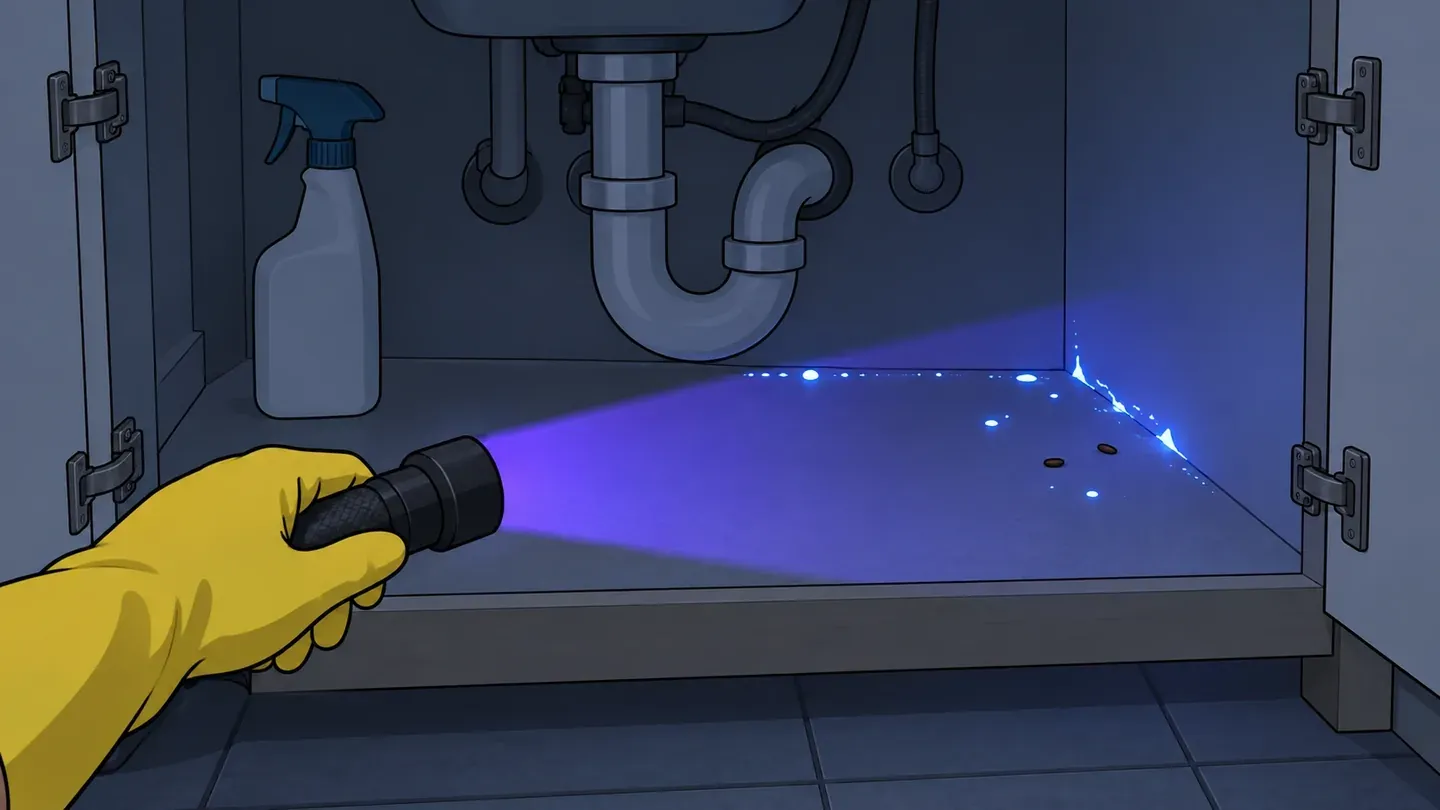
Illustration: under a UV light, fresh rodent urine glows blue-white, but so do many other things.
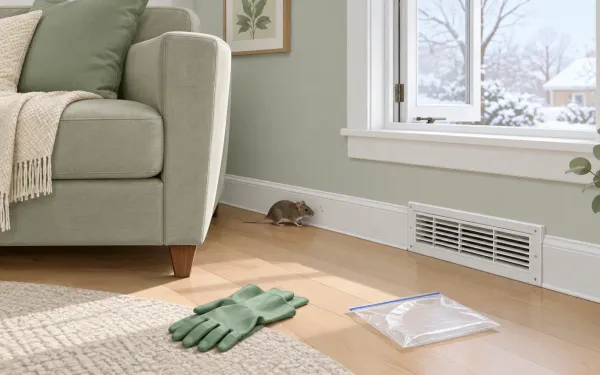
Mouse urine smell is musky and ammonia-like, most noticeable in cabinets, drawers and along baseboards. Find the source there and near nests. Air out the room, spray the spots with disinfectant or bleach solution, let them soak 5 minutes and wipe up; never sweep or vacuum (CDC). Then trap and seal, or it returns.
Cost: about $15–21 in supplies. Difficulty: easy. Call a pro if urine and droppings cover a large area, mice have been in your heating or cooling ducts, or fresh urine spots keep appearing after a week of trapping.
This guide covers how to tell mouse urine from other smells, find and clean it, treat carpet, fabric and wood, and weigh the health risks. We haven’t tested products ourselves; it rests on CDC, university extension and National Park Service (NPS) guidance, plus Target and cost-guide prices.
Mouse Urine, Rat Urine or a Dead Mouse?
| What you notice | Likely cause |
|---|---|
| Musky, ammonia-like odor that builds over weeks, often with fresh droppings | Living mice: urine, droppings and nests |
| Musty smell from a heavy infestation | Rats (NC State Extension) |
| Rotten smell, sometimes with flies, often after using poison | A dead rodent in a wall, ceiling or floor |
A rotten smell usually means a dead mouse, which needs a different fix: poisoned rodents often die out of reach and draw flies. Large droppings? See rat poop vs. mouse poop.
What Does Mouse Urine Smell Like?
Musky and ammonia-like. The University of Arizona Extension describes a “musky ammonia smell” most noticeable in pantries, cabinets and drawers, often stronger along baseboards. The smell is common in large or long-term infestations, so a strong mouse urine odor usually means an established problem, not one stray mouse.
The smell collects where mice spend time: the NPS says nests and travel routes can often be smelled because urine and droppings concentrate there.
What Does Mouse Urine Look Like?
Mouse urine is hard to see. The Internet Center for Wildlife Damage Management (ICWDM) says to look for tiny droplets, from a couple of millimeters across to microscopic, where mice travel or feed. Rodents urinate while running, so a mouse urine trail often runs as streaks along a wall or shelf edge.
Where it builds up, look for dark spatters on floors and shelves, stains on fabric and ceiling tiles, and greasy smears on walls, pipes and wires. A stained ceiling tile far from any water source points to rodents, not a leak.
Droppings are the easier clue: mouse droppings are ⅛ to ¼ inch (3–6 mm) long (NPS), and they usually sit near mouse pee stains.
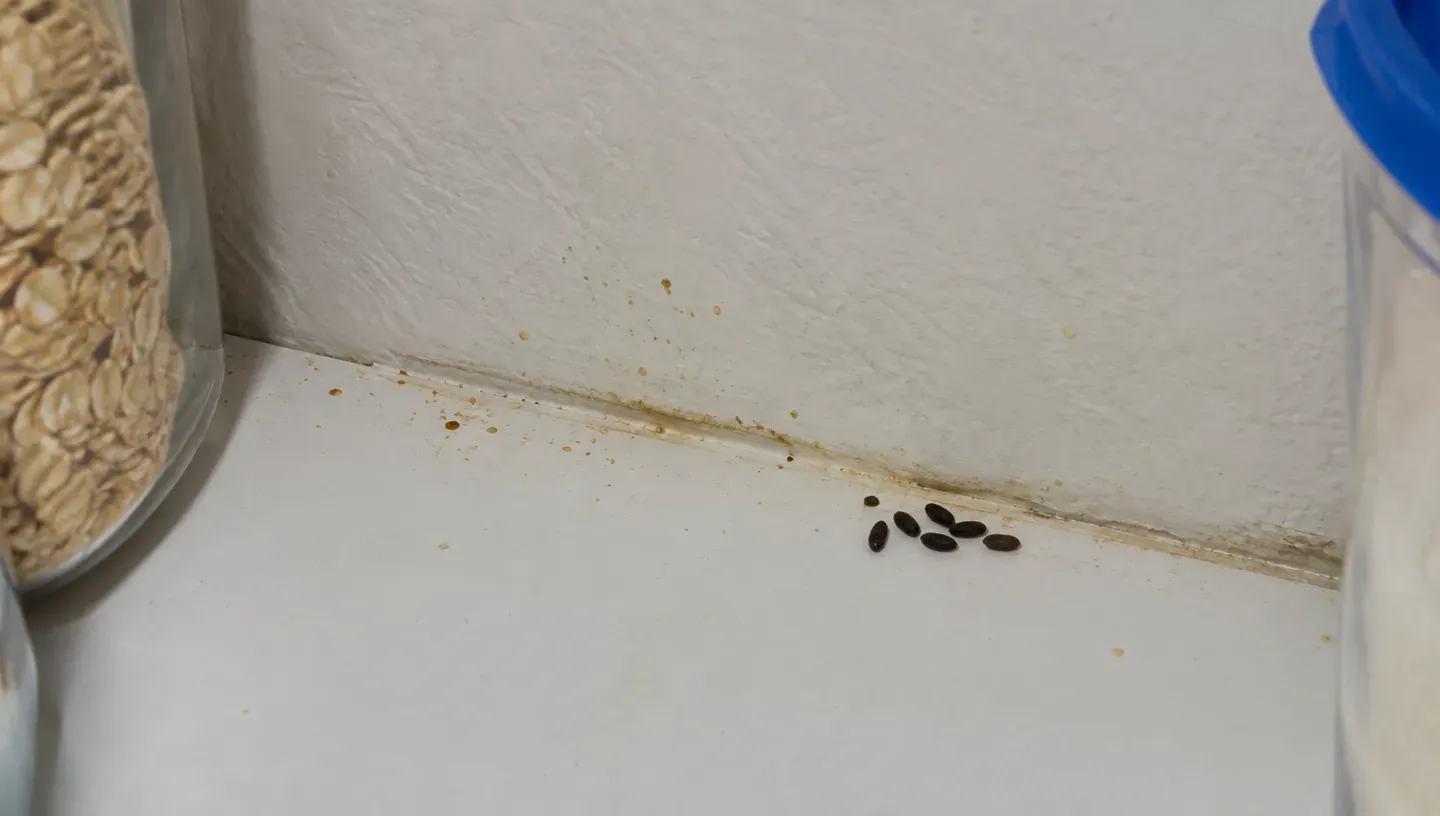
Small dried urine spots and a faint smear along a pantry shelf, with mouse droppings beside them.
How to Confirm the Source of the Smell
Step 1: Follow the smell to the strongest spot. Check cabinets, closets and drawers first, without touching anything.
Step 2: Check the closed-in spots behind the stove and refrigerator and in the back of cabinets and drawers.
Step 3: Look for nests near heat. Nebraska Extension says mouse nests are often near water heaters, ovens and refrigerators.
Step 4: Confirm with droppings, gnaw marks or smears. A smell alone doesn’t show where the mice are now.
UV lights: a hint, not proof. Fresh rodent urine glows blue-white under ultraviolet (black) light, wet or dry, but so do many other things, including cleaning products. A Utah State University Extension manual says spotting urine this way “takes skill” and doesn’t recommend UV lights, because droppings are easier to find. The NPS uses them only where there are other signs.
Cleaning Mouse Urine: Soak 5 Minutes, Never Sweep
Soak, wait, wipe, not sweep or vacuum: the CDC says sweeping or vacuuming rodent urine, droppings or nests can put tiny droplets containing viruses into the air. Never mix bleach with ammonia or any other cleaner.
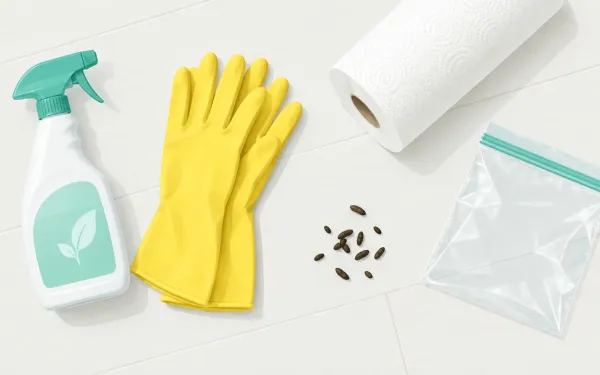
Air the room out for 30 minutes and put on rubber or plastic gloves. Spray the spots until very wet with a household disinfectant (the label must say “disinfectant”) or fresh bleach solution, 1 part bleach to 9 parts water. Let it soak 5 minutes or as long as the label says, then wipe up with paper towels, throw them in a covered garbage can and wash your hands.
Droppings or nests too? Follow cleaning up mouse droppings. For a heavy infestation, the CDC calls for coveralls, goggles and a half-mask respirator with HEPA filters.
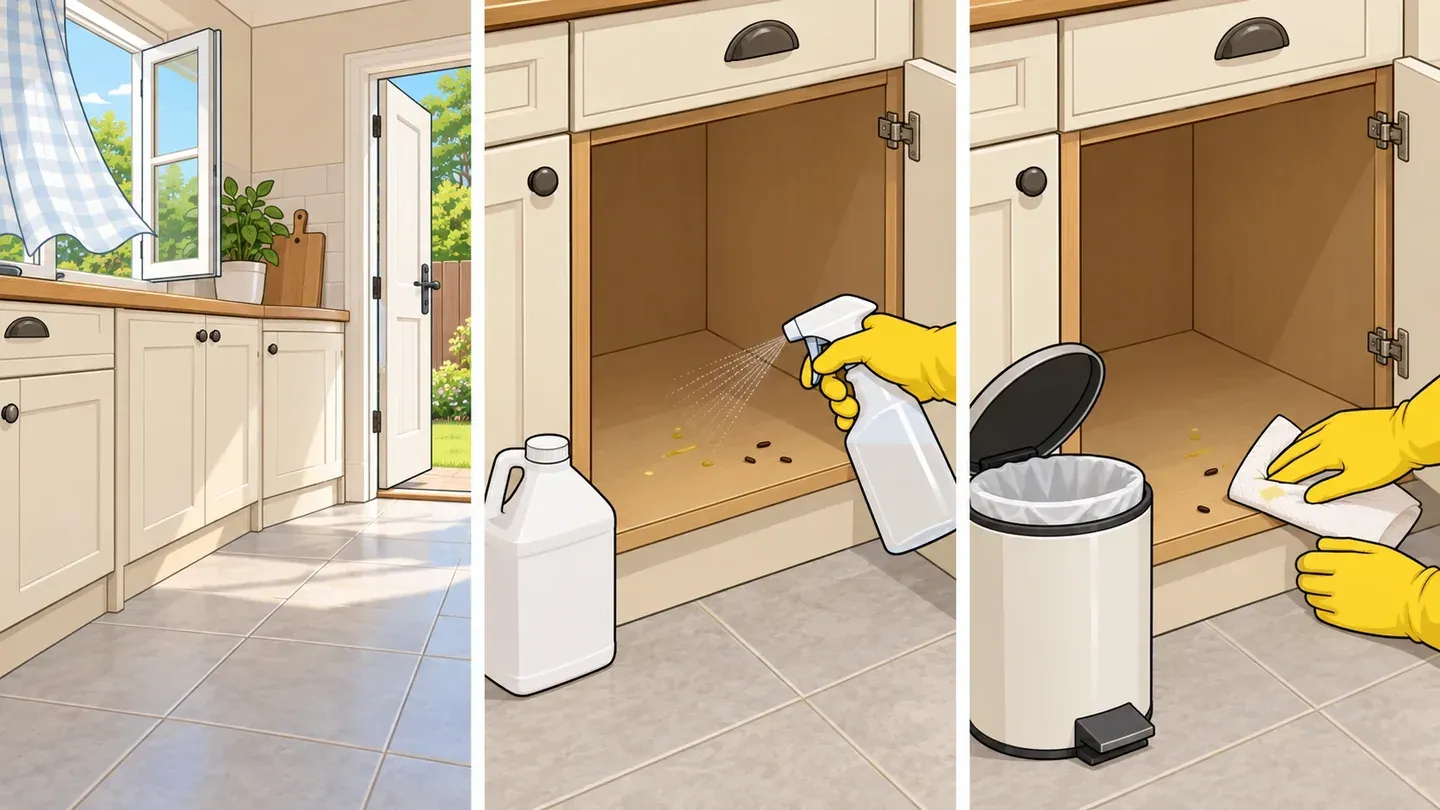
Illustration: a window and door propped open, a gloved hand spraying urine spots on a cabinet floor, and paper towels wiping them up.
How to Get Rid of Mouse Urine Smell in Carpet, Fabric and Wood
Disinfect first, then treat the odor. These CDC steps for other materials come after the soak-and-wipe above:
| Material | What to do |
|---|---|
| Clothing and bedding | Hot wash with detergent, then dry on high or in the sun |
| Carpets and upholstery | Shampoo with a commercial disinfectant, or a commercial-grade steam cleaner |
| Books and papers | Sunlight for several hours, or a rodent-free room for at least three weeks, preferably six |
| Cardboard | Throw out boxes soiled with urine or droppings |
| Attic insulation | Bag soiled insulation for removal; see mice in the attic |
| Cars | Open doors, hood and trunk for 20 minutes; disinfect before any vacuuming; replace the air filter if mice nested in the intake |
Pet-stain guides warn that steam heat can set urine odor into synthetic fibers, so the disinfectant shampoo is the safer pick for carpet. If the smell stays, Ohio State’s veterinary college (writing about cat urine) says to replace the pad underneath; on wood floors and trim, it advises an enzymatic cleaner, then sanding and refinishing if the smell stays strong. Smell coming from inside a sofa? Check the couch for a nest.
An enzyme cleaner handles odor, not disinfection: the store-brand one priced below isn’t labeled a disinfectant. Use it after disinfecting, once the surface is dry, and never with bleach.
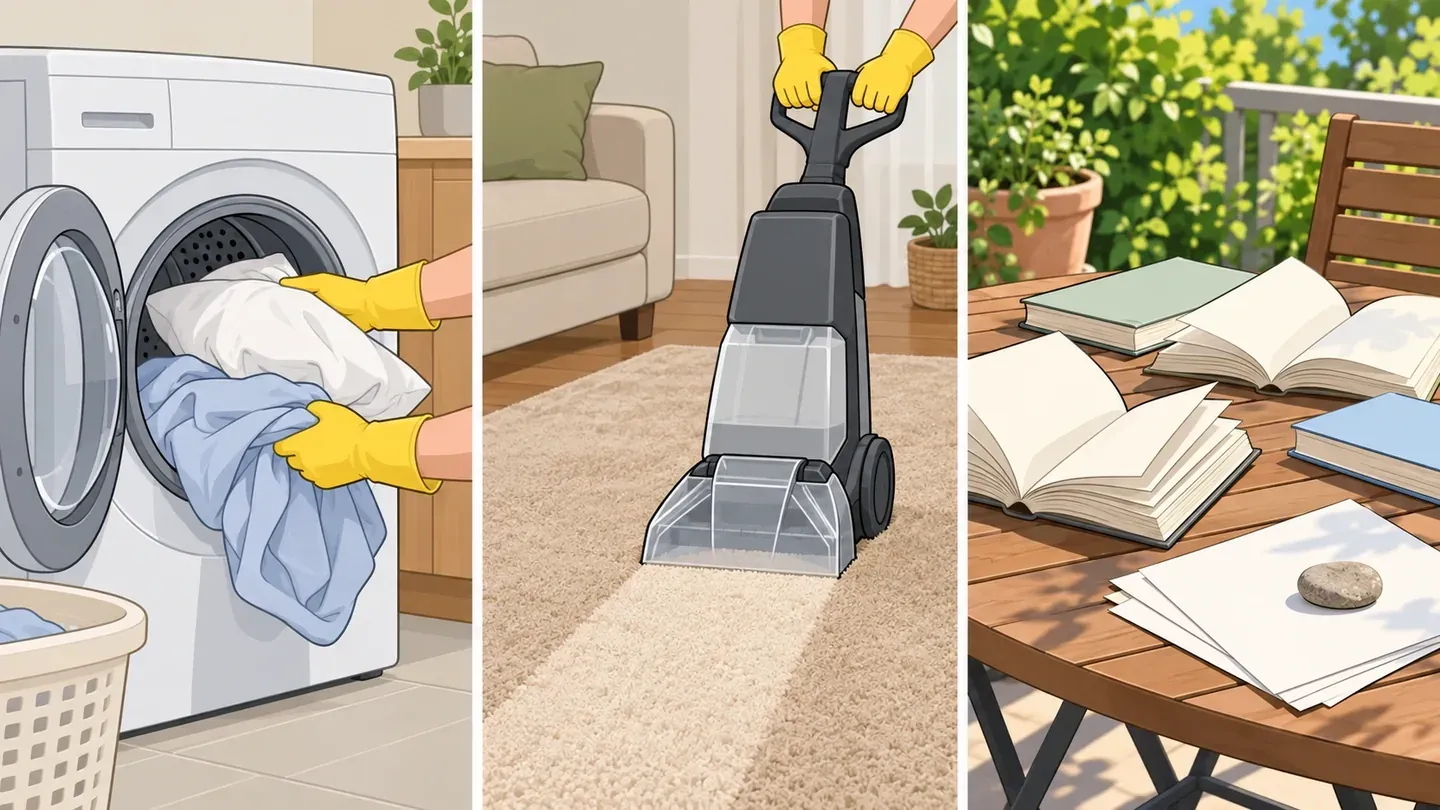
Illustration: bedding going into a washing machine, a rug being shampooed, and books laid open in the sun.
Is Mouse Urine Dangerous?
It can be: the CDC says rodent diseases mainly spread when people breathe contaminated air.
- Hantavirus: can get into the air when fresh urine, droppings or nests from an infected rodent are stirred up. In the U.S., the most common hantavirus that causes illness is spread by the deer mouse. House mice aren’t known carriers, but few people can tell the species apart.
- Lymphocytic choriomeningitis (LCM): spread by the house mouse through fresh urine, droppings, saliva or nesting material; it can be serious for pregnant women and people with weakened immune systems.
- Leptospirosis: spread through the urine of infected animals, including rats and mice.
- Asthma and allergies: UC IPM says house mouse urine is a major source of allergens, linked to early asthma in sensitive children.
If you get sick after contact with mice or rats, see a doctor and mention the rodent exposure. If you’re pregnant, the CDC’s LCM advice is to avoid contact with wild mice, so ask someone else to clean up.
Why Does It Still Smell After Cleaning?
Either urine soaked into something porous, or mice are still marking their routes. Trap with snap traps near the urine and droppings, not glue or live traps, which the CDC says scare rodents into urinating; see how to set a mouse trap. Seal gaps as wide as a pencil (¼ inch, 6 mm) with steel wool and caulk.
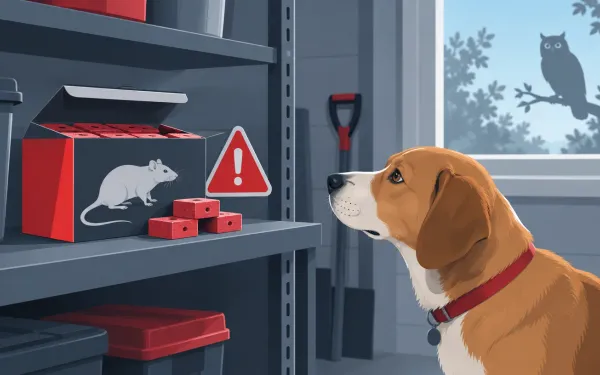
Skip poison indoors: poisoned mice often die inside the house, which adds a second smell (rat and mouse poison dangers). When a week passes with no catches and no new signs, they’re gone; if new urine spots keep appearing after that, the CDC says you may have rats (getting rid of rats). The full plan is in how to get rid of mice.
What It Costs: DIY vs. a Pro
| Item | Typical cost |
|---|---|
| Nitrile gloves (50) and bleach (81 oz) | $14.88 |
| Enzymatic odor cleaner, 32 oz (optional) | $5.99 |
| UV flashlight (optional) | From $24.70 |
| Pro trap-and-seal job, 53 shared quotes (middle half) | $1,400–$3,000 |
| Pro visit, price-guide range (usually no sealing) | $150–$655 |
| Pro attic insulation cleanup, if upsold | $7,500–$14,000 |
DIY: Target list prices on September 30 and October 1, 2026, before tax. Pro: the middle half of 53 trap-and-seal quotes homeowners shared on Reddit (see the quote table). Price-guide range: This Old House for mice (April 2026) and HomeAdvisor for rats (June 2026); it usually covers a trap-and-bait visit, with sealing extra. Attic cleanup: the middle half of 35 shared quotes that included new insulation.
Before You Clean: Checklist
- Open the windows and keep kids and pets away from the spot.
- Find the strongest spot and confirm it with droppings.
- Put on gloves and mix bleach 1 to 9, with nothing else added.
- Soak 5 minutes, then wipe; never sweep or vacuum.
- Wash, shampoo or bin soiled fabric and cardboard.
- Trap and seal so the smell doesn’t come back.
Common questions
The CDC’s hantavirus and LCM warnings focus on fresh urine and droppings, but you can’t tell a stain’s age by looking. Clean dried stains the same way: air out, soak with disinfectant, wipe.
Musty, in a heavy infestation (NC State Extension); a strongly musky odor points more to mice. The same CDC cleanup works for rat pee.
Sources and further reading · 10
- CDC: Clean Up, Trap Up, Seal Up and Cleaning With Bleach — cleanup steps, fabrics, trapping, sealing, bleach safety.
- CDC: Hantavirus, Hantavirus Prevention, LCM and Leptospirosis — disease spread.
- UC IPM: House Mouse — odor, allergens, range.
- ICWDM: House Mice — urine droplets, UV, odor.
- NPS Conserve O Gram 3/12 — urine stains, smears, UV flashlights.
- Nebraska Extension G1105 — nest sites, hantavirus note.
- UF/IFAS Extension ENY-224 and Utah State University Extension: IPM for Rats and Mice — urine streaks, UV limits.
- University of Arizona Extension: House Mice — musky ammonia odor, black light.
- NC State Extension: Rats — rat urine smell.
- Ohio State: Cat Urine Clean-Up and Humane World for Animals: Pet Stains — pet urine odor.