Do Ultrasonic Pest Repellers Work on Mice and Rats?
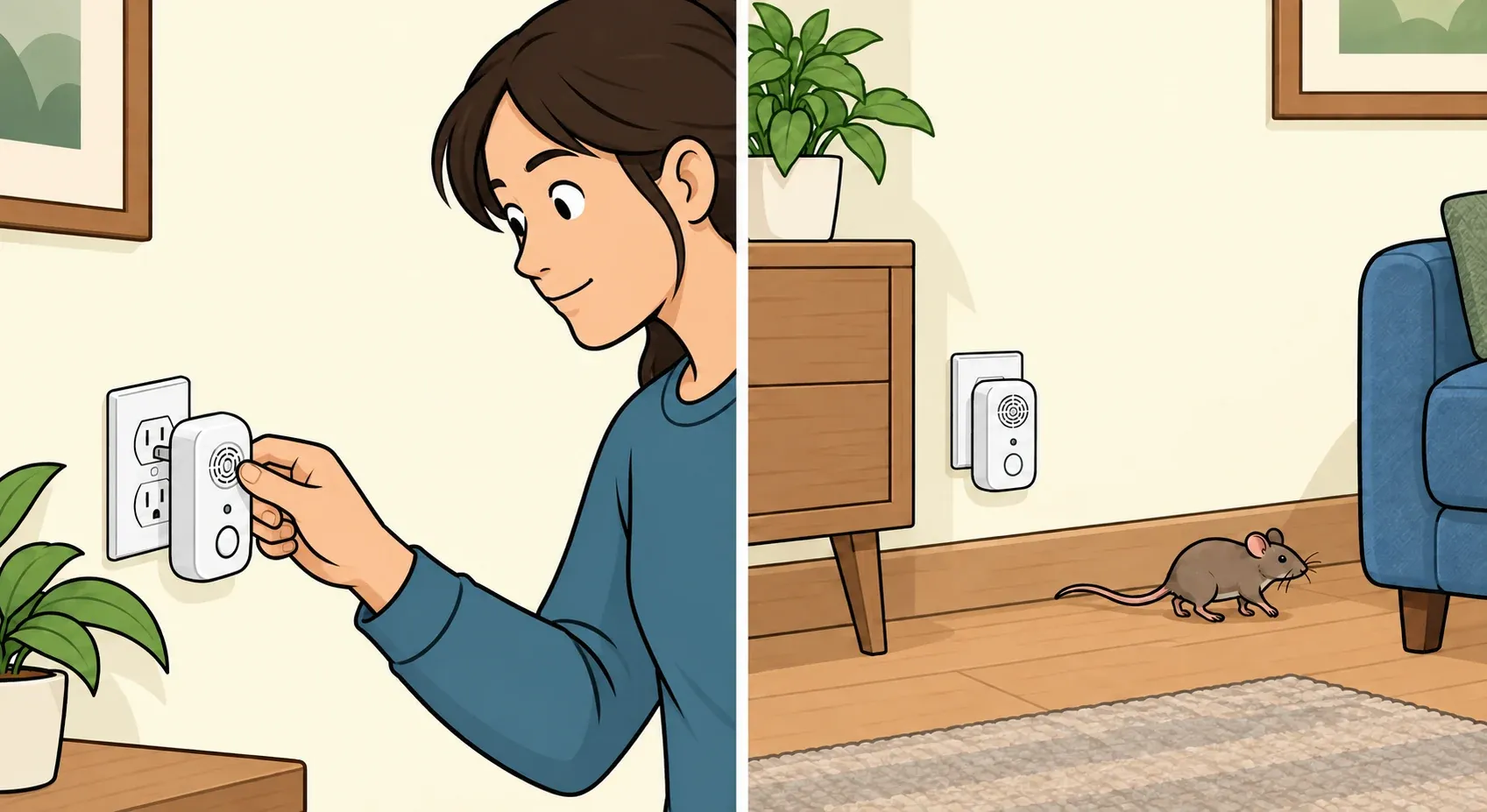
Illustration: plugging in a repeller in one room while a mouse runs along the baseboard next door.
Ultrasonic pest repellers don’t get rid of mice or rats. UC IPM says high-frequency devices aren’t effective for house mice, and mice quickly get used to repeated sounds. If yours is still returnable, take it back and spend about $60 on what works: seal gaps wider than ¼ inch, then trap the mice inside.
Call a pro if fresh droppings keep appearing after you seal and trap, or the mice are in an area you can't reach or clean.
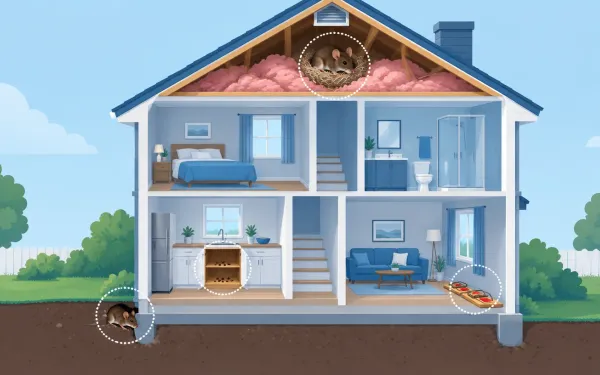
This guide checks plug-in repellers against the evidence, explains why the sound fails, covers pet safety, and compares the options that do remove mice. We haven’t tested these devices ourselves. It rests on UC IPM, FTC, EPA and CDC material, one maker’s manual, and September 2026 list prices.
A plug-in is not a plan on its own; the full sequence is in our guide to getting rid of mice.
How We Compared These Options
We judged ultrasonic units and the alternatives on four things:
- Evidence: what UC IPM and federal regulators say about whether it works.
- What it does: keeps mice out, removes mice inside, or neither.
- Safety: risks to dogs, cats, pet rodents and kids.
- Cost: U.S. list prices from September and October 2026.
Sources are listed at the end.
Do Ultrasonic Pest Repellers Work? What the Evidence Says
No. UC IPM’s July 2025 house-mouse guidance says high-frequency electronic devices are not effective, and it finds little evidence that sound, magnetic or vibration devices drive established mice or rats out of buildings or keep them out.
The Federal Trade Commission has challenged ultrasonic device advertising since the 1980s; its complaints alleged that any reaction from rodents could be temporary as they got used to the sound.
| Option | Works on mice? | Cost | Main limitation |
|---|---|---|---|
| Ultrasonic plug-in | No, per UC IPM | — | Mice get used to it; sound is blocked |
| Magnetic or vibration device | Little evidence, per UC IPM | — | Same verdict as ultrasonic |
| Peppermint and other scents | Briefly, in a lab | — | Peppermint’s effect faded within a week |
| Sealing gaps with metal | Yes; UC IPM’s most lasting fix | $28.80 for 20 ft of mesh | Doesn’t remove mice already inside |
| Snap traps | Yes; the CDC’s recommended trap | $2.29 a two-pack | Exposed trigger, and you handle the catch |
| Electronic traps | Yes, with enough traps (UC IPM) | $24.99–$31.69 each | Cost per trap, plus batteries |
Ultrasonic Plug-Ins: Mice Tune Them Out
A plug-in repeller doesn’t remove a single mouse, and any scare it causes doesn’t last. It also can’t reach the places mice actually hide.
Can Mice Get Used to Ultrasonic Sound?
Yes, and quickly. UC IPM says house mice can be frightened by strange noises but soon get used to sounds that repeat. It gives no number of days, so a quiet week after you plug one in doesn’t mean the mice are gone. Check for fresh droppings instead.
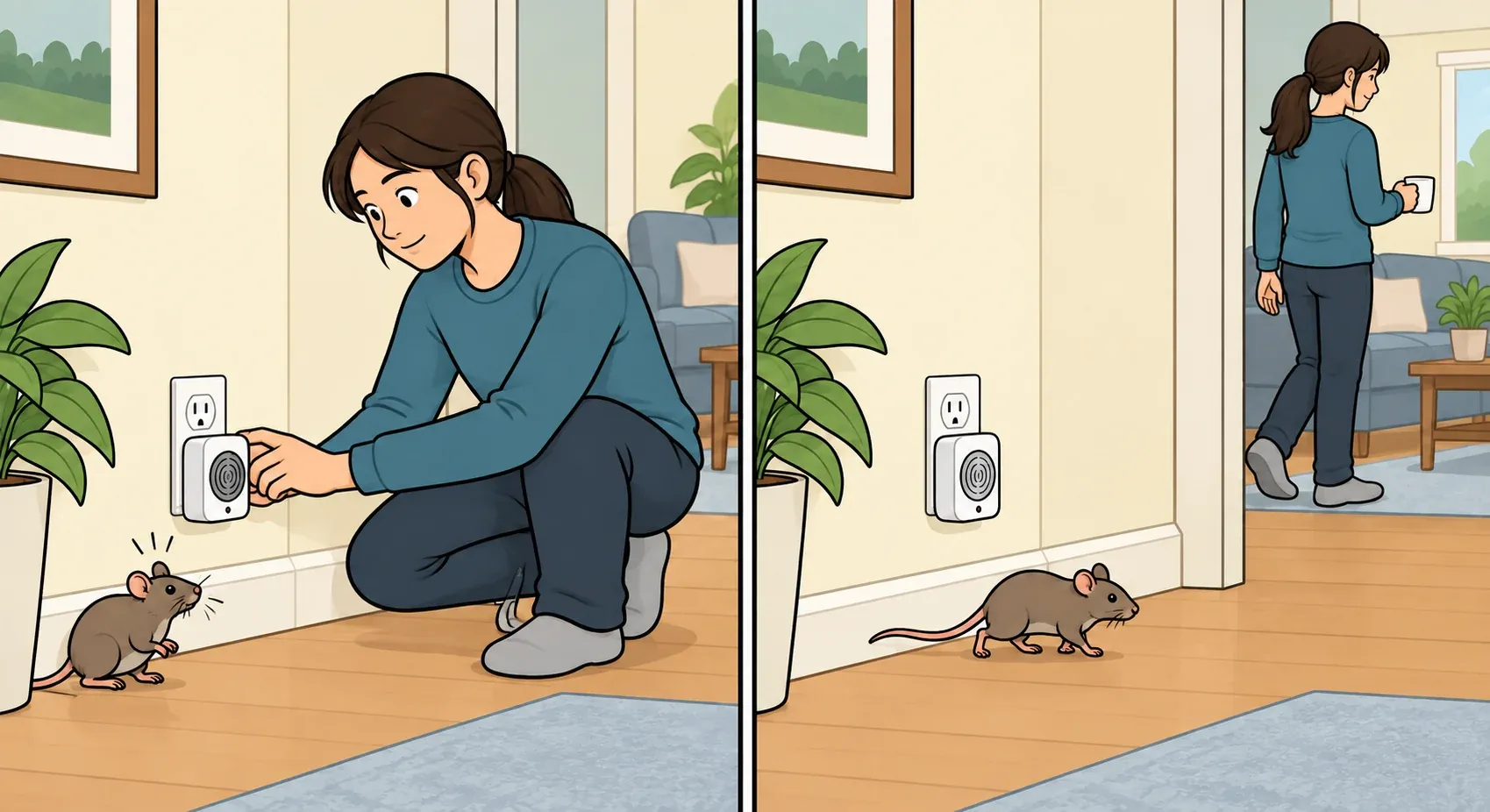
Illustration: she plugs in the device and walks away; a mouse carries on along the baseboard.
Why the Sound Misses Mice Behind Furniture and Walls
Ultrasound doesn’t fill a home. UC IPM describes it as directional: it doesn’t get behind objects, and it fades quickly with distance. A sofa, a stack of boxes or a cabinet leaves a quiet spot right where mice like to hide, and mice inside the walls are out of reach entirely.
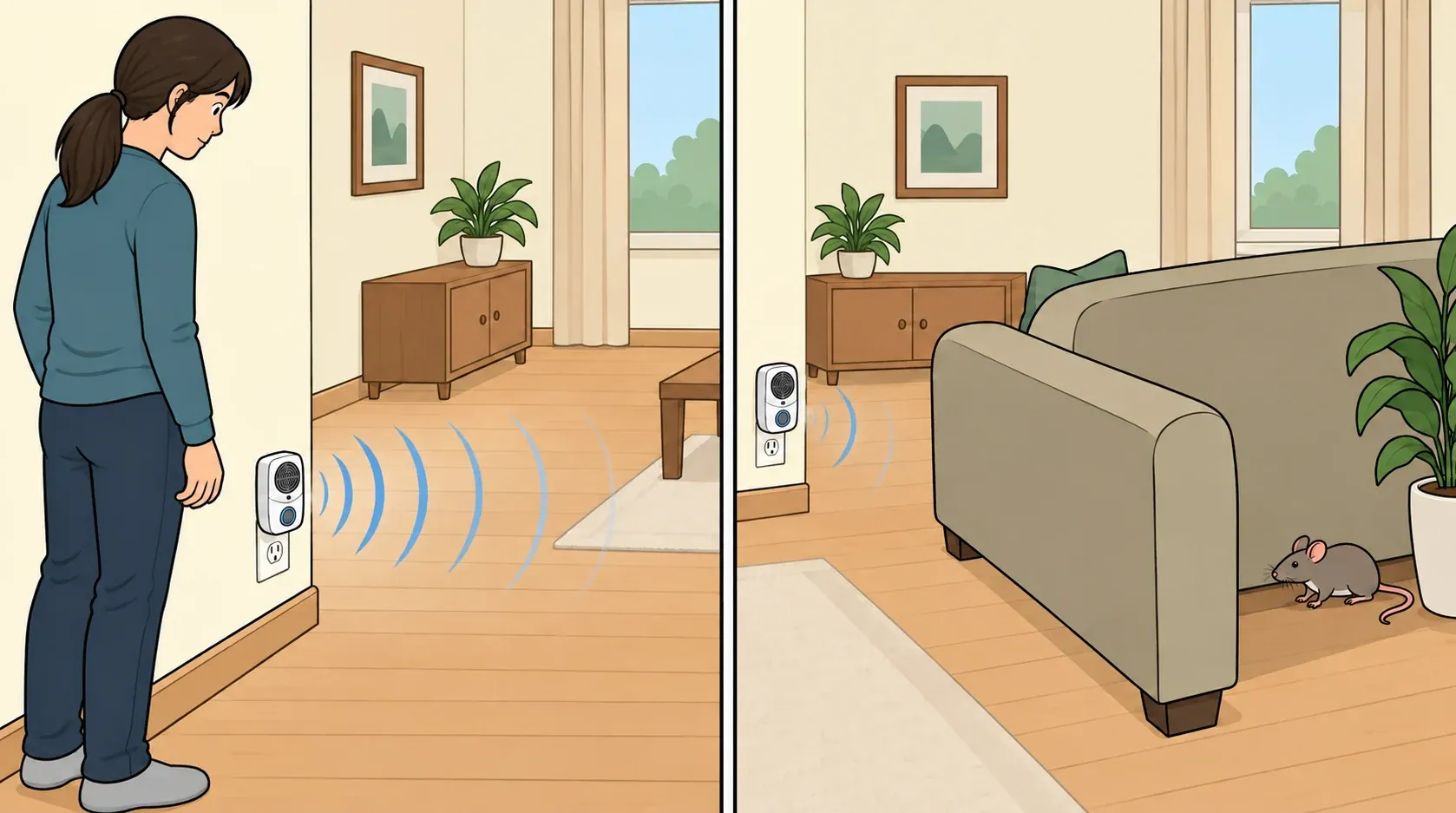
Illustration: sound arcs spread across an open room while a mouse sits behind the couch.
Best for: nothing in a mouse plan.
Main limitation: mice get used to the sound, and it can’t reach behind furniture.
Magnetic and Vibration Devices: Same Verdict
Some devices are sold as magnetic or vibration repellers instead of sound. UC IPM groups them with ultrasonic units: little evidence that any of them drives established mice out or keeps them out.
Best for: nothing we could find evidence for.
Main limitation: no better supported than ultrasound.
Scent Repellents: No Better
Swapping the plug-in for peppermint oil doesn’t fix the problem. In a 2022 lab study, peppermint’s effect on mice was gone by the one-week test, and extension experts say homemade and commercial repellents generally don’t work; we checked the details in what smells mice hate.
Best for: not a substitute for sealing.
Main limitation: short-lived at best, and some essential oils poison cats.
Sealing Gaps: The Fix That Lasts
Sealing is what a repeller promises and can’t deliver: keeping mice out. UC IPM calls it the most successful and permanent form of house mouse control, and mice fit through gaps bigger than ¼ inch. The CDC suggests steel wool held in place with caulk for small holes; steel wool vs. copper mesh compares the fillers.
Best for: every home with mice, before or alongside trapping.
Main limitation: it doesn’t remove mice already inside.
Snap and Electronic Traps: Remove the Mice Inside
Traps do the other half. Snap traps are the CDC’s recommended trap at $2.29 a two-pack. An electronic trap is a different device from an electronic repeller: it kills a mouse that walks inside, and UC IPM says some homeowners get good control with them. Our guide to types of mouse traps compares both.
Best for: clearing the mice already living in the house.
Main limitation: traps need daily checks, and electronic ones cost $25 or more each.
Do Ultrasonic Repellers Work on Rats or Bugs?
No better than on mice. UC IPM says rats quickly get used to repeated sounds, which makes high-frequency and ultrasonic devices ineffective for controlling rats in homes and gardens. For insects, past federal complaints against device makers alleged that ultrasound doesn’t control them either, and a test of commercial units found none repelled German roaches well enough to count (what smells roaches hate). For rats, see how to get rid of rats in your house.
Are Ultrasonic Pest Repellers Safe for Dogs, Cats and Pet Rodents?
“Pet-safe” on the box is the maker’s claim. The EPA doesn’t review ultrasonic repellers before they’re sold, so nobody at the EPA has checked that claim.
Some manuals say it outright: Micron’s RODAR II instructions say not to use that model near pet rats, mice, hamsters, gerbils or guinea pigs. If you keep a small rodent pet, don’t use one. With a dog or cat, read your model’s manual and unplug it if your pet seems bothered.
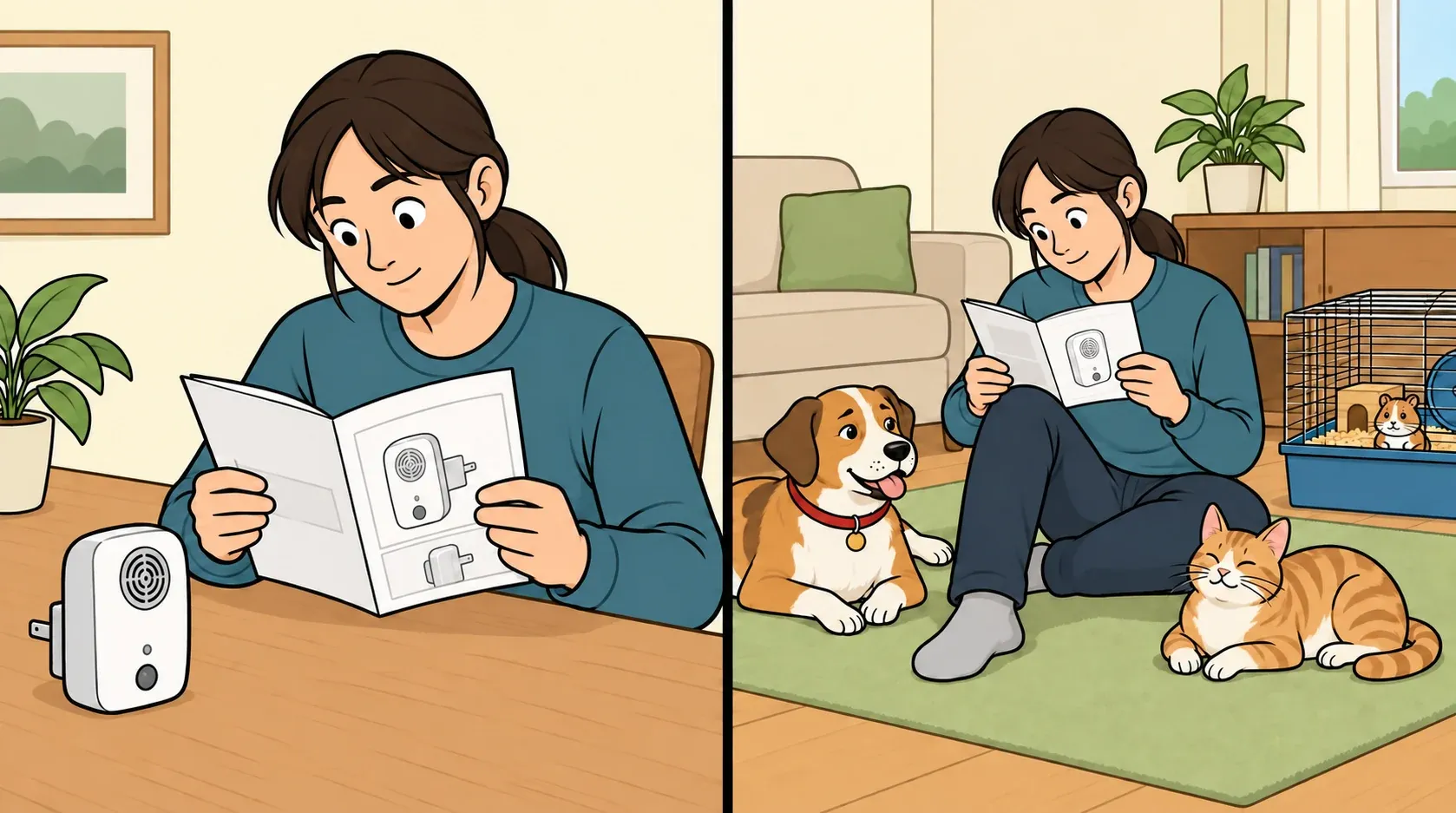
Illustration: reading the device manual with the dog and cat nearby.
Already Bought One? What to Do Instead
Unplug it, return it if you can, and put the effort here.
Step 1: Find the entry gaps. Check inside and outside, around pipes, doors, vents, appliances and cabinets. The CDC says mice can fit through an opening about the width of a pencil.
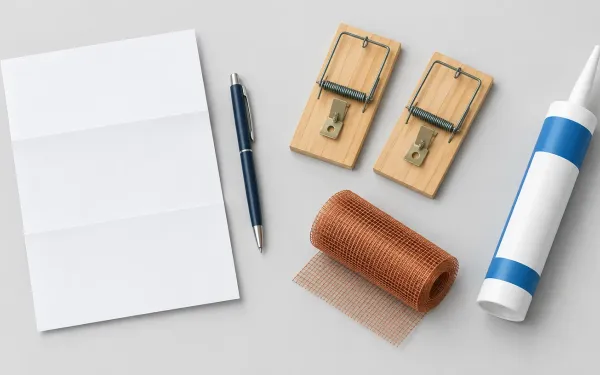
Step 2: Seal them with metal. Pack small holes with steel wool held in place with caulk; bigger openings need metal, cement or hardware cloth. If you rent, report gaps in the outside walls to your landlord in writing.
Step 3: Trap the mice already inside. Set traps next to droppings, out of reach of children and pets. See how to set a mouse trap.
Step 4: Lock up food. Keep food, pet food and garbage in closed containers. A week with no catches and no new droppings means they’re gone.
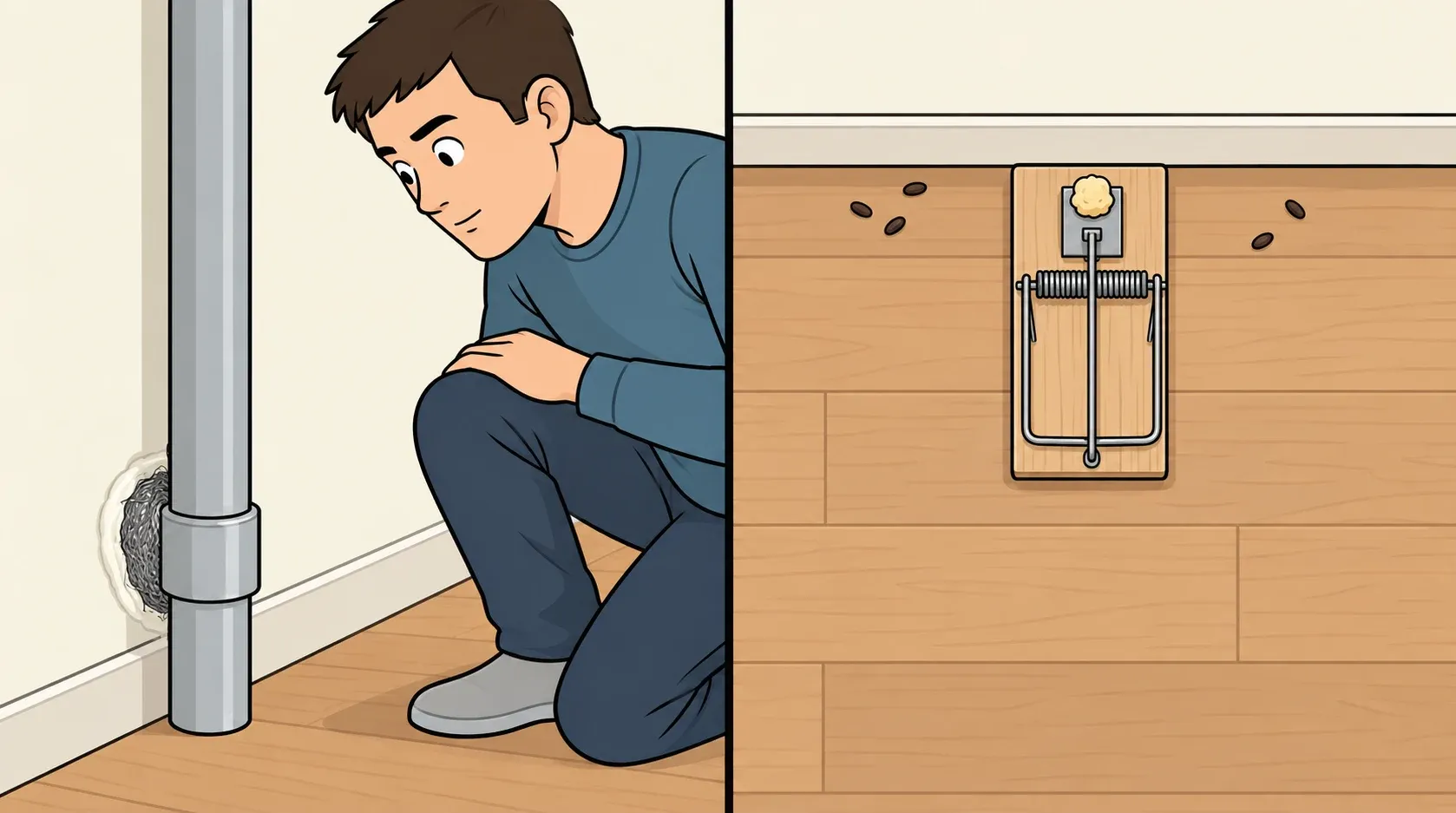
Illustration: a pipe gap packed with steel wool and caulk, and a snap trap with its baited end against the wall near droppings.
Which Option Fits Your Situation
| Situation | What to do | Why |
|---|---|---|
| Repeller still within its return window | Return it; buy traps and copper mesh | About $60 covers what works. |
| You keep a hamster, gerbil or pet rat | Don’t use a repeller at all | At least one maker’s manual warns against it. |
| Mice behind furniture or in the walls | Snap traps along those walls | Ultrasound doesn’t reach behind objects. |
| You rent | Trap inside; ask the landlord in writing to seal | Outside gaps are usually the building’s job. |
| You’d rather not touch a mouse | Electronic traps | They remove mice; a repeller doesn’t. |
| Rats or roaches, not mice | Skip the plug-in for those too | UC IPM and a roach test found the devices ineffective. |
What It Might Still Cost
| Item | Price |
|---|---|
| 12 wooden snap traps | $13.74 |
| Copper mesh for sealing, 20 ft | $28.80 |
| Nitrile gloves, 50 count | $8.49 |
| Bleach for cleanup, 81 oz | $6.39 |
| Electronic trap, if you prefer | $24.99–$31.69 |
| Pro trap-and-seal job, 53 shared quotes (middle half) | $1,400–$3,000 |
| Pro visit, price-guide range (usually no sealing) | $150–$655 |
Doing it yourself costs about $60: a dozen snap traps, 20 feet of copper mesh, gloves and bleach at September 2026 U.S. list prices (our math). Pro jobs that also seal the gaps had a $2,000 median across 53 quotes homeowners shared on Reddit (see the quote table), against $150–$550 for a trap-and-bait visit in price guides (This Old House); the exterminator vs. DIY cost page compares the two.
Before You Plug Anything In: A Quick Checklist
- Check the return window on any repeller you already bought.
- Unplug it if you keep a pet rodent.
- Look for fresh droppings to find where mice run.
- Seal gaps wider than ¼ inch with steel wool and caulk.
- Set snap traps by the droppings, out of reach of kids and pets.
- Store food and pet food in closed containers.
- Call it done after a week with no catches and no new droppings.
Common questions
The claims are hard to back up. In 2001 the FTC warned more than 60 makers and sellers that efficacy claims need scientific support. The devices aren’t reviewed before they’re sold, and the establishment number printed on the box isn’t an approval.
A review can’t tell whether mice left because of the sound or for another reason, such as a sealed gap, a trap or a change in season. UC IPM notes mice often move indoors in autumn, so timing alone can make a device look like it worked.
The Bottom Line
Ultrasonic pest repellers don’t drive out mice or rats: they get used to the sound, and it can’t reach behind furniture or into walls. Return the device if you can, seal gaps wider than ¼ inch with steel wool or copper mesh, and trap the mice already inside. If fresh droppings keep turning up after that, it’s time to call a pro.
Sources and further reading · 8
- UC IPM: House Mouse — high-frequency devices aren’t effective; mice get used to repeated sounds; autumn entry.
- UC IPM: Rats — ultrasonic devices are ineffective for rats in homes and gardens.
- FTC: Warning to Makers and Sellers of Ultrasonic Pest Control Devices (2001) — the warning letters and earlier complaints, including insects.
- U.S. EPA: Pesticide Devices, A Guide for Consumers — why devices aren’t reviewed before sale.
- Micron RODAR II instructions — an example of a manual that warns against use near pet rodents.
- UC ANR: Debunking Pest Myths — sealing gaps larger than ¼ inch.
- CDC: Seal Up and Trap Up — sealing gaps, trap placement and the one-week all-clear.
- This Old House: Mice Exterminator Cost — professional mouse removal prices.