What Smells Do Mice Hate? What the Evidence Says
What smells do mice hate? In a 2022 lab study, mice avoided peppermint, orange, lemongrass and ginger oils, but peppermint’s effect was gone within a week, and no smell is proven to clear mice from a home. Seal gaps wider than ¼ inch and trap the mice inside instead. Skip dryer sheets, soap and mothballs.
Call a pro if you still find fresh droppings after two weeks of sealing and trapping, or you can't reach or clear mice in the walls or attic after trapping where they come out yourself.
This guide checks each popular mouse repellent, from peppermint oil to predator urine, against lab studies and extension advice, then shows what works instead. We haven’t tested these repellents ourselves. It rests on a 2022 lab study, UC IPM, UC ANR, University of Georgia and CDC guidance, plus list prices.
Smells are only one piece of a mouse plan; the full sequence is in our guide to getting rid of mice.
How We Compared These Repellents
We judged each smell or product on four things:
- Evidence: whether a controlled study tested it on mice, and for how long.
- Expert view: what UC IPM, UC ANR and the University of Georgia say.
- Safety: risks to cats, kids and the people breathing it.
- Label: whether it’s registered or reviewed for mice at all.
Sources are listed at the end; prices are September 2026 U.S. list prices.
What Smells Do Mice Hate? What the Studies Show
Mice have a keen sense of smell, according to UC IPM, and a strong odor can change where they walk for a while. The problem is how short “a while” is.
| Smell or product | What the evidence shows | Verdict |
|---|---|---|
| Peppermint oil | Mice avoided it in a 2022 lab study, but the effect was gone by the one-week test. | Skip |
| Orange, lemongrass and ginger oil | Mice still avoided treated fabric after a week in 5-minute maze tests. Never tested in a home. | Unproven |
| Dryer sheets, bar soap | UC ANR lists both among things that don’t repel rodents. | Skip |
| Vinegar, cinnamon, bleach, cloves | No controlled study on house mice. Extension experts say homemade repellents don’t work. | Skip |
| Store sprays and pouches | The University of Georgia calls commercial repellents generally ineffective. | Skip |
| Predator urine | Mice avoid a carnivore-urine chemical in the lab, not in homes. | Skip |
| Mothballs | Little or no effect as repellents, and off-label. | Skip |
| Sealing gaps and trapping | The CDC’s method for keeping mice out and removing the ones inside. | Use this |
Does Peppermint Oil Repel Mice?
Briefly, in a lab. In a 2022 study, mice avoided fabric treated with peppermint oil, but by the one-week test neither peppermint oil nor menthol had a significant effect, and the study didn’t test a home.
The test was short and controlled: researchers sprayed 2 mL of oil on a strip of fabric and timed hungry lab mice in a maze for five minutes. That is a long way from a cotton ball under the sink.
If you have cats, skip it. Pet Poison Helpline lists peppermint, cinnamon, clove, eucalyptus and citrus oils among the essential oils known to poison cats.
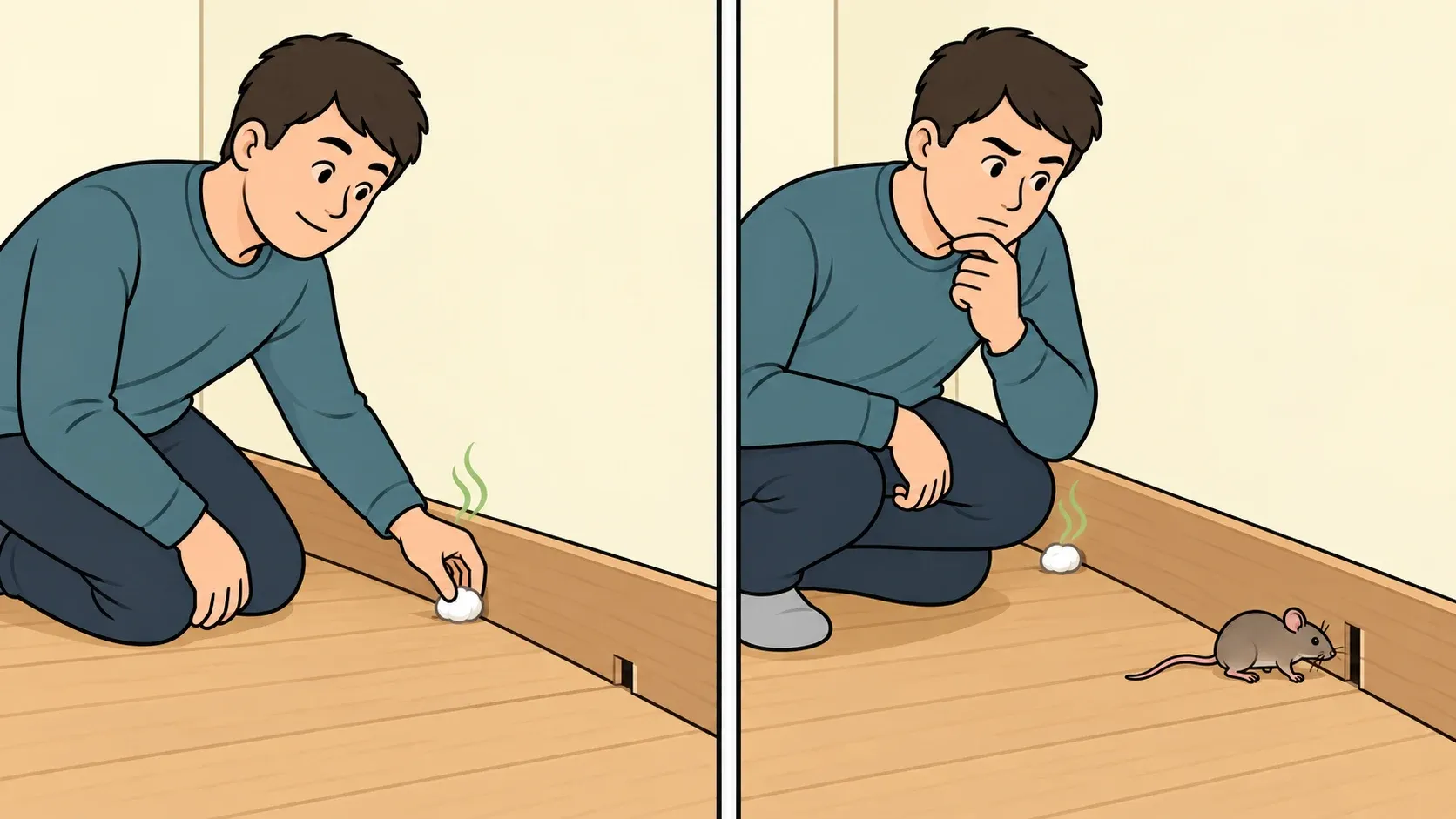
Illustration: a peppermint-soaked cotton ball by the baseboard, and a mouse at an open wall gap a few feet away.
Best for: making a room smell of mint; not for removing mice.
Main limitation: the effect faded within a week in the lab, and the oil can poison cats.
Citrus, Lemongrass and Ginger Oils: Lab Results Only
These did better than peppermint in the same 2022 study: mice still avoided treated fabric after a week. But the tests lasted five minutes in a maze, and none of the oils was tried in a house with food and nesting spots on offer.
Best for: nothing proven in a home.
Main limitation: no home test, and citrus oils are on the cat-poison list too.
Do Dryer Sheets or Irish Spring Soap Keep Mice Away?
No. Dryer sheets and bar soap are two of the most repeated mouse tips, and UC ANR lists both among household items that don’t repel rodents. It adds that rodents quickly get used to smells like these.
How long do dryer sheets keep mice away? No study has measured it, so there’s no number to trust. Judge by fresh droppings, not by how the room smells.
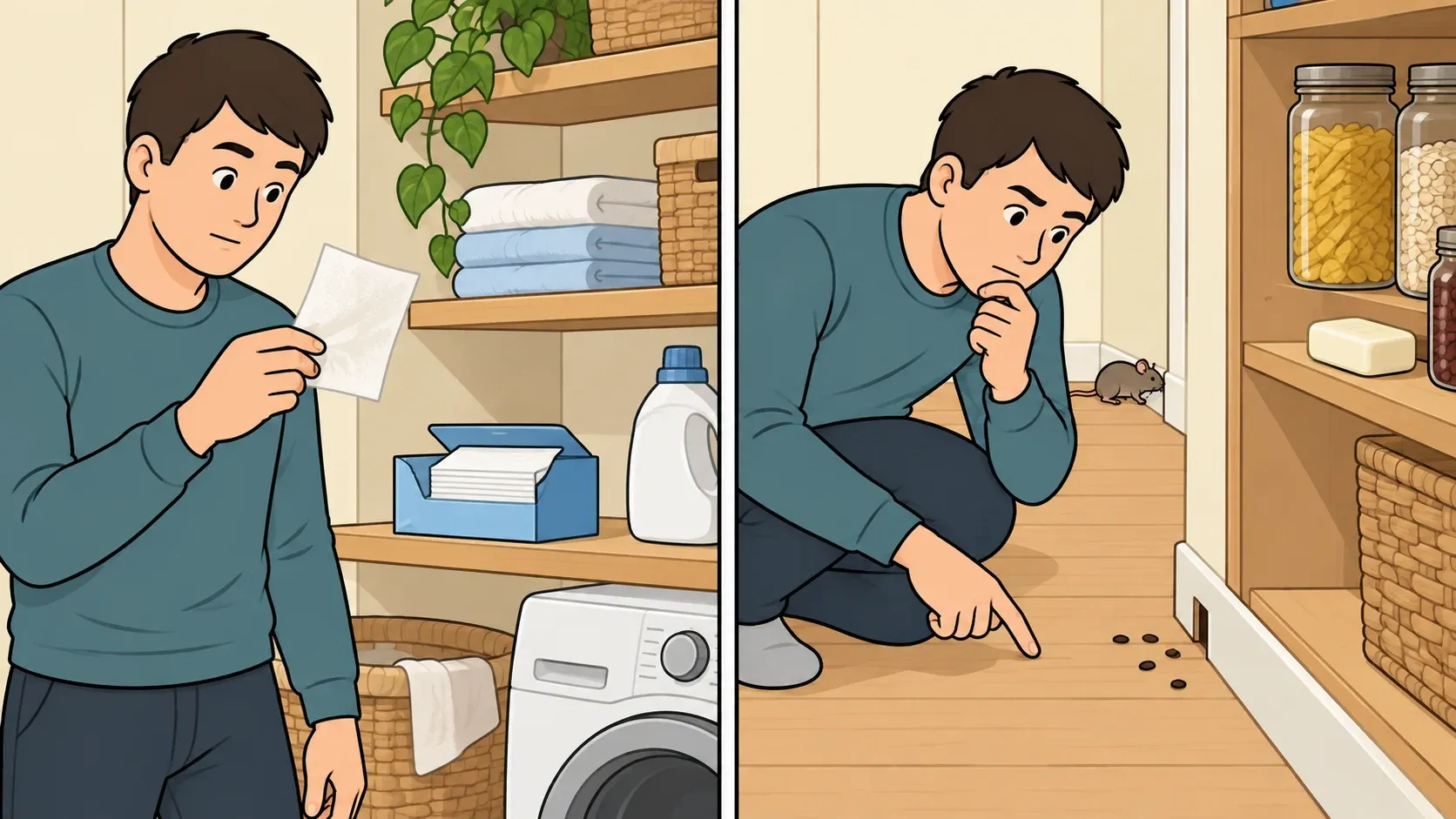
Illustration: holding a dryer sheet in the laundry area, then checking the pantry shelves for droppings.
Best for: laundry, not mice.
Main limitation: UC ANR says they don’t repel rodents at all.
Vinegar, Cinnamon and Bleach: No Evidence
Vinegar, cinnamon, cayenne, cloves, coffee grounds and bleach all show up on lists of smells mice hate. We couldn’t find a controlled study that tested any of them against house mice, and the University of Georgia’s IPM program says homemade repellents generally don’t work.
Bleach does have a job in mouse control, but it’s cleanup, not prevention. The CDC uses a bleach solution to disinfect droppings, urine and nesting material after the mice are gone; see how to clean mouse droppings.
Best for: bleach, as a disinfectant after the mice are gone.
Main limitation: no study shows any of these keeps mice out.
Do Mouse Repellent Sprays and Pouches Work?
Mostly no. Most store-bought sprays and pouches use the same plant oils, and the University of Georgia’s IPM program says commercial products labeled as repellents are generally ineffective.
Many peppermint sprays and pouches are sold as “minimum risk” pesticides, which are exempt from registration, and the EPA says it generally doesn’t review products that claim the exemption. “EPA exempt” on a label says nothing about whether it works.
A few repellents are EPA-registered for a specific pest and site; this EPA label covers a capsaicin gel as a rat repellent, not a mouse treatment. If you buy one, check that the label names mice and the place you plan to use it.
Best for: a registered product whose label names mice and your site.
Main limitation: a quiet week near a pouch doesn’t prove the mice left the house.
Predator Urine: Works in a Lab, Not a House
Fox and coyote urine sell because the idea sounds right: in lab tests, mice and rats avoid a chemical that carnivores produce in their urine (PNAS, 2011). In a house it doesn’t hold up; UC ANR puts predator scent on the same don’t-work list as dryer sheets.
Best for: nothing indoors.
Main limitation: lab avoidance hasn’t translated into mice leaving homes.
Mothballs and Ultrasonic Plug-Ins: Skip Both
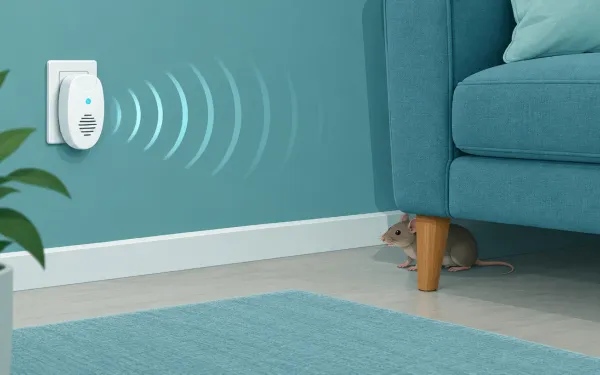
Mothballs are labeled for clothes moths in tightly closed containers, not mice, and the National Pesticide Information Center says they have little or no effect as repellents. Scattered in the open, they expose people and pets to vapor; see whether mothballs keep mice away. Plug-in sound devices fare no better, as our ultrasonic repeller review explains.
Best for: neither has a place in a mouse plan.
Main limitation: mothballs add a pesticide risk; ultrasonic units add nothing.
What Actually Keeps Mice Away
Close the way in, then remove the mice already inside.
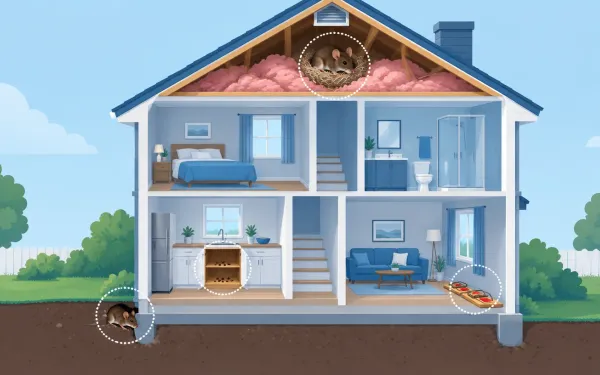
Step 1: Find the entry points. Check around pipes, cabinets, doors, vents and appliances, inside and out. The CDC says house mice can fit through an opening about the width of a pencil, roughly ¼ inch (6 mm).
Step 2: Seal them with metal, not scent. For small holes, the CDC suggests steel wool held in place with caulk; larger openings may need metal, cement, hardware cloth or metal sheeting. Steel wool vs. copper mesh compares the fillers.
Step 3: Trap the mice already inside. Set traps near droppings and gnaw marks, out of reach of children and pets. Our guides explain how to choose a mouse trap and how to set one.
Step 4: Secure food and watch for new signs. Keep food, garbage and pet food in closed containers. A week with no catches and no new droppings means they’re gone.
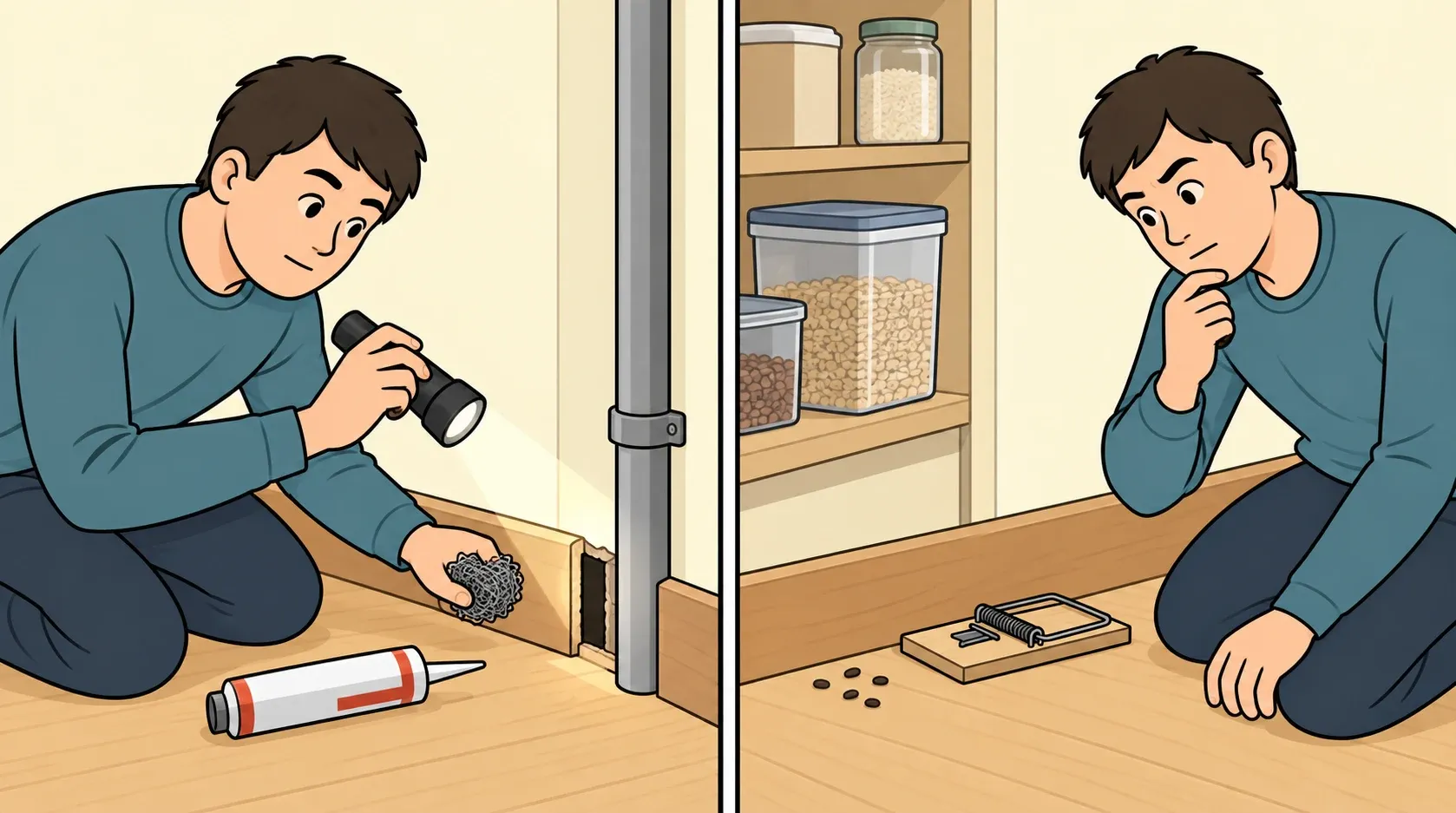
Illustration: checking a wall gap, packing it with steel wool and caulk, setting a snap trap by the droppings, and food in closed containers.
Which Option Fits Your Situation
| Situation | What to do | Why |
|---|---|---|
| You already spread peppermint oil | Keep sealing and trapping; don’t rely on the scent | The lab effect was gone within a week. |
| Cats at home | Skip essential oils entirely | Peppermint, citrus, clove and cinnamon oils can poison cats. |
| Mothballs already out | Collect them with gloves and bag them | Dispose of them as household hazardous waste. |
| Fresh droppings in the kitchen | Snap traps by the droppings, food in closed bins | Smells don’t remove mice already inside. |
| You rent | Report outside gaps to the landlord in writing | Sealing the building is usually their job. |
| Rats, not mice | See what smells rats hate | UC IPM says no repellent solves a rat problem for long. |
What It Might Still Cost
Put the money toward traps instead of repellents:
| Item | Price |
|---|---|
| 12 wooden snap traps | $13.74 |
| Copper mesh for sealing, 20 ft | $28.80 |
| Nitrile gloves, 50 count | $8.49 |
| Bleach for cleanup, 81 oz | $6.39 |
| Full DIY kit, 12–24 traps | $57–71 |
| Pro trap-and-seal job, 53 shared quotes (middle half) | $1,400–$3,000 |
| Pro visit, price-guide range (usually no sealing) | $150–$655 |
Supplies are U.S. list prices from September 2026, before tax; the kit range is our math, itemized on the exterminator vs. DIY cost page. Pro: the middle half of 53 trap-and-seal quotes homeowners shared on Reddit (see the quote table). Price-guide range: This Old House for mice (April 2026) and HomeAdvisor for rats (June 2026); it usually covers a trap-and-bait visit, with sealing extra.
Before You Buy a Repellent: A Quick Checklist
- Look for fresh droppings to find where mice are active.
- Check gaps around pipes, vents and doors for anything ¼ inch or wider.
- Seal them with steel wool and caulk, not scented cotton balls.
- Set snap traps by the droppings, out of reach of kids and pets.
- Store food in closed containers.
- Skip essential oils if you have cats.
- Judge success by droppings, not by how the room smells.
Common questions
Menthol, the main compound in peppermint, triggers the body’s cold sensors. The authors of the 2022 study think that cooling feeling drives the avoidance and that mice adapt to it, which may be why peppermint stopped working by day seven.
Yes. In lab tests, mice and rats avoid a chemical found in carnivore urine. But UC IPM says predators rarely control mice around homes and can just make them harder to spot. See how to get rid of mice without poison for what cats can and can’t do.
Not for long. UC IPM says rats have an initial aversion to some odors, but no repellent has solved a rat problem for more than a very short time. For rats, start with how to get rid of rats in your house.
The Bottom Line
Mice dislike peppermint, citrus, lemongrass and ginger oils in a lab maze, but no smell has been shown to clear them from a home, and peppermint stopped working within a week. Spend the money on steel wool, caulk and a dozen snap traps instead, and call it done after a week with no catches and no new droppings.
Sources and further reading · 12
- Chiang Mai University Journal of Natural Sciences (2022): essential oils and menthol as mouse repellents — the maze test, the oils tested, and peppermint’s loss of effect by one week.
- UC ANR: Debunking Pest Myths — dryer sheets, soap, predator scent and mothballs don’t repel rodents; seal gaps larger than ¼ inch.
- UC IPM: House Mouse — sense of smell, high-frequency devices, predators.
- UC IPM: Rats — rats’ short-lived aversion to odors.
- University of Georgia IPM: Rats and Mice — homemade and commercial repellents generally don’t work.
- Ferrero et al., PNAS 2011 (PubMed) — mice and rats avoid 2-phenylethylamine from carnivore urine.
- U.S. EPA: Minimum Risk Pesticide Definition and 40 CFR 152.25 (LII) — peppermint oil’s exemption, and why EPA doesn’t review these products.
- Pet Poison Helpline: Essential Oils and Cats — oils known to poison cats.
- NPIC: Can I use mothballs to repel insects or animals? — mothballs as repellents.
- U.S. EPA: capsaicin rat repellent label — an example of a registered, pest-specific repellent.
- CDC: Seal Up, Trap Up and Clean Up — sealing gaps, the one-week all-clear, and bleach for cleanup.
- This Old House: Mice Exterminator Cost — professional mouse removal prices.