How Big Do Rats Get? Norway Rat and Roof Rat Size
The biggest rat you’ll find in a U.S. home is the Norway rat. An adult can reach 11 inches long with a slightly shorter tail, about 16 inches nose to tail tip (Cornell), and weighs 7 to 18 ounces (UC IPM), 12 to 16 ounces on average (ICWDM). The roof rat, the other common house rat, is smaller and sleeker at 5 to 10 ounces (UC IPM). So a rat that looks enormous is usually just a full-grown Norway rat, and it needs rat traps, not mouse traps.
Cost: about $22–43 in supplies. Difficulty: easy. Call a pro if rats are in the walls or attic, you see them in daylight, or you’re still finding fresh droppings after at least 15 days of trapping and re-baiting.
This guide covers how big Norway and roof rats get, how they compare with mice, the world’s biggest rats, and what size tells you about the problem. We haven’t weighed rats ourselves; it rests on Cornell, UC IPM, ICWDM, NC State Extension and Florida Fish and Wildlife guidance.
Rat Size at a Glance
| Rodent | Length | Weight |
|---|---|---|
| Norway rat | Up to 11 in, about 16 in with the tail (Cornell) | 7–18 oz (UC IPM) |
| Roof rat | Smaller and sleeker; tail longer than head and body (UC IPM) | 5–10 oz (UC IPM) |
| House mouse | 5–7 in including a 3–4 in tail (UC IPM) | About ½ oz (UC IPM) |
| Gambian pouched rat (not in U.S. homes) | 20–35 in head to tail tip (Florida FWC) | Up to 9 lb (Florida FWC) |
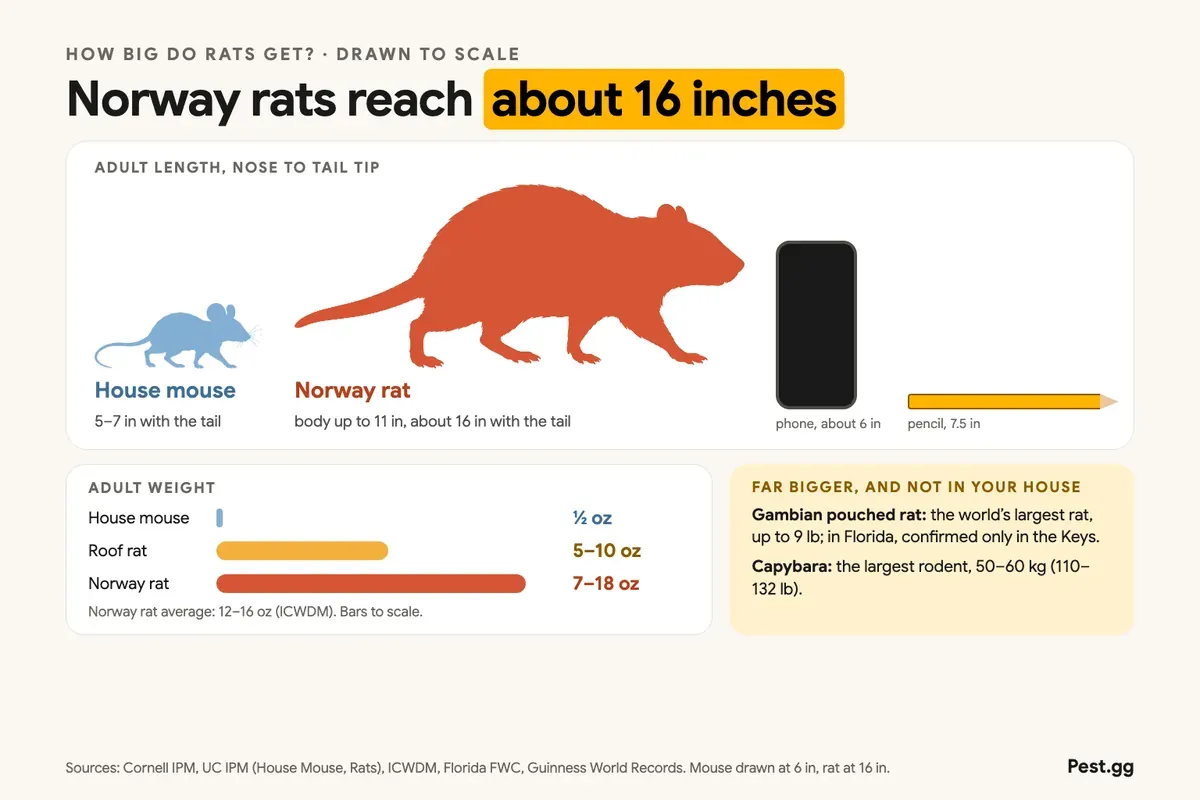
Infographic: a house mouse and a Norway rat to the same scale, with a phone and a pencil. Sources: Cornell, UC IPM, ICWDM, Florida FWC, Guinness World Records.
How Big Do Norway Rats Get?
The Norway rat, also called the brown rat, is the big one. Cornell puts adults at up to 11 inches (28 cm) long, with a slightly shorter tail, for a total of about 16 inches. UC IPM gives a weight of 7 to 18 ounces, so the biggest are a little over a pound, and ICWDM says the average adult weighs 12 to 16 ounces.
It’s built heavy: UC IPM describes it as generally larger and stockier than the roof rat, with a blunt muzzle, small ears that don’t reach the eyes when folded over, and a scaly tail that, pulled forward over the back, reaches only about the middle of the skull. Its coat is coarse, usually brown or reddish gray above and grayish white below (ICWDM).
Norway rats burrow, and ICWDM says their entrance holes are 2 to 3 inches across.
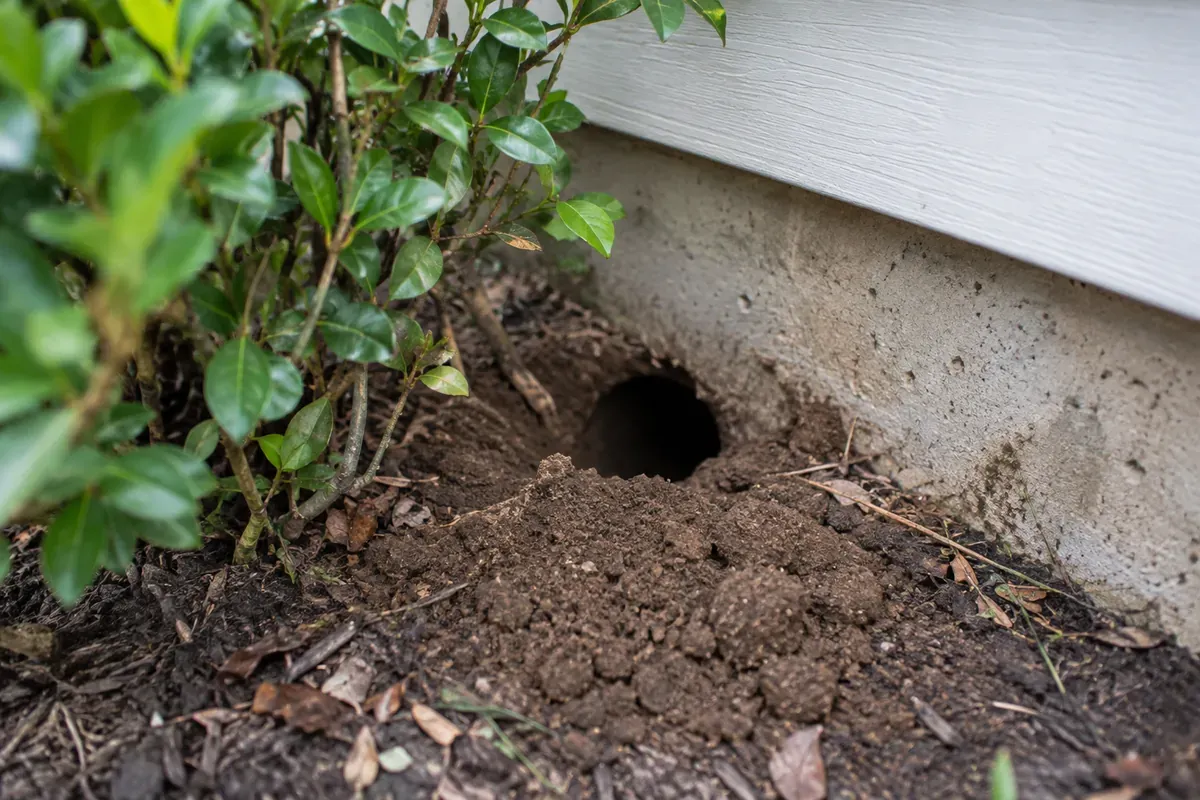
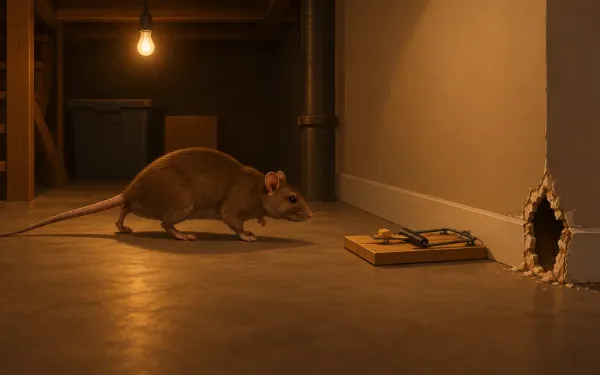
Illustration: a burrow by the foundation, the kind of 2- to 3-inch hole Norway rats dig.
How Big Do Roof Rats Get?
Smaller. UC IPM says roof rats are smaller and sleeker than Norway rats, weighing 5 to 10 ounces, with a pointed muzzle, ears long enough to reach the eyes when folded over and a tail longer than the head and body combined. They’re climbers that nest in attics, trees and vines, as our roof rat entry describes, so the rat you see running along a fence or power line is often a roof rat. See how to get rid of rats in the attic.
Why Does the Rat I Saw Look So Big?
Usually because it is a normal adult Norway rat. Measured nose to tail tip, about 16 inches is full size (Cornell), so a rat that looked “over a foot long” is ordinary. The tail adds a lot of the length; on a Norway rat it’s a little shorter than the body (Cornell).
If the animal you saw was much smaller, it may be a young rat or a mouse. Very young rats have large heads and feet for their bodies, while adult mice have small ones (UC IPM). Rat vs. mouse covers the differences, and droppings help too: Norway rat droppings are ¾ to 1 inch long, mouse droppings ⅛ to ¼ inch (Cornell).
The World’s Biggest Rat and the Largest Rodent
Neither lives in your walls, but they come up whenever people search for “biggest rat.”
- Biggest rat: the Gambian pouched rat, native to Africa, which Florida Fish and Wildlife calls the world’s largest rat. It reaches up to 9 pounds and measures 20 to 35 inches from head to tail tip. Florida lists it as a prohibited species; the only confirmed sightings in the state have been in the Florida Keys, with breeding on Grassy Key.
- Largest rodent: the capybara, at 1 to 1.3 meters long and 50 to 60 kilograms, about 110 to 132 pounds (Guinness World Records). It’s a rodent, but not a rat.
What Rat Size Means for Getting Rid of Them
Big rats need big traps. NC State Extension says mouse snap traps aren’t an effective tool for rats, and UC IPM warns that mice and small young rats often won’t trigger a rat trap. So match the trap to what you saw and to the droppings.
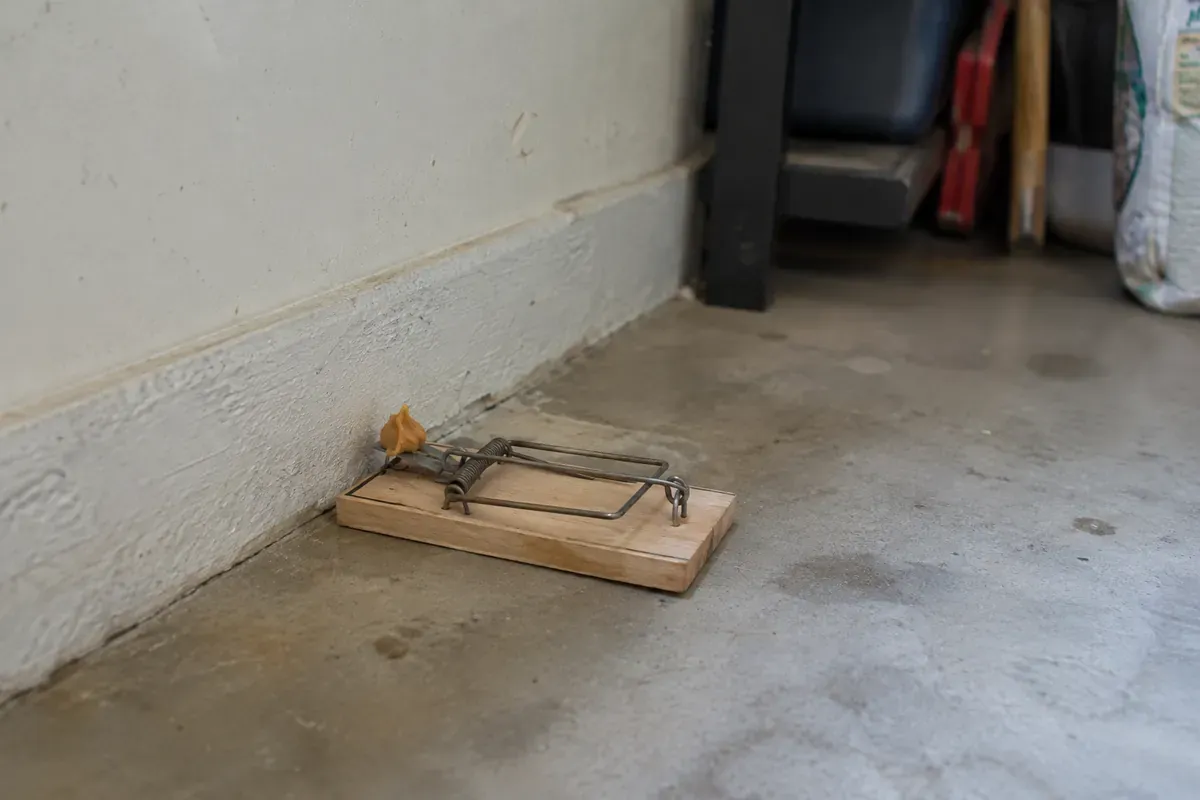
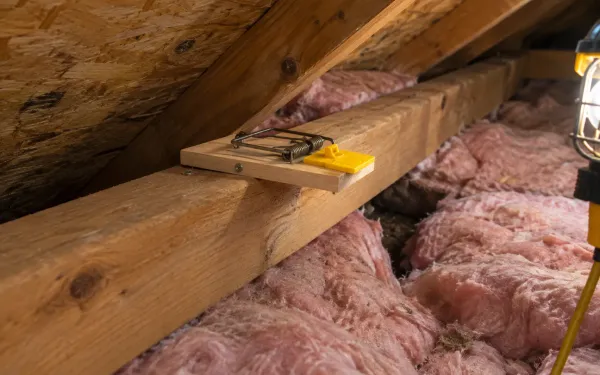
Illustration: a rat-size snap trap along the wall, baited with a pea-sized dab.
- Use rat-size snap traps, about 10 to 20 feet apart, with a pea-sized amount of bait (UC IPM). Best bait for rat traps compares baits.
- Pre-bait for a few days. Rats avoid new objects, so leave traps baited but unset until the bait has been taken several times (UC IPM). NC State says traps may take up to a week to catch anything.
- Seal holes over ¼ inch with steel wool, wire screen or sheet metal, since rats chew through plastic, foam, wood and caulk (UC IPM). Young rats can squeeze under a door with a ½-inch gap (UC IPM).
The full plan is in how to get rid of rats in your house and how to catch a rat.
What It Costs
| Item | Typical cost |
|---|---|
| Wooden rat snap trap | $3.59 each |
| 6–12 rat snap traps | $22–43 |
U.S. list price, September 30 to October 1, 2026, before tax. Steel wool, mesh and caulk for sealing are extra.
When to Call a Pro
If rats are in the walls or attic, you see them in daylight, or you’re still finding fresh droppings after at least 15 days of trapping and re-baiting.
Common questions
In homes, the Norway rat: up to about 16 inches with the tail and 7 to 18 ounces (Cornell, UC IPM). The much larger Gambian pouched rat has been confirmed only in the Florida Keys, where the state treats it as a prohibited invasive species (Florida FWC).
Not a Norway rat or roof rat by the extension figures we found: UC IPM tops Norway rats out at 18 ounces, a little over a pound. The Gambian pouched rat can reach 9 pounds (Florida FWC), but it isn’t a house rat in the U.S.
Size doesn’t change the risk from droppings and urine; clean up any rodent mess wet and with gloves. It does change the traps you need: use rat traps for rats.
The Bottom Line
The biggest rat in a U.S. house is the Norway rat, about 16 inches with its tail and up to a little over a pound. Roof rats are smaller and sleeker, and mice are tiny by comparison. A big rat calls for rat-size traps, a few days of pre-baiting and metal over every hole bigger than ¼ inch.
Sources and further reading · 9
- CDC: Trap Up: keep trapping for at least 15 days.
- Cornell IPM: Mouse and Rat Biology and Behavior: Norway rat length, droppings.
- UC IPM: Rats: Norway and roof rat weight, build, ears, tails, trapping, pre-baiting and sealing.
- UC IPM: Rats (Pest Notes 74106): young rats vs. mice; small rats and rat traps.
- UC IPM: House Mouse: mouse size and weight.
- ICWDM: Norway Rats: average weight, coat, burrow entrance size.
- NC State Extension: Surveillance and Management of Common Structure-Invading Rats: mouse traps aren’t effective for rats.
- Florida Fish and Wildlife Conservation Commission: Gambian Pouched Rat: world’s largest rat, size, Florida status.
- Guinness World Records: Largest Rodent: capybara size.