How to Get Rid of Rats in the Attic
Attic rats are usually roof rats. Trap them on the beams, cut off the roof routes, then seal the roofline.
To get rid of rats in the attic, set rat-size snap traps on the beams, pipes and ledges they run along, leave them baited but unset for a few nights so the rats get used to them, then set them all at once. At the same time, cut off the way in: trim tree limbs back from the roof, and seal gaps at the roofline, eaves and vents. Once the catches stop, clean up the droppings the CDC way.
Cost: about $65–87 in supplies. Time: about 2–3 weeks. Difficulty: moderate. Call a pro if you can’t reach the roofline safely, rats keep coming back after you’ve trapped and sealed, or the insulation is heavily soiled.
Roof rats climb, live above ground and favor attics, walls and false ceilings, and they prefer warm climates and coastal areas (UC IPM). So in the South and along the coasts, rats in the attic are usually roof rats; in colder states, an attic rat may be a Norway rat that climbed up. They’re warier of new objects than mice, which changes how you trap them. This guide covers the attic-specific steps: telling who’s up there, removing rats from the attic with traps, closing the roof routes, and cleanup. For the rest of the house, see how to get rid of rats in the house. We haven’t tested these methods ourselves; this rests on CDC, UC IPM and ICWDM guidance.
Hearing scratching overhead tonight? Don’t put poison up there; a rat that dies in the attic or a wall is hard to find and the smell lingers. Look for droppings and rub marks tomorrow in daylight, and read on. If you see chewed wiring, have an electrician look: UC IPM warns that rats gnawing in attics can cause sparks and even fires.
What Works and What Doesn’t for Rats in the Attic
| Method | Works? | Cost | Main limitation |
|---|---|---|---|
| Rat-size snap traps on beams and pipes | Yes, the CDC’s choice for homes | About $65 with sealing | Rats avoid new traps for days at first |
| Pre-baiting traps unset for a few nights | Yes, cuts trap shyness (UC IPM) | Free | Adds a few days |
| Trimming limbs back from the roof | Yes, removes a roof route (UC IPM) | Your time or a tree crew | Utility lines are another route |
| Sealing the roofline, eaves and vents | Yes, the lasting fix | Mesh, sheet metal | Needs a safe ladder or a pro |
| Ultrasonic or noise devices | No, rats get used to them (UC IPM) | — | Wasted money |
| Poison bait in the attic | Not recommended | — | Dead rats in walls and insulation; wildlife risk |
Rats, Mice or Something Else?
Rats and mice both run the attic at night, but they need different traps. Rat droppings are about ½ inch long or more; mouse droppings are about ¼ inch (rat poop vs. mouse poop). Heavy thumping in the daytime is more often squirrels. If it’s mice, mice in the attic is the page you want.
 AtticRoof ratSlim, big ears, tail longer than its body. The usual attic rat.
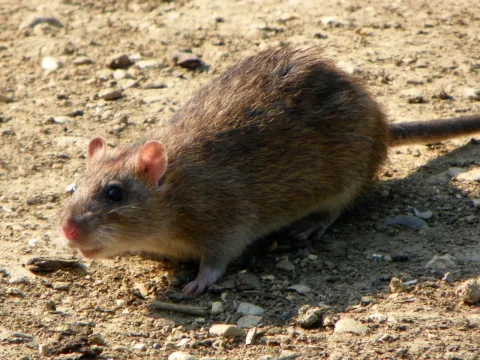 Ground floorNorway ratStocky, small ears. Usually basements, but it can climb.
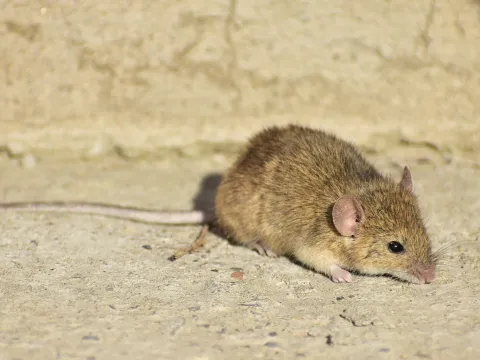 Not a ratHouse mouseMuch smaller, droppings about ¼ inch. Needs mouse traps.
Other signs of rats in the attic: noises from the attic or drop ceiling at night (UC IPM), dark greasy rub marks along beams, shredded insulation and gnawed wires or wood.
Before You Go Up: Attic Safety
Walk only on the joists or on boards laid across them; the ceiling between them won’t hold you. Wear gloves, and a dust mask while you look around. Don’t touch droppings or nesting material yet; cleanup comes last, with the CDC’s wet method. Keep the trip short in summer, when attics get very hot.
Step 1: Find Where They Run
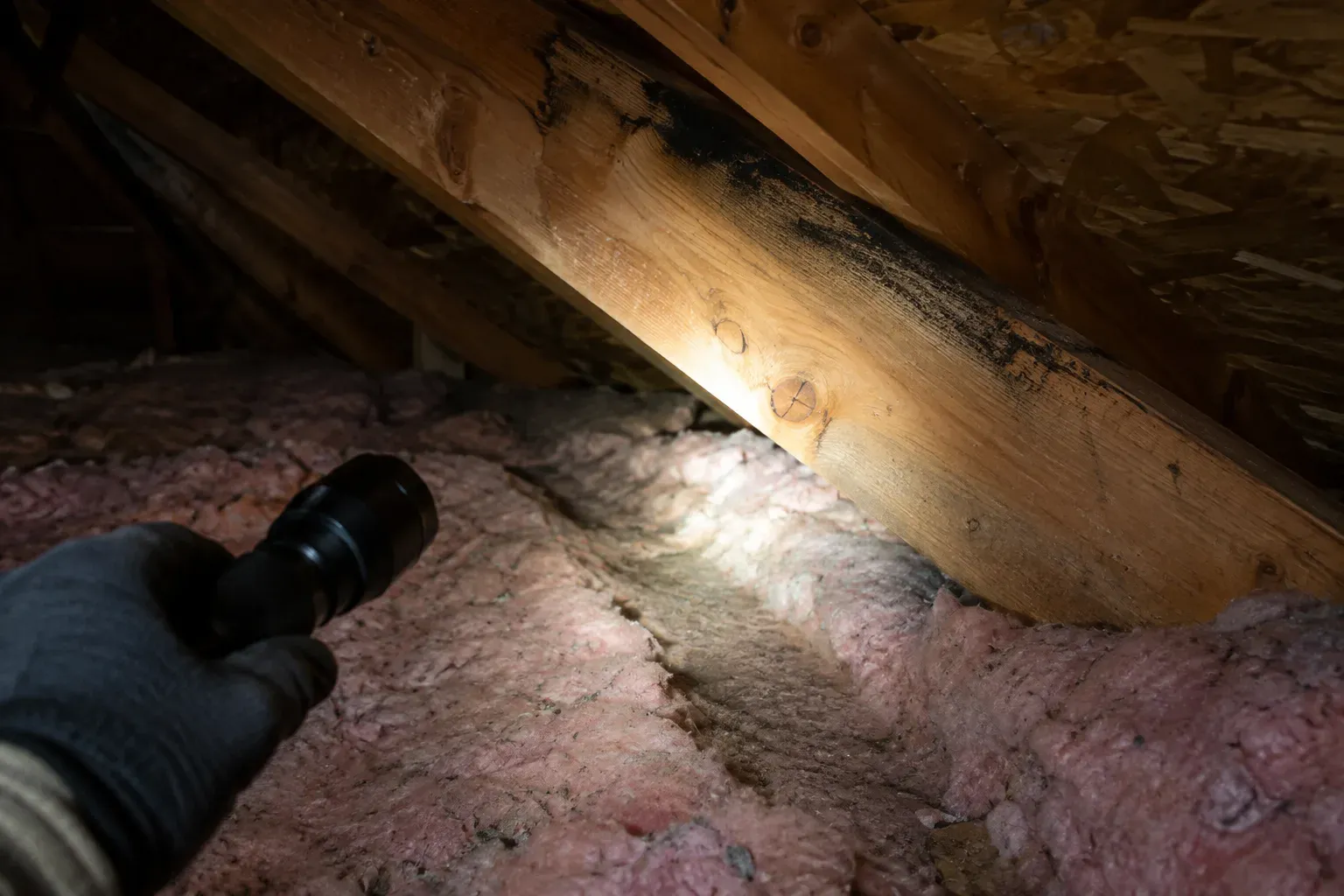
Rats use the same paths every night. With a flashlight, look for droppings, rub marks on the tops of beams and along the edges of rafters, and paths flattened into the insulation. ICWDM says attic rafters close to the activity are the best trapping sites in a home. Note where the paths meet the roofline or a vent: that’s often the way in.
Step 2: Set Traps Where the Rats Travel
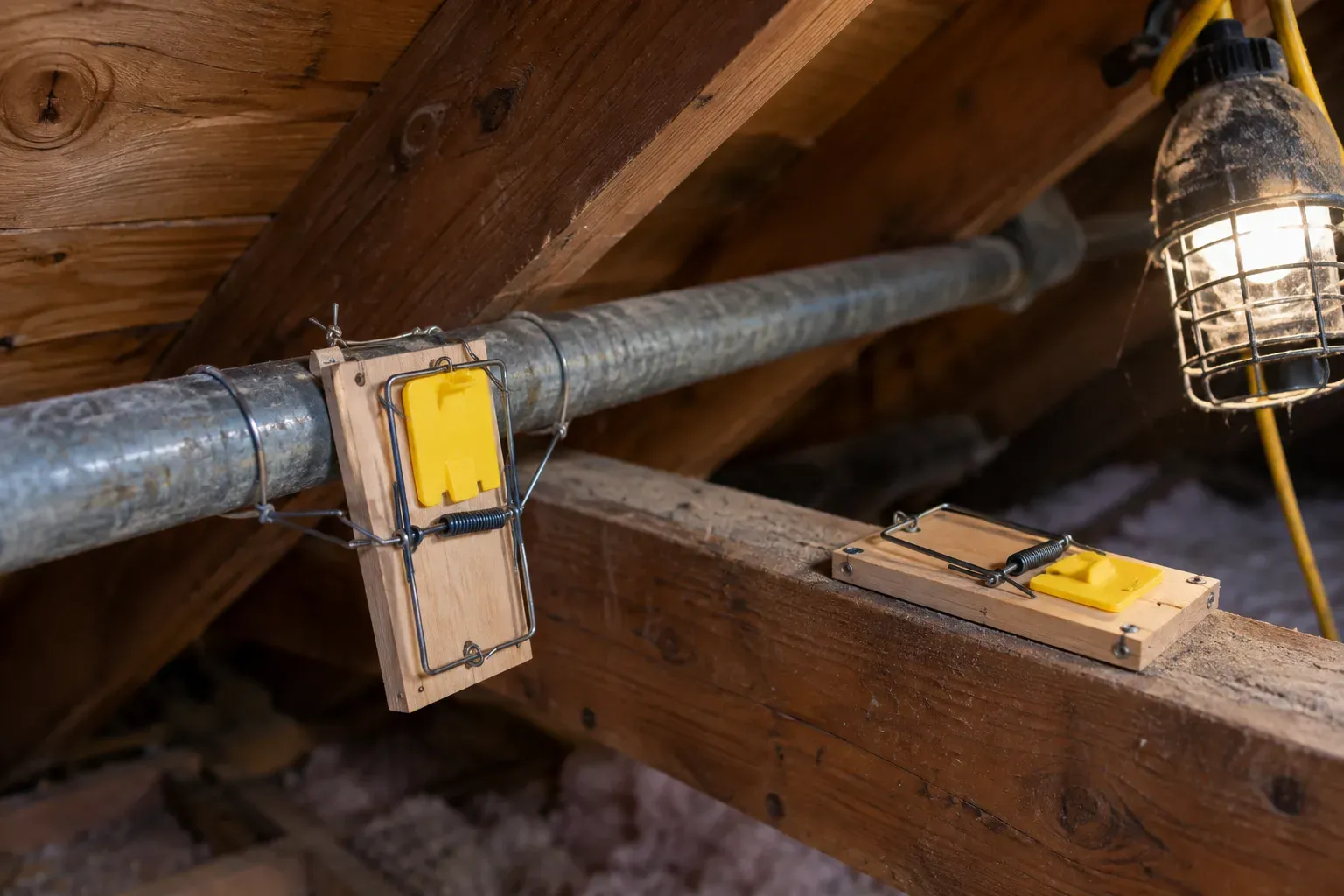
Use rat-size snap traps with a wide trigger plate; mouse traps are too small. UC IPM says to put traps for roof rats in off-the-ground spots such as ledges, shelves, pipes and overhead beams, and ICWDM adds that traps can be nailed to beams or wired to pipes. Fastening them down also stops a rat caught by a leg from dragging the trap away.
- On beams and rafters: set the trap along the top, trigger toward the path.
- On pipes: wire the trap to the pipe so the trigger sits in the rat’s path.
- On the attic floor: along the edges and next to the paths in the insulation.
- How many: UC IPM says a heavily infested home may need a dozen or more traps, about 10 to 20 feet apart.
Bait with a small amount of nuts, dried fruit or peanut butter, tied or pressed onto the trigger; the best bait for rat traps compares them.
Step 3: Pre-Bait for a Few Nights, Then Set Them All
Rats are wary of new things and often avoid traps and baits for the first several days, sometimes longer (UC IPM). So leave the traps baited but unset until the bait has been taken a few times, then set them all on the same night. Mice don’t need this step; rats usually do. Why rats avoid traps explains the behavior, and how to catch a rat covers the setting details.
Check the traps every day, and keep going until a full week passes with no catches and no new droppings (CDC).
Step 4: Cut Off the Roof Routes
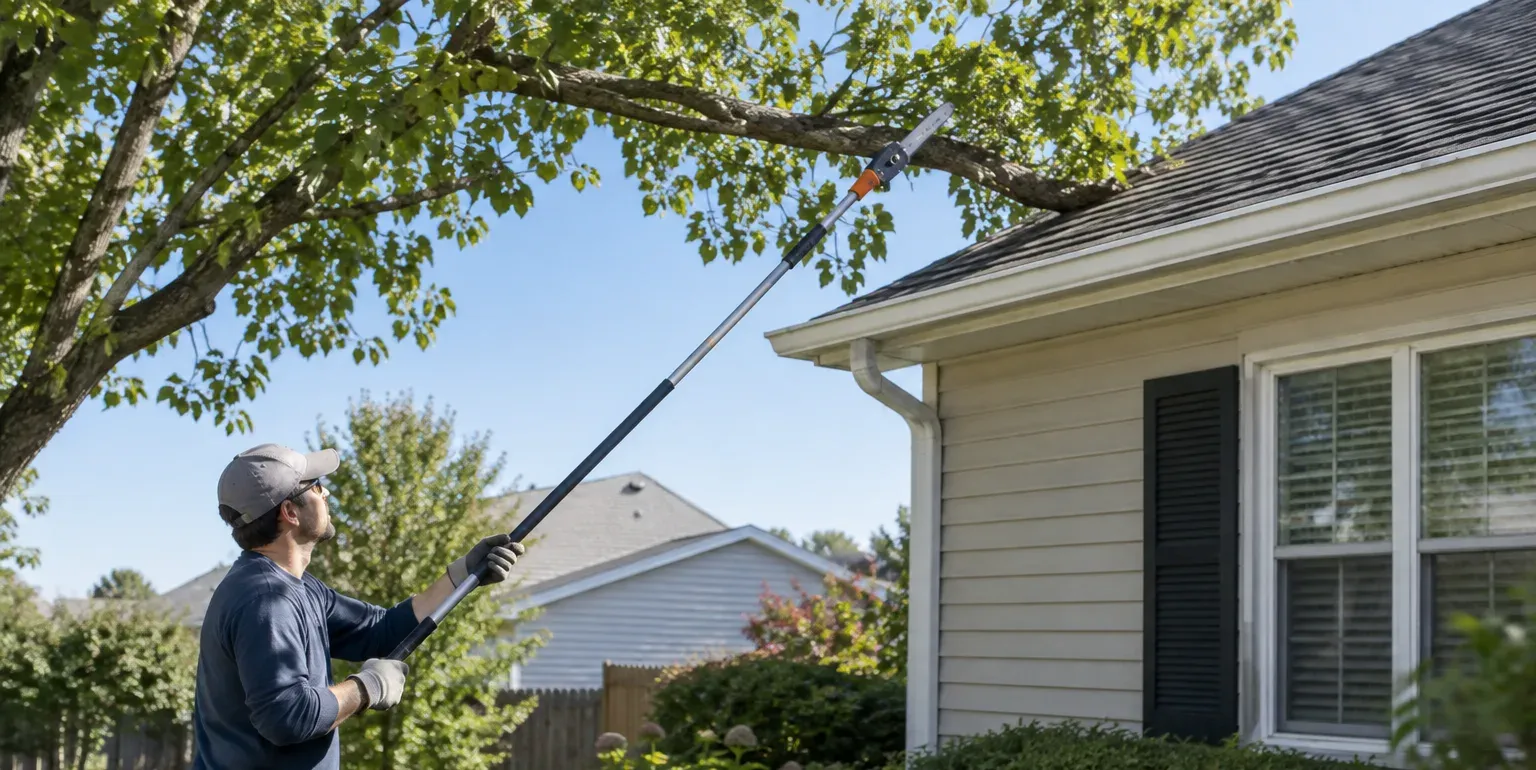
Roof rats get onto the roof from trees, vines, fences and overhead lines. UC IPM says to prune tree limbs within 3 feet of the roof and to remove overhanging limbs within 6 feet, which also keeps tree squirrels off. Pull vines off the walls. ICWDM says rats often travel along overhead utility lines; don’t cut or touch those yourself. Ask your utility about rat guards.
Step 5: Seal the Roofline, Eaves and Vents
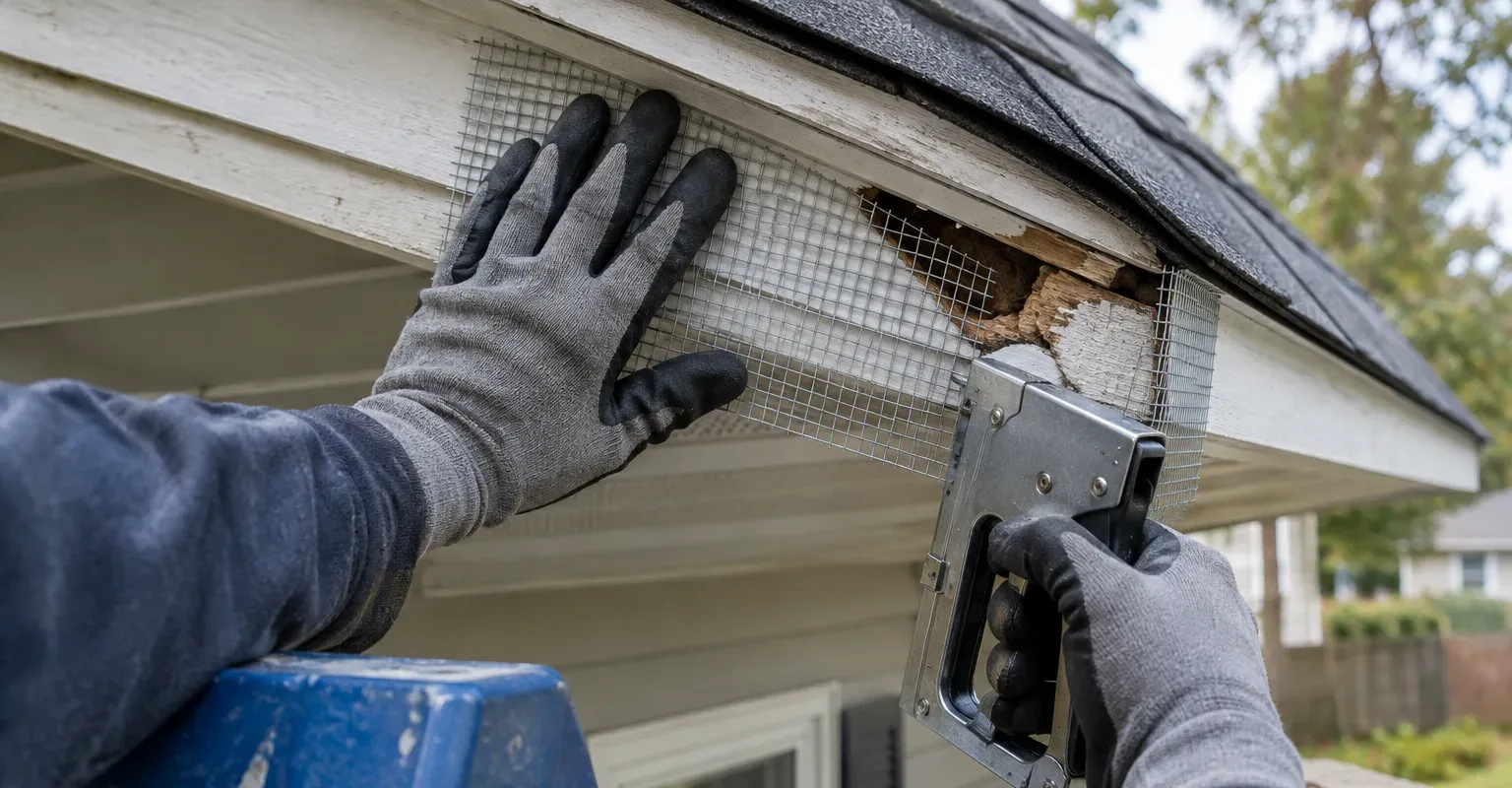
Seal while you trap, so rats inside are caught and new ones can’t follow. UC IPM says to seal cracks and openings larger than ¼ inch with steel wool, wire screen or sheet metal, and to repair or replace damaged screens on roof and attic vents and under the eaves. Check:
- Gaps where the roof meets the fascia and soffit
- Roof vents, gable vents and soffit vents with torn or missing screens
- Where pipes, cables and the chimney pass through the roof
- Chewed corners on eaves and trim
Use hardware cloth or sheet metal on chewed spots, since rats gnaw through plastic and wood. Close the last openings once the traps have been quiet for a few nights, so no rat is shut inside.
Step 6: Clean Up the Attic the CDC Way
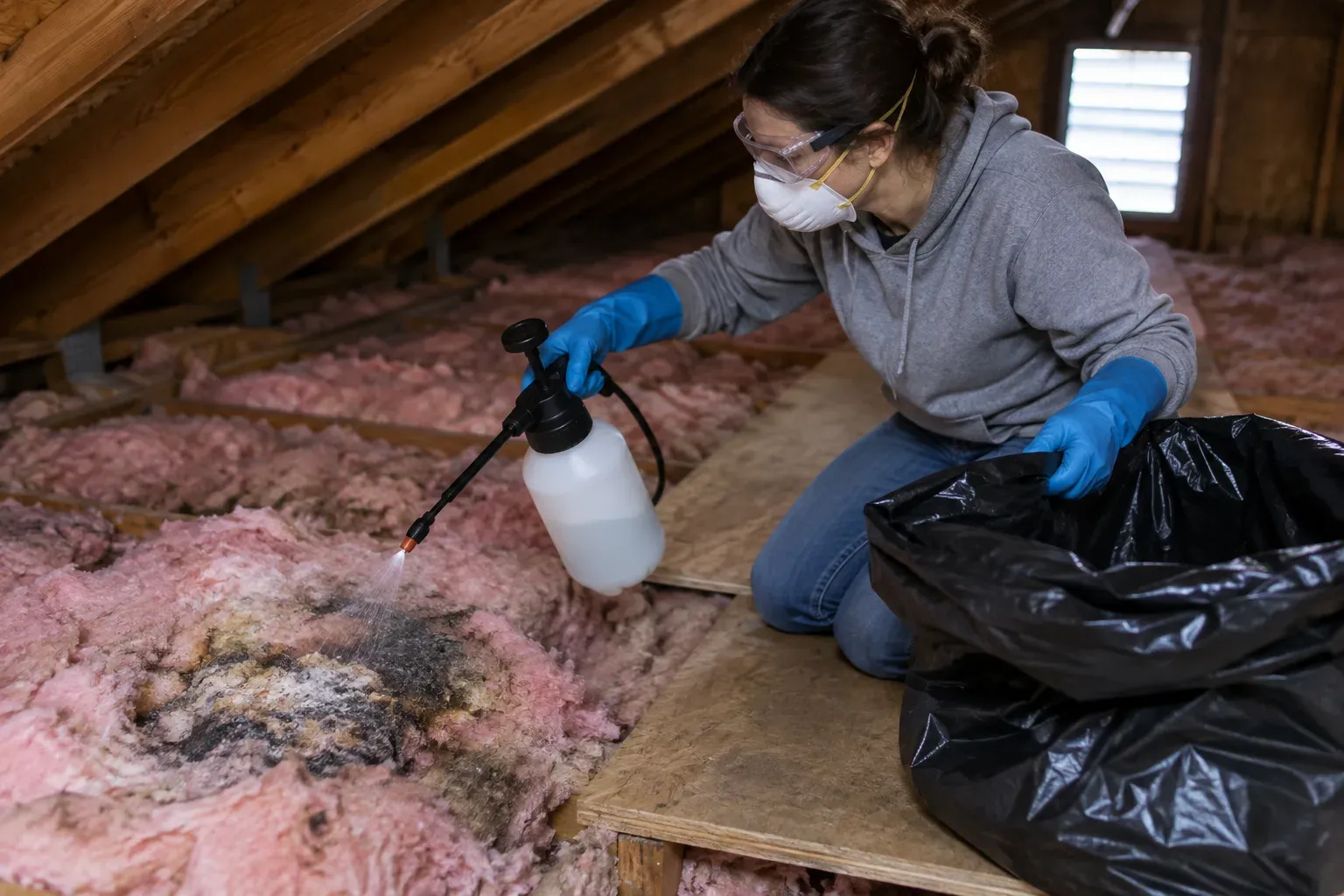
When the catches have stopped, clean up. The CDC’s method: air out the space, wear gloves, spray droppings and nesting material with a disinfectant or a bleach solution and let it soak, then wipe it up with paper towels and bag it. Don’t sweep or vacuum droppings dry. How to clean mouse droppings has the full steps, and they apply to rats too.
For insulation, small soiled patches can be bagged and replaced. If rats have nested through large areas, that’s when replacing insulation becomes a bigger job; see mice in insulation for how to decide.
What It Costs
| Item | Typical cost |
|---|---|
| DIY: 6 rat snap traps, 20 ft copper mesh, gloves, bleach | $65 |
| DIY, heavy infestation: 12 traps instead of 6 | $87 |
| Pro trap-and-seal job, 53 shared quotes (middle half) | $1,400–$3,000 |
| Pro visit, price-guide range (usually no sealing) | $150–$655 |
| Pro attic insulation cleanup, if upsold | $7,500–$14,000 |
These are the same figures as our rats in the house guide: DIY list prices checked September 30, 2026; pro jobs from quotes homeowners shared on Reddit; the visit range from HomeAdvisor (June 2026). Insulation cleanup is the biggest upsell in attic jobs. Ask to see the soiled areas before you agree to replace all of it. Our study of 5,315 exterminator quotes shows how much prices vary for the same job.
When to Call a Pro
Call one if you can’t reach the roofline safely from a ladder, if rats keep coming back after you’ve trapped and sealed, if you find chewed wiring, or if the insulation is soiled across most of the attic. Ask whether sealing is included, how they’ll find every entry, and what follow-up visits cost.
Common questions
Scratching or running sounds at night, droppings about ½ inch long, dark rub marks on beams, shredded insulation and gnawed wires or wood. Smaller droppings point to mice instead.
Usually from the roof: along tree branches, vines, fences and overhead lines, then in through gaps at the eaves, roofline or vents. UC IPM says to seal any opening larger than ¼ inch.
Rarely while there’s shelter and food nearby. Trap the ones inside and seal the gaps, and they won’t be replaced by new ones.
The Bottom Line
Attic rats are usually roof rats. Pre-bait rat traps on the beams and pipes for a few nights, then set them all; trim limbs back from the roof and seal the roofline and vents; clean up with the CDC’s wet method once a week passes with nothing new.
Sources and further reading · 4
- UC IPM: Rats (Pest Notes): roof rats in attics, trap placement, trap shyness, pruning limbs, sealing openings, vents, fire risk, ultrasonic devices.
- ICWDM: Roof Rat Prevention and Control Methods: attic rafters as trapping sites, nailing and wiring traps, utility lines.
- CDC: Trap Up and Clean Up.
- Costs: see the sources in how to get rid of rats in the house.