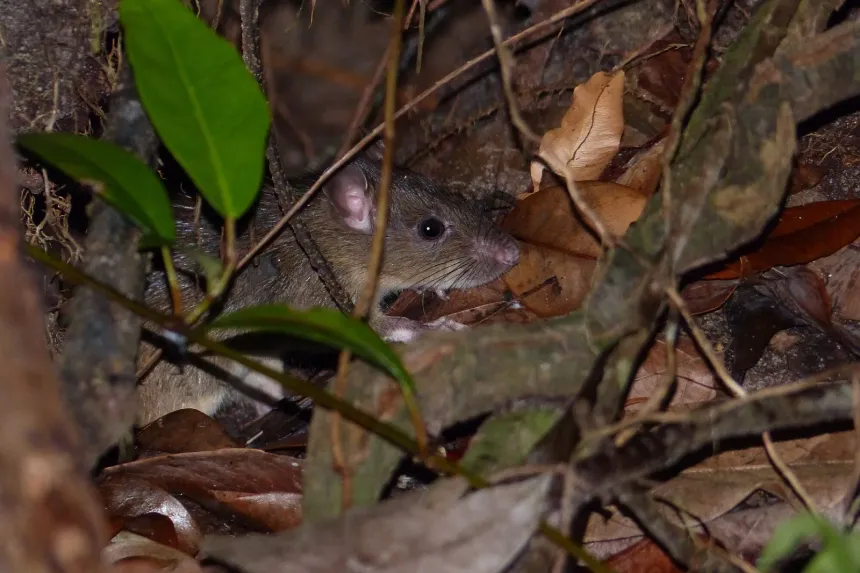
- Scientific name
- Rattus rattus
- Also called
- black rat, ship rat, fruit rat
- Size
- Body 6–8 in, tail 7–10 in
- Color
- Dark gray to black, lighter belly
- Found in
- Attics, ceilings, trees, vines, upper floors
- Harmful?
- Yes. Gnaws wiring, contaminates food, spreads disease
- Active
- Year-round, at night
- DIY cost
- $65–87 in suppliesSee the plan
- Pro quotes
- $1,400–$3,000 to trap and seal (53 shared quotes)See quotes
What to do
The roof rat is the sleek, dark rat that climbs: it runs along fences, power lines and branches and gets into homes high up, so it usually ends up in the attic rather than the basement. It’s as harmful as any rat, chewing attic wiring, raiding fruit trees and spreading disease through droppings and urine. The one thing to do: cut branches back from the roof and set snap traps up high, on beams and ledges.
This page covers how to identify a roof rat, tell it from a Norway rat and find where it travels. It rests on UC IPM and NC State Extension guidance.
How to Identify a Roof Rat: Slender, Big Ears, Long Tail
- Sleek and agile: 5 to 10 ounces as an adult, lighter than a Norway rat (UC IPM).
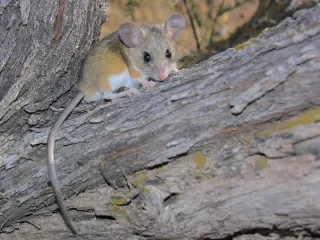
- Pointed muzzle, large eyes and large ears that reach the eyes when folded forward.
- Tail longer than the head and body: pulled back over the body, it reaches at least to the snout. It’s evenly dark, with fine scales.
- Dark gray to black, with a gray to white belly.
- Droppings: about 1/2 inch, with pointed ends.
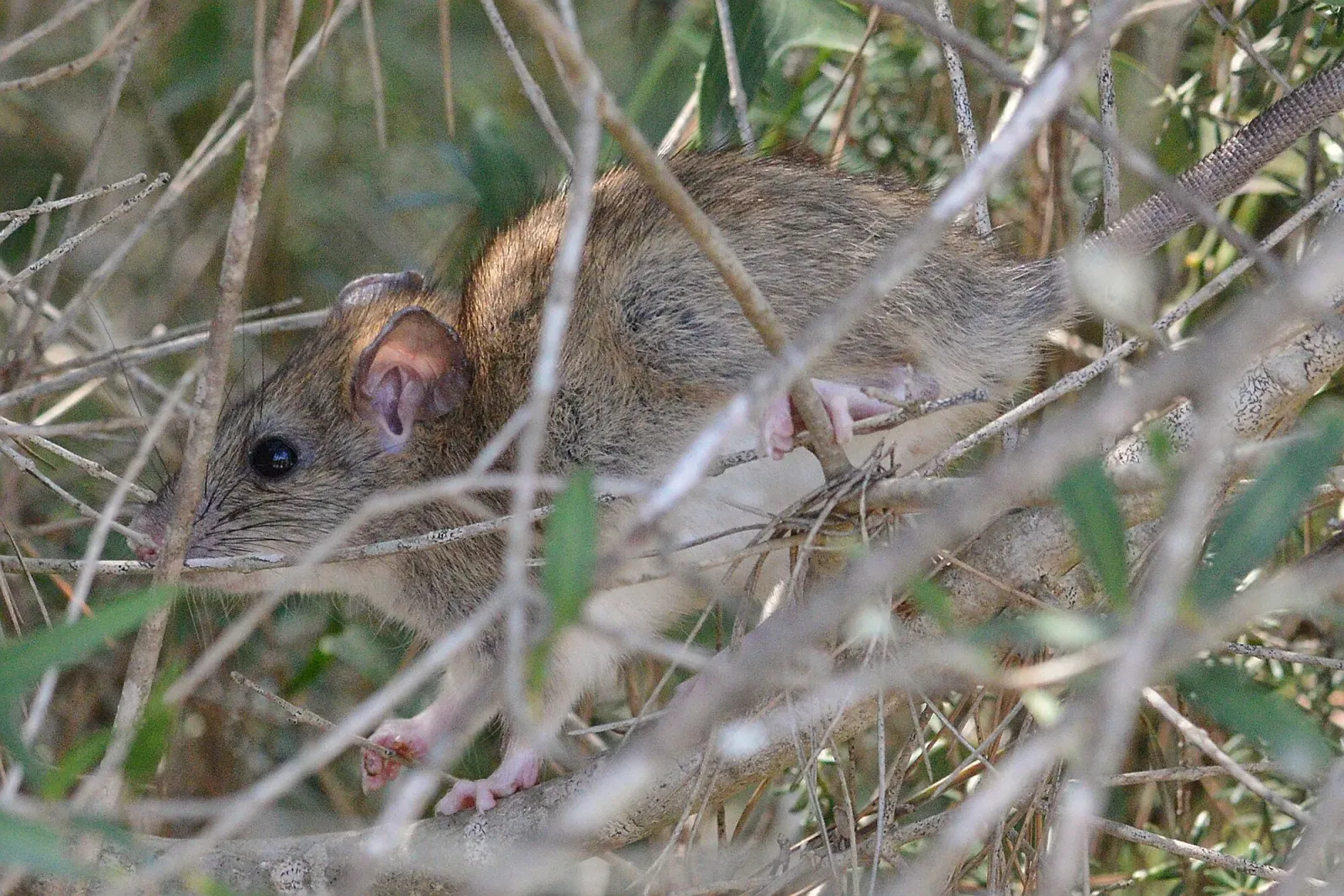
A roof rat climbing through shrubs. Roof rats travel up high, along branches, fences and wires. Photo: Ryan Hodnett (CC BY-SA 4.0), via Wikimedia Commons.
Roof Rat vs. Look-Alikes: The Tail Test
| Animal | How it differs | How to tell |
|---|---|---|
| Roof rat | Slender, pointed nose, big ears | Tail reaches past the snout |
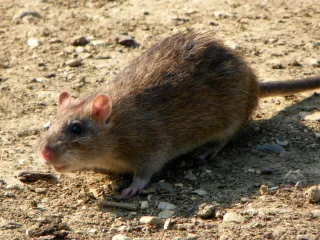
| Norway rat | Heavy, blunt nose, small ears | Tail stops at mid-skull; droppings 3/4 inch, blunt |
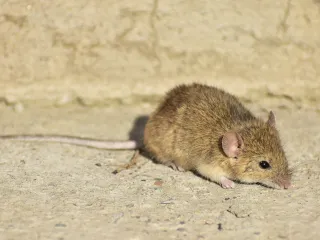
| House mouse | Far smaller | Droppings about 1/4 inch |
| Tree squirrel | Also gets into attics | Noise early morning and late afternoon, not at night |
The fastest check is the tail: lay it back along the body. A roof rat’s tail reaches past its nose; a Norway rat’s doesn’t. Droppings in the attic around 1/2 inch with pointed ends point to roof rats; see mouse poop vs. rat poop for sizes, or the mouse vs. rat guide if you’re not sure it’s a rat at all.
Where Roof Rats Live: Up High
Outdoors they nest above ground in trees, shrubs and dense vegetation such as ivy, and yards with mature landscaping suit them well. Indoors they favor attics, wall voids, false ceilings and cabinets (UC IPM). They prefer warm climates and coastal areas, though their range is expanding.
They travel 300 feet or more for food, so they may nest in one yard and feed on fruit trees in another. At night you may see them running along utility lines and fence tops, balancing with their long tails. They’re strongly tied to their nest sites and come back if nests aren’t removed.
Are Roof Rats Harmful? Yes
In attics their gnawing and nest-building can cause real damage and electrical sparks or fires, and rats may chew gas lines and car engine wiring (UC IPM). Outdoors they eat citrus and avocados on the tree: they hollow out oranges through a small hole, leaving empty rinds hanging, and eat lemon rinds but leave the flesh. Like Norway rats, they can spread typhus, leptospirosis, salmonella and rat-bite fever.
How to Confirm It’s a Roof Rat
- Listen overhead at night for running and scratching in the attic or ceiling; compare with scratching in walls.
- Check for droppings in the attic and on top of cabinets: about 1/2 inch, pointed.
- Look at fruit trees for hollowed-out oranges still hanging.
- Look for rub marks along rafters, beams and pipes, and watch fence tops at dusk.
What to Do: Trim, Screen, Trap High
Prune branches within 3 to 6 feet of the roof (UC IPM), pull climbing plants off walls, and seal roofline gaps of 1/2 inch or more with metal mesh or sheet metal; rats chew through plastic, foam, wood and caulk. Set rat-size snap traps both on the ground and up high on ledges, shelves, pipes and beams, secured to the surface if you can. Roof rats are warier of new objects than Norway rats, so expect a slow start. The full plan, with costs, is in how to get rid of rats in the house. For other pests, browse all pest guides.
Often confused with
Sources
Last reviewed Oct 5, 2026.
_under_the_Tree_House_(15858296885).jpg)