How Do Mice Get in the House? How to Keep Them Out
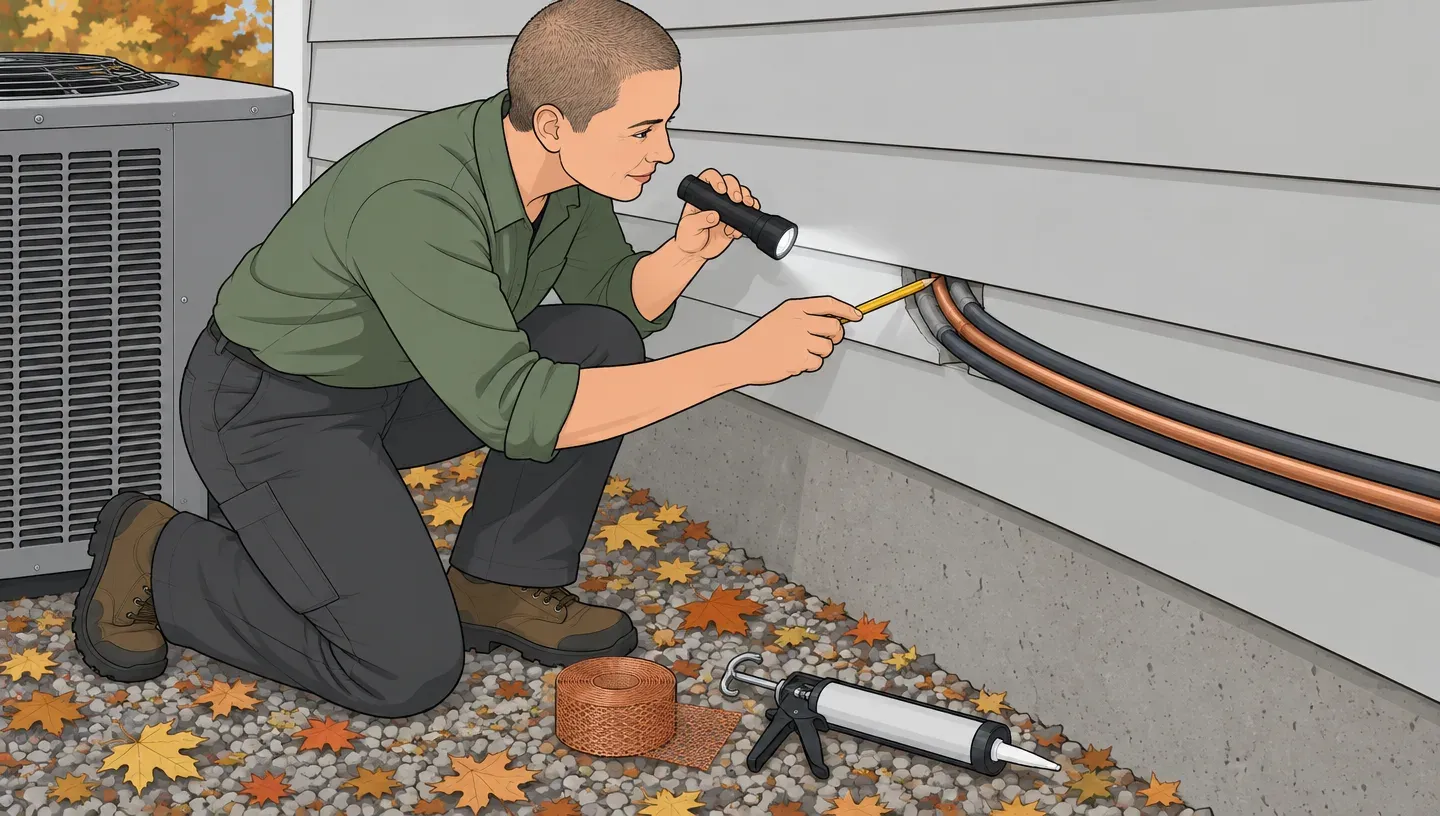
Illustration: a pencil pushed into the gap around an air conditioner line on an outside wall.
How do mice get in the house? Through gaps about ¼ inch wide, the width of a pencil (CDC): around pipes and wires, under doors and garage doors, at foundation cracks, vents and the roofline. Seal each gap with metal mesh plus caulk or cement, not foam, then trap any mice already inside. A week without new droppings means it worked.
Cost: about $57–71 in supplies. Difficulty: moderate. Call a pro if the gaps are on the roofline or chimney and you can’t reach them safely, rats are running along overhead utility wires, or traps checked and re-baited for at least 15 days haven’t stopped new droppings.
This guide covers where mice get in, how to find the hole, how to seal it and whether to seal or trap first. We haven’t tested these methods ourselves; this rests on CDC, UC IPM, National Park Service and university extension guidance and September 2026 list prices. If mice are already settled in, pair it with how to get rid of mice.
Saw a mouse or droppings tonight? Check under the sink, behind the stove and under outside doors with a flashlight and a pencil. Stuff steel wool into any gap a pencil fits. Set snap traps with a small dab of peanut butter, baited end against the wall, where kids and pets can’t reach. Don’t sweep or vacuum droppings; clean them up wet instead.
What Works and What Doesn’t for Sealing Mice Out
| Method | Works? | Cost | Main limitation |
|---|---|---|---|
| Copper mesh or stainless fiber + caulk | Yes | $28.80 for 20 ft | Needs caulk or mortar over it to stay put |
| Plain steel wool | For tonight | — | Rusts; swap it out later |
| Door sweeps and garage door seals | Yes | Local store price | Must leave no more than ¼ inch |
| ¼-inch hardware cloth on vents | Yes | Local store price | Not on a dryer vent: lint builds up |
| Foam, rubber, vinyl, plastic, wood alone | No | — | Gets gnawed |
| Ultrasonic repellers | No | — | Little evidence they keep mice out (UC IPM) |
| Poison | Skip | — | Harms kids and pets; mice die indoors |
How Small of a Hole Can a Mouse Fit Through?
About ¼ inch, the width of a pencil (CDC). If a mouse’s head fits, its body follows, and rodents gnaw small holes wider. So if a pencil slides in, pack the gap with metal mesh and caulk; if it doesn’t, caulk it anyway.
How Do Mice Get Into Your House? The Common Entry Points
Mostly through gaps that already exist: mice aren’t good at gnawing new holes, while rats are (Oregon State Extension).
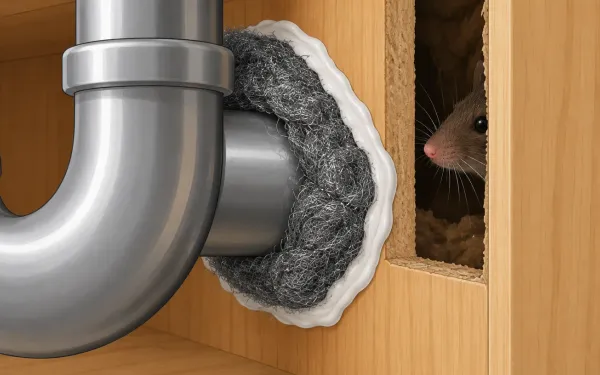
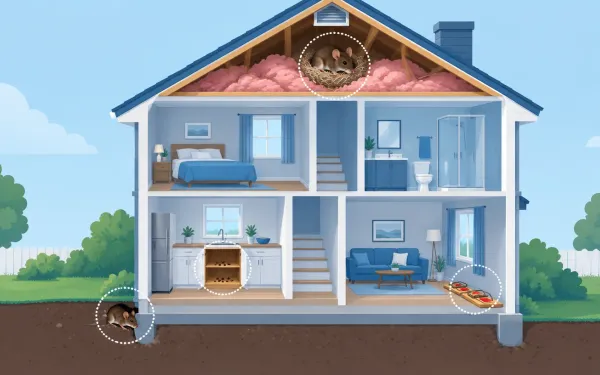
Pipes, wires and the AC line. Gaps where they pass through walls are “ideal rodent entry points,” says a National Park Service rodent-proofing manual. Inside, check under sinks, behind the stove and fridge and around the water heater pipes.
Doors and garage doors. Light under a closed outside door is the tell; the NPS manual wants no more than ¼ inch of clearance. On garage doors, check the side gaps and the seal’s bottom corners, where rodents usually chew.
Foundation and sill. Walk around at ground level and look where the siding meets the foundation (the sill), at door thresholds, foundation cracks, and where the foundation meets the ground.
Vents. Crawl-space and attic vents need intact screens, and a dryer vent with a missing or lint-jammed flap is an open door.
Roofline and chimney. Look under the overhang, at the gable ends and around the chimney. House mice run up any rough vertical surface, so yes, mice can climb walls to reach those gaps (mice in the attic).

Illustration: the places to check on a walk around the house, from the foundation up to the eaves.
Why Mice Come In When It Gets Cold
House mice often move indoors in autumn as nights get colder (UC IPM), drawn by warm air escaping through gaps. Do the search and sealing below in early fall, not after the first sighting.
How to Find Where Mice Are Getting In
Start inside near the droppings and work outward; house mice seldom go more than 30 feet from their nest (UC IPM).
Follow the smudges. Oil and dirt from mouse fur rub off along regular routes, and a black smudge line often leads straight into a hole. A bright flashlight shows them even in daylight.
Look for daylight. On a sunny day, stand in the attic or crawl space with the lights off; light showing through marks a gap.
Do the pencil test. A mouse hole rarely looks like a cartoon arch; it’s usually a gap around a pipe or where the floor meets the wall.
Confirm with flour. A thin, smooth patch of flour on a pathway shows tracks overnight.
How to Keep Mice Out of Your House, Step by Step
Sealing them out, called rodent exclusion, is the most successful and permanent form of house mouse control (UC IPM). Shopping list: copper mesh or stainless steel wool, silicone or polyurethane caulk (it stays flexible), a door sweep per outside door, ¼-inch hardware cloth, and a dozen snap traps, gloves and bleach. On a tight budget, start with the mesh and traps (does steel wool keep mice out?).
Step 1: Seal gaps around pipes and wires. Pack copper mesh or stainless fiber into the gap with a screwdriver, then cover it with caulk or mortar so rodents can’t push it aside (Nebraska Extension). Larger holes get hardware cloth, metal sheeting or cement. Already sprayed foam? Push mesh into the remaining gap, then trim the foam and paint over it (NPS manual).
Step 2: Close gaps under doors and garage doors. Fit a door sweep to each outside door. For garage doors, use a brush kit or rubber seal, with metal flashing over chewed corners (NPS manual).
Step 3: Screen vents without blocking airflow. Cover crawl-space and attic vents with ¼-inch hardware cloth. On a dryer vent, use a cover that closes when the dryer stops, not stapled mesh, which builds up lint and raises the fire risk (NPS manual).
Step 4: Fix the foundation and clear the perimeter. Fill larger foundation holes with concrete and thin plants touching the walls. Keep woodpiles a foot off the ground and as far from the house as you can; the CDC’s ideal is 100 feet.
Renting? Report outside gaps to your landlord in writing before you touch walls, vents or doors.
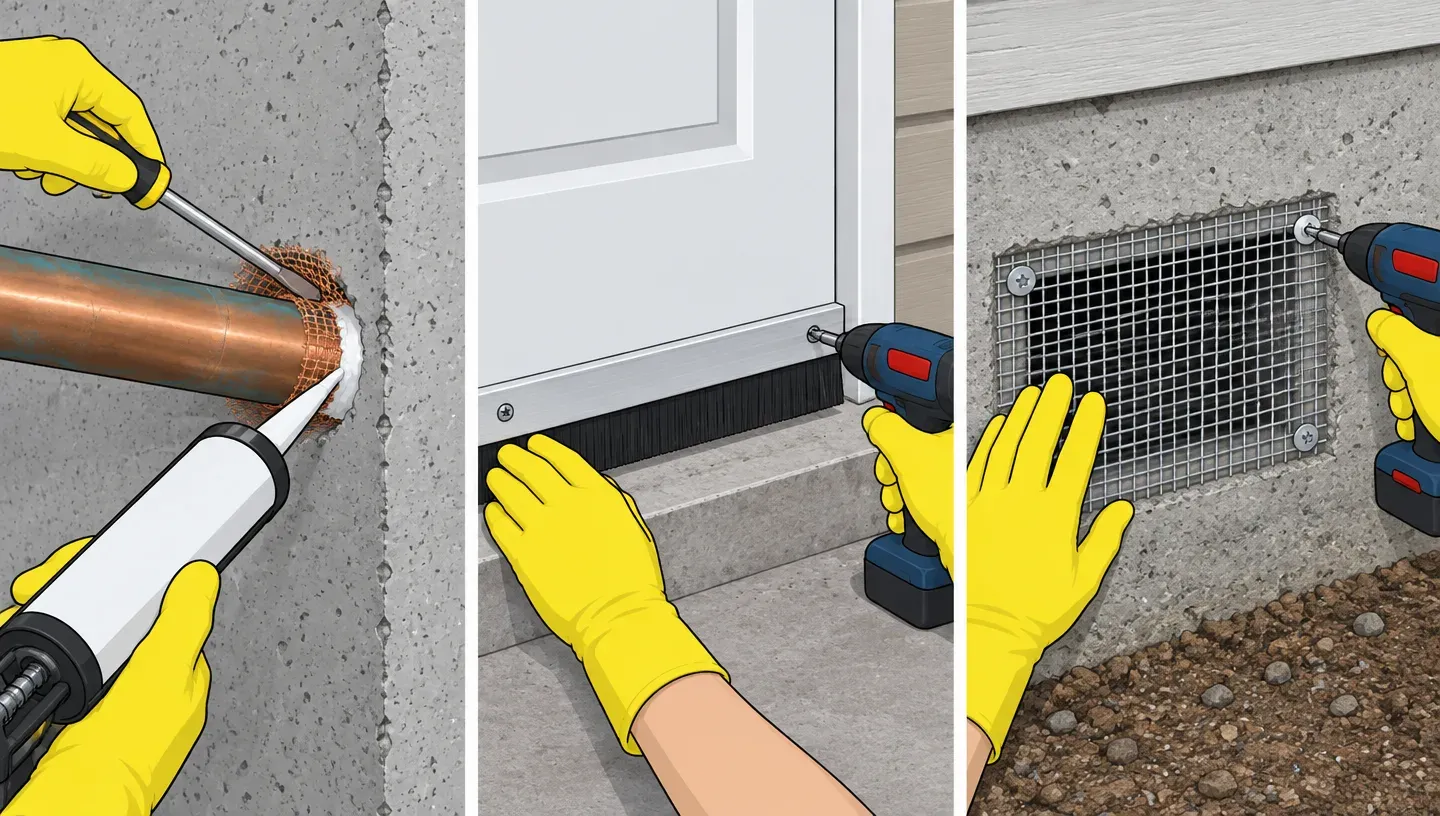
Illustration: mesh plus caulk around pipes, a tight door sweep, and hardware cloth over foundation vents.
Should You Seal Holes or Trap First?
Seal first. The CDC’s order: find how they got in, seal the holes, then trap any mice still inside. The exception: if rodents live in burrows under the foundation with no other exit, trap them before closing the hole.
Use snap traps, not poison (why we skip poison). Set them on the floor, baited end against the wall in a “T,” near the gaps and behind the stove, fridge or cabinets, no more than about 10 feet apart (UC IPM). More in how to set a mouse trap.
Keep traps out at least 15 days (CDC); a week with no catches and no new droppings means they’re gone. Mice already behind the drywall need a plan for getting mice out of walls.
How to Keep Rats Out of Your House
Sealing every hole over ¼ inch keeps out both, with three differences (UC IPM):
- Rats gnaw more. Young rats squeeze under a ½-inch door gap and may chew it wider, and they chew through plastic, foam, wood and caulk, so use metal.
- Roof rats climb, so openings above ground level need plugging too.
- Drains. Rats can enter through toilets or broken drains.
Rats already inside need a plan to get rid of rats in the house.
Which Plan Fits Your Situation
| Your situation | Start with | Then |
|---|---|---|
| Renting | Steel wool in indoor gaps, traps | Outside gaps reported to your landlord |
| Kids or pets | Traps out of reach, no poison | Seal the gaps they use |
| Gaps on the roofline | Check from a stable ladder | A pro if you can’t reach |
| Rats, not mice | Metal only; check drains | The rat plan |
| Fall, no mice yet | Walk around with a pencil and flashlight | Seal before the cold |
What It Might Still Cost
| Item | Typical cost |
|---|---|
| Copper mesh, 20 ft roll | $28.80 |
| 12 wooden snap traps | $13.74 |
| DIY kit: mesh, 12–24 traps, gloves, bleach | About $57–71 |
| Pro attic insulation cleanup, if upsold | $7,500–$14,000 |
| Pro trap-and-seal job, 53 shared quotes (middle half) | $1,400–$3,000 |
| Pro visit, price-guide range (usually no sealing) | $150–$655 |
DIY prices are U.S. list prices checked September 30, 2026, before tax; add caulk, door sweeps and hardware cloth at your local store’s price. Pro: the middle half of 53 trap-and-seal quotes homeowners shared on Reddit (see the quote table). Price-guide range: This Old House for mice (April 2026) and HomeAdvisor for rats (June 2026); it usually covers a trap-and-bait visit, with sealing extra. Attic cleanup: the middle half of 35 shared quotes that included new insulation. Ask a pro which openings they’ll seal, with what, and whether a return visit is included.
Before You Start: A Quick Checklist
- Carry a pencil and a bright flashlight on your walk-around.
- Start inside near the droppings, then work outward.
- Buy copper mesh, not just steel wool.
- Check every outside door for light underneath.
- Leave the dryer vent unmeshed; fit a closing cover instead.
- Set traps once the gaps are sealed and keep them out 15 days.
When to Call a Pro
- Openings on the roofline, chimney or high gables you can’t reach from a stable ladder.
- Rats running along overhead utility wires; a pest professional or the utility company can help.
- Rodents in places you can’t reach to clean.
- At least 15 days of checked, re-baited traps haven’t stopped new droppings (CDC).
Do Mice Have Bones?
Yes, a full skeleton, collarbones included (Jackson Laboratory mouse anatomy atlas). They slip through small gaps because their bodies are slim: where the head fits, the body follows, and the fur makes them look bigger than they are.
Common questions
Mostly in autumn, as nights get colder (UC IPM), but any time of year if there’s a gap and food inside (what attracts mice). Sealing in late summer keeps the fall rush out.
Yes. A dime is almost three times wider than the ¼-inch gap a mouse can use, and in one filmed test reported by PCT magazine, two mice went through dime-size holes.
Usually a gap you haven’t found: under the garage door, around a utility line or at the roofline. Look for smudge marks and check for daylight from a dark attic or crawl space.
Sources and further reading · 9
- CDC: Seal Up, Trap Up, Clean Up and Controlling Wild Rodent Infestations.
- UC IPM (University of California Integrated Pest Management): House Mouse and Rats.
- Nebraska Extension: Controlling House Mice (G1105).
- Internet Center for Wildlife Damage Management (ICWDM): House Mice and House Mouse Control.
- National Park Service (NPS): Rodent Exclusion Manual (2019).
- Oregon State University Extension: Mice.
- The Jackson Laboratory: Anatomy of the Laboratory Mouse, Skeleton.
- Dime test: PCT: Mouse Mythbusters; U.S. Mint: Dime specifications.
- Costs: DIY list prices from DoMyOwn, Victor and Target (September 30, 2026); pro prices from HomeAdvisor (June 2026) and This Old House, citing HomeGuide (April 2026).