How Long Do Ants Live? Workers, Queens and Why It Matters
A worker lives weeks. The queen can live for years, which is why spraying the trail doesn’t end it.
It depends on the ant’s job. Worker ants live weeks to months; Texas A&M AgriLife says fire ant workers generally live about 5 weeks, though they can survive much longer. Queens live for years: 7 years or more for a fire ant queen (Texas A&M) and as long as 15 years for a carpenter ant queen (NC State Extension). Males die soon after mating (Texas A&M). That’s why spraying the trail doesn’t end an ant problem: the queen keeps laying eggs, and slow-acting bait carried back to the nest is what reaches her (UC IPM).
Difficulty: easy. Call a pro if winged ants keep coming out of a wall, you suspect carpenter ants nesting in damp wood, or baits haven’t cut the trails after a few weeks.
This guide covers ant lifespan by role, the ant life cycle, and what it means for the ants in your kitchen. We haven’t kept ant colonies ourselves; it rests on Texas A&M AgriLife, NC State Extension and UC IPM guidance.
Ant Lifespan at a Glance
| Ant | Lifespan | Source |
|---|---|---|
| Fire ant worker | About 5 weeks; can survive much longer | Texas A&M AgriLife |
| Fire ant male | Dies soon after mating | Texas A&M AgriLife |
| Fire ant queen | 7 years or more | Texas A&M AgriLife |
| Carpenter ant queen | As long as 15 years | NC State Extension |
| Carpenter ant workers | In mature colonies, can live many years | NC State Extension |
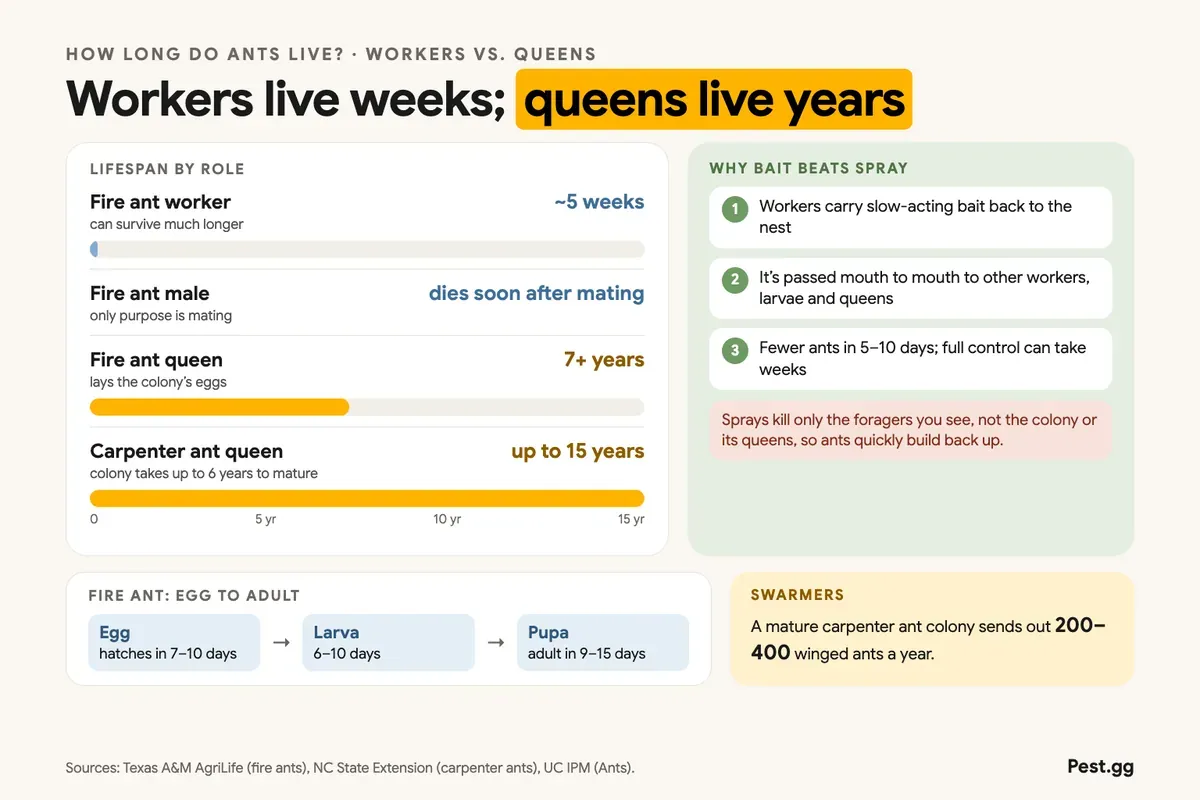
Infographic: worker and queen lifespans and why bait works. Sources: Texas A&M AgriLife, NC State Extension, UC IPM.
Numbers vary by species and season, and we found reliable figures only for fire ants and carpenter ants. Treat them as a guide to the pattern: short-lived workers, long-lived queens.
Who’s Who in an Ant Colony
UC IPM describes three kinds of ants:
- Queens handle reproduction and are larger than the other ants. They lay the eggs.
- Workers are sterile females. They gather food, feed and care for larvae, build tunnels and defend the colony. The ants on your counter are workers.
- Males don’t take part in colony work; their only job is to mate with queens. Winged males and females leave the nest to mate, and a colony starts producing them after a few years.
Some household ants, such as odorous house ants and Argentine ants, have many queens per colony, which is part of why they’re hard to wipe out (see how to get rid of sugar ants); see the odorous house ant and Argentine ant entries.
The Ant Life Cycle
Ants go through egg, larva, pupa and adult. Texas A&M gives the fire ant timeline (for their stings, see fire ant bites): eggs hatch in 7 to 10 days, larvae develop for 6 to 10 days and then pupate, and adults emerge 9 to 15 days later. So a new worker can appear within about a month of the egg being laid.
Colonies grow slowly. NC State says a new carpenter ant colony takes up to six years to fully mature, after which it produces 200 to 400 winged swarmers every year.
Why Killing the Ants You See Doesn’t Work
The ants on the trail are a small, short-lived part of the colony. UC IPM says spraying ants indoors won’t prevent more ants from entering, and perimeter sprays kill only foraging ants without killing the colony and the queens, so ants quickly build back up and invade again. With a queen that can live for years laying new workers, the trail keeps coming back.
Bait works because workers do the delivery. UC IPM says workers carry small portions of bait back to the nest, where it’s passed mouth to mouth to other workers, larvae and queens. That’s why bait has to be slow-acting: the foragers need time to get home.
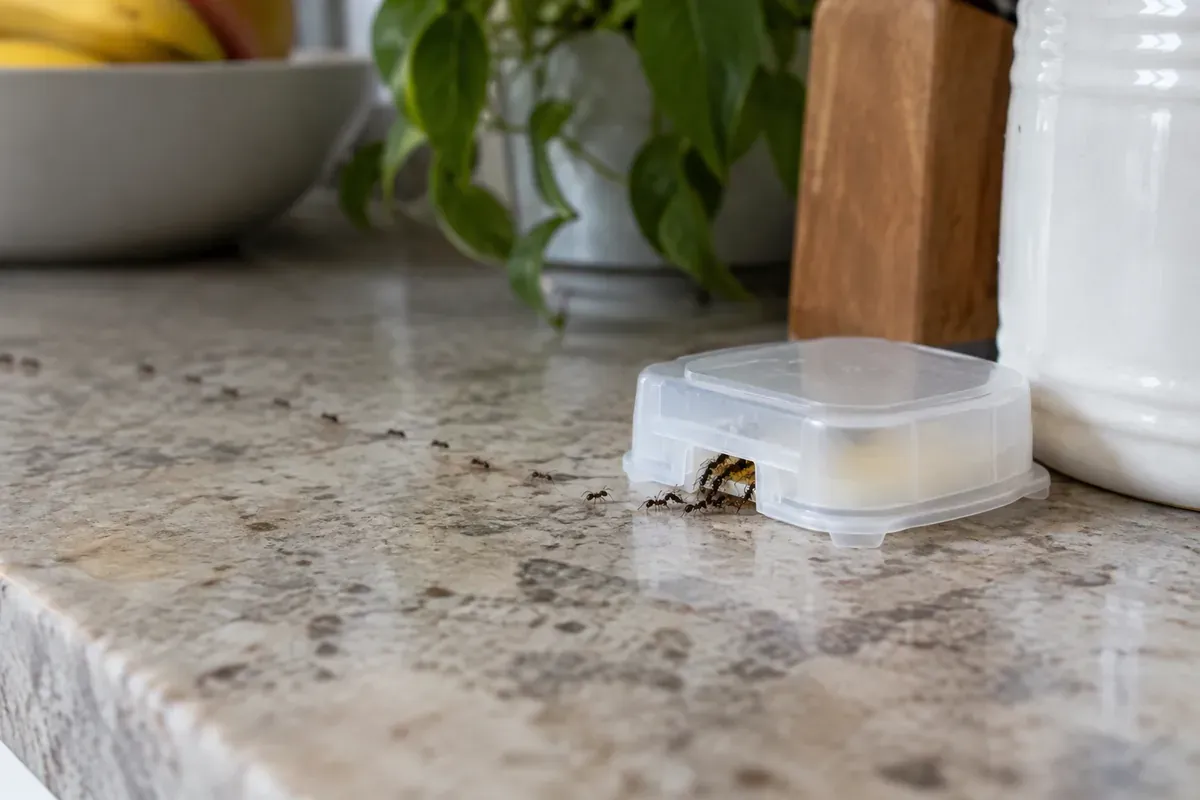
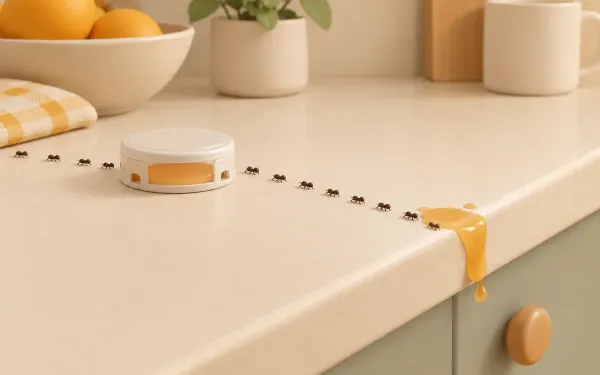
Illustration: a bait station placed right on the trail.
How to use it:
- Put bait on the trail, where you see ants walking, and leave them alone while they feed. Ant traps covers which kind to buy.
- Don’t spray near the bait. NC State says ants avoid treated areas.
- Wait. UC IPM says you may see fewer ants in 5 to 10 days, and full control can take several weeks or more; NC State says 7 to 10 days before activity drops significantly.
- Clean up and seal. Wipe trails with soapy water, store sweets sealed and close gaps once the bait has done its work.
Common House Ants
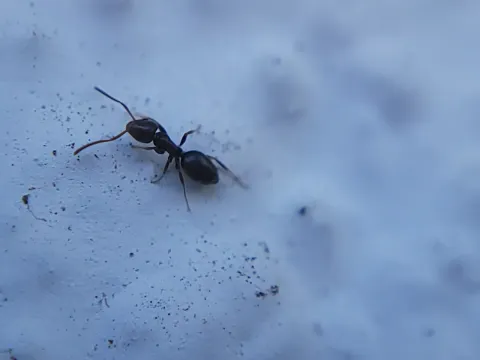 Many queensOdorous house ant1/16 to 1/8 inch; smells like coconut when crushed.
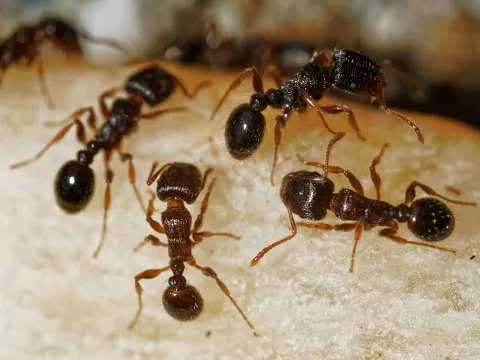 CommonPavement antAbout 1/8 inch; nests under slabs and sidewalks.
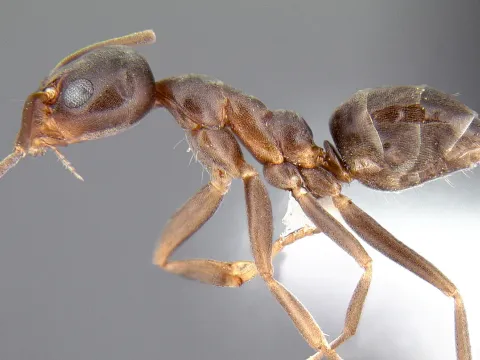 Many queensArgentine antAbout 1/8 inch; huge linked colonies.
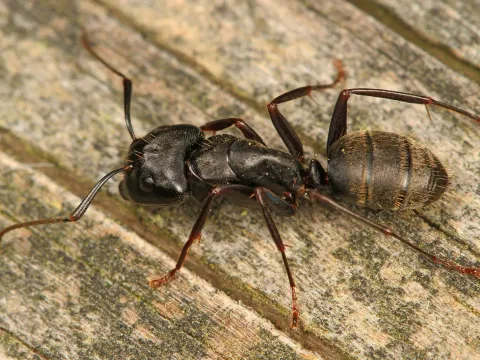 Queen to 15 yrsCarpenter antWorkers 1/4 to 1/2 inch; nests in damp wood.
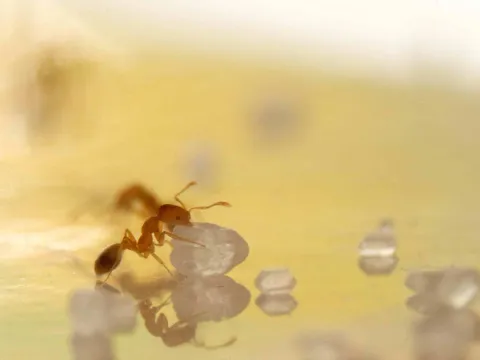 Bait onlyPharaoh antAbout 1/16 inch; spreads when sprayed.
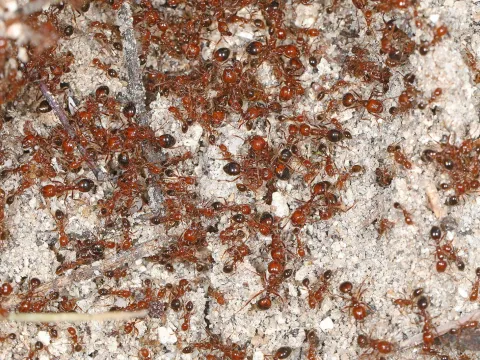 StingsFire ant1/8 to 1/4 inch; mounds in sunny lawns; stings.
Sizes from the Pest Library entries: odorous house ant, pavement ant, Argentine ant, carpenter ant, pharaoh ant and fire ant, each with its own bait advice. Pharaoh ants are a special case: colonies split easily, so sprays can spread them, and slow-acting bait is what works (pharaoh ant).
When to Call a Pro
If winged ants keep coming out of a wall, you suspect carpenter ants nesting in damp wood (see how to get rid of carpenter ants), or baits haven’t cut the trails after a few weeks.
Common questions
Weeks to months. Texas A&M says fire ant workers generally live about 5 weeks but can survive much longer, and NC State says carpenter ant workers in mature colonies can live many years.
Years. A fire ant queen can live 7 years or more (Texas A&M), and a carpenter ant queen as long as 15 years (NC State).
Not while the queen is alive and laying eggs. Use slow-acting bait so workers carry it back to the nest (UC IPM).
The Bottom Line
Ants on your counter are short-lived workers; the queen back in the nest can live for years. Skip the spray, put slow-acting bait on the trail, give it a week or two, then clean the trail and seal the gaps.
Sources and further reading · 3
- Texas A&M AgriLife: Fire Ant Biology: queen, worker and male lifespans; development times.
- NC State Extension: Biology and Control of Carpenter Ants: queen lifespan, colony maturity, swarmers, worker longevity, baits.
- UC IPM: Ants: queens, workers and males; why sprays fail; how baits work and how long they take.