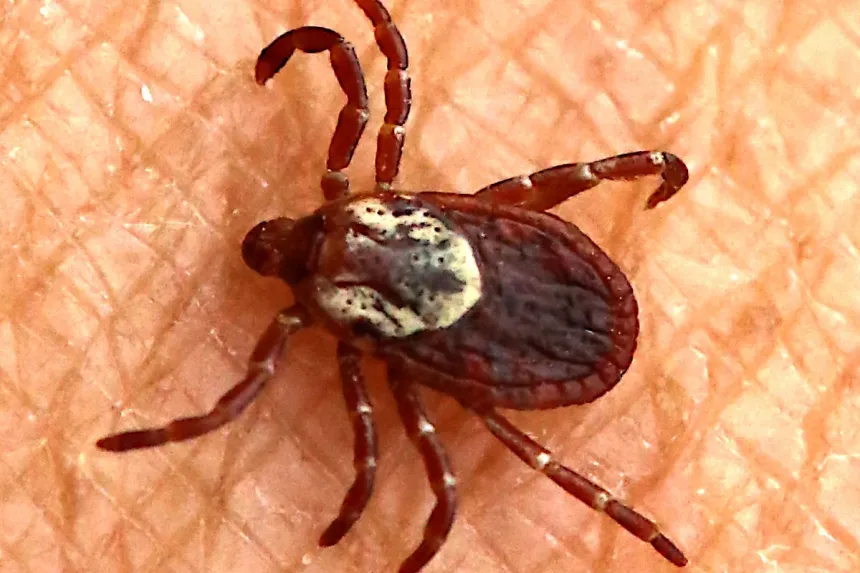
- Scientific name
- Dermacentor variabilis
- Also called
- wood tick, dog tick
- Size
- Adult about 3/16 in unfed; up to 1/2 in engorged
- Color
- Brown with white or silvery mottling on the shield
- Found in
- Grassy trails, roadsides, field edges; East, Midwest and parts of the West
- Harmful?
- Yes. Rocky Mountain spotted fever, tularemia
- Active
- March through September
The American dog tick is one of the largest common ticks: brown with white or silvery mottling, waiting on grass along trails and roadsides for dogs and people. It can spread Rocky Mountain spotted fever and tularemia. The one thing to do: check pets and people after walks, and remove attached ticks promptly with fine-tipped tweezers.
This page covers how to identify an American dog tick, tell it from other ticks and avoid bites. It rests on University of Kentucky guidance; see a doctor about any illness after a tick bite.
How to Identify an American Dog Tick: Large and Mottled
- Larger than a deer tick: adults are about 3/16 inch before feeding.
- Brown, with white or silvery mottling on the shield behind the head (the whole back in males).
- Engorged females swell up to about 1/2 inch and turn gray-blue.
- Short mouthparts, compared with the lone star tick.
Despite the name, it feeds on many animals, not just dogs.
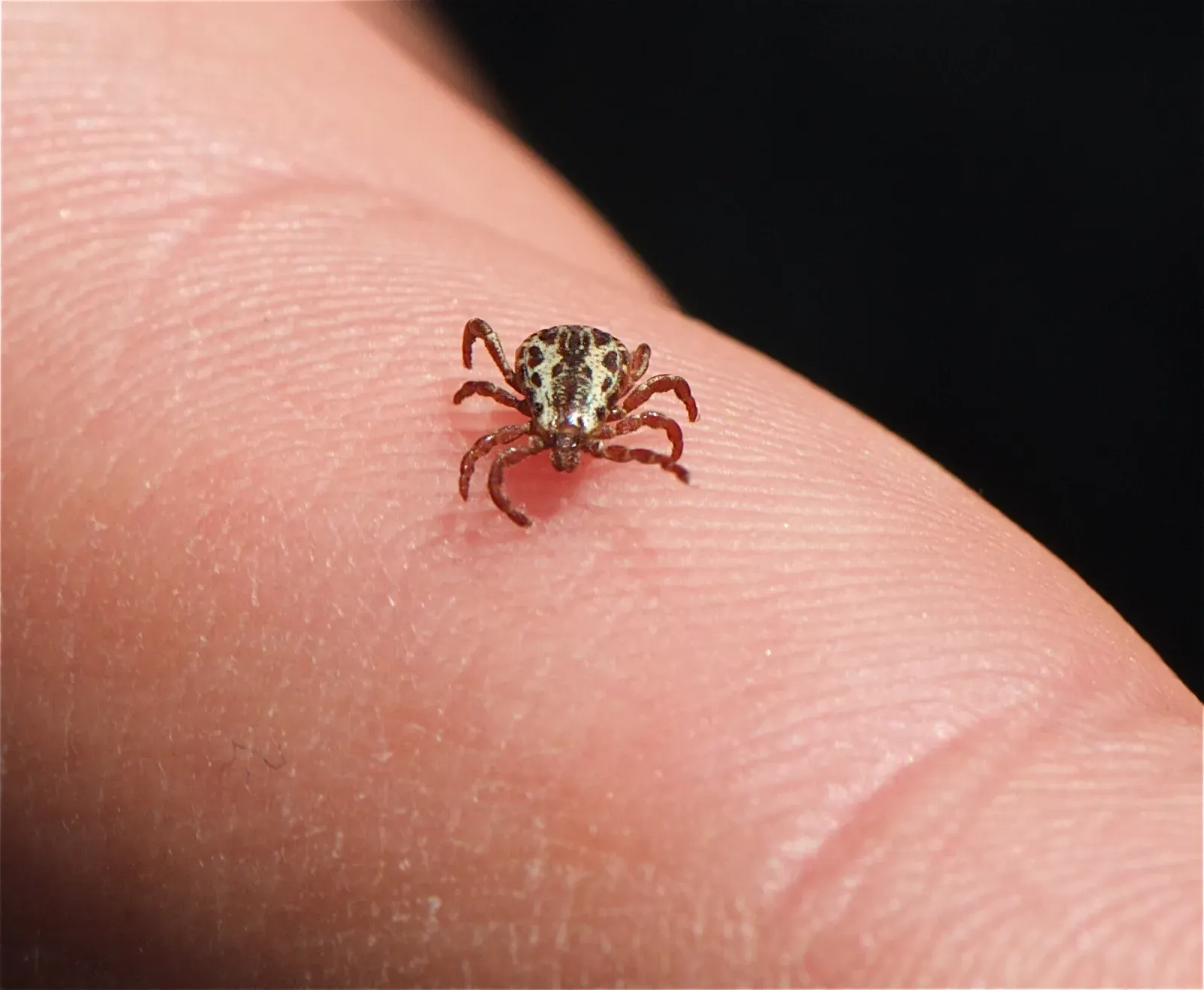
An American dog tick on a fingertip, showing how small it is before it feeds. Photo: Jerry Kirkhart (CC BY 2.0), via Wikimedia Commons.
American Dog Tick vs. Other Ticks: Check the Markings
| Tick | How it differs | How to tell |
|---|---|---|
| American dog tick | Larger, brown with white mottling | Mottled shield |
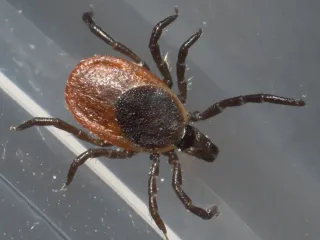
| Blacklegged (deer) tick | Much smaller, black legs | No white markings |
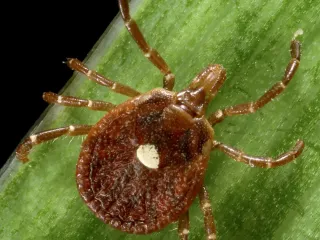
| Lone star tick | Female has one white spot | A single spot, not mottling |
| Brown dog tick | Plain reddish brown | No markings; can live indoors in kennels and homes |
Where You’ll Find Them: Grassy Edges
- Grassy trails, roadsides and meadow edges
- Overgrown yards and field borders
- On dogs after walks
Adults can survive up to two years without feeding, so they persist in grassy areas even where hosts are few (University of Kentucky).
Are American Dog Ticks Dangerous? Spotted Fever Risk
They can spread Rocky Mountain spotted fever and tularemia, according to the University of Kentucky. Rocky Mountain spotted fever can be severe or even fatal if it isn’t treated in the first few days of symptoms. See a doctor if fever, headache, rash or body aches appear in the days to weeks after a tick bite. They don’t carry the Lyme bacteria. Other bite marks are compared in bug bite pictures.
How to Confirm It’s an American Dog Tick
- Look for white or silvery mottling on the shield.
- Compare the size: clearly bigger than a deer tick.
- Save the tick in a sealed bag and note the date, in case symptoms appear.
What to Do: Protect Pets, Check, Mow
Keep pets on a veterinarian-recommended tick preventive, check pets and people after walks, remove attached ticks with fine-tipped tweezers, and keep grass and weeds cut along paths and yard edges. See how to get rid of ticks for the rest of the yard plan. For other pests, browse all pest guides.
Often confused with
Sources
Last reviewed Oct 4, 2026.