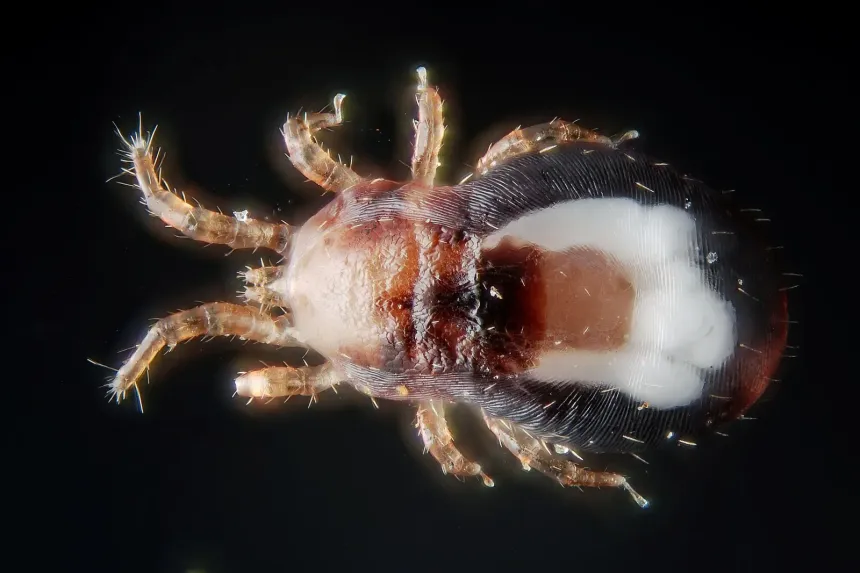
- Scientific name
- Ornithonyssus and Dermanyssus species
- Also called
- chicken mite, northern fowl mite
- Size
- About 1/32 in, a moving speck
- Color
- Gray to translucent; red after feeding
- Found in
- Near bird nests in eaves, gutters, vents, AC units and attics
- Harmful?
- Itchy bites; can't reproduce on people; no known disease
- Active
- Late spring and summer, after nestlings leave
Bird mites are tiny mites from the nests of pigeons, sparrows, starlings and poultry that wander indoors after young birds leave or a nest is abandoned. They bite people, leaving itchy red bumps, but they can’t live or breed on humans and haven’t been shown to spread disease. The one thing to do: find and remove the nest once the birds are gone, then seal the opening.
This page covers how to identify bird mites, where they come from and how to tell them from other tiny biters. It rests on University of Kentucky guidance.
How to Identify Bird Mites: A Moving Speck Near a Nest
- Tiny: about 1/32 inch, a moving speck just visible on a white surface.
- Gray or translucent, turning red after a blood meal.
- Eight legs, fast-moving, often seen crawling on walls, windowsills, bedding or near vents.
- Bites that itch, usually on the upper body and arms.
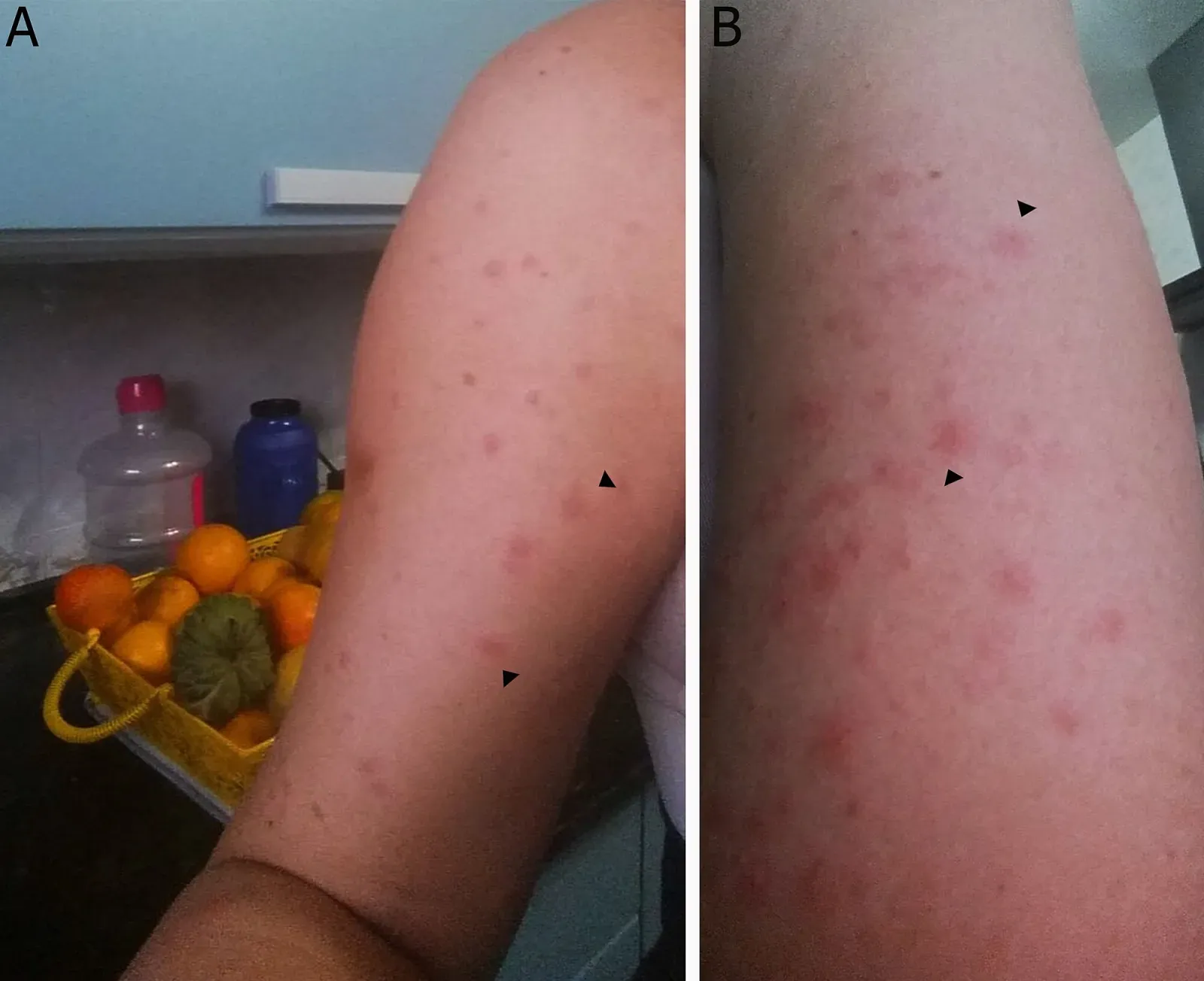
Bird mite bites on an arm: small, scattered red bumps that itch. Photo: Ricardo Bassini-Silva et al. (CC BY 4.0), via Wikimedia Commons.
Where Bird Mites Come From: Nests On or In the House
- Nests in eaves, gutters, chimneys and dryer or bathroom vents
- Nests on window air conditioners, ledges and porches
- Attics with nesting birds
- Chicken coops, backyard flocks and pet birds’ cages, including newly bought parrots, parakeets and canaries
When the hosts leave, thousands of hungry mites go looking for a new one. The University of Kentucky says mites from commercial poultry are very unlikely to arrive on store-bought eggs. A similar mite, the tropical rat mite, comes from Norway rat nests.
Bird Mites vs. Other Tiny Biters: Where and When
| Pest | Clue |
|---|---|
| Bird mites | Indoors near a window, vent or wall where birds nest; late spring and summer |
| Chiggers | Bites after time outdoors in grass; ankles and waistband |
| Clover mites | Red specks on sunny windowsills; don’t bite |
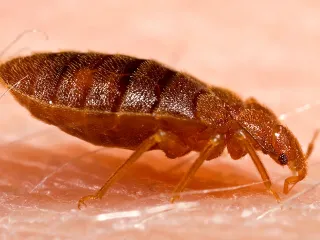
| Bed bugs | Larger, visible bugs in mattress seams; bites after sleeping |
The University of Kentucky also notes that “paper mites” and “computer mites,” often blamed for itching, don’t exist. More bite patterns are in bug bite pictures.
Are Bird Mites Harmful? Itchy, Not Dangerous
They bite people, which causes itchy red bumps, but the University of Kentucky notes that bird mites can’t reproduce on humans and haven’t been found to transmit disease to people. Once the source is removed, they die off within a few weeks.
How to Confirm It’s Bird Mites
- Look near the bites’ likely source: a window, vent or wall where birds nested this spring.
- Wipe the sill with a white tissue and look for moving specks.
- Check outside for a nest in the eaves, gutter, vent or air conditioner.
What to Do: Remove the Nest, Seal the Gap
Find and remove the nest once birds have left it (active nests of many wild birds are protected by law), then clean the area and seal or screen the opening. Close off attics, chimneys and vents so birds can’t nest in the house again. Vacuum around windows, vents and beds; mites indoors die without hosts. For other pests, browse all pest guides.
Often confused with
Sources
Last reviewed Oct 4, 2026.
.jpg)