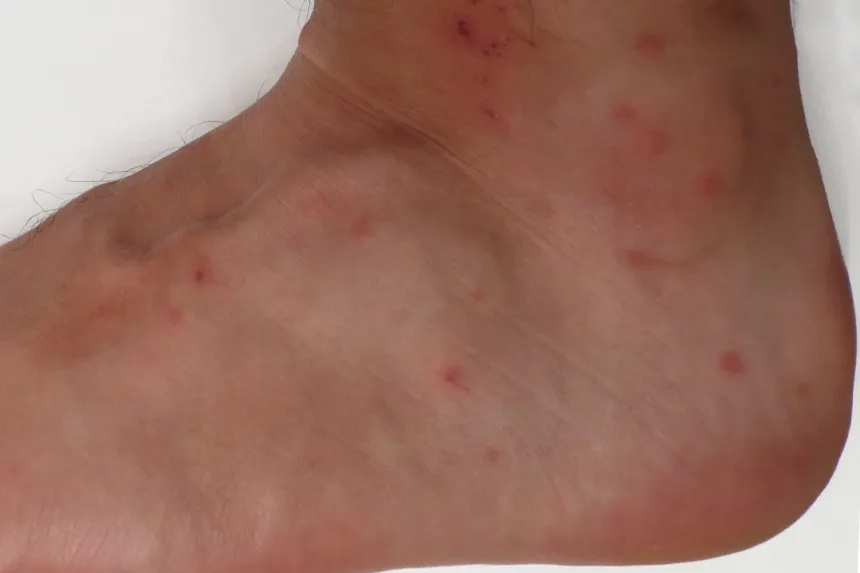
- Scientific name
- Trombiculidae (family)
- Also called
- red bug, harvest mite, berry bug
- Size
- Barely visible, under 1/100 in
- Color
- Reddish orange
- Found in
- Tall grass, brush, woodland edges, berry patches
- Harmful?
- Very itchy bites for 10–14 days; no disease in the US
- Active
- Spring through fall, peaks in late spring and late summer
Chiggers are nearly invisible mite larvae that climb onto you from tall grass and leave clusters of intensely itchy red bumps where clothing presses on skin. They don’t burrow or stay in the skin, and the itch fades in about two weeks. The one thing to do: shower and wash your clothes soon after walking through grass.
This page covers how to recognize chigger bites, how to tell them from other bites, and how to avoid them. It rests on University of Kentucky guidance.
How to Identify Chiggers: You’ll See the Bites, Not the Bugs
- Barely visible: under a magnifier they’re tiny, reddish, with six legs (adult mites have eight, but adults don’t bite).
- Bites are what you notice: small, intensely itchy red bumps that may not show up until 12 to 24 hours after being outdoors (University of Kentucky).
- Where the bites are: ankles, behind the knees, the groin, along the waistband, in the armpits and around bra lines, anywhere skin is thin or clothing presses on it.
- What a bite looks like: an inflamed, hardened reddish patch. The center may be a sunken red dot, a slightly raised bump or a pustule that pops like a blister, and people react differently.
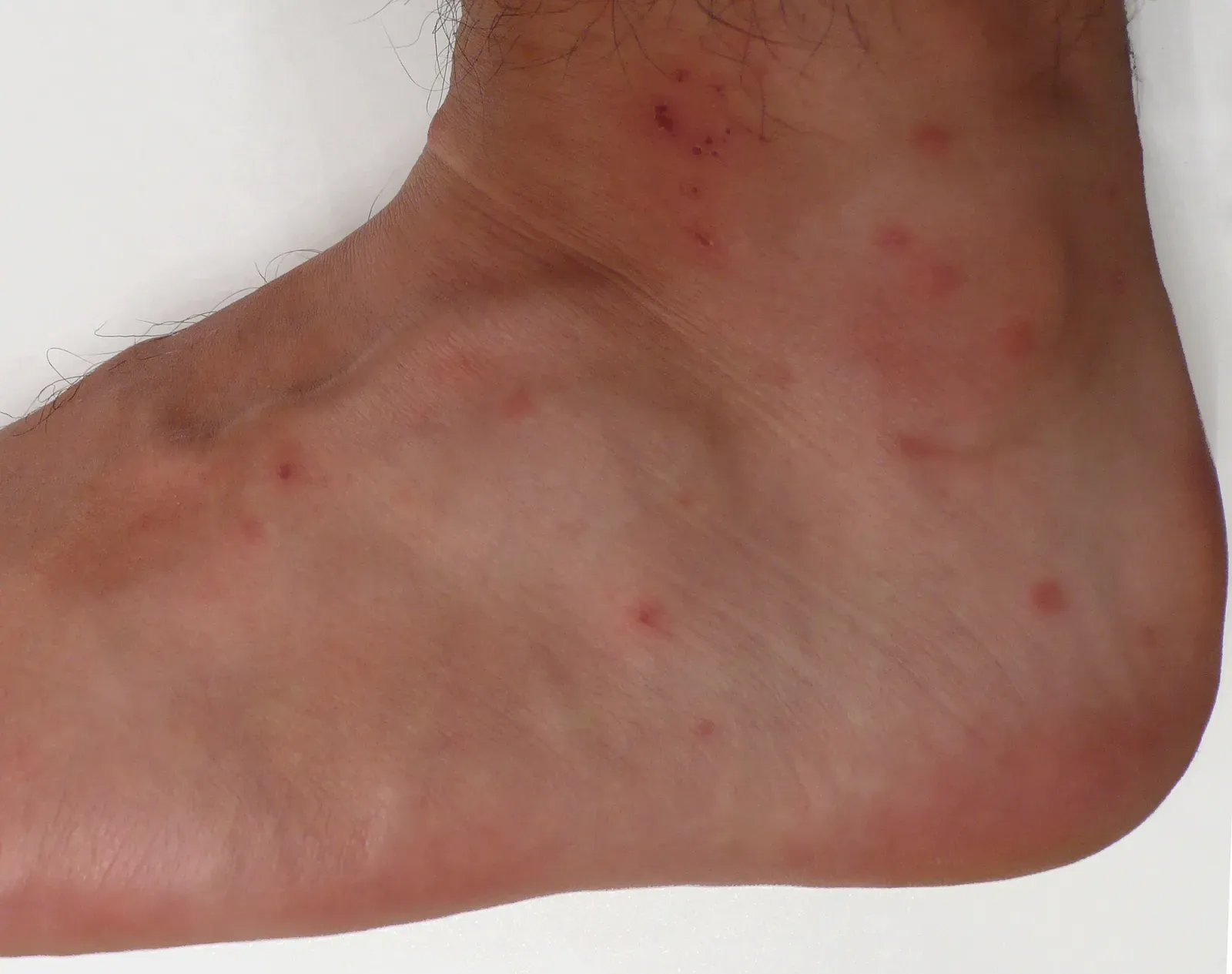
Chigger bites on a foot: small, very itchy red bumps, often around socks or waistbands. Photo: TimVickers (Public domain), via Wikimedia Commons.
Do Chiggers Burrow Into Your Skin? No
The University of Kentucky notes that chiggers are external parasites that don’t burrow or live in the skin. They pierce the skin, inject saliva that breaks down skin cells, feed over 2 to 4 days and drop off. The red bump and the itch are the body’s reaction to that saliva, and the itch usually lasts about 10 to 14 days.
Covering bites with nail polish doesn’t suffocate anything, because nothing is in there.
Chigger Bites vs. Other Bites: Where and When
| Bites from | Usually found | Look |
|---|---|---|
| Chiggers | Ankles, waistband, behind knees, after time in grass | Clusters of small red bumps, very itchy |
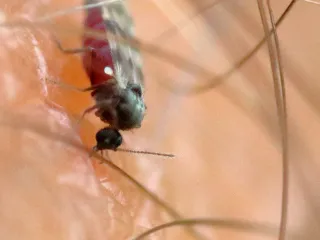
| Mosquitoes | Exposed skin | Puffy single welts |
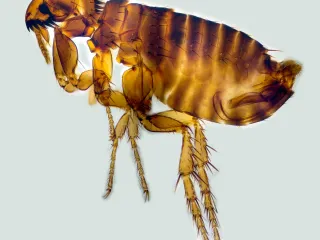
| Fleas | Ankles and lower legs, at home | Small bumps, often with a red halo |
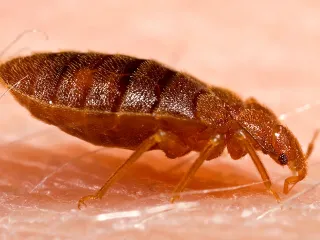
| Bed bugs | Upper body, after sleeping | Welts in lines or clusters |
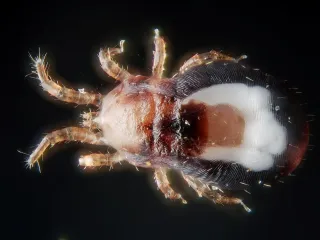
| Bird mites | Indoors near eaves, vents or attics with an old nest | Itchy bites from a moving gray speck |
More side-by-side photos are in bug bite pictures.
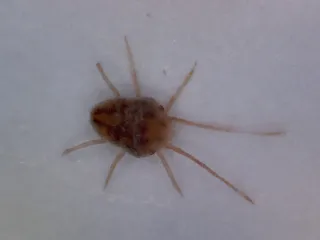
Tiny red mites on a windowsill? Those are probably clover mites, which crawl over sunny walls in spring and fall and don’t bite.
Where Chiggers Live: Grassy Edges, Not Mown Lawns
- Tall grass and weeds, especially along edges between lawns and woods
- Brushy areas, berry patches and overgrown fields
- Damp, shaded spots with low plants
When Chiggers Bite: Spring Through Late Summer
Adult chiggers spend winter in the soil. When the soil warms to around 60°F in spring, they come out, mate and lay eggs in overgrown spots. The larvae that bite climb to the tips of grass blades and plants and wait for a person or pet to brush past. After feeding they drop off and molt. In Kentucky there can be several generations a year, so bites are possible through the whole growing season, with peaks in spring and late summer (University of Kentucky).
How to Confirm It Was Chiggers
- Check the pattern: clusters where socks, waistbands or straps pressed on skin.
- Think back a few hours: bites show up after time in tall grass or brush.
- Rule out home pests: bites at home with no grass trip point to fleas or bed bugs instead.
What to Do: Cover Up, Repel, Wash, Mow
Stay on mown paths and trails, and wear long pants tucked into socks or shoes, plus long sleeves. The University of Kentucky lists these steps:
- Repel them on skin: DEET is the best choice; picaridin, IR3535 and oil of lemon eucalyptus also work and repel ticks and mosquitoes too. Reapply for long days outside.
- Treat clothing, not skin, with permethrin for long stretches in chigger habitat, such as camping, hunting or yard work.
- Knock them off after: wipe your legs with a dry towel or take a quick shower and scrub your lower legs, even after short jobs like weeding.
- Ease the itch with hydrocortisone or calamine lotion; ask a doctor about stronger relief.
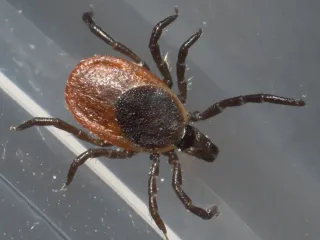
In the yard, mow, remove brush and open up shady, humid spots to let in light. That makes the area less inviting to chiggers and the animals they feed on. Insecticide sprays only knock numbers down for one to two weeks and won’t give lasting control. The same yard work cuts ticks too; see how to get rid of ticks. For other pests, browse all pest guides.
Often confused with
Sources
Last reviewed Oct 4, 2026.